


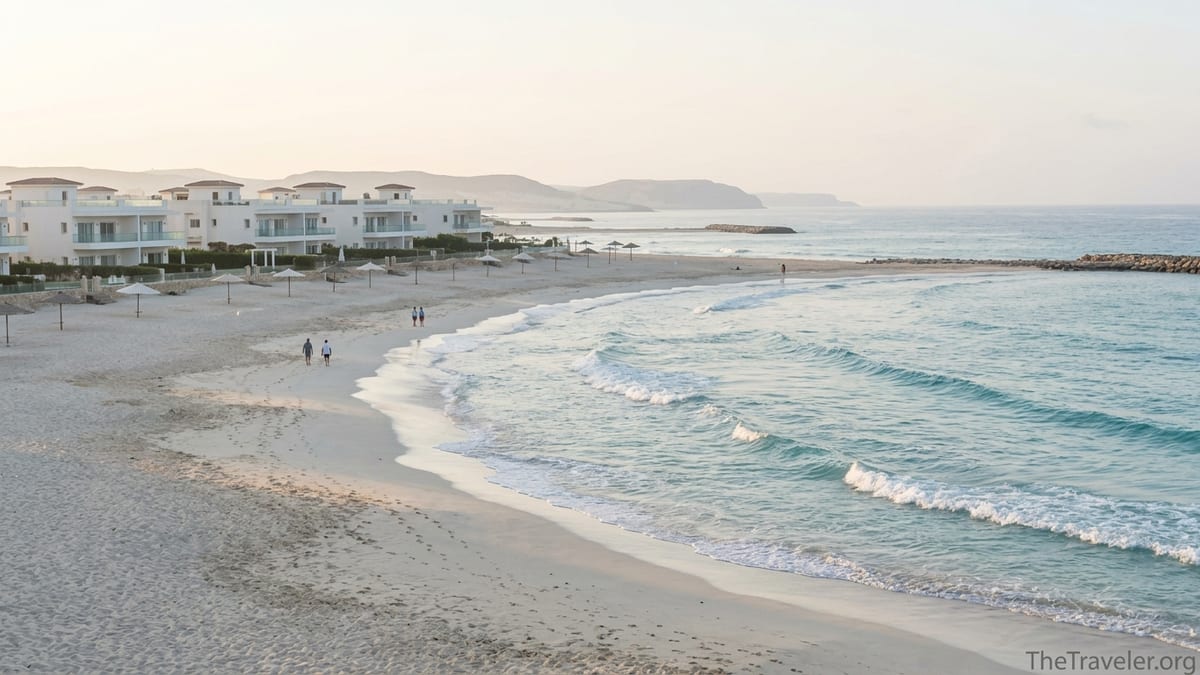
The Mediterranean coast of Egypt looks made for a long beach season: pale sand, turquoise shallows and a string of resort towns from Alexandria all the way to Marsa Matrouh. Yet unlike the Red Sea, this coast really only comes alive for a few intense summer months. If you are choosing between June, August or late September, or weighing up the Mediterranean against Hurghada and Sharm el Sheikh, timing is everything for warm water, smaller crowds and reasonable prices.
Understanding the Mediterranean Egypt Beach Season
Egypt’s Mediterranean shore stretches roughly 1,000 kilometers, but for beach holidays most visitors focus on three areas: Alexandria, the North Coast compounds known locally as El Sahel between El Alamein and Sidi Abdel Rahman, and the quieter bays around Marsa Matrouh further west. The region has a classic eastern Mediterranean climate with mild, slightly wet winters and hot, dry summers moderated by sea breezes. That moderation is key: it keeps summer air temperatures pleasant but also means the sea takes longer to warm and cool, creating a narrow swimming window compared with the Red Sea coast.
Along the northern coast, average summer air temperatures tend to hover in the high 20s to low 30s Celsius, cooler than Cairo or Luxor at the same time of year. In Alexandria, for example, typical July daytime highs sit around 30 to 31 degrees, with relatively humid evenings that still feel comfortable for seaside promenades on the Corniche. By contrast, inland cities often climb well above 35 degrees in mid-summer. That coastal moderation is ideal for sunbathing and outdoor dining but means sea temperatures only reach their most inviting levels from roughly late June through September.
The sea itself follows a predictable curve. Around Marsa Matrouh and the North Coast, average water temperatures creep above about 22 to 23 degrees Celsius in June, peak around 27 to 28 degrees in August, then slide back to the low 20s by October. For many travelers used to the western Mediterranean, 22 degrees can be swimmable, but people who expect “bath-warm” water usually find July and August noticeably more comfortable. Outside that core period, locals still stroll the beach and enjoy the views, yet relatively few people spend long in the water without a wetsuit.
This seasonal pattern stands in stark contrast to Hurghada or Sharm el Sheikh on the Red Sea, where the more enclosed basin and lower latitude keep sea temperatures higher for much longer. In Hurghada, monthly averages typically stay above 24 degrees Celsius most of the year and peak around the high 20s in late summer. That allows Red Sea resorts to promote year-round swimming and diving, while Mediterranean Egypt largely focuses on a concentrated 3 to 4 month beach holiday season.
Best Months for Beaches and Swimming
If your priority is classic beach weather and long, comfortable swims without a wetsuit, the sweet spot on Egypt’s Mediterranean coast usually runs from late June to mid-September. During this window, the combination of warm, dry air and steadily heated water creates the conditions that keep Egyptian families returning every summer. July and August are the months when the sea is at its warmest, regularly around the mid to high twenties Celsius along the North Coast compounds and around Marsa Matrouh’s famous bays such as Almaza Bay.
Travelers who feel the cold or who plan to spend hours snorkeling will notice the difference between early June and mid-August. In early June near Alexandria or Ras El Bar at the eastern edge of the Delta, water temperatures are often still just crossing into the low twenties. You can certainly splash around and take a quick dip, but long swims might feel brisk, especially when a north wind adds a bit of chop. By late July, the same spots typically feel far more inviting, with locals and visitors staying in the water at sunset and into the evening without any chill.
For shoulder-season travelers who want decent swimming plus more space on the sand, early to mid-September is often ideal. The sea, having been warmed all summer, stays pleasantly warm even as the air begins to cool slightly and domestic holidaymakers return to Cairo and Alexandria for work and school. In places like Sidi Abdel Rahman or Ras El Hekma, you may find almost the same water temperature as August, but with far fewer cars on the coastal highway and shorter waits at beach club entrances.
Outside this main window, expect a very different feel. In May and October, you might enjoy sunny days around 24 to 28 degrees on land, yet the sea is often in the high teens or very low twenties Celsius, fine for hardy swimmers but less comfortable for families with young children. Between November and April, Mediterranean Egypt is better suited to cultural breaks in Alexandria or Port Said than beach holidays: the air can be breezy and cool, and many resort facilities operate on reduced hours or close altogether.
Peak Summer Crowds, Prices and Availability
The Mediterranean beach season in Egypt is not just governed by weather. It closely follows the domestic holiday calendar, which is why the crowds and prices peak in a very narrow band. From roughly mid-June to early July, as schools close, Egyptians begin flocking to the North Coast. By the second half of July and throughout August, compounds such as Marassi, Hacienda Bay, and Mountain View Ras El Hekma are fully in high season mode, with many nights fully booked, especially over weekends and any overlapping public holidays like Eid.
This limited operating season has a direct impact on pricing. Short stay rentals along El Sahel are frequently advertised at moderate off-season rates in late May or late September, only to rise sharply over peak weeks from late July to mid-August. It is common to see a two-bedroom chalet that might rent for the equivalent of 100 to 150 US dollars per night on a quiet June weekday jump to 250 to 400 dollars or more per night in high-demand compounds during Eid or peak August weekends. In premium enclaves with beach clubs and branded hotels, villas with private pools can command several hundred dollars per night during that period.
Availability during these weeks often reflects local rather than international demand. Many North Coast homes are second residences owned by Egyptians, who occupy them themselves in July and August and only rent selected weeks. Travel platforms and local agencies report that the most sought-after weeks in compounds such as Almaza Bay or Sidi Heneish, which are famous for their powdery sand and calm water, may sell out months ahead. Minimum-stay rules of three to seven nights are common in high season, particularly over holiday weeks.
Restaurants and beach clubs also follow the same condensed pattern. A lounge on the sand that might welcome walk-ins and casual coffee drinkers in June can introduce cover charges and reservation-only policies in late July. Entry fees at popular beach clubs on the North Coast can range from modest day-use tickets comparable to around 20 US dollars per person on quieter days to significantly higher rates on nights featuring headline DJs or live performers. All of this intensifies the sense that Mediterranean Egypt’s beach summer is a short, intense festival rather than a slow, six-month season.
How to Find Lower Prices and Fewer Crowds
Travelers who are flexible on dates can still enjoy excellent swimming while avoiding the worst of the crowds and pricing. The most reliable strategy is to aim for the shoulder weeks at the beginning and end of the season. Early to mid-June and the last ten days of September often deliver comfortable daytime temperatures and progressively warmer or still-warm sea temperatures, yet with substantially lower accommodation costs than peak August.
For example, a mid-market North Coast compound near El Alamein might offer a family two-bedroom apartment in early June for a rate that is 30 to 40 percent lower than what the same unit would command in the last week of July. Local rental indexes and host guides often describe this pattern explicitly, noting that summer prices on the North Coast are compressed into a three to four month window, which forces owners to recoup annual costs in a short time. International visitors who can travel outside school holidays are well placed to take advantage of these quieter intervals.
Another way to balance cost and experience is to choose your base carefully along the coast. Alexandria, as a year-round city rather than a pure resort strip, has a broader range of hotels at various price points, and room rates in early June or September often compare favorably with North Coast compounds. A waterfront hotel near Stanley Bridge or in the San Stefano area can provide easy access to the Corniche and city beaches, with day trips to nearby public or private beaches east and west of town. While August in Alexandria can be crowded with domestic tourism, late May, June and October often bring more moderate occupancy and noticeably better nightly rates.
Further west, around Marsa Matrouh, the appeal for value-focused travelers lies in the combination of striking natural beaches and a slightly more relaxed scene than the high-energy Sahel compounds. In and around bays such as Almaza, you will find a mix of branded resorts and independent hotels that often run early-bird offers for June stays or end-of-season packages in late September. Travelers should, however, budget for transport carefully, as taxis or private transfers from Cairo or Borg El Arab airport can make up a significant share of the overall trip cost, particularly when split among fewer people.
Why the Mediterranean Season Is Shorter Than the Red Sea
One of the most common questions first-time visitors ask is why Egypt’s Mediterranean coast has such a concentrated beach season when destinations only a short flight away on the Red Sea market themselves as year-round. The answer lies both in physical geography and in how domestic tourism demand has developed over time. The Mediterranean along northern Egypt behaves like the open eastern basin of a temperate sea. Winter winds, cooler air temperatures and occasional storms mean surface waters lose heat through autumn and early winter and only slowly regain it in late spring and early summer.
By comparison, the Red Sea is a narrow, semi-enclosed basin with higher salinity and much less winter cooling. Resorts such as Hurghada and Sharm el Sheikh sit significantly further south, closer to the tropics. As a result, average monthly sea temperatures along the Red Sea coast remain high all year, often sitting between the mid-twenties and high twenties Celsius even in winter. While the air can be breezy and cooler between December and February, especially in the evenings, most hotels there still advertise comfortable swimming for much of the year, a claim that would be difficult to make without a wetsuit along the Mediterranean in January.
Domestic travel patterns amplify this natural difference. Egyptians typically treat the North Coast as a pure summer escape, perfectly aligned with school holidays. Cities like Cairo and Alexandria often empty out at weekends between late June and August as affluent families head to compounds where almost every villa and chalet is occupied only for those few months. Many units remain shuttered for the rest of the year, so there is limited incentive for operators to keep beach clubs fully staffed or to market aggressively outside that short period.
Red Sea resorts developed under a different model. Hurghada, Sharm el Sheikh, El Gouna and Marsa Alam are built around international charter flights and year-round diving tourism. Their hotel stock is designed to stay open twelve months of the year, with seasonal pricing but far less drastic closures. A diver can visit in March or November and still expect functioning dive centers, open restaurants and a reasonable choice of boat trips. This year-round demand encourages more stable pricing and makes it common to find off-season package deals from European gateways at times when the Mediterranean is simply too cool for beach holidays.
For travelers deciding between the two coasts, this difference translates into trade-offs. The Mediterranean offers a short but spectacular summer, with a vibrant social scene, cooler air temperatures than inland Egypt and beaches that many locals consider the country’s most beautiful. The Red Sea offers greater flexibility on timing, more predictable swimming conditions across the calendar and a wider range of water sports and diving, all with generally lower humidity. Choosing between them depends on whether you prefer being part of an intense local summer scene or having reliable sea warmth in shoulder and winter months.
Sample Trip Scenarios and What to Expect
To make these seasonal differences more concrete, it can be helpful to imagine a few real-world itineraries. Consider a couple from Europe planning a one-week beach holiday in early July. If they choose the North Coast and base themselves in a mid-range compound near El Alamein, they can expect daytime highs around the low thirties, pleasantly warm evenings and sea temperatures approaching the mid-twenties Celsius. Rental prices will already be edging into high season, especially for weekends, but weekday nights might still be reasonably priced. They will find beach clubs beginning to fill, with some nightlife options but not yet the absolute peak mayhem of late July and August.
If the same couple instead booked for the third week of August, they would encounter the Mediterranean at its warmest but also at its most crowded and expensive. Compounds such as Marassi or Hacienda typically have near-full occupancy, traffic along the coastal road is heavy, and many restaurants operate waiting lists at dinner time. Beach clubs may impose higher cover charges and run ticketed events. For some visitors, this high-energy environment is part of the appeal, with live music, pop-up dining concepts and a sense of being inside Egypt’s most fashionable summer scene. Others may find the crowds and inflated prices off-putting, especially if they are used to quieter European beach towns.
Now imagine a family with school-age children from North America considering a trip in late September. If they choose Mediterranean Egypt, they might base themselves in Alexandria or a quieter North Coast resort. The sea often remains comfortably warm from the heat stored over the summer, and daytime temperatures soften into the upper twenties. Accommodation prices drop significantly compared with August, and some families find that weekday rates for apartments or hotel rooms can be almost half of peak-season levels. The trade-off is that some seasonal venues may already have closed or reduced hours, and there will be fewer organized activities for children.
Finally, consider an avid snorkeler who can travel in April or November. For this traveler, the Red Sea is likely the more practical choice, with consistently warmer water, more marine life and a greater concentration of dive schools and boat operators open outside the Mediterranean’s narrow summer. A four-star hotel in Hurghada at these times of year will often price competitively with mid-range Mediterranean properties in June, but with access to coral reefs and glassy, protected lagoons that Mediterranean Egypt necessarily cannot offer.
The Takeaway
When planning a beach trip to Mediterranean Egypt, the most important decision is when to go. The coast between Alexandria and Marsa Matrouh delivers its best combination of warm sea, lively atmosphere and full services from late June to mid-September, with July and August reserved for travelers who prioritize hot weather, very warm water and a buzzing social scene over tranquility and budget concerns. Shoulder weeks in June and late September can be excellent for those seeking lower prices and more space, even if the water may be a shade cooler or some venues run on shorter hours.
Understanding why the Mediterranean season is so compressed compared with the Red Sea also helps set realistic expectations. This is a temperate sea with a genuine winter, and the beach infrastructure is largely geared to Egypt’s school holidays, not year-round tourism. Travelers drawn to the North Coast’s famously turquoise bays and fashionable compounds will find the experience most rewarding when they plan around this pattern, booking peak dates well in advance or targeting shoulder periods strategically for value.
Ultimately, Mediterranean Egypt is not trying to replicate the Red Sea model. It offers a different kind of escape: a short, intense, locally driven summer that showcases how Egyptians themselves enjoy the sea. If you time your visit to match the season that suits your preferences for temperature, crowd levels and budget, you can enjoy some of the country’s most memorable beaches, whether that means a sunset swim in Marsa Matrouh’s glassy coves or a quieter June morning walk along Alexandria’s historic Corniche.
FAQ
Q1. When is the sea warm enough for comfortable swimming on Egypt’s Mediterranean coast?
The sea usually feels comfortably warm for most swimmers from late June through mid-September, with July and August offering the warmest water.
Q2. Which month offers the best balance of warm water and fewer crowds?
Early to mid-September often provides a good balance, as the sea remains warm from summer while many domestic holidaymakers have already left.
Q3. How do prices in North Coast compounds compare between June and August?
Accommodation on the North Coast is typically 30 to 50 percent cheaper in early June or late September than during peak weeks in late July and August.
Q4. Is Alexandria a good base for a Mediterranean beach holiday?
Yes. Alexandria offers year-round hotels, city beaches and access to nearby coastal areas, though it gets busy and more expensive during August.
Q5. Why does the Mediterranean have a shorter beach season than the Red Sea?
The Mediterranean is cooler and more exposed to winter weather, so sea temperatures take longer to warm, while the Red Sea stays much warmer year-round.
Q6. Can I find quiet beaches on the North Coast in summer?
Yes, but you may need to target weekdays, early mornings or less famous stretches of coast, or stay toward the edges of large compounds rather than central hubs.
Q7. Are beach clubs and restaurants open outside July and August?
Some stay open in June and September, especially in larger resorts, but many operate with reduced hours or close entirely outside the main summer months.
Q8. How far in advance should I book for peak summer on the North Coast?
For late July and August, especially over holidays, it is wise to book several months in advance to secure preferred compounds and better nightly rates.
Q9. Is the Mediterranean coast suitable for a winter beach holiday?
Not usually. Winters are mild but can be cool and windy, and the sea is chilly for swimming, so winter visits are better for city and cultural sightseeing.
Q10. If I care most about snorkeling and diving, should I choose the Mediterranean or Red Sea?
If snorkeling and diving are your main focus, the Red Sea is the better choice, with warmer water, coral reefs and more year-round operators.