


Egypt’s Mediterranean coastline has quietly become one of the most desirable beach destinations in the region, with long arcs of white sand, sheltered bays and lagoon-like turquoise water. From classic Marsa Matruh to the polished resort strips of Sidi Abdel Rahman and Ras El Hekma, and from New Alamein to family-friendly Alexandria, the choice can feel overwhelming. This guide breaks down the main areas, what they are really like on the ground in 2026, and how to choose the right stretch of coast for your style and budget.
How Egypt’s Mediterranean Coast Compares to the Red Sea
For many international visitors, Egypt and beaches usually means the Red Sea resorts of Sharm El Sheikh or Hurghada. The Mediterranean coast is different in both look and feel. The water here tends to a softer spectrum of blues and turquoise, the sand is often fine and pale, and summer temperatures are warm without the intensity of Upper Egypt or the Sinai. The North Coast, commonly called “Sahel” by Egyptians, has become a prime summer escape for domestic travelers, and tourism infrastructure is now catching up for international visitors too.
Unlike the year-round beach climate of the Red Sea, the Mediterranean coast is strongly seasonal. Peak visiting time runs from roughly mid-June to early September, when sea temperatures are comfortable for long swims and most resorts are fully operational. Outside of that window some complexes partially close, though Alexandria’s beaches and the city of Marsa Matruh still see weekend visitors on warm spring and autumn days. If you are planning a pure beach holiday with children and want predictable swimming conditions, aim squarely for the peak summer months.
Another key difference is that the North Coast is less about all-inclusive complexes and more about gated resorts, serviced apartments and beach clubs. In places like Sidi Abdel Rahman and Ras El Hekma, much of the best sand sits in master-planned communities developed over the last decade. Day-use passes are increasingly common, letting non-residents access facilities such as pools, loungers and restaurants for a fixed fee, which in summer 2026 typically runs in a broad range from around the equivalent of 15 to 50 US dollars per adult depending on the resort, day of the week and inclusions.
For travelers, the practical question is not whether the Mediterranean coast is “better” than the Red Sea, but which stretch of coast suits your priorities. Marsa Matruh’s wide public bays are very different from the manicured lagoons of Sidi Abdel Rahman or the urban beachfront of Alexandria. The sections below look at each of the main areas in turn and highlight who each one works best for.
Marsa Matruh: Classic Bays and Some of Egypt’s Clearest Water
Marsa Matruh sits near the western end of Egypt’s Mediterranean coastline and is widely regarded inside the country as one of its most beautiful beach destinations. The town’s main bay is sheltered by natural rock formations that act as a breakwater, creating calm, transparent water that is ideal for relaxed swimming and for children under supervision. Several beaches here have soft white sand and a gently sloping seabed, which is a big advantage if you are traveling with younger kids or less confident swimmers.
Well-known spots include Ageeba Beach, a dramatic cove about 25 to 30 kilometers west of the city, where chalky cliffs frame a small crescent of vivid turquoise water. Ageeba can get busy in high season and the water deepens fairly quickly close to the rocks, so it suits confident swimmers and adults who want that “postcard” Mediterranean scene. Closer to town, Cleopatra Beach and Rommel Beach are popular for their historical associations and easy access, while newer public beaches west of the center offer services like sunbed rental, simple cafés and lifeguards at prices that remain modest by international standards.
If you are looking for resort-style comfort, Almaza Bay, roughly 40 kilometers east of Marsa Matruh on the coastal highway, gathers several upscale hotels around a bright, scalloped bay. Here, the water is exceptionally clear and the sand is fine and pale, with many hotels operating on half-board or full-board plans. This area often appeals to families who want a self-contained environment with kids’ clubs and organized activities but still prefer the softer Mediterranean climate over the Red Sea’s stronger heat.
For quieter alternatives around Marsa Matruh, local visitors often suggest less publicized stretches west of Cleopatra Beach and around Umm El Rakham, where small coves and simple guesthouses offer a more low-key feel. These areas have fewer built-up facilities, so they tend to be calmer outside Egyptian holiday weekends. They work well if you are comfortable driving and prefer to trade some convenience for space and tranquility.
Sidi Abdel Rahman & New Alamein: Polished Resorts and Family Comfort
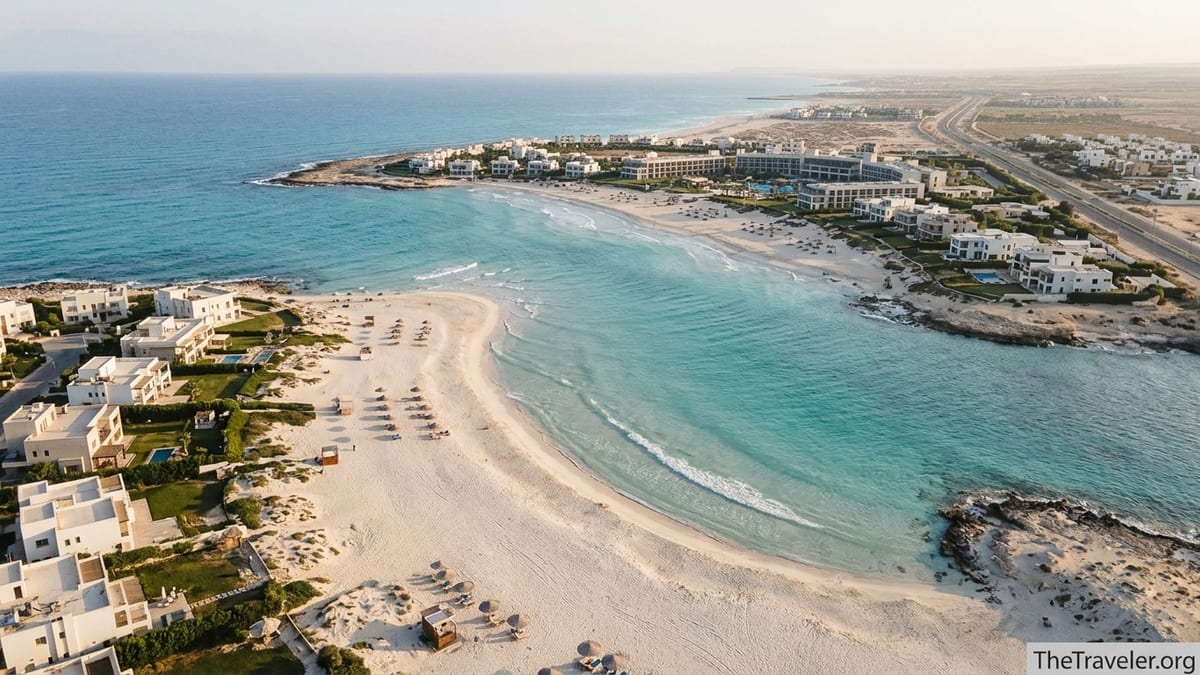
Roughly 130 kilometers west of Alexandria, the bay of Sidi Abdel Rahman has evolved into one of Egypt’s most in-demand resort zones. Here you find a string of gated communities and hotels such as the long-established Al Alamein Hotel and several modern beachfront resorts that face a wide azure bay. The sand is pale and soft, and in settled weather the sea is lagoon-like, with shallow entry in many sections that suits families with children.
Accommodation in Sidi Abdel Rahman tends to sit in the mid to high price brackets by Egyptian standards. Many properties focus on multi-bedroom villas, chalets or interconnected rooms, which is practical for multi-generational trips. Inside the larger developments you can expect landscaped pools, children’s play areas, beach clubs with loungers and umbrellas, and a mix of casual and higher-end dining. Some resorts open their beaches to day visitors for a fee, which in recent summers has often included a basic set of amenities such as a sunbed, towel and use of pools.
Just to the east, New Alamein City is emerging as a more urban complement to Sidi Abdel Rahman’s resort clusters. High-rise towers face the sea, and a growing number of branded hotels offer direct beach access combined with city-style dining and shopping. The beaches here are long and straight, with wide sections of groomed sand fronting the larger properties. This part of the coast works for travelers who want modern comforts, an easy resort environment and a relatively short drive from Borg El Arab Airport or Alexandria.
The main drawback of Sidi Abdel Rahman and Alamein is that access to the best sections of beach is usually controlled by private developments. If you are hoping to wander freely along an undeveloped shoreline, this is not the place. On the other hand, if your priority is clean, well-serviced beaches, ample shade, lifeguards and family-oriented facilities, this stretch of coast is one of the strongest all-round choices on Egypt’s Mediterranean in 2026.
Ras El Hekma: Turquoise Water, White Sand and the New Hotspot
Further west along the Alexandria–Marsa Matruh highway, the Ras El Hekma area has gained significant attention over the last few years. The coastline here is known for powdery white sand and unusually bright, clear water, with several resorts marketing themselves explicitly on the strength of the color and clarity of their bays. A rapidly expanding list of developments, from established brands to new villages such as Marsa Baghush, reflects intense investment aimed at turning Ras El Hekma into one of the flagship destinations of Egypt’s North Coast.
For travelers, what sets Ras El Hekma apart is the combination of natural beauty and a slightly more relaxed atmosphere compared to the busier sections nearer Alexandria. Many projects here incorporate lagoons and beach clubs, giving guests a choice between open sea and calmer, lagoon-style swimming. Properties like Azur White Resort emphasize the area’s tranquil setting and the distance from larger urban centers, with the highway distance from New Alamein usually noted in marketing materials to underline the “getaway” feel.
As of summer 2026, Ras El Hekma remains very much a work in progress. Construction is visible along several stretches of coast, and large-scale plans to develop an entirely new city here are still in the early phases on the ground. That said, completed resorts are already welcoming both overnight guests and day-use visitors, and early adopters value the relatively low density on the sand compared to older sections of Sahel. If you want the white-sand, turquoise-water experience and do not mind a longer drive from Cairo or Alexandria, Ras El Hekma is among the strongest contenders on the coast.
Because individual projects vary significantly in style and pricing, it is worth looking closely at the details before booking. Some complexes are firmly positioned in the luxury bracket, with upscale beach clubs and contemporary villas, while others aim more at local families wanting a simple summer retreat. The common denominator is the quality of the sea and sand, which is consistently one of the highlights mentioned by visitors.
Alexandria & Maamoura: Urban Mediterranean With Family-Friendly Corners
Alexandria offers a very different coastal experience from the resort strips farther west. Here, the sea is woven into the life of a busy Mediterranean city, with a mix of public and ticketed beaches lining the Corniche. The sand is generally darker and the water less intensely turquoise than in Ras El Hekma or Sidi Abdel Rahman, and the city’s scale and traffic mean this is not a secluded setting. Yet for travelers who want to pair beach time with museums, historic sites and café culture, Alexandria can be appealing.
Toward the eastern side of the city, Maamoura Beach has built a reputation as one of Alexandria’s better-managed sandy stretches. Promoted as a family-friendly area, Maamoura offers a neat sweep of sand, relatively clear water for an urban environment, and a cluster of services that include changing areas, cafés and organized loungers. Entrance is ticketed, which helps keep numbers in check, especially outside peak holiday dates. Nearby Montazah, with its historic palace and gardens, overlooks rocky and sandy sections where locals come to stroll and watch the sea, though direct beach access is more limited than at Maamoura.
Accommodation in Alexandria ranges from simple guesthouses to larger seafront hotels along the Corniche. Sea views are common, but not all properties have direct beach access; many guests simply walk or take short taxis to their chosen beach club. Prices for loungers and umbrellas at organized beaches in Alexandria are usually more modest than at North Coast resorts, though costs rise significantly at higher-end private beach clubs attached to hotels.
If your priority is bright turquoise water and powdery white sand, Alexandria will not compete with Marsa Matruh or Ras El Hekma. However, if you are traveling outside peak summer and want a mix of culture and afternoon swims, or you have limited time and prefer to stay close to a major city, Alexandria’s beaches, especially Maamoura and some sections east of the center, can offer a practical compromise.
Choosing the Right Area for Your Trip
When deciding between Marsa Matruh, Sidi Abdel Rahman, Ras El Hekma, Alamein and Alexandria, it helps to be clear about your main priorities. For the most striking white-sand and turquoise-water combination within Egypt’s Mediterranean, many locals will point you toward Marsa Matruh and the newer resorts of Ras El Hekma, especially for travelers who are willing to spend a little longer on the road from Cairo. These areas typically deliver the clearest water and softest sand, along with a slower pace when you move away from the most famous public beaches.
For families who want strong resort infrastructure and easy access to services, Sidi Abdel Rahman and New Alamein stand out. Here you are never far from a café, pharmacy or supermarket within a gated community, and many hotels have children’s clubs, shallow pools and lifeguarded beach zones. The trade-off is that prices in summer can be higher than in Marsa Matruh’s town beaches or Alexandria’s public stretches, and much of the shoreline is effectively privatized behind resort gates.
Travelers on a tighter budget, or those who value a sense of place as much as resort polish, may gravitate toward Marsa Matruh town or Alexandria. In both, you can mix beach time with local markets, traditional seafood restaurants and historic sites, and there is a wider range of price points for accommodation and food. The sea in Marsa Matruh is significantly clearer than in Alexandria, so if swimming and color of water matter more than nightlife or culture, Marsa Matruh usually wins that comparison.
Finally, consider your tolerance for crowds and traffic. In peak Egyptian holiday periods, especially late July and August, some North Coast resorts can feel intensely busy, with queues at beach entrances and packed parking areas. If you are flexible, scheduling your trip for late June or early September can bring noticeably calmer beaches while keeping sea temperatures pleasant, and it may also soften hotel rates slightly compared with the absolute peak weeks.
The Takeaway
Egypt’s Mediterranean coast offers a surprisingly wide range of beach experiences within a relatively short stretch of shoreline. Marsa Matruh delivers archetypal white-sand, clear-water bays that have long been cherished by Egyptians, while Sidi Abdel Rahman and New Alamein provide polished resort environments where families can settle in for a week of pool-and-beach routines. Ras El Hekma is emerging as the new hotspot, marrying standout natural beauty with ambitious resort projects that are still unfolding.
Alexandria and its nearby beaches, especially Maamoura, bring an urban twist, appealing to those who want to punctuate museum visits and café hopping with a few hours on the sand. No single destination is “best” for everyone; the right choice depends on how you balance budget, atmosphere, resort access and the importance you place on that classic turquoise, waist-deep water.
Whichever stretch of coast you choose, planning around the seasonal rhythm of the Mediterranean and understanding how access works, particularly in gated communities, will help you make the most of Egypt’s northern shores. With realistic expectations and a bit of research into specific resorts and beach clubs, you can find a corner of the coast that feels made for your kind of holiday.
FAQ
Q1. When is the best time of year to visit Egypt’s Mediterranean beaches?
The most reliable period for warm sea temperatures and fully operating resorts is from mid-June to early September, with late June and early September often slightly less crowded than late July and August.
Q2. Which area has the clearest turquoise water and whitest sand?
Many travelers and locals single out Marsa Matruh and the newer resorts around Ras El Hekma for particularly clear, bright turquoise water and very pale, soft sand, especially on calm days.
Q3. What is the best area for families with young children?
Sidi Abdel Rahman, New Alamein and several sections of Marsa Matruh are especially practical for families, thanks to shallow-entry beaches, lifeguards, kids’ pools and family-oriented facilities inside resorts.
Q4. Can non-guests access resort beaches on the North Coast?
In many cases yes, through paid day-use passes that grant access to a resort’s beach and pools. Availability, prices and what is included vary widely, so it is worth checking details with individual properties in advance.
Q5. How does Alexandria compare to the North Coast resorts for beach quality?
Alexandria’s beaches are more urban, with darker sand and generally less vivid water color than the western North Coast, but areas like Maamoura offer relatively clean, well-managed family beaches with easier city access and more varied sightseeing.
Q6. Do I need a car to enjoy Egypt’s Mediterranean beaches?
A car is very helpful for exploring Marsa Matruh, Ras El Hekma and parts of the North Coast, where many resorts sit along the highway. In Alexandria, taxis and ride-hailing apps are usually sufficient, while some resort clusters offer internal shuttles.
Q7. Are there quieter alternatives to the busiest North Coast resorts?
Yes. Around Marsa Matruh, coves near Umm El Rakham and less-publicized stretches west of town can be calmer. On the wider North Coast, some smaller developments and earlier- or later-season visits can also offer a quieter feel than the marquee resorts.
Q8. How expensive are beach holidays on the North Coast compared to the Red Sea?
High-end North Coast resorts can match or exceed Red Sea prices in peak summer, but Marsa Matruh town and Alexandria’s beaches often offer more budget-friendly options. Overall costs depend greatly on your choice of accommodation and season.
Q9. Is the Mediterranean coast suitable for confident swimmers and water sports?
Yes, although conditions can vary with wind and waves. In settled weather, many bays are excellent for swimming, with some resorts offering kayaking, paddleboarding and other activities. Always follow local safety advice and lifeguard guidance.
Q10. How far are the main beach areas from Cairo?
By road, Alexandria is typically around two and a half to three hours from Cairo in normal traffic, Sidi Abdel Rahman and New Alamein about three and a half to four hours, and Marsa Matruh and Ras El Hekma roughly five to six hours depending on the exact location and stops.