


Egypt’s Mediterranean coast offers two very different holiday experiences in Alexandria and Marsa Matruh. One is a lively, historic port city with a famous Corniche and cosmopolitan cafe culture. The other is a quieter resort town fronting lagoons that many Egyptians consider among the country’s most beautiful beaches. Choosing between them is less about which place is “better” and more about what kind of Mediterranean escape you want. This guide compares Alexandria and Marsa Matruh on attractions, beaches, hotels, food, transport, and who each destination suits best, so you can confidently pick the right base for your trip.
Overall Vibe: City by the Sea vs Quiet Beach Town
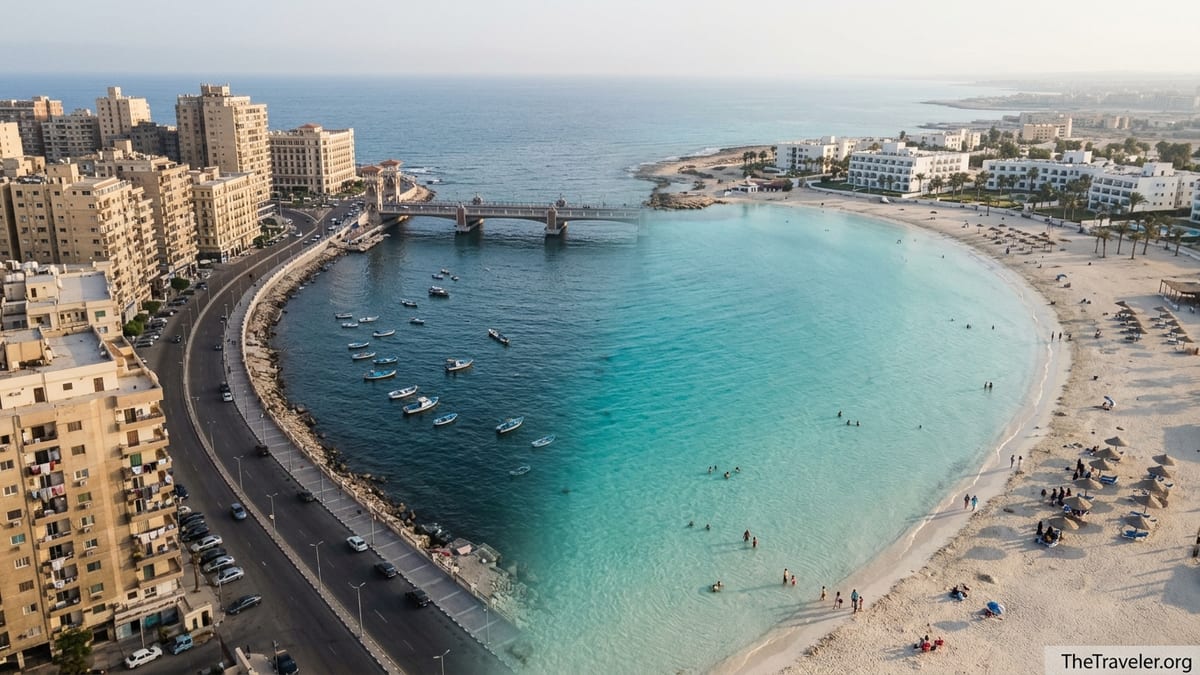
Alexandria is Egypt’s second city and feels like it. Along the Corniche you get constant traffic, tram bells, packed pavements and a skyline of weathered apartment blocks punctuated by grand hotels such as the Steigenberger Cecil and Four Seasons San Stefano. It is busy but atmospheric, with colonial-era facades, bookshops and old cafes lining streets behind the waterfront. In the evening, locals stroll Stanley Bridge for sea breezes, hawkers sell corn and ice cream, and the city feels energetic rather than purely touristic.
Marsa Matruh, about 300 kilometers west of Alexandria, has a much calmer character. The town spreads along wide, horseshoe-shaped bays of turquoise water, with shorter blocks, low-rise hotels and a noticeably slower pace, especially outside Egyptian school holidays. You are never far from a stretch of fine sand, yet traffic is modest and the main promenade feels more like a provincial town than a big resort. Many visitors are Egyptian families escaping Cairo’s summer heat, so the atmosphere is conservative but relaxed.
If you like cities that happen to sit beside the sea, Alexandria is the clear winner. If you want the sea to be the main event and are happy with a modest downtown, Marsa Matruh is closer to the classic “beach town” feel, just with more Arabic signage and fewer international chains.
Attractions and Things to Do
Alexandria offers significantly more to do away from the water. The modern Bibliotheca Alexandrina, built as a tribute to the ancient library, is one of Egypt’s most impressive contemporary buildings, with a vast reading room and a rotating program of exhibitions and events. The 15th century Qaitbay Citadel guards the harbor where the Pharos Lighthouse once stood, and its ramparts offer sweeping views of the Eastern Harbor and Corniche. Inland, the Catacombs of Kom El Shoqafa and the Roman Amphitheatre give you a compact Roman and early Christian history loop in a single afternoon.
Days in Alexandria can easily be filled by combining cultural visits with local life. A typical day might include a morning at the Bibliotheca Alexandrina, a seafood lunch at one of the harbor restaurants in Anfoushi, a stroll through the Montazah Palace gardens in the late afternoon, and sunset on Stanley Bridge. Cafes such as Trianon or Brazilian Coffee Store give a sense of the city’s literary and cosmopolitan heritage while you watch trams rattle past.
Marsa Matruh is more about natural scenery than monuments. The town’s main activities revolve around its different bays and viewpoints, such as Al Gharam Beach (Lover’s Beach), associated with classic Egyptian cinema, and Cleopatra Beach, where a rocky headland frames a sheltered cove of shallow, clear water. A bit further west, Ageeba Beach is famous for dramatic rock formations and bright turquoise shallows that feature regularly in Egyptian tourism posters. Apart from these spots, sightseeing is limited to local markets and small mosques, so most visitors swim, sunbathe, and perhaps add a day trip to a more upscale compound like Almaza Bay for a change of scene.
For travelers who get restless after one or two days on a lounger, Alexandria is a better fit. Marsa Matruh works when you are content with beaches, casual strolls, and maybe one or two short excursions rather than a packed cultural itinerary.
Beaches and Water: Clarity vs Convenience
Although Alexandria sits on the Mediterranean, it is not a pure beach destination. The Corniche has stretches of public sand but these are narrow and sit right below a major road, so they feel more urban than idyllic. Cleaner and more attractive options exist in the eastern suburbs around Stanley, Rushdi and San Stefano, where small private beach clubs offer sunbeds, umbrellas and basic facilities for a day fee that is often in the range of a few hundred Egyptian pounds per person, depending on the season and club. Further east, the Montazah area has some of the cleanest local beaches, framed by palace gardens and pine trees rather than tower blocks.
Water quality in Alexandria is decent enough for swimming in season, but it is not the crystal-clear blue you may associate with Mediterranean postcards. The city’s long industrial history and dense population mean the sea feels more like a pleasant bonus than a pristine wilderness. Most visitors treat Alexandria’s waterfront as somewhere to walk, people-watch and enjoy the breeze, not a place to spend an entire week on a sun lounger.
Marsa Matruh, on the other hand, is famous across Egypt for exceptionally clear, shallow, aquamarine water and fine, pale sand. The main city beach forms a calm lagoon protected from open-sea waves, making it ideal for children and less confident swimmers. Outlying spots such as Ageeba Beach showcase deeper blues and more dramatic scenery, while Cleopatra Beach offers a mix of rock platforms and sandy entries. On busy summer days you will still share these bays with many Egyptian holidaymakers, but the sea itself tends to be cleaner and more vivid than Alexandria’s.
If your priority is to swim in clear water and photograph classic Mediterranean blues without leaving Egypt, Marsa Matruh is the stronger choice. Alexandria’s beaches work as a supplement to a cultural city break rather than as the core reason to visit.
Hotels, Resorts and Price Levels
Alexandria’s hotel scene is anchored by a handful of well-established properties along the Corniche and in the eastern suburbs. The Steigenberger Cecil, a 1930s landmark overlooking Midan Raml, appeals to travelers who like historic hotels with sea views and central locations. The Romance Alexandria Hotel and similar mid-range options along the Corniche serve couples and business travelers who want a comfortable base within walking distance of both the waterfront and restaurants. At the upper end, the Four Seasons Hotel Alexandria at San Stefano offers resort-style facilities, including a private beach area, outdoor pools and a small marina, but still within an urban setting.
Room rates in Alexandria vary with season, but a mid-range double in a Corniche-front hotel can often fall somewhere in the moderate bracket compared with equivalent properties in Cairo, especially outside peak summer weekends. Budget travelers can find simpler guesthouses in side streets off the Corniche or near the Raml Station area, trading lifts and sea views for local atmosphere and easy access to trams and microbuses.
Marsa Matruh mixes classic city hotels with resort properties spread along the coastline. Within town you will find straightforward three and four star hotels catering mainly to domestic tourists, often with half-board packages and simple pool areas. Outside the town, more upmarket resorts line the coast, particularly towards Almaza Bay and similar developments, where beachfront hotels come with multiple pools, kids’ clubs and manicured stretches of private sand. Access to some high-end compounds can be controlled, so day visitors may need reservations at on-site restaurants or to be registered guests to use certain facilities.
Overall, Marsa Matruh can be good value if you opt for local-style hotels and travel outside the absolute peak of July and August, when prices rise sharply in response to domestic demand. For a consistently high international standard, Alexandria currently has more recognizable global brands, but Marsa Matruh can offer better direct beach access at equivalent price points, especially for families booking week-long packages.
Food, Nightlife and Local Culture
Alexandria is renowned in Egypt for seafood and cafe culture. Around the Eastern Harbor and Anfoushi, traditional fish restaurants allow you to pick fresh catch from ice-filled displays before it is grilled or fried, then served with rice, salads and tahini. Prices vary widely, but you can usually find options that feel affordable by international standards. Further along the Corniche, modern spots in San Stefano and Stanley mix coffee, mocktails and shisha with views of the bay, attracting a mix of locals, students and visitors.
Beyond the waterfront, Alexandria’s backstreets hold old patisseries, tiny sandwich shops and juice bars. A classic evening might involve a sunset walk along the Corniche, a plate of sayadeya (baked fish with caramelized onions and rice) in a harbor restaurant, and a late-night stop in a historic cafe with walls lined in faded framed photographs. Alcohol is available in some hotels and certain restaurants, but most nightlife is low-key and revolves around cafes, dessert shops and family strolls rather than bars or clubs.
Marsa Matruh’s dining scene is simpler and more focused on local crowds. You will find plenty of casual places selling grilled fish, calamari and shrimp, as well as shawarma, kofta and Egyptian fast food. Beach kiosks on the main bays sell snacks, cold drinks and simple meals, often at lower prices than equivalent seafront locations in Alexandria. In the evening, families head to the promenade for corn on the cob, ice cream and waffles while children play in small amusement areas.
Compared to Alexandria, there are fewer stand-out cafes or restaurants that visitors talk about long after their trip. Instead, the appeal is the combination of warm water, sunset light on the bay and the feeling of being in a very Egyptian seaside town rather than an international resort. Alcohol is less visible than in Alexandria and some hotels avoid serving it, so travelers who prioritize sundowner drinks and varied restaurant choices may feel more at home in Alexandria, while those focusing on family-friendly evenings will fit easily into Marsa Matruh’s rhythm.
Getting There and Getting Around
Reaching Alexandria from Cairo is straightforward, which is one reason it works so well for short trips. Trains depart Cairo’s Ramses Station frequently throughout the day and take roughly two and a half to three hours to Alexandria, with different classes and speeds available at varying price points. Many travelers instead choose intercity buses or private transfers arranged through travel agencies or ride-hailing platforms, which can be cost-effective for small groups and provide more flexibility on departure times.
Within Alexandria, the city stretches for many kilometers along the coast, but the Corniche acts as a simple backbone. Taxis, ride-hailing services and microbuses run this route constantly, and there is also a tram network, although visitors often find ride-hailing apps easier to navigate than deciphering tram lines. Walking is pleasant in central sections like from the Bibliotheca Alexandrina to the Cecil Hotel and onwards to the harbor, but you will likely combine strolls with short car rides to cover longer distances, especially to Montazah or San Stefano.
Getting to Marsa Matruh is more involved. From Cairo you are looking at a road journey of several hours, typically five to six by bus depending on traffic and rest stops. Long-distance bus companies operate services from Cairo to Marsa Matruh, especially during the summer season, and travel agencies commonly arrange private minibuses for families or groups heading there for a week-long stay. The town has an airport, but scheduled commercial flights have been very limited in recent years, so most visitors still arrive by road rather than by air.
Once you are in Marsa Matruh, most movement happens by taxi or on foot within the town. If you stay in a resort outside the center, you may rely heavily on hotel shuttles or pre-arranged drivers to visit Ageeba, Cleopatra Beach or the town’s markets. There is no tram or metro equivalent, and local minibuses can be difficult to navigate if you do not speak Arabic. As a result, Marsa Matruh is easiest when you are comfortable largely staying within one hotel or resort area and adding only a few planned excursions.
Best For Families, Couples and Trip Length
For families, Marsa Matruh’s calm lagoons and shallow bays are a strong draw. Parents with younger children appreciate the sheltered water, soft sand and relaxed rhythm of days spent moving between the beach, hotel pool and early-evening promenade. Many Egyptian families visit with grandparents and extended relatives, so it is normal to see big family groups and fully occupied beach umbrellas. Modest city attractions mean there is less pressure to sightsee, which can be a plus if children simply want to swim and play.
Alexandria can also work for families, especially with older children or teenagers who will appreciate the novelty of trams, markets and historic sites. A two or three night stay offers enough time for a mix of culture and sea air without anyone getting bored. However, its urban setting means you need to pay more attention when crossing roads and managing kids near busy parts of the Corniche, and beaches are less conveniently family oriented than in Marsa Matruh.
Couples face a different decision. If you enjoy city breaks with history, cafes and evening walks, Alexandria can feel surprisingly romantic, particularly around Montazah, the Bibliotheca area and the older blocks near the harbor. Watching the sun set behind the Western Harbor from Qaitbay Citadel or sipping coffee above the waves at Stanley Bridge can be as memorable as a day on a remote beach. Marsa Matruh, by contrast, suits couples seeking a quieter, slower-paced escape focused on swimming and early nights, with perhaps one or two excursions to photogenic spots such as Ageeba.
In terms of trip length, Alexandria works very well for one to three nights, either as a stand-alone weekend from Cairo or as a break in a longer Egypt itinerary that might include Cairo and the Nile Valley. Marsa Matruh makes more sense as a four to seven night stay, partly because of the longer travel time from Cairo and partly because its appeal lies in unhurried days by the sea rather than intensive sightseeing.
The Takeaway: Which Destination Should You Choose?
If your Mediterranean Egypt trip is your only time on the coast and you want both culture and sea views, Alexandria is usually the better first choice. It offers a dense bundle of experiences in a compact area: major modern and historic landmarks, classic seafood dinners, atmospheric old cafes and a waterfront promenade that is busy until late. You can reach it relatively easily by train or bus from Cairo, and even a short stay of two nights gives a strong sense of place.
Choose Marsa Matruh when your priority is beach time in clear water and you do not mind that the town itself is quiet. It is best for families with children, couples who want to switch off and travelers who have already had their fill of museums and monuments elsewhere in Egypt. Because of the longer road journey, it shines as a week-long base rather than a quick side trip.
For many travelers, the ideal scenario is to combine both: a few nights in Alexandria to enjoy its layered history and Corniche, followed by several days in Marsa Matruh or a nearby resort compound to focus purely on swimming and rest. If you have to pick just one, ask yourself a simple question. Do you picture your Mediterranean Egypt memories as cafe tables and citadels above a lively harbor, or as a sheltered bay of light-blue water and quiet evenings on hotel balconies? If it is the former, head to Alexandria. If it is the latter, Marsa Matruh is your spot.
FAQ
Q1. Is Alexandria or Marsa Matruh better for a first-time visitor to Egypt?
Alexandria is generally better for first-time visitors because it combines accessible history, city life and a manageable coastline, and is easier to reach from Cairo by train or bus.
Q2. Which destination has nicer beaches, Alexandria or Marsa Matruh?
Marsa Matruh has the edge for beaches, with clearer turquoise water, sheltered lagoons and fine sand that are better suited to full beach days than Alexandria’s urban shoreline.
Q3. Can I visit Alexandria and Marsa Matruh in one trip?
Yes, many travelers spend two or three nights in Alexandria for culture and then four to seven nights in Marsa Matruh for beach time, usually transferring between them by private car or bus.
Q4. How many days do I need in Alexandria?
Two full days in Alexandria are enough to see key sights such as the Bibliotheca Alexandrina, Qaitbay Citadel and Montazah, while still enjoying seafood meals and Corniche walks.
Q5. Is Marsa Matruh suitable if I do not speak Arabic?
Marsa Matruh is manageable without Arabic, especially in hotels and resorts, but English is more widely used in Alexandria, which can make daily logistics slightly easier there.
Q6. Which place is more budget friendly?
Both can be affordable, but Marsa Matruh’s simple local hotels and casual eateries can work out slightly cheaper for week-long stays, while Alexandria offers a wider price range and more international-standard options.
Q7. Is it safe to swim in the sea in both destinations?
In season, locals routinely swim in both. Marsa Matruh’s bays are especially calm and shallow, while in Alexandria you should stick to designated beaches and heed local advice on currents and conditions.
Q8. Which destination offers better food?
Alexandria has the broader and more distinctive food scene, especially for seafood and historic cafes, though Marsa Matruh still serves fresh fish and classic Egyptian dishes in a more low-key setting.
Q9. Do I need a car in Alexandria or Marsa Matruh?
You do not need a car in Alexandria thanks to taxis and ride-hailing services along the Corniche. In Marsa Matruh, a car or pre-arranged transfers help if you are staying outside town or want to visit multiple beaches.
Q10. When is the best time of year to visit Alexandria and Marsa Matruh?
Late spring and early autumn are ideal for both, with warm weather and fewer crowds. High summer brings hotter temperatures and more domestic visitors, especially to Marsa Matruh’s beaches.