

Egypt’s Mediterranean coast is changing fast. Long a summer escape for Cairenes, the strip from Alexandria to Marsa Matruh is now a mix of historic port city, family-friendly beach towns and ambitious new resort megaprojects such as New Alamein and Ras El Hekma. For first-time visitors, it can be hard to decode what each area offers, how to move between them, and what to budget. This guide breaks down the main coastal hubs, typical costs and timelines, and how to build a realistic first itinerary that balances sea, history and new development.
Understanding Mediterranean Egypt’s North Coast
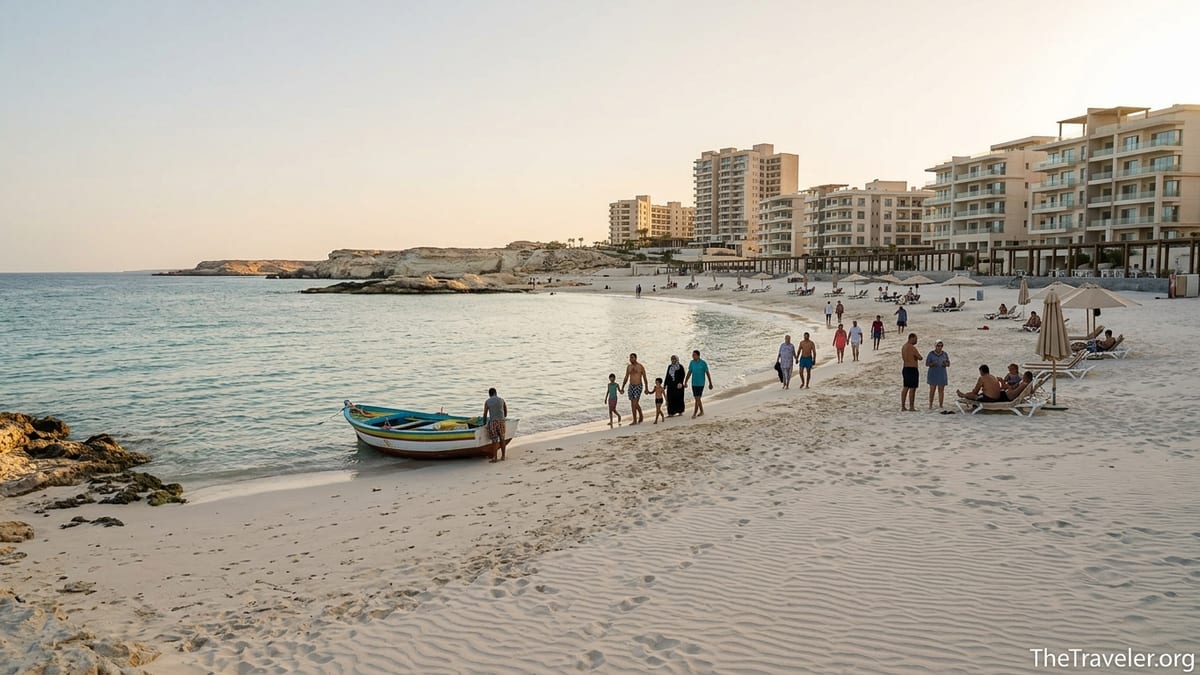
Locally known as the Sahel, Egypt’s Mediterranean shore stretches roughly 500 kilometers from Alexandria in the east to Marsa Matruh and beyond in the west. Thanks to cooling sea breezes, summer here is noticeably milder and more humid than in Cairo or Luxor, with daytime highs often in the low 30s Celsius and cooler evenings. Alexandria remains the historic anchor, with a working port, museums and the famous Corniche. West of the city, a ribbon of beach communities and gated resorts runs past El Alamein, Sidi Abdel Rahman and Ras El Hekma toward Marsa Matruh, many built as private Egyptian holiday compounds that are gradually opening up to international visitors.
Development is accelerating. New Alamein has been planned as a year-round “fourth generation” city with high-rise towers, a 14 kilometer beach frontage and large-scale tourism projects, and was named Arab Summer Capital for 2025 by the Arab Tourism Organization, underlining its role as a key regional seaside destination. Farther west, Ras El Hekma is the focus of a multibillion-dollar Egypt–UAE megaproject that aims to transform what was a small Bedouin area into a full-scale coastal city with hotel clusters, residential zones and a planned international tourist port. This changing backdrop means first-time visitors can combine classic Mediterranean experiences with a front-row view of one of the Middle East’s largest coastal redevelopments.
For trip planning, think of the coast in four main segments. Alexandria offers urban life, culture and city beaches. The stretch between Borg El Arab and El Alamein is dotted with older local resorts and villa compounds. New Alamein, Sidi Abdel Rahman and Ras El Hekma are home to newer, more polished resorts and branded beach clubs. Marsa Matruh, near the Libyan border, retains a simpler, more local feel, with turquoise bays like Agiba and Ageeba Beach that often appear in Egyptian tourism campaigns. Deciding which of these zones suits your style and time frame is the first step toward a smooth itinerary.
Alexandria: Historic Port With a Local Beach Scene
Alexandria is the easiest Mediterranean entry point for most visitors. Trains from Cairo Ramses Station to Alexandria’s Misr Station typically take 2.5 to 3 hours, with standard class tickets often priced in the range of the cost of a casual Cairo cafe meal for one, and first-class seats still affordable by European standards. Buses operated by national and private companies also connect Cairo and Giza to Alexandria, though they can be slower in summer traffic on the desert highway. From Alexandria’s center, ride-hailing apps and metered yellow taxis offer reliable transport along the waterfront.
First-timers usually base themselves along or near the Corniche, the sweeping seafront boulevard that arcs around Alexandria’s Eastern Harbor. The Corniche has been gradually widened to accommodate more car lanes, and as a result many small public beaches sit below the road level with stairway access. These beaches are busy, local and inexpensive, with sunbed rentals and tea kiosks rather than polished beach clubs. For a more relaxed swim, many visitors opt for hotel-managed beaches attached to midrange and upscale properties in areas like Stanley or San Stefano, where a day-use pass might be comparable to a mid-priced restaurant meal in Cairo and includes a lounger and changing facilities.
Beyond the sand, Alexandria offers enough culture to fill two or three days. The Bibliotheca Alexandrina, a striking modern library and cultural center, hosts exhibitions and guided tours. Qaitbay Citadel guards the harbor on the site of the ancient Lighthouse of Alexandria. Inland, the Catacombs of Kom El Shoqafa and the Roman Amphitheatre add archaeological depth to a beach-focused itinerary. In the evening, local families and couples stroll the Corniche, buying grilled corn, ice cream and cups of sugarcane juice from street vendors while the sun sets over the harbor. For first-time visitors, this mix of city life and sea views gives a gentler introduction to Mediterranean Egypt than heading straight into isolated resort compounds.
New Alamein and the Modern North Coast Resorts
Roughly 100 kilometers west of Alexandria lies El Alamein and, alongside it, New Alamein City. What was once primarily known for World War II cemeteries is now a focal point of Egypt’s coastal reinvention. New Alamein features clusters of residential and hotel towers, landscaped public beaches and a long, continuous boardwalk lined with cafes and restaurants. During high summer, Egyptian and Gulf families fill seafront cafes, while music drifts from beach clubs that resemble those found in parts of southern Europe. Many of the coastal towers and compounds are still partly under construction, so visitors will see cranes on the skyline, but sections of the beach and promenade are already fully operational.
Accommodation spans simple serviced apartments to branded resorts with large lagoon pools. In peak summer months, nightly rates at a modern seafront hotel in New Alamein can be comparable to prices in established Mediterranean destinations, especially on weekends and holidays, while shoulder-season stays in May, early June or late September are often substantially cheaper. Several compounds, such as Marina, Hacienda Bay and other long-standing North Coast communities near Sidi Abdel Rahman, operate like small towns in summer, with internal shuttle buses, small supermarkets, pharmacies and casual restaurants. International visitors may find that booking through recognized global hotel brands or large local hotel companies provides clearer information in English and more predictable service standards than renting a private chalet via local classifieds.
West of New Alamein, the coastline around Sidi Abdel Rahman and Ras El Hekma has become associated with higher-end gated resorts. Brands like Mountain View, Palm Hills, Tatweer Misr and others market Greek- and Mediterranean-inspired compounds with whitewashed architecture, artificial lagoons and upscale beach clubs. Day-pass access is sometimes available to non-residents, particularly at branded clubs and restaurants, but policies vary widely between resorts and can change from year to year. First-time visitors should always confirm in advance whether outside guests are admitted and what the day-use fee includes. In many cases, a day at a fashionable beach club, including entry, lounger and food, can easily match the cost of a decent hotel room in Alexandria, so it is wise to budget accordingly.
Ras El Hekma and Marsa Matruh: The New Frontier
Ras El Hekma, around 200 kilometers west of Alexandria, is at the heart of one of Egypt’s most significant tourism and real estate initiatives. A large-scale agreement between Egypt’s government and partners from the United Arab Emirates has earmarked tens of billions of dollars to develop the area into a full-fledged coastal city with residential districts, hospitality zones and a planned tourist port. Developers such as Modon Holding have announced projects like the Wadi Yemm precinct and a partnership with well-known luxury brands, while separate resort communities including La Vista Ras El Hekma, Fouka Bay, Hacienda, Naia Bay and others market private villas, chalets and boutique hotels along turquoise bays.
On the ground, Ras El Hekma still feels seasonal and partially under construction, but the natural setting is striking. The coastline is known for pale, soft sand and clear water that can appear almost Caribbean in calm weather. Many resorts cluster along the Alexandria–Marsa Matruh road, with signage at kilometer markers (for example, “KM 191” or “KM 205”), and several benefit from the Fouka Road, a newer highway link that shortens the drive from Cairo to around three hours in good traffic. For now, most accommodation is oriented toward Egyptian second-home owners, but a growing number of developments are courting international guests with hotel components and English-language marketing.
Farther west, Marsa Matruh marks the last major Mediterranean town before the Libyan border. Traditionally a domestic holiday spot, the town is famous for bays such as Agiba, where a rock arch frames bright blue water, and for long stretches of public beach. Facilities here are simpler than in New Alamein: three-star hotels, family-run guesthouses and basic furnished apartments are common, and prices for meals and services are generally lower than in the newer gated resorts. Public beaches can be extremely busy in July and August, with rows of plastic chairs and umbrellas, vendors selling snacks and beach toys, and loud music. For a quieter experience, visitors often target early morning swims, shoulder-season visits in late spring or early autumn, or paid access to hotel-operated sections of the coast.
At present, there is no direct rail line that hugs the entire coast from Alexandria to Marsa Matruh with frequent tourist-friendly services, so most travelers use a combination of private cars, shared microbuses and scheduled coaches along the coastal highway. Travel times between Alexandria and Marsa Matruh are commonly in the 4 to 5 hour range by road, depending on the number of stops and summer traffic. While the region is generally safe and heavily policed, checkpoints along the route are normal, and drivers will be asked to show identification and car documents.
Getting Around: Transport, Seasonality and Weather
For a first-time visitor, the most straightforward approach is to arrive in Cairo, spend a day or two, then take the train to Alexandria and continue west by road. Train tickets can often be purchased online, at stations or through authorized agents, but during summer weekends and national holidays it is sensible to book at least a few days in advance, as popular departures sell out. The Alexandria–Cairo line is one of the country’s busiest, and while older rolling stock still runs, newer air-conditioned trains are increasingly common. From Alexandria, private transfer services, ride-hailing apps and intercity bus operators offer connections to El Alamein and New Alamein, while Ras El Hekma and Marsa Matruh are more easily reached by prearranged car or long-distance coach.
Driving the North Coast in a rental car is possible, but first-timers should be aware of local road habits. Speeding and sudden lane changes are common, and night driving can be tiring due to bright headlights and occasional unlit stretches. International visitors who are not confident in these conditions may prefer to hire a car with driver for longer transfers. In resort towns, many visitors get around on foot or by golf cart or internal shuttle within compounds, using local taxis or ride-hailing for longer trips to supermarkets or nearby attractions.
Weather is one of the main reasons to choose Mediterranean Egypt. From late May to early October, daytime highs are typically warm but tempered by sea breezes, and evenings are pleasant. Humidity can rise in August, but compared with Cairo or Upper Egypt the heat is generally easier to manage. Sea temperatures are comfortable for swimming for much of this period. Winter brings cooler, sometimes rainy conditions, particularly in Alexandria, which can see wind and occasional storms. Many seasonal resorts on the North Coast partially close or scale back services outside of June to September, so if you are planning a late autumn or winter trip it is important to confirm which facilities will be open. New Alamein and central Alexandria, with more permanent populations, are better suited to off-season stays than isolated beach compounds.
When budgeting time, many first-time visitors underestimate travel days. A practical one-week itinerary might allocate two or three nights in Alexandria, two in New Alamein or Sidi Abdel Rahman and two in one of the quieter resorts near Ras El Hekma or in Marsa Matruh, with travel days in between. For a long weekend from Cairo, spending the entire time in Alexandria or New Alamein avoids excessive time on the road. Allow extra time for Friday traffic out of Cairo in summer and for busy Sunday returns.
Costs, On-the-Ground Practicalities and Safety
Costs on Egypt’s Mediterranean coast vary sharply between local-oriented towns and luxury compounds. In Alexandria, a modern midrange hotel in a central area such as Sidi Gaber or San Stefano may cost the equivalent of a mid-tier European city hotel in shoulder season and more in peak summer, with breakfast often included. Simple two- and three-star hotels along the Corniche or in Bahari can be much cheaper, especially outside August. A typical sit-down meal in a local seafood restaurant, such as grilled sea bream or shrimp with mezze and soft drinks, might cost what you would pay for a casual restaurant dinner in a mid-priced Eastern European capital. Street food, including falafel sandwiches, koshari and shawarma, is inexpensive by international standards.
In New Alamein and the high-end North Coast resorts, prices can rise quickly. Beach clubs may charge a substantial day-use fee per person that includes a sunbed and minimum spend, while cocktails, imported wines and gourmet dining are often priced closer to Western Mediterranean levels. Renting a private chalet or villa in a sought-after compound during Eid holidays or August school breaks can be significantly more expensive than a similar-sized apartment in Alexandria, though sharing with a group of friends or an extended family reduces per-person costs. Conversely, smaller towns such as Marsa Matruh often offer more modest hotel and restaurant prices, though choices may be more limited and decor more basic.
Foreign cards are accepted at many hotels, malls and larger restaurants, especially in Alexandria and New Alamein, but smaller beaches, street vendors, local taxis and some family-run eateries remain cash-oriented. ATMs are available in most urban areas and larger resorts. It is sensible to carry small notes for tipping, beach chair rentals and quick snacks. Tipping expectations are similar to the rest of Egypt: modest but regular. Rounding up taxi fares, leaving a small gratuity in cafes and tipping hotel and beach staff for good service are appreciated.
From a safety perspective, the North Coast is heavily patrolled and considered secure for tourists. Visible police presence around Alexandria’s main sights and along the coastal highway is normal. Standard urban precautions apply: keep valuables out of sight, use hotel safes when available and be mindful of bags on crowded beaches and public transport. Dress on the Mediterranean coast is generally relaxed compared with some other parts of Egypt, particularly inside private resorts where beachwear is the norm. In public town beaches, many local women swim in modest swimwear such as full-body suits, and visitors who choose similar styles may feel more comfortable. Alcohol is typically served in hotel bars and licensed restaurants but not in all local venues, so those who wish to drink should plan around hotel facilities or venues that clearly list alcoholic beverages on the menu.
First-Time Planning: Itineraries and What to Expect
For a first trip focused on the Mediterranean rather than the Nile Valley, a common approach is to combine Alexandria’s history and nightlife with a few days at a resort farther west. A five-night itinerary might look like this: arrive in Cairo and immediately board a train to Alexandria, spend two nights exploring the Corniche, Bibliotheca Alexandrina and Qaitbay Citadel, then transfer by private car or bus to New Alamein for two nights in a modern resort. Finish with a night in Alexandria or at Borg El Arab Airport before flying out. This keeps transfers reasonable while giving a taste of both city and resort life.
Travelers with more time might push west to Ras El Hekma or Marsa Matruh. For example, after Alexandria, spend two nights in Sidi Abdel Rahman or Ras El Hekma to enjoy quieter beaches and night skies with fewer city lights, then continue to Marsa Matruh for a further two nights exploring Agiba Beach and nearby bays. Returning directly from Marsa Matruh to Cairo by road is possible but makes for a long day, so some visitors prefer to break the trip with a night back in New Alamein or Alexandria. As infrastructure improves and more hotels open in Ras El Hekma, it is likely to become an increasingly popular standalone base for international travelers.
Expect some rough edges. Many North Coast developments are works in progress, with active construction zones, incomplete landscaping and limited off-season services. Maps and reality can diverge, as some advertised restaurants or facilities may not yet be operating or might only open during peak summer. When booking accommodation, it is wise to check recent guest reviews and to confirm by message which amenities are currently available, including pool access, beach shuttles and on-site dining. For those who enjoy exploring beyond resort gates, renting a car with driver for a day to visit nearby bays, war cemeteries around El Alamein or archaeological sites such as Marina el-Alamein can add variety.
Finally, remember that Mediterranean Egypt differs from the Red Sea resorts like Hurghada or Sharm el Sheikh. Snorkeling and coral reefs are far less prominent here, but the sense of being in a living, evolving part of Egypt is stronger. You are more likely to share a table with local families in a fish restaurant, wander through busy summer markets selling beachwear and home goods, or join Alexandrians on their nightly Corniche stroll. For first-time visitors who want sea and sand alongside an introduction to everyday Egyptian life, the North Coast is an increasingly compelling option.
FAQ
Q1. When is the best time to visit Egypt’s Mediterranean coast?
The most comfortable months are typically late May to early July and September to early October, when the weather is warm, the sea is pleasant and crowds and prices are lower than in peak August.
Q2. How many days do I need for a first-time North Coast trip?
A long weekend is enough for Alexandria alone, but to combine the city with a resort area most visitors find 5 to 7 days ideal, allowing time for transfers and at least three full beach days.
Q3. Is it easy to visit the North Coast without speaking Arabic?
In Alexandria, New Alamein and major resorts, many hotel staff and younger people speak at least some English, and signage is often bilingual. In smaller towns like Marsa Matruh, English is less widely spoken, but patient communication, translation apps and basic phrases are usually sufficient.
Q4. Can I swim comfortably on public beaches, or do I need a resort?
You can absolutely swim on public beaches, especially in Alexandria and Marsa Matruh, but expect crowds, modest dress norms and basic facilities. Resorts and hotel beaches offer more space, privacy and amenities at a higher cost.
Q5. What should I budget per day on the Mediterranean coast?
Budgets vary, but as a loose guide, budget travelers in Alexandria can often manage on a modest daily amount covering a basic hotel, local meals and transport, while midrange travelers in New Alamein or upscale resorts might spend several times that once resort dining and beach clubs are included.
Q6. Is it safe to drive from Cairo or Alexandria to the North Coast?
The main highways are well used and patrolled, and many Egyptians drive them regularly. However, driving styles can be assertive, and some visitors prefer hiring a car with driver or using buses and transfers rather than self-driving, especially at night.
Q7. Do I need to book accommodation in advance?
In July, August and during religious holidays, advance booking is strongly recommended, particularly in popular compounds and beachfront hotels. Outside of peak times, you may find more flexibility, but booking at least your first nights in each destination is wise.
Q8. Are there alcohol restrictions on the North Coast?
Alcohol is widely available in hotel bars, some restaurants and licensed bottle shops, especially in Alexandria and resort areas. Many local eateries and public beaches are alcohol-free, so those wishing to drink should plan around hotel venues or clearly licensed establishments.
Q9. Can I combine the Mediterranean coast with other parts of Egypt in one trip?
Yes. Many visitors pair a week in Cairo and the Mediterranean with a separate side trip to Luxor, Aswan or the Red Sea. With careful planning, two weeks is enough to include the main Nile highlights plus several days on the North Coast.
Q10. What should I pack for a Mediterranean Egypt trip?
Light clothing, a hat, sunscreen and conservative cover-ups for towns and public beaches are essential. Swimwear for resort areas, comfortable walking shoes for city sightseeing and a light jacket for breezy evenings, especially outside midsummer, are also useful.