


The Red Sea coast of Egypt is one of the world’s most varied seaside playgrounds, stretching from the Gulf of Aqaba in Sinai down to the remote southern reefs near the Sudanese border. The challenge for many travelers is not whether to go, but where to base themselves. From high-energy resort cities and family friendly marinas to barefoot diving towns and quiet luxury bays, each stretch of coast offers a different kind of holiday. This guide compares Hurghada, Sharm El Sheikh, Marsa Alam, Dahab, El Gouna, Soma Bay, Makadi Bay, Safaga and Port Ghalib to help you choose the right Red Sea base for beaches, reefs, resorts, diving, families, couples, nightlife and luxury.
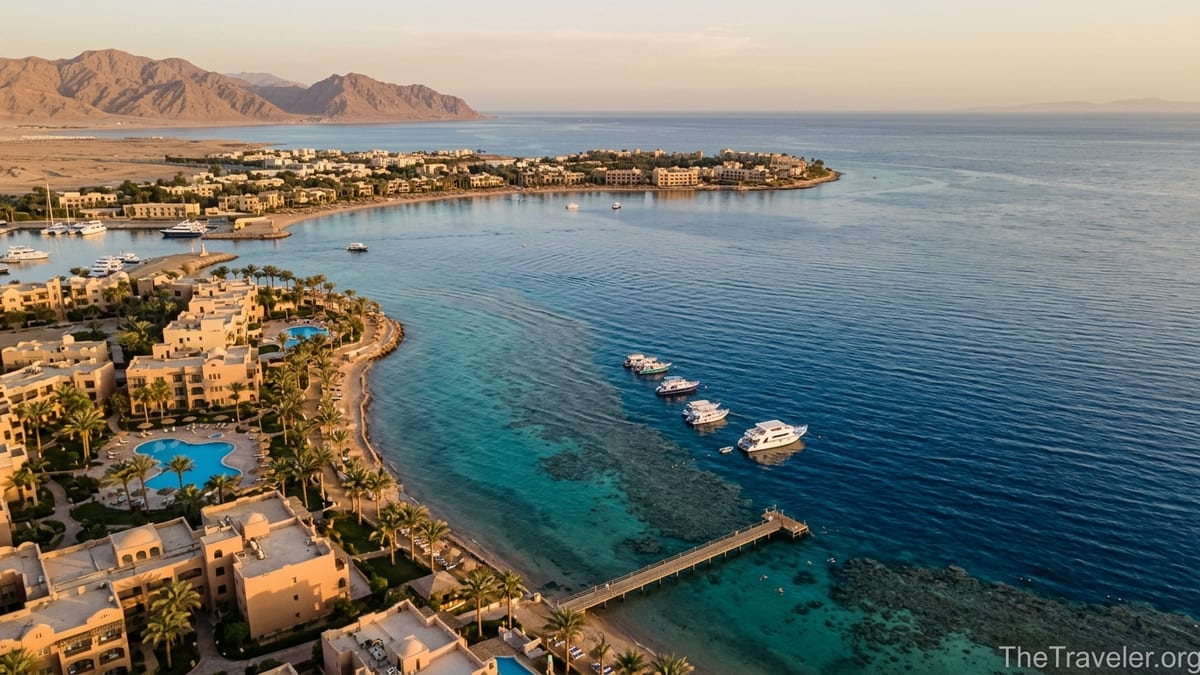
How the Egyptian Red Sea Coast Is Laid Out
Understanding the basic geography of Egypt’s Red Sea helps you make sense of the different resort names that appear in brochures. There are two main zones: the Sinai Peninsula on the Asian side of the Red Sea, where Sharm El Sheikh and Dahab sit along the Gulf of Aqaba and the southern tip of Sinai, and the African mainland coast that runs south from Hurghada past El Gouna, Soma Bay, Makadi Bay, Safaga and on to Marsa Alam and Port Ghalib. Distances are significant, so it is hard to “sample everything” in one short trip without flying or long transfers.
Most short beach holidays focus on either Sharm El Sheikh in Sinai, or the Hurghada area and its satellite bays. Hurghada acts as a hub, with an international airport that feeds not only the city but also El Gouna to the north, and Soma Bay, Makadi Bay and Safaga to the south. Marsa Alam and Port Ghalib form a second cluster further down the coast, reached by Marsa Alam International Airport or a long coastal drive from Hurghada. Dahab is normally reached via Sharm El Sheikh Airport followed by a road transfer of around one and a half to two hours.
Climate is reliably sunny and dry throughout the region, but there are differences in wind and sea conditions. The El Gouna and Soma Bay areas are known for consistent winds that attract kitesurfers, while the Sinai reefs around Sharm and Dahab can see stronger currents that experienced divers seek out. Families with small children tend to prefer the more sheltered sandy entries at Hurghada, Makadi Bay and some Marsa Alam coves, where the reef lies just beyond a band of shallow lagoon water.
Hurghada and Its Bays: All Rounder for Families and First Timers
Hurghada has grown into one of Egypt’s busiest resort areas, with an international airport, long strips of hotels, a modern marina and easy boat access to offshore reefs such as Giftun Island. In practical terms this means competitive package prices, plenty of all inclusive resorts and a wide choice of dive centers. Travelers who want a straightforward winter sun break often pick Hurghada because flights from Europe are frequent and transfers to most hotels take 10 to 30 minutes.
The beaches around Hurghada itself vary from natural sand to manmade lagoons, but many large resorts stretch out along long, gently shelving sands that suit children. For example, several family oriented hotels south of the city offer shallow entry with a jetty that takes snorkellers out to the drop off, so parents and older kids can drift over coral while younger ones paddle near shore. Excursions to Giftun’s popular beach clubs, where soft sand shelves into turquoise water with offshore patch reefs, are sold in hotel lobbies almost every day.
Hurghada also works well as a base for families or mixed groups who want more than just the beach. In the evening, the New Marina and Sheraton Road areas fill with people strolling the promenade, visiting ice cream parlors, casual seafood restaurants, shisha cafes and a sprinkling of bars and clubs. You can book quad biking into the Eastern Desert, day trips by bus or minivan to Luxor for the temples of Karnak and the Valley of the Kings, or glass bottom boat rides for non swimmers who still want to see coral and fish.
For visitors who prefer a more self contained feel, the satellite bays around Hurghada each have their own character. El Gouna, about half an hour north, is an upmarket, master planned lagoon town with a marina, golf course and a strong reputation for kitesurfing and nightlife. To the south, Makadi Bay clusters a series of resort hotels around a sandy bay with good house reefs, while Soma Bay offers a smaller, quieter peninsula with a handful of higher end properties, a marina, spa facilities and a reputation for flat water and reliable wind that appeal to both kitesurfers and wellness focused travelers.
Sharm El Sheikh: Polished Resorts, Iconic Reefs and Nightlife
Sharm El Sheikh on the southern tip of Sinai is Egypt’s original Red Sea flagship resort and remains the top choice for travelers who prioritize diving and nightlife in a single base. A dedicated international airport serves large beach resorts spread along Naama Bay, Sharks Bay and Nabq Bay, with protected marine areas such as Ras Mohammed National Park and the Straits of Tiran reached by daily dive and snorkel boats. Many hotels in Sharm are built directly on top of fringing reef, with jetties leading out over colorful coral gardens that drop into deeper blue water teeming with anthias, butterflyfish and occasionally turtles.
Diving around Sharm is considered among the best accessible reef diving in the region, with steep walls, strong colors and frequent currents that attract schooling fish. Day boats reach sites like Shark Reef and Yolanda Reef at Ras Mohammed, where advanced divers often drift along vertical drop offs while beginners stay shallower along the reef plateau. Wreck enthusiasts sometimes combine a Sharm stay with a long day trip or overnight mini liveaboard to the famous Thistlegorm wreck further to the northwest.
On land, Sharm has more of an international resort feel than most Egyptian towns. Naama Bay remains the classic tourism strip lined with restaurants, souvenir shops and venues that stay open late, while areas like Soho Square by the airport focus on polished dining, bars and family entertainment with fountains and ice rinks. Prices range widely, from inexpensive all inclusive packages that draw European charter flights to upscale branded properties with private beaches, large pools and spa facilities that compete with Mediterranean or Gulf resorts.
For families, the trade off in Sharm is that many hotels have steep or stepped access down to the water and immediate reef at the shoreline. This delights snorkellers, who can climb down the jetty steps into clear water above coral, but means very small children often end up in the pool rather than in the sea. Travelers with toddlers who mainly want to paddle in soft sand may find it easier to use the few sandy coves in Sharm itself or choose Hurghada, Makadi Bay or a sandy Marsa Alam cove instead.
Marsa Alam and Port Ghalib: Quiet Coasts and Serious Reefs
South of Hurghada, the coast becomes less developed and more focused on nature and diving. Marsa Alam is the informal name for a long stretch of shoreline anchored by Marsa Alam town and Port Ghalib marina further north. An international airport serves the region, although many visitors still arrive via Hurghada then transfer for around four to five hours along the coastal highway, which is worth factoring into itineraries with small children or limited time.
This relative remoteness is part of the appeal. Resorts are more spaced out, and many sit in natural bays where seagrass meadows and fringing reefs shelter turtles and sometimes dugongs. Abu Dabbab, one of the best known bays, is famous among snorkellers for repeat turtle sightings in shallow water and the chance, if you are fortunate, of glimpsing a dugong grazing on seagrass further out. Coral quality is often excellent, especially on outer reefs reached by boat such as Elphinstone, a long, current swept reef where experienced divers go in the hope of seeing oceanic whitetip sharks in season.
Port Ghalib itself is a manmade marina town with a promenade, cafes and a mix of midrange and upscale hotels that serve as bases for diving. From here, daily boats head to nearby reefs while liveaboards depart for the deep south itineraries that explore remote sites closer to the Sudanese border. For a typical week long stay, many visitors split their time between relaxed days on the house reef, where you can snorkel straight from the jetty, and one or two full day boat trips that include lunch on board and three dives or extended snorkel stops.
On land, Marsa Alam is quiet. There are fewer independent restaurants, shops and nightlife options than in Hurghada or Sharm, and some resorts are quite isolated with little around them but desert and sea. This suits travelers who want to disconnect, watch stars at night and wake early for diving. Couples often choose smaller, low rise beachfront hotels with a strong house reef, while keen underwater photographers and advanced divers treat the region almost as a base camp for intensive reef exploration rather than a classic resort holiday.
Dahab and Safaga: Relaxed Towns for Divers and Kite Surfers
Dahab, on the east coast of Sinai, has a very different atmosphere from Sharm El Sheikh despite being only a couple of hours away by road. Originally a Bedouin fishing village and later a backpacker hangout, it has gradually added more guesthouses and small hotels while keeping a relaxed, pedestrian friendly seafront lined with simple restaurants and cafes. Many dive centers are clustered right on the waterfront, and shore diving is a big part of Dahab’s appeal, with famous sites such as the Blue Hole and the Canyon reached by jeep or pickup from town.
For travelers, Dahab is a strong choice if you prefer a low rise, lived in feel over big all inclusive resorts. You can walk along the promenade in the evening choosing between Egyptian, Levantine and international food, or sit on low cushions by the water. Prices for accommodation and meals are often lower than in Sharm or Hurghada, especially outside peak holiday periods. The town is also popular with wind and kitesurfers thanks to reliable winds and suitable lagoons north of the main bay, so it works well for active travelers and longer stays.
On the African mainland, Safaga lies south of Hurghada and serves as a quieter diving base with some simple resorts and small hotels. Its port history and more modest tourism development mean the town itself feels less polished than Hurghada, but offshore reefs are highly regarded by divers, and the Safaga and Soma Bay area is often described as Egypt’s third major diving zone after Hurghada and Sharm. Boat trips visit coral gardens, drop offs and a handful of wrecks, while shore based divers enjoy house reefs where vibrant hard corals and reef fish are the main draw.
Safaga also has a niche reputation among wellness travelers because of its black sands and mineral rich waters, which some visitors seek out for therapeutic treatments combined with spa stays. It does not offer the marina promenades or nightlife of El Gouna or Hurghada, but for those who value peaceful evenings, long dives and perhaps a few wellness sessions, it can be a rewarding alternative.
El Gouna, Soma Bay and Makadi Bay: Lifestyle, Wellness and Easy Luxury
El Gouna, Soma Bay and Makadi Bay are three purpose built resort areas that orbit Hurghada while offering distinct experiences. El Gouna, to the north, is a fully fledged resort town laid out around lagoons, islands and a yacht marina. It has its own small airport for private flights, an 18 hole golf course and a compact downtown known for restaurants, cafes and bars that stay lively into the night. Families like the ease of walking or using tuk tuks between beaches, marinas and kid friendly attractions, while kitesurfers praise the shallow, windy lagoons just outside town.
Soma Bay, on a self contained peninsula south of Hurghada, feels more exclusive and low key. A handful of upscale hotels share long, uncrowded beaches and a reef that runs along the outer edge of the bay, with dive boats heading out to local sites such as Ras Abu Soma. Because the peninsula juts into the sea, wind is often consistent, making it a favorite for kitesurfing schools that run multi day courses. Many visitors come for spa and wellness facilities combined with quiet beaches rather than nightlife, and accept that evening options outside the hotels are limited.
Makadi Bay, closer to Hurghada, consists mainly of midrange and upper midrange all inclusive properties lined up around a wide, sandy bay. This makes it a practical choice for families who want a resort centered holiday with on site kids’ clubs, slides, evening shows and easy beach access. House reefs at the ends of the bay and near some jetties give snorkellers and divers colorful coral right off the beach without the stronger currents associated with Sharm or some outer reefs. At the same time, Hurghada’s city and marina are usually under an hour away by taxi or hotel shuttle for those who want at least one night out or a shopping trip.
Price wise, El Gouna often sits at a premium compared with standard Hurghada resorts, reflecting its master planned environment and nightlife, while Soma Bay and Makadi Bay can range from competitive package deals to high end suites with private pools. When comparing offers, it is worth checking whether kitesurfing lessons, golf or spa access are included or charged separately, as these can significantly change the overall cost of a stay in these lifestyle oriented bays.
Which Red Sea Base Is Best for You
For beach focused families, Hurghada, Makadi Bay and some Marsa Alam bays tend to work best thanks to sandy entries, sheltered lagoons and a good selection of all inclusive resorts with kids’ pools and slides. El Gouna adds more walkable town life and activities like go karting and mini golf, but beaches there can be more lagoon based, with the best snorkeling usually reached by short boat trips. Families who want to add history often choose Hurghada so they can take long day trips to Luxor and return in the evening to a resort with familiar international food.
If your main goal is diving and snorkeling, Sharm El Sheikh, Marsa Alam or the Safaga and Soma Bay zone are strong candidates. Sharm offers the easiest combination of top class reefs, numerous dive centers and lively evenings, but many sites have currents and depth that suit at least intermediate divers. Marsa Alam and Port Ghalib appeal to experienced divers hunting pristine reefs, turtles and the chance of pelagics at offshore sites, at the price of quieter nights and longer transfers. Safaga and Soma Bay sit between these extremes, providing quality reefs with fewer crowds plus enough comfort and spa options for non diving partners.
Couples looking for a mix of comfort, good food and relaxed evenings often narrow choices to El Gouna, Soma Bay, Port Ghalib or certain Sharm neighborhoods. El Gouna and Port Ghalib both have marinas where you can stroll past moored yachts before choosing a candlelit restaurant. Soma Bay and some Marsa Alam resorts deliver more seclusion and stargazing, with dinners often enjoyed on hotel terraces overlooking calm water. Budget minded couples and solo travelers might instead appreciate Dahab or central Hurghada, where small hotels and guesthouses sit within walking distance of casual dining and dive shops.
For nightlife, Sharm El Sheikh and El Gouna are the clear leaders, followed by Hurghada city itself. Sharm’s Naama Bay and newer complexes host late running bars, beach clubs and venues with live music or DJs, attracting a mix of international visitors. El Gouna’s compact downtown offers bars, events and occasional festivals within a controlled, walkable setting that particularly appeals to younger urban travelers and digital nomads. Hurghada’s nightlife is more dispersed along Sheraton Road and the Marina, with everything from simple shisha bars to dance clubs, but most satellite bays like Soma Bay, Makadi Bay and Safaga remain quiet after dinner.
Practical Tips for Choosing and Booking
When comparing Red Sea destinations it is worth checking not only hotel star ratings but also the exact beach configuration and reef access. Some five star resorts sit on rocky shores with stair access to the sea, which suits confident swimmers and snorkellers but can frustrate parents with toddlers. Other, more modest properties front long sandy strands but have the main reef several hundred meters offshore, meaning you will rely on jetty walks or boat trips for serious snorkeling. Studying hotel photos and guest descriptions of the beach can save disappointment, especially in Sharm and some Hurghada stretches.
Travel time and airport access are another deciding factor. Packages to Hurghada and Sharm are widely available from many European cities, often with competitive prices that include flights, transfers and all inclusive board. Marsa Alam and Port Ghalib have fewer direct routes, so some travelers either accept a longer flight with a connection or choose a combined itinerary, flying into Hurghada, spending a few nights there, then transferring south. Dahab requires an overland transfer from Sharm, and while this is routine it adds extra time, so travelers with very short breaks might opt to stay in Sharm itself instead.
Season also matters. Winter months from roughly November to March are popular for Europeans escaping cold weather, with pleasant daytime temperatures and cooler evenings. Water is cooler but still swimmable for most, especially with short wetsuits for longer snorkels or dives. In high summer the heat can be intense in the middle of the day, which is manageable in resort settings with shade and pools but requires more care on boat trips or desert excursions. Windy conditions in some months favor kitesurfers in El Gouna, Soma Bay and Dahab, while very exposed reefs may occasionally be off limits to small boats if waves pick up.
Budget wise, Hurghada, Makadi Bay and some Sharm packages often deliver the lowest per person prices, especially outside major holiday periods. El Gouna, Soma Bay and remote Marsa Alam boutique properties usually cost more per night but can feel more intimate or upscale. Dahab and Safaga still offer good value for divers willing to stay in simple guesthouses or modest hotels and eat in local restaurants rather than resort buffets. In all cases, comparing what is included in all inclusive or half board packages against the cost of eating and drinking out locally helps determine real value.
FAQ
Q1. Which Red Sea destination is best for a first visit to Egypt?
Hurghada or Sharm El Sheikh usually suit first timers best, thanks to frequent flights, many resort options, organized excursions and a wide choice of reputable dive and snorkel operators.
Q2. Where are the best beaches for children and non swimmers?
Wide sandy bays with gentle entry, such as those around Hurghada, Makadi Bay and some Marsa Alam coves, tend to be easiest for children and non swimmers compared with steeper reef edges in parts of Sharm.
Q3. Which area has the best coral reefs and marine life?
Sharm El Sheikh, Marsa Alam and the Safaga and Soma Bay region are known for particularly strong reef diving, with Marsa Alam and its offshore sites like Elphinstone prized by experienced divers.
Q4. Is Dahab still a good choice for budget travelers?
Yes, Dahab remains popular with budget minded travelers thanks to its small hotels, guesthouses, walkable seafront and many local cafes, combined with shore diving and kitesurfing options.
Q5. Where should I go for quiet luxury and wellness rather than nightlife?
Soma Bay, select Marsa Alam resorts and some properties in Port Ghalib focus on calm beaches, spa facilities and house reefs, with quieter evenings and minimal nightlife compared with Sharm or El Gouna.
Q6. Which Red Sea base is best if I want to visit ancient sites like Luxor?
Hurghada makes the most practical base for combining the Red Sea with Luxor, since many operators run long day trips or one night excursions by road between the two, often bundled into resort packages.
Q7. Do I need to be an experienced diver to enjoy the Red Sea?
No, many resorts offer beginner friendly snorkeling from beaches and jetties, as well as introductory dives, while experienced divers can seek out drift dives, deep walls and advanced sites with stronger currents.
Q8. Is it easy to move between Red Sea resorts during one trip?
It is possible to combine areas by road or domestic flights, for example Hurghada with Soma Bay or Makadi Bay, or Sharm with Dahab, but distances between Hurghada and Marsa Alam or between Sinai and the mainland are long enough that many travelers prefer to focus on one region per trip.
Q9. When is the best time of year to visit Egypt’s Red Sea coast?
Temperatures and sea conditions are generally pleasant from late autumn through spring, roughly November to April, while summer brings hotter midday conditions that suit pool and beach stays but can feel intense for sightseeing.
Q10. Which destination is best for nightlife on the Red Sea?
Sharm El Sheikh and El Gouna offer the most concentrated nightlife, with bars and clubs operating late, followed by Hurghada’s Marina and Sheraton Road, while Soma Bay, Makadi Bay, Safaga and Marsa Alam are much quieter in the evenings.