


The Red Sea coastline of Egypt remains one of the most reliable places on earth for easy, warm-water snorkeling: coral walls dropping from hotel jetties, bays where clownfish dart between anemones just meters from the shore, and boat trips that still feel like expeditions without requiring expedition-level budgets. Choosing between Marsa Alam, Sharm El Sheikh, Hurghada and smaller reef hubs can, however, make or break a snorkel-focused holiday. This guide compares the main regions, highlights specific resorts and house reefs, and explains which areas work best for beginners, families, and dedicated reef lovers.
How the Egyptian Red Sea Works for Snorkelers
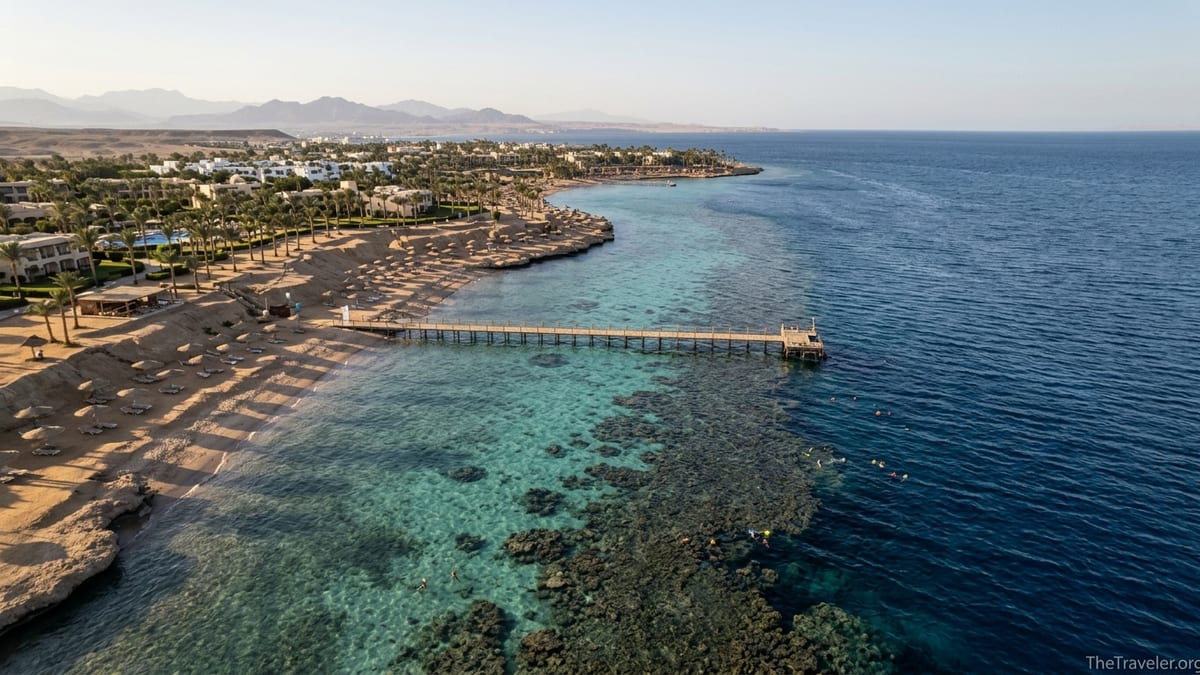
Egypt’s classic Red Sea resorts all share a similar formula. Most front onto a shallow reef flat that ends abruptly at a drop-off, with corals hugging the edge and schooling fish riding the current. To protect fragile reef tops, many hotels use long jetties so guests can enter where the water is already deep enough to float above the coral. In practice that means you often walk 100 to 300 meters along a pier, slip into 3 to 8 meters of clear water, and fin slowly along the reef edge with anthias and parrotfish beneath you. Some bays, especially around Hurghada and south of Marsa Alam, still offer sandy entries where you can wade in from the beach.
From a planning point of view, most visitors combine shore snorkeling directly from their hotel with at least one or two organized boat trips. In Sharm El Sheikh that often means a day boat to Ras Mohammed National Park or Tiran Island. From Hurghada, typical excursions run to the Giftun Islands, Dolphin House or Sharm El Naga. Around Marsa Alam, half- and full-day trips target offshore reefs like Sataya or coastal seagrass bays used by turtles and, in season, dugongs. Day trips including lunch and equipment rental regularly fall in the range of about 40 to 90 US dollars per adult, with private-speedboat options considerably higher.
Conditions vary with season and location. Winter water temperatures off Sharm and Hurghada can dip to the low 20s Celsius, so a shorty wetsuit makes longer sessions more comfortable, especially for children. Marsa Alam, further south, tends to stay a degree or two warmer. Wind is a bigger factor than rain here; many of the best-regarded house reefs are in semi-sheltered bays or behind offshore barrier reefs, precisely because they stay swimmable when open-water sites whitecap.
Coral health remains patchy but often surprisingly good compared with many other global reef destinations. Heavy traffic and past bleaching events mean some shallow flats are partly damaged, yet drops and outer walls can still be richly coloured. Choosing the right bay or resort, where currents bring clear water and reefs are carefully managed, greatly improves your chances of seeing vivid hard corals, giant clams and a good mix of reef fish on every swim.
Sharm El Sheikh: Jetty Reefs, Dramatic Walls and Day Boats
Sharm El Sheikh, at the southern tip of the Sinai Peninsula, offers perhaps the most famous combination of house-reef access and boat-based snorkeling. Large resort zones like Sharks Bay, Ras Um Sid and Hadaba sit directly on fringing reefs. Many four- and five-star properties have private jetties that drop onto walls used by both divers and snorkelers. Well-known names with strong house-reef reputations include big-brand properties in Ras Um Sid and along the Montazah and Sharks Bay strips, where guests routinely report stepping off the jetty into clear water above lush coral gardens.
For visitors who want shore snorkeling without feeling trapped in a single hotel, the Ras Um Sid area on Sharm’s southern headland is a standout. Public beach clubs there give access to a long, high-energy reef famous among divers yet still rewarding in the top few meters where snorkelers swim. Independent travelers sometimes choose mid-range hotels uphill, then pay a modest day-use fee at a beach club to use the jetty and facilities. For those staying at nearby all-inclusive resorts whose grounds back directly onto the same bay, snorkeling becomes almost a morning and late-afternoon ritual rather than a special outing.
Boat trips from Sharm are easy to arrange through hotel desks or local operators. Ras Mohammed National Park, a protected area at the tip of Sinai, is the classic choice, combining dramatic drop-offs with reef plateaus suitable for confident beginners. Trips typically include multiple guided snorkel stops, lunch and soft drinks. Another popular day heads further north to Tiran Island, where shallow lagoons over bright sand offer excellent visibility. Prices for standard group boats often start at low double-digit US dollar amounts, while semi-private or small-group speedboat trips cost more but allow you to avoid crowds and time your swims around peak boat traffic.
For many travelers Sharm strikes the best balance between underwater quality and topside infrastructure. The town has a busy airport with frequent international and domestic flights, and areas like Naama Bay or Soho Square offer nightlife, restaurants and shopping that Marsa Alam and quieter southern resorts lack. Families who want to mix reef time with water parks and evening promenades will likely find Sharm more engaging than isolated eco-lodges. The trade-off is that some central bays see heavy boat and snorkeler traffic, so choosing a slightly more outlying area with its own healthy house reef can pay dividends.
Marsa Alam & The Deep South: Wild Reefs and Serious House‑Reef Resorts
South along the Egyptian mainland, Marsa Alam has developed into a softer, more nature-focused alternative. The coastline between Port Ghalib and Berenice is dotted with resorts that market their house reefs as the main attraction rather than a bonus amenity. South of the small town itself, properties in areas such as Wadi El Gemal National Park and the Ras Banas peninsula front onto protected bays where seagrass meadows host green turtles and rays, and outer reefs remain rich in hard coral. Some resorts operate almost as self-contained dive and snorkel villages, with on-site centers running guided house-reef tours, zodiac shuttles to outer drop-offs and occasional night snorkeling.
Several modern resorts near Marsa Alam emphasize their house reefs in marketing materials, describing long private beaches that give way to the “staggering” walls just offshore or gently sloping sandy entries that soon meet coral gardens. Farther south, more remote properties front onto multi‑kilometer beaches whose adjacent reefs are accessed via short swims from shore or modest jetties. These southern resorts generally attract guests who are happy to spend most of their week in or near the water rather than exploring town life, which remains limited compared with Hurghada and Sharm.
Day trips from Marsa Alam typically target well-known snorkel sites such as Sataya Reef, also called Dolphin Reef, where boats search for pods of spinner dolphins in a large turquoise lagoon. Operators run combined wildlife watching and reef snorkeling days from harbors north and south of town; travel time can be two to three hours each way depending on departure point. Other excursions visit sheltered coves famous for resident turtles and occasional dugongs, where snorkelers drift over seagrass and patch reefs. Costs for these trips are often similar to or slightly higher than Hurghada excursions, reflecting longer distances and smaller guest numbers.
For dedicated reef travelers and photographers, Marsa Alam’s key selling points are quieter water, less urban development and the chance to see larger marine life such as eagle rays, schools of bumphead parrotfish or, in the far south, reef sharks cruising outer walls. The trade-off is remoteness. Flight options are typically fewer than to Sharm or Hurghada, transfer times from the airport to southern resorts can exceed two hours, and there is little to do in the evenings beyond hotel entertainment or stargazing. Families with young children who want short transfers and varied distractions may find Marsa Alam better suited to a second or third Red Sea trip once they know everyone loves being in the water.
Hurghada, Soma Bay & Safaga: Easy Entries and Classic Boat Days
Hurghada, one of Egypt’s oldest Red Sea resorts, offers a different feel again. The main town is busy, with shopping streets, bars and marinas catering to both package tourists and independent travelers. Inside this sprawl, natural reef has been interrupted in places by breakwaters and marinas, so central Hurghada itself is not the strongest zone for house-reef snorkeling from the hotel beach. However, nearby areas such as Makadi Bay, Sahl Hasheesh, Soma Bay and Safaga have become reliable bases for those who prefer easier shore entries, sandier beaches and day boats to offshore sites.
South of Hurghada, some mid- to upper-range resorts occupy headlands and bays where the reef comes close to shore yet patches of sand allow you to wade into waist-deep water before reaching coral. Sharm El Naga, a small bay used both as a simple overnight resort and as a popular day trip from Hurghada hotels, is a notable example. Visitors pay a day-use fee that includes beach access, chairs and often a buffet lunch, then swim a short distance from a sandy beach to a vividly coloured fringing reef. Operators advertise it as suitable for beginners and families specifically because you do not need to climb down a ladder into deep water from a long jetty.
For most people staying in Hurghada, the classic snorkeling experience still involves a boat trip. Operators on the main marina and along resort strips sell full-day excursions to the Giftun Islands with time on sandbar-style beaches and snorkel sessions over patch reefs, as well as trips to “Dolphin House” areas where boats hope to encounter pods of wild dolphins. Many packages cost roughly comparable amounts to similar Sharm or Marsa Alam outings and include hotel transfers, gear and a simple on-board lunch. Private charters are widely available, ranging from budget shared speedboats that visit two or three reefs to high-end yachts catering to small groups.
Compared with Sharm and Marsa Alam, Hurghada scores highly on ease of access and non-water activities. Its airport has frequent connections to Cairo and European hubs, city taxis and ride-hailing apps are widely available, and there is a larger choice of dining and nightlife. Families with teenagers who might enjoy go-kart tracks, malls or cable parks as much as coral gardens could find Hurghada a better fit than more isolated coastlines. On the other hand, experienced snorkelers seeking world-class house reefs directly under their rooms generally look either to a carefully chosen bay south of town or to Sharm and Marsa Alam.
Other Reef Areas: Dahab, El Quseir & The Far South
Beyond the three big names, several smaller Egyptian Red Sea regions appeal strongly to snorkel-focused travelers. On the Sinai’s east coast, Dahab has long attracted independent divers and free divers. Its shoreline combines pebble beaches, casual waterfront cafes and reef drops just offshore. Famous dive spots such as the Blue Hole are not beginner territory, but many stretches of Dahab’s coast allow easy snorkeling directly from the beach in shallow water. The town remains more low-key than Sharm, with a mix of simple hotels and a few higher-end properties, making it appealing for travelers who prioritize relaxed atmosphere over large all-inclusive complexes.
On the mainland between Hurghada and Marsa Alam, El Quseir and its surrounding bays offer another compromise. Here a cluster of low-rise resorts line quiet stretches of coast where the reef lies close to shore. Some properties, operated by large regional hotel groups, have gained reputations as family-friendly bases with good house reefs and on-site snorkeling guides. These mid-distance locations can be convenient for travelers who want stronger reef quality than classic Hurghada but shorter airport transfers than deep-south Marsa Alam. Access is generally via Hurghada airport, followed by a transfer of around one and a half to two hours.
Farther south, beyond Marsa Alam toward Berenice, a handful of resorts sit in relatively isolated bays adjacent to protected areas. These often feature long natural beaches where you can wade out over sand and seagrass before reaching coral. It is in this region that some of Egypt’s least disturbed shallow reefs remain, partly because visitor numbers are modest and coastal development is sparse. Stays here tend to be longer and more self-contained. Many guests fly into Marsa Alam, take a two- to three-hour transfer, and then spend most of their week alternating between house-reef sessions, guided zodiac drifts and occasional longer boat trips.
While infrastructure continues to improve, travelers considering the far south or smaller hubs like Dahab should be prepared for more limited medical services and less formal beachfront lifeguarding than at big Sharm or Hurghada resorts. In exchange, you often gain quieter water, fewer large excursion boats and a stronger sense that the reef is the main event rather than a side activity. For repeat Red Sea visitors looking to go beyond the obvious, these secondary regions can deliver some of the most memorable snorkeling of the trip.
Choosing the Right Area for Families and Beginners
For families with younger children or complete beginners, the style of entry and the presence of calm, shallow water are often more important than absolute reef grandeur. A long, exposed jetty dropping into deep blue water can intimidate first-time snorkelers, particularly anyone nervous about depth. Bays with gradual sandy entries, where you can stand and adjust masks before finning over to the coral, tend to feel friendlier. In Egypt, you are more likely to find such gentle conditions in sheltered bays around Hurghada, Soma Bay and Safaga, as well as in some Marsa Alam and southern resorts built inside natural coves.
Sharm El Sheikh can still work beautifully for families, especially around Naama Bay and some shallower house reefs where the drop-off is not immediate. However, parents should be aware that many of Sharm’s best-known jetties open straight onto walls several meters deep, with currents that can be moderate at times. Children who are already strong swimmers will usually take this in stride, especially when wearing life vests, but anxious beginners may do better with one or two days of practice in pool-like lagoons or sandy shallows before exploring deeper edges. Resorts that advertise both a protected swimming lagoon and access to a main reef often represent the best of both worlds.
Marsa Alam’s quieter environment appeals to families whose children are comfortable entertaining themselves on the beach and in the sea, but it can feel remote to those used to promenades and evening shows. Many Marsa properties provide well-organized kids’ clubs and shallow pools, and some market themselves explicitly as ideal for family snorkeling with house reefs accessed via short jetties and calm inner lagoons. Because transfer times can be longer, it is worth considering how well younger travelers tolerate multi-hour drives after a flight before committing to the deep south for a relatively short trip.
Regardless of region, practical safety considerations remain the same. Simple gear such as child-sized life vests, brightly coloured rash vests and well-fitting masks make a major difference to confidence. Choosing guided boat trips that focus on snorkeling rather than mixed dive and snorkel groups often results in calmer briefings, more patient in-water supervision and shorter swim distances. Families should also pay attention to whether their chosen hotel offers on-site lifeguards with clear flag systems for jetty closures during high wind or rough seas.
Resorts with Notable House Reefs and What to Look For
Because individual hotels can define the quality of your daily snorkeling, it is worth studying resort layouts and reef descriptions before booking. In Sharm El Sheikh, many experienced snorkelers gravitate toward properties at the outer edges of major bays, where currents are a little stronger and coral growth more robust. Independent reports frequently highlight upmarket resorts in areas like Sharks Bay, Ras Um Sid and Montazah for their vivid walls and reliable fish life. At some of these hotels, guests comment that they rarely felt the need to book boat trips because the house reef kept them occupied for an entire week with dawn and dusk swims.
Around Marsa Alam and El Quseir, several four- and five-star resorts explicitly brand themselves around their house reefs. Marketing materials often emphasize long private beaches, protected inner lagoons and direct access to drop-offs suitable for both snorkelers and divers. One family-focused resort north of Marsa Alam, for instance, describes an extensive house reef just beyond a large sandy beach, positioning itself as an “ideal holiday resort for the entire family” while still appealing to experienced underwater photographers. Farther south, quieter properties highlight adjacent national park status or multi-kilometer beaches where even simple shore walks offer views of sea turtles surfacing beyond the breakers.
Near Hurghada, Makadi Bay and Soma Bay feature clusters of mid-range to luxury resorts with varying reef quality. In Makadi, some hotels front shallow lagoons with limited coral, while others sit closer to outer reef edges. Soma Bay and nearby Sharm El Naga are better known among snorkelers, with at least one small hotel and a busy day-use beach that both promote their easily accessible house reef. Travelers who select accommodation primarily for snorkeling often use satellite imagery to check for natural reef outlines and longer jetties, or read recent traveler reports mentioning live coral rather than predominantly dead patches.
When comparing specific properties, useful indicators include whether the hotel describes a house reef directly off its own jetty or beach, whether there is a dive or water sports center on site, and how recent reviews describe visibility, currents and coral condition. Comments about frequent jetty closures due to wind, very long walks from room to pier, or mostly broken coral on the inner reef can help filter options. Given that conditions and management change over time, prioritizing resorts with consistently positive snorkel feedback in the past year or two usually yields the best results.
Boat Trips, Safety and Environmental Considerations
Regardless of which region you choose, boat trips typically feature in a Red Sea snorkeling itinerary. Group day boats from Sharm El Sheikh, Hurghada or Marsa Alam usually depart between 8 and 9 in the morning, serve a simple buffet lunch and return by late afternoon after two or three in-water sessions. Prices scale with boat size, exclusivity and distance to sites. Families watching budgets often opt for shared excursions booked through local agencies, which can be significantly cheaper than similar trips sold in international hotel chains, while experienced snorkelers may value smaller groups and more flexible schedules enough to pay extra.
Safety standards have improved over the years, but travelers should still ask basic questions before committing. Useful checks include whether guides provide a clear safety briefing, carry surface buoys for groups to follow, and enforce life jacket use where appropriate. Given that the Red Sea can experience sudden wind shifts, it is sensible to favor operators who seem conservative about cancelling or rerouting trips rather than pressing on regardless. Recent incidents involving tourist vessels in the wider Red Sea region are a reminder that seaworthiness and good decision-making matter as much on snorkeling cruises as on longer liveaboards.
From an environmental standpoint, reef-friendly practices make a noticeable difference over time. Responsible boats brief guests not to stand on coral, chase turtles or attempt to touch dolphins. Many now request or require the use of mineral-based, reef-safe sunscreen and encourage guests to wear rash vests or thin wetsuits to reduce chemical load. On shore, hotels that manage their jetties carefully, restrict anchoring on the reef flat and support local conservation programs tend to maintain healthier house reefs year after year.
Individual snorkelers can contribute by staying relaxed and neutrally buoyant, avoiding fin kicks that hit coral and resisting the urge to feed fish. Even simple actions like carrying out small bits of floating litter picked up during a swim, or gently reminding fellow guests not to stand on the reef, help preserve the very environments that draw visitors to Egypt’s Red Sea coast in the first place.
The Takeaway
Sharm El Sheikh, Marsa Alam, Hurghada and their smaller neighbors all deliver classic Red Sea snorkeling, yet each suits a different style of traveler. Sharm combines some of the region’s most dramatic house-reef walls with lively nightlife and easy day boats, making it a strong choice for first-time visitors who want both vivid coral and a resort-town atmosphere. Marsa Alam and the deep south prioritize quieter, more nature-focused stays, where the reef is the main event and evenings revolve around stars rather than shopping malls.
Hurghada and its satellite bays offer the friendliest introduction for many families and beginners, with more sand entries, a wider variety of hotels and excursions, and plenty to do ashore. Smaller hubs such as Dahab, El Quseir and Berenice add choices for independent travelers and repeat Red Sea fans chasing less crowded reefs. Whatever region you choose, paying close attention to the specific bay and hotel, checking up-to-date snorkel reports, and prioritizing safety and reef-friendly behavior will reward you with warm, clear water and some of the most accessible coral reef snorkeling within easy reach of Europe and the Middle East.
FAQ
Q1. Which Egyptian Red Sea area is best overall for snorkeling from a resort?
For a combination of strong house reefs, easy flight access and plenty of boat options, Sharm El Sheikh usually offers the best all-round package, especially in areas like Ras Um Sid and Sharks Bay, though carefully chosen resorts in Marsa Alam and Soma Bay can match or surpass Sharm’s coral quality for dedicated snorkelers.
Q2. Where should beginners or nervous swimmers base themselves?
Beginners often feel most comfortable in sheltered bays with sandy entries, which are common around Hurghada, Soma Bay and parts of Marsa Alam; look for resorts that advertise a shallow lagoon or sandy-beach access to the reef rather than only a long jetty into deep water.
Q3. Is Marsa Alam worth the longer transfer compared with Hurghada?
Marsa Alam generally offers quieter resorts, less developed coastline and, in many areas, healthier reefs with higher chances of seeing turtles and larger fish, so for travelers who prioritize underwater life over nightlife and do not mind longer transfers it is often worth the extra effort.
Q4. Can I snorkel safely with children in Sharm El Sheikh?
Yes, many families snorkel happily in Sharm, particularly in Naama Bay and at resorts with protected lagoons, but parents should be prepared for deeper water at jetty entries, pay attention to currents and use life vests and guided excursions until everyone is confident.
Q5. Are day-boat trips necessary if my resort has a good house reef?
Not strictly, since some house reefs are so good that guests are content to stay local, but a well-run day trip to sites like Ras Mohammed, the Giftun Islands or Sataya Reef usually adds variety, different coral formations and a sense of adventure to a week-long stay.
Q6. What time of year is best for snorkeling the Egyptian Red Sea?
Conditions are generally good year-round, but many travelers find March to June and September to early November most comfortable, with warm water, long daylight hours and air temperatures that are hot but not extreme compared with midsummer.
Q7. Do I need a wetsuit for snorkeling in Egypt?
In summer a swimsuit and thin rash vest are usually enough, but in winter months and for long sessions, a shorty or 3-millimeter wetsuit helps you stay warm, especially in Sharm and Hurghada where winter water temperatures can feel cool after extended time in the sea.
Q8. How can I tell if a resort really has a good house reef?
Look for recent traveler reports specifically mentioning live coral, clear water and abundant fish right off the hotel jetty or beach, check satellite images for visible reef outlines and consider resorts that host on-site dive centers, since these usually indicate worthwhile underwater terrain.
Q9. Is snorkeling safe around reef wildlife like dolphins and turtles?
Snorkeling near turtles, rays or dolphins is generally safe if you keep a respectful distance, avoid chasing or touching animals and follow guide instructions; responsible operators emphasize passive observation and may move away if wildlife seems disturbed.
Q10. Can non-swimmers still enjoy the Red Sea reefs?
Non-swimmers can still experience the reefs from glass-bottom boats, semi-submersible tours or by floating with a life vest and guide in calm shallows, but for full enjoyment it is wise to take basic swimming lessons before the trip and use flotation aids until confidence improves.