


The Egyptian Red Sea coast keeps many promises: warm water for most of the year, colorful coral gardens, reliable sunshine and good-value all-inclusive resorts. The real dilemma for many travelers is not whether to go, but where to base themselves. Two names dominate the conversation: Marsa Alam, the quieter southerner often praised for its reefs, and Hurghada, the long-established hub with big-resort infrastructure and nightlife. Both can deliver a brilliant Red Sea holiday, but they do it in very different ways.
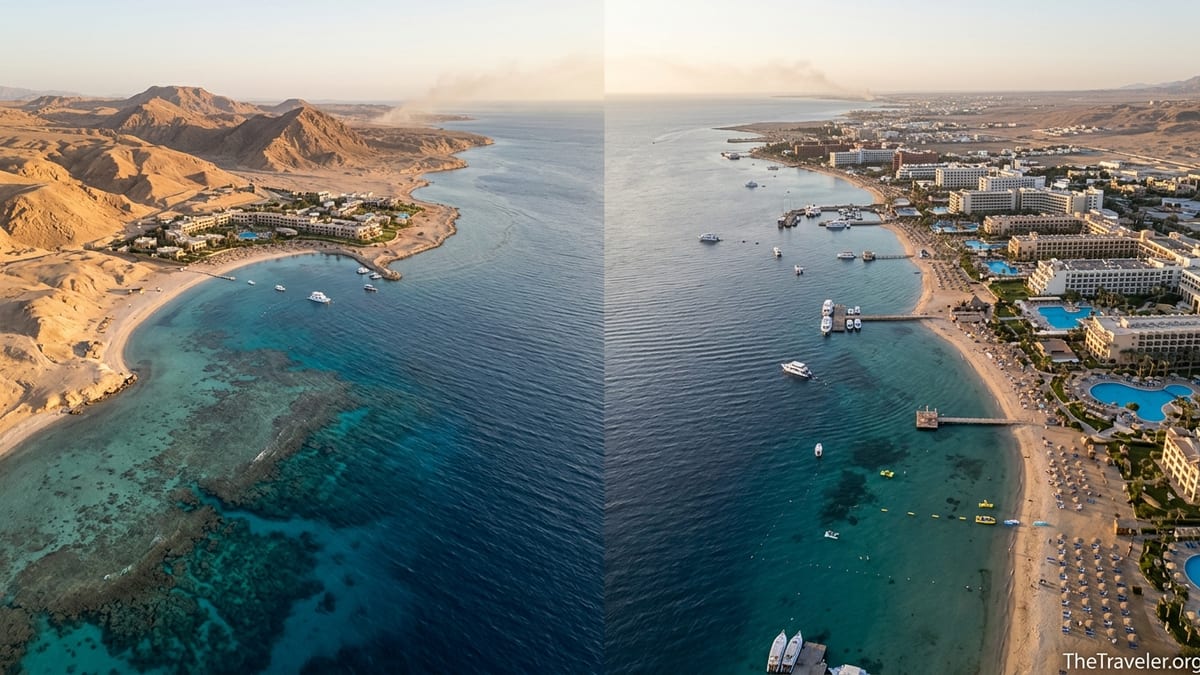
Overall Vibe: Quiet Nature vs Classic Resort City
Marsa Alam feels like a string of self-contained beach resorts scattered along a wild stretch of coast. Outside the hotel gates there is usually very little: a main road, desert, perhaps a small local village or a dive marina. This is precisely the appeal for travelers who want to wake to the sound of the surf and spend days moving between beach lounger, jetty and reef, without the distractions of a city. A stay at a bay resort such as Brayka Bay or Coraya Bay feels more like a nature-focused retreat than a city break with a beach.
Hurghada, by contrast, is a fully fledged resort city running for many kilometers along the shore. The central areas around the new marina and Sheraton Road have traffic, shisha cafes, bars, souvenir shops, malls and local neighborhoods. South of town, zones like Sahl Hasheesh, Makadi Bay and Soma Bay offer calmer resort strips, but you are still within reach of supermarkets, pharmacies and excursion agencies that can be booked at the last minute. If you want the classic Red Sea “town plus resort” experience, Hurghada is the template.
For couples who dream of quiet evenings under starry skies and the feel of being “away from it all,” Marsa Alam usually wins. For first-time visitors to Egypt, groups of friends or families who like the reassurance of city services and options beyond the hotel buffet, Hurghada is generally the more comfortable starting point.
Price-wise, both destinations cover a similar budget range, from simple three-star packages to large five-star all-inclusives. However, Hurghada tends to offer more aggressive competition and frequent deals, particularly in shoulder seasons, which can make it easier to find discounted week-long packages including flights and all-inclusive stays.
Reefs, Snorkeling and House-Reef Access
If your main aim is to step off the beach and into a fish-filled coral garden, Marsa Alam has a clear edge. Many resorts sit on bays with their own sheltered house reefs, where coral starts close to shore and continues along both sides of the bay. At Brayka Bay, for example, snorkelers can enter directly from the sandy beach and follow the reef walls that frame the bay, often spotting blue-spotted rays, lionfish, morays and large napoleon wrasse without ever boarding a boat. Coraya Bay and the area around Port Ghalib offer similar “reef at your doorstep” experiences with relatively little boat traffic.
Several famous sites near Marsa Alam add to the appeal. Abu Dabbab, a broad sandy bay north of town, is known for frequent encounters with green sea turtles feeding on the seagrass and occasional dugong sightings. Offshore reefs like Elphinstone attract experienced divers with the chance of seeing oceanic whitetip and hammerhead sharks in season. Many hotels run regular minibus and boat trips to these sites, meaning you can combine easy daily snorkeling on the house reef with a handful of “big ticket” excursions.
Hurghada’s coral is more hit and miss directly from the beach. Some resort stretches are sandy and shallow with limited coral, better for paddling than snorkeling. Others, especially in Makadi Bay and Soma Bay, do have strong house reefs, often accessed from long jetties over the shallow plateau. Guests at a Makadi Bay resort may, for instance, walk down a 200-metre pier and drop into deep, clear water with schooling fish and patch reefs below. However, in busy areas near the city, reefs can feel more crowded with boat traffic and day-trip groups, and shallow coral close to popular jetties often shows more wear.
If you are happy to take boat trips, Hurghada closes the gap. Full-day snorkeling excursions to island beaches and reefs such as Giftun Island or Orange Bay typically include two or three snorkel stops and lunch on board, which can be ideal for families who prefer supervision and amenities. For independent snorkel addicts who want to be in the water two or three times a day without long transfers, Marsa Alam remains the more convenient and consistently rewarding choice.
Diving: Big Marine Life vs Wrecks and Easy Day Boats
Divers tend to talk about Marsa Alam in almost reverent tones. The stretch between El Quseir and Marsa Alam combines healthy fringing reefs, offshore walls and seamounts that attract pelagic life. Liveaboards use Marsa Alam and nearby Port Ghalib as gateways to the southern Red Sea, but even resort-based divers can access notable sites. Elphinstone, reachable by speedboat from many hotels, is famed for steep drop-offs, purple soft corals and encounters with oceanic whitetip sharks when currents and seasons align. Closer in, reefs like Abu Dabbab, Marsa Mubarak and various local house reefs deliver a mix of caverns, pinnacles and turtle-patrolled seagrass that rewards multiple dives.
Hurghada, as one of Egypt’s original dive hubs, offers quantity, convenience and variety, even if it cannot always match the “frontier” feel of the deep south. Dozens of day boats depart its marinas daily for reefs in the Straits of Gubal and offshore islands, serving everyone from absolute beginners taking their first PADI Open Water course to experienced divers focused on wrecks. Sites like Shaab El Erg (often called Dolphin House) are known for the chance, though never guaranteed, of seeing wild dolphins, while the reefs around Giftun and Abu Ramada Islands offer classic Red Sea coral gardens and drift dives.
One major distinction is wreck diving. While Marsa Alam has some small local wrecks, Hurghada is better positioned for famous northern Red Sea wrecks when combined with mini-safaris or liveaboards, including the Thistlegorm and the ship graveyards around Abu Nuhas. Even on standard day boats, divers based in Hurghada often get a mix of reef and smaller wreck dives within a week.
From a training perspective, Hurghada’s busy dive centers, many attached to mid-range all-inclusive hotels, make it straightforward to find English- and European-language instructors, pool sessions and flexible schedules. Marsa Alam also has well-regarded dive operations, but they may run on more fixed timetables tied to specific hotels. If you are planning your first certification and want the widest choice of schools and beginner-friendly shallow sites, Hurghada is usually simpler. If you are already certified and primarily interested in rich reefs and big marine life, Marsa Alam tends to be more rewarding.
Hotels, Resorts and What Daily Life Looks Like
In Marsa Alam, your hotel is your world. Resorts typically sit in isolated bays, such as Brayka Bay, Coraya Bay or around Abu Dabbab, with everything inside the gates: buffet and à la carte restaurants, dive center, beach bars, kids’ club and evening shows. A standard day might mean breakfast, a morning snorkel on the house reef, lunch on the terrace, a rest around the pool, then an afternoon dive or another swim before a low-key evening at the hotel’s bar. Some resorts arrange small local trips, such as a visit to Marsa Alam town or an evening desert safari, but you should not expect a promenade of independent restaurants or shops outside.
Hurghada presents almost the opposite pattern. While many guests still spend much of their time inside all-inclusive resorts in areas like Makadi Bay or Sahl Hasheesh, they have the option of stepping out. A taxi or hotel shuttle into the marina area brings a choice of seafood and Lebanese restaurants, ice cream parlors and rooftop bars. Families can spend an evening at a water park or bowling alley, or browse the mall for souvenirs without committing to a structured excursion. For longer stays, that change of scenery can be critical, especially if not everyone in the group wants to spend every day in fins and masks.
Hotel choice itself is broader in Hurghada. You will find everything from no-frills downtown guesthouses and simple three-star beachfront properties to high-end branded resorts with lagoon pools, kids’ splash zones and multiple specialty restaurants. By contrast, Marsa Alam’s inventory tilts heavily toward mid- to upper-midrange beach resorts, often with a strong focus on divers and snorkelers. There are comfortable options for families, but fewer internationally recognized luxury brands or ultra-budget city hotels.
For travelers who like to self-cater, pick local cafes and maybe move between different neighborhoods in a single trip, Hurghada offers far more flexibility. For those who are happy to eat at the same buffet and Italian restaurant all week in return for killer snorkeling out front, Marsa Alam is a sound trade-off.
Families vs Couples: Matching the Destination to Your Group
Families with younger children often lean toward Hurghada, particularly the resort bays such as Makadi Bay and Soma Bay. Here, hotels are built around family infrastructure: shallow-entry pools, splash parks, kids’ clubs with multilingual staff and long, sandy beaches without strong drop-offs. Many Makadi Bay resorts, for example, have small aquaparks and evening mini-discos, and some offer connecting family rooms or two-bedroom suites that make sharing with children easier. Parents also appreciate the quick access to pharmacies, supermarkets and medical clinics in or near Hurghada city if someone falls sick.
That said, Marsa Alam can work well for nature-loving families whose children are comfortable in the water and happy with a slower rhythm. A resort in a protected bay like Brayka Bay or Coraya Bay gives safe, usually calm water for supervised snorkeling near the shore, plus the excitement of seeing rays and turtles in a natural setting rather than on an organized dolphin tour. There may be fewer slides and kids’ shows than in a big Hurghada complex, but inquisitive children can spend hours spotting parrotfish and butterflyfish from the jetty.
For couples, the choice is more finely balanced. Marsa Alam particularly appeals to pairs who value quiet, starry nights, sunrise snorkeling sessions and early bedtimes over bars and clubs. Honeymooners often pick adults-focused or small-scale properties on the Marsa Alam coast where evening entertainment is limited to a cocktail at sunset and perhaps an acoustic guitar session in the lobby. The romance comes from the scenery, especially at resorts set in wide natural bays surrounded by desert mountains.
In Hurghada, couples can fine-tune their vibe by zone. Sahl Hasheesh, south of the city, has become a favorite for couples seeking a polished, landscaped setting with a seafront promenade and elegant hotels, but without the full-on city noise. Central Hurghada and the marina suit younger couples and groups of friends who want to alternate diving and snorkeling with nights out in bars, clubs and late-opening cafes. For those who want a bit of both, staying in a quieter bay and taking occasional taxis into town is a common compromise.
Nightlife, Restaurants and Things To Do Beyond the Beach
If nightlife is important to you, Hurghada is the more realistic choice. Around the marina and Sheraton Road, there is a concentration of bars, lounges and late-night cafes that stay active well into the small hours, especially in high season and around New Year. Some larger resort complexes also host their own nightclubs or beach parties, ranging from laid-back cocktail evenings to full DJ sets. Dining options extend beyond hotel buffets, with independent restaurants serving everything from Egyptian grills and fresh fish to Italian and Asian dishes.
Marsa Alam, by contrast, is noticeably quiet once the sun goes down. Evening entertainment within resorts tends to revolve around in-house animation teams, low-key live music or occasional themed nights. There are a few beach bars and cafes near the main town and at small marinas, but nothing on the scale of Hurghada’s nightlife. This suits guests who are in bed early to catch the best morning light on the reef or the first dive boat, but it can feel limiting for night owls or social groups expecting a party scene.
In terms of non-water activities, Hurghada again offers more variety. Desert quad-bike safaris, camel rides, star-gazing trips, water parks, shopping malls and even day trips to Luxor to see the temples of Karnak and the Valley of the Kings are widely advertised. Many visitors build their week around two or three excursion days and several “resort days” by the pool. While you can arrange similar desert trips from Marsa Alam, distances to major archaeological sites are longer, and the choice of operators smaller.
For travelers who know they will be content spending almost all their time snorkeling, diving and reading by the pool, the quieter evenings in Marsa Alam are a feature rather than a bug. If you like to mix beach time with cultural visits, shopping and restaurant-hopping, Hurghada is far better equipped.
Airport Access, Transfers and Practical Logistics
Hurghada International Airport is one of Egypt’s busiest holiday gateways, with frequent flights from many European cities during the main holiday seasons. For visitors from the UK, Germany, Italy and several Eastern European countries, it is often possible to find direct charter or low-cost flights bundled with package holidays or sold separately. Transfer times from the airport to central Hurghada hotels can be as short as 10 to 20 minutes, while resorts in Makadi Bay, Sahl Hasheesh or Soma Bay typically sit 25 to 45 minutes away by road.
Marsa Alam has its own international airport, which significantly shortens travel compared with older routings via Hurghada. However, the number of direct flights is usually smaller and more seasonal, concentrated on key European markets and specific tour operators. Many hotels lie 30 to 60 minutes’ drive from Marsa Alam Airport, and some of the northernmost bays and resorts around El Quseir can be more than 90 minutes away. This relative remoteness is part of the destination’s charm but is worth considering if you are traveling with young children or arriving on late-night flights.
For travelers arriving independently rather than on a package, Hurghada also offers more choice in local transport. Taxis and ride-booking services are widely available, and there are regular buses north to El Gouna and south along the coast. In Marsa Alam, most movement is by pre-arranged hotel transfer or private car, and it is less common to change hotels mid-stay without planning ahead.
If you value a short, simple transfer after a long flight and like the option of spontaneous day trips, Hurghada comes out ahead. If you are happy to trade a longer journey for fewer crowds and darker, quieter nights, Marsa Alam earns its reputation as the more remote, escapist option.
The Takeaway
Choosing between Marsa Alam and Hurghada is essentially choosing the kind of Red Sea holiday you want. Marsa Alam is the choice for travelers who put healthy reefs, house-reef snorkeling and a sense of seclusion above all else. A week in a bay resort here means stepping into the water a few fin-kicks from your sun lounger, watching rays and turtles cruise by and ending evenings under a sky filled with stars rather than city lights. It is particularly strong for keen snorkelers and divers, and for couples or families who are content with hotel-based entertainment.
Hurghada, on the other hand, suits those who want a classic resort city with options. You can still snorkel and dive excellent reefs, especially from bays like Makadi or on day boats to nearby islands, but you also have nightlife, independent restaurants, malls and excursion agencies on tap. Families often appreciate the shorter airport transfers, big water parks and easy access to pharmacies and clinics. First-time visitors to Egypt who feel more relaxed with urban infrastructure and a wider choice of hotels typically feel at home here.
If your ideal Red Sea week is “reef, sleep, repeat” with very little else, Marsa Alam is likely to feel magical. If you picture diving or snorkeling every other day, shopping and dining out in the evenings, maybe a desert trip and a day to Luxor, then Hurghada is the better all-round base. Many frequent visitors eventually try both and then tailor future trips: Marsa Alam when they crave nature and underwater time, Hurghada when they are traveling in a group or want nightlife. Either way, the combination of warm sea, reliable sun and dramatic desert backdrops means the Red Sea rarely disappoints.
FAQ
Q1. Which destination is better for beginner snorkelers, Marsa Alam or Hurghada?
Both can work, but Marsa Alam’s sheltered bays with house reefs directly off the beach are generally easier and more rewarding for beginners who are comfortable in the water. In Hurghada, beginners often get the best experience by joining guided boat trips to island reefs rather than relying on whatever lies in front of the hotel beach.
Q2. Is Marsa Alam or Hurghada better for a family with small children?
Hurghada usually suits families with small children better because of shorter airport transfers, widespread kids’ clubs, water parks and quick access to pharmacies and clinics. However, calm bays in Marsa Alam can be excellent if your children love the sea and you are happy with quieter evenings and fewer off-resort activities.
Q3. Where will I find healthier coral reefs?
Conditions change over time, but many divers and snorkelers report more consistently healthy fringing reefs around Marsa Alam, especially in less developed bays and offshore sites. Around Hurghada, the best coral is often reached by boat, while some inshore areas show more wear from heavy use.
Q4. Which is better for nightlife and bars?
Hurghada is clearly better for nightlife. The marina and central districts offer bars, lounges, shisha cafes and some clubs, while larger resort complexes host their own evening shows and parties. Marsa Alam is much quieter, with most entertainment limited to hotel-based programs.
Q5. Are there good all-inclusive resorts in both destinations?
Yes. Both Marsa Alam and Hurghada have numerous all-inclusive resorts ranging from simple to upscale. Hurghada has greater overall variety and more competition, which can mean sharper deals, while Marsa Alam’s all-inclusives often emphasize direct reef access and a nature-focused setting.
Q6. Which destination is more convenient for short breaks?
Hurghada is generally more convenient for short breaks of three to five nights because of its busier international airport, shorter transfers and abundance of nearby activities. Marsa Alam can still work, but the more limited flight schedules and longer resort transfers make it better suited to week-long or longer stays.
Q7. Is Marsa Alam worth it if I am not a diver or keen snorkeler?
Marsa Alam can still be enjoyable for non-divers who love quiet beaches, desert scenery and relaxing by the pool, but much of its special appeal comes from its reefs. If you are unlikely to spend much time in the water, Hurghada’s broader choice of restaurants, nightlife and excursions might give you a more varied holiday.
Q8. Can I combine both Marsa Alam and Hurghada in one trip?
Yes, many travelers do. The two areas are linked by a coastal road, and private transfers or pre-arranged taxis can take around three to four hours depending on your exact hotels. Some visitors start in Hurghada for a few nights of city energy, then move south to Marsa Alam for a quieter, reef-focused second half.
Q9. Which is safer in terms of currents and conditions for swimming?
Both destinations generally have safe swimming areas, especially inside sheltered bays managed by resorts. Marsa Alam can see stronger currents on outer reefs and jetties, which is why many hotels designate specific entry points and times. In Hurghada, some open beaches can be choppier on windy days, but lifeguards and clear safety signage are common in larger resorts.
Q10. If I want to visit Luxor as a day trip, which base is better?
Hurghada is the better base for a day trip to Luxor. Tour companies routinely offer early-morning coach or minibus excursions that reach Luxor in roughly four hours each way, making a long but manageable day. From Marsa Alam, the journey is usually longer and less commonly offered as a simple day tour.