


The stretch of Red Sea coastline around Hurghada, Makadi Bay, Sahl Hasheesh and El Gouna has become one of Egypt’s busiest hubs for boat trips, island escapes and snorkeling days. Dozens of operators sell nearly identical-sounding excursions, yet the experience on the water can vary dramatically depending on which trip you book. This guide breaks down the main types of Red Sea boat trips, with concrete examples of what is usually included, realistic price ranges in 2026, and practical advice on which options are genuinely worth your time and money.
Understanding the Red Sea Boat Trip Scene Around Hurghada
Most marine excursions along Egypt’s central Red Sea coast operate out of Hurghada and its nearby resorts, including Makadi Bay, Sahl Hasheesh, Soma Bay and El Gouna. Whether you book at your hotel, from a marina kiosk or online in advance, you are almost always funneled onto the same network of shared boats and private charters. The core experiences are snorkeling over coral reefs, visiting sandbar-style islands in the Giftun archipelago, watching or swimming near wild dolphins, and shorter glass-bottom or semi-submarine trips for those who prefer to stay dry.
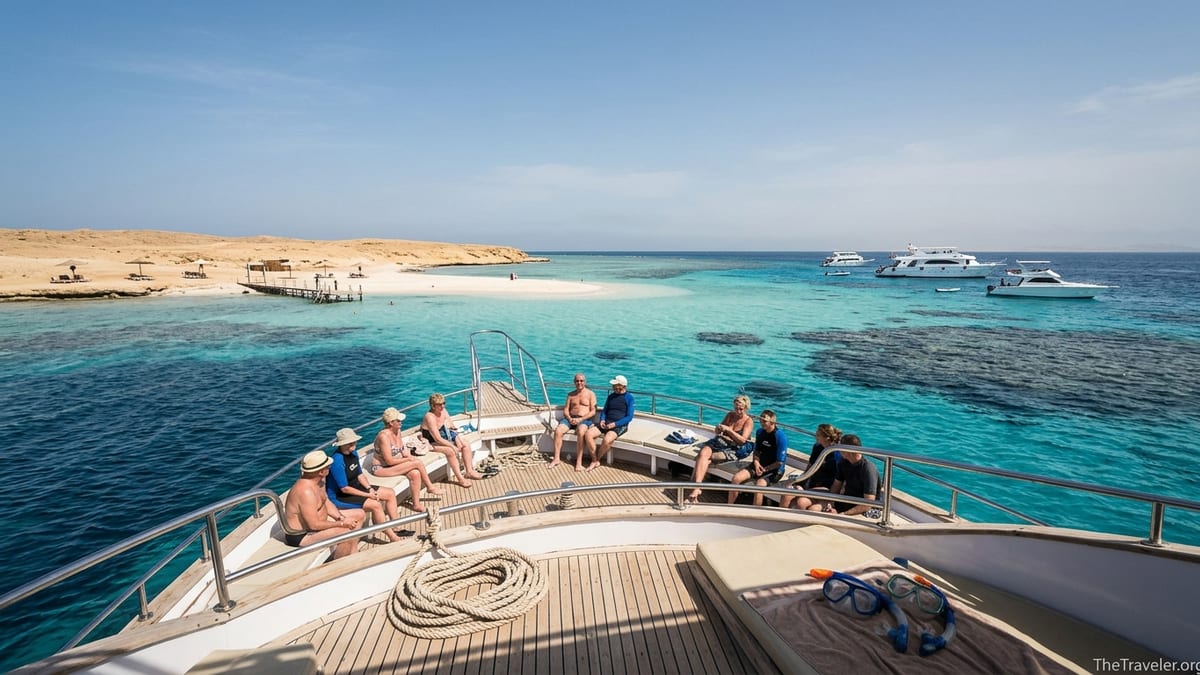
On a typical full-day snorkeling or island trip you are collected by minibus from your hotel between about 7:30 and 8:30 in the morning, driven 20 to 40 minutes to a marina, then board a large wooden or fiberglass boat with 20 to 50 passengers. From there, the day usually includes two or three snorkeling stops, a simple buffet lunch on board, and soft drinks or water throughout, returning to your hotel around 4:00 or 5:00 in the afternoon. Many operators follow this same template, but differ in group size, reef quality, safety standards and how crowded they allow the boat to become.
Prices in 2026 for a shared full-day snorkeling boat from Hurghada generally fall between about 25 and 60 US dollars per adult, depending on inclusions and marketing. Cheaper trips often pack more people on board and may charge extra for items like fins or hotel pickups from more distant areas, while better-reviewed outfits charge more for smaller groups, newer boats, higher quality food and more attentive guiding. Understanding these trade-offs is the key to booking wisely.
Giftun-Area Islands: Orange Bay, Paradise Island and White Island
The most famous excursions from Hurghada focus on the Giftun Islands National Park. The names you see in brochures, such as Orange Bay, Paradise Island and White Island, usually refer to specific beach operations and shallow sandbars within the wider Giftun area rather than separate islands in their own right. All of them offer the same essential ingredients: white sand, shallow turquoise water that feels almost Caribbean, and a beach club style setup with sun loungers, umbrellas and photo spots.
A standard Orange Bay boat trip from Hurghada in 2026 typically costs somewhere in the range of 25 to 75 US dollars per adult, including hotel pickup, around six to eight hours on the water, two snorkeling stops on nearby reefs, lunch on board and a few hours of free time on the island’s beach platform. Very low advertised prices, such as around 15 to 20 dollars, do exist, but travelers commonly report crowds of more than 60 people per boat, limited shade and add-on costs for items like fins or beverages beyond basic water and soft drinks.
Paradise Island and similar Giftun beach operations follow almost the same pattern. For example, some Hurghada-based companies sell a “Paradise Island snorkeling trip by boat” at around 25 euros per adult, including transfers from Hurghada city hotels, lunch, soft drinks and basic snorkeling equipment. Transfers from further-flung resorts like Makadi Bay, Sahl Hasheesh or El Gouna often attract a supplement of around 5 to 7 dollars per person, which is important to clarify when booking if you are not staying in central Hurghada.
In recent years, speedboat-style trips to so-called White Island, a shallow sandbar off the Giftun area, have grown in popularity among small groups and couples. One example marketed in 2026 offers a private speedboat trip for two people with hotel pickup, a 20-minute run out to the sandbar, guided snorkeling and a light lunch for about 180 dollars per group. These speedboats deliver a more flexible and quiet experience than big day boats, but the per-person price is significantly higher unless you share the cost with three or four friends or family members.
Snorkeling Cruises: What You Really Get for the Money
Full-day snorkeling cruises without a heavy focus on island beach clubs are still the backbone of Red Sea excursions. A typical “Red Sea snorkeling trip from Hurghada” will advertise hotel pickup, two or three snorkeling stops at reefs like Magawish, Abu Ramada or other nearby coral gardens, lunch and unlimited soft drinks, plus use of mask, snorkel and sometimes fins. Many also combine sightseeing with an optional water toy session, such as a quick inflatable banana boat or sofa tube ride near the end of the day.
Expect to pay roughly 25 to 60 dollars per adult in 2026 for this kind of shared boat day. Around the lower end of that range, you often see large boats taking 40 to 50 passengers, simple buffet lunches and basic equipment that may show heavy use. Around the upper end, some Hurghada specialists cap numbers closer to 20 or 25 people per boat, offer newer masks and fins, and send qualified snorkel guides into the water with small groups to point out marine life and keep weaker swimmers safe.
One real-world example is a Dolphin House style boat trip marketed from Makadi Bay and Hurghada, which runs from about 9:00 until 16:00 and includes hotel transfer, two or three snorkel stops, a hot buffet lunch on board and soft drinks throughout. Adult prices advertised by comparable operators in 2026 are often around 40 to 50 euros. Another variation is a shorter three-hour high-speed glass-bottom boat combined with a Magawish Island snorkel stop, typically priced at about 45 euros per adult, suitable for visitors who want a taste of the reefs without committing to a full day in the sun.
Almost all snorkel boats provide life jackets and a limited range of sizes for masks and fins, but they cannot guarantee a perfect fit. Many experienced travelers bring their own mask and snorkel for better comfort and hygiene, especially if they plan to join more than one trip. Rash vests or light long-sleeve swim shirts are highly recommended, as the Red Sea sun can be intense even in winter and most boats offer limited shade on the upper deck.
Dolphin Trips: Expectations, Ethics and Reality
Dolphin-focused boat trips, often labeled “Dolphin House” from Hurghada, Makadi Bay or Soma Bay, promise the chance to see wild spinner or bottlenose dolphins in their natural environment. In practice, these trips are classic full-day snorkeling cruises that target reef areas frequented by dolphins, with two or three snorkel stops and lunch on board. Adult prices in 2026 generally range from about 35 to 60 dollars, depending on group size and inclusions.
Trip descriptions sometimes claim very high chances of seeing dolphins, occasionally quoting figures as optimistic as 90 percent or more. In reality, sightings are common in season but never guaranteed, and responsible operators explicitly state this. When dolphins are present, boats may coordinate to drop guests in the water ahead of the passing pod. Better-regulated trips limit how close snorkelers can approach and insist on avoiding direct pursuit to avoid stressing the animals, while less scrupulous operators may crowd dolphins with multiple boats and allow people to chase them aggressively.
If your main goal is respectful dolphin encounters, look for companies that emphasize natural behavior, capped group sizes and clear rules on not touching or feeding dolphins. Some operators now include a short briefing about marine life and proper snorkeling etiquette before guests enter the water. Practical reports from recent seasons suggest that on many full-day dolphin trips, guests may enjoy one or two short in-water encounters followed by longer, relaxed snorkeling over coral gardens regardless of whether dolphins are nearby.
It is also important to prepare for motion and weather. Even on calm days, the sea can feel choppy once boats leave sheltered bays, particularly in the winter months when winds are stronger. If you are prone to seasickness, consider taking medication 30 to 60 minutes before boarding, sit on the upper deck in the fresh air, and keep your eyes fixed on the horizon while the boat is moving. Families with young children may prefer shorter dolphin-watching and glass-bottom combinations rather than full eight-hour trips.
Glass-Bottom Boats and Semi-Submarines: Best for Non-Swimmers
Glass-bottom boats and semi-submarines are among the most accessible marine excursions in Hurghada and its neighboring resorts. These boats have large underwater viewing windows or a sunken cabin where guests sit below the surface, watching fish and coral through panoramic glass while the vessel cruises slowly over nearby reefs. Trip durations are usually around two to three hours dock to dock, making them ideal for families with small children, visitors with mobility issues or anyone who prefers to stay out of the water.
One example frequently marketed in Hurghada is a three-hour semi-submarine trip on a boat like the Seawolf Reefking or similar, often priced around 30 to 40 euros per adult and less for children. The program usually includes hotel pickup, about 90 minutes of underwater viewing and sometimes a short snorkeling stop in shallow water for those who feel comfortable getting in. Another style, such as the Quest high-speed glass-bottom boat out of Hurghada, pairs a rapid scenic ride along the coast with reef viewing and a relaxed island swim stop, at a price of about 45 euros per adult in 2026.
From a content point of view, glass-bottom and semi-submarine trips offer a surprisingly rich look at Red Sea life. You are likely to see a mix of hard and soft corals, bright reef fish like butterflyfish and angelfish, and occasionally rays or small reef sharks, all without needing swim skills. However, because these trips visit easily accessible reef patches close to shore, the coral can be more impacted than at outlying sites. Guests should listen carefully to crew instructions, avoid standing on coral when snorkeling, and supervise children closely around the stairs and wet decks.
For price-conscious travelers, glass-bottom boat rides also serve as add-ons to another sea day rather than the main event. Because tickets often cost about 30 to 40 dollars, many visitors pair one short semi-submarine trip with a separate full-day snorkeling or island excursion. This combination gives a good overview of the Red Sea for both confident swimmers and non-swimmers within a single week-long holiday.
Private Boats and Small-Group Charters
For travelers who value space, flexibility and quieter surroundings, private boat charters from Hurghada and its neighboring marinas are increasingly attractive. These range from four-hour speedboat trips for two or four people to full-day private yachts that can host extended families or small groups of friends. The key advantages are control over the itinerary, departure time and pace of the day, along with the ability to avoid the most crowded time slots at popular reefs and islands.
As of 2026, small private speedboat trips from Hurghada to Giftun-area sandbars such as White Island often start around 150 to 200 dollars per boat for two to four guests, including hotel pickup, snorkeling equipment and soft drinks, with optional lunch. Full-day private yacht charters that accommodate larger groups are understandably more expensive. Some Hurghada dive centers advertise full-day private boats at around 600 to 800 euros per day, though newer operators promote more modest-sized yachts from approximately 160 dollars for a basic eight-hour charter without premium catering. Most packages include crew, fuel, standard snorkeling gear and soft drinks, while special menus or extra activities cost more.
Private charters are especially worthwhile for occasions like birthdays, honeymoons or multi-generational family trips where grandparents might prefer to relax in the shade while children learn to snorkel on a quiet reef. Many operators are happy to customize the day: a first stop at a sheltered coral garden for beginners, a lazy lunch at anchor, then an optional visit to a beach platform or sandbar in the afternoon. Because you are alone on the boat, crew members can spend more time fitting masks, adjusting life jackets and guiding nervous swimmers in the water.
The main downside is that on a per-person basis, private boats cost significantly more unless you are a group of six or more sharing the price. For solo travelers or couples, a well-reviewed small-group snorkeling cruise may offer a better balance of cost and comfort. Either way, it is advisable to ask for clear written confirmation of what is included: exact boat size and capacity, hours on the water, whether lunch is freshly prepared on board, and any harbor taxes or park entry fees that may be collected separately.
Hotel Pickup, Meals and Equipment: What to Check Before You Book
Nearly every Red Sea boat trip around Hurghada advertises hotel pickup and drop-off, lunch and snorkeling equipment, but the details matter. Pickup times can vary based on your location, with central Hurghada hotels often collected sooner and resorts further south or north requiring longer transfer windows. Some dolphin and island trips specify that pickups from Makadi Bay or Sahl Hasheesh cost about 5 dollars per person extra, and from more distant Soma Bay or El Gouna about 7 dollars per person, to cover additional driving time and fuel.
Lunch on board is usually a simple but satisfying buffet: grilled or baked chicken or fish, rice or pasta, salads and fruit, sometimes with a small dessert. On better-organised boats, food is prepared in a compact galley and served in a shaded area on the main deck, with chilled soft drinks available throughout the day. Budget trips may rely on pre-cooked trays brought on board, with queues forming quickly at serving time. If you have food allergies, vegetarian preferences or need guaranteed bottled water, it is important to declare this when booking and confirm again with the guide who meets you at your hotel.
Snorkeling equipment typically includes masks, snorkels and fins in a range of sizes, along with optional wetsuits on some winter trips. However, gear quality varies greatly between operators, and high turnover means that masks may be scratched and snorkels heavily used. Many frequent Red Sea visitors bring their own basic set, especially for children, to ensure proper fit and hygiene. Life jackets are usually mandatory for non-swimmers and available in multiple sizes. Guests who wear glasses should consider prescription masks or contact lenses, as standard masks sit too far from the eyes for clear vision with spectacles.
Most importantly, ask in advance about group size limits and safety provisions. A slightly more expensive trip that limits numbers to 20 people on a boat built for 40 will feel far more relaxed than a rock-bottom deal that sails full. Check that there is at least one English-speaking guide for every 10 to 15 snorkelers, a visible first-aid kit and clear safety briefing at the start of the day. Reputable operators also include basic travel insurance or require that guests hold their own, particularly if water sports like banana boat rides are part of the program.
What Is Worth Booking & How to Avoid Disappointment
With so many similar-sounding offers in hotel lobbies and along Hurghada’s marina, it is tempting to choose purely on price. Yet reviews and recent traveler reports make it clear that the cheapest sea trips are not always good value once crowding, rushed schedules and surprise extras are taken into account. The most consistently praised experiences tend to be mid-range or slightly higher in price, run by companies that cap group size, own or tightly supervise their boats, and invest in decent equipment and crew training.
If you are visiting the Red Sea for the first time, one well-chosen full-day snorkeling and island trip around the Giftun area is often the single most rewarding excursion. Look for an itinerary that includes at least two snorkeling stops plus two to three hours of relaxed time on a beach platform like Orange Bay or Paradise Island, with hotel pickup, lunch, soft drinks and basic equipment clearly included in the quoted price. A realistic adult price in 2026 is somewhere between 35 and 60 dollars from central Hurghada, with supplements if you are picked up from more distant bays.
Families with young children or nervous swimmers might prioritize a half-day glass-bottom or semi-submarine experience paired with a short guided snorkel in shallow water. This delivers a vivid introduction to the Red Sea’s coral reefs without the fatigue of a full eight-hour day in the sun. Active couples or small groups with some snorkeling experience, on the other hand, often find that a private speedboat or small-group charter to quieter reefs provides much better value than a rock-bottom shared trip once the cost is split between four or six people.
Finally, remain realistic about what each excursion can deliver. Dolphins are wild animals, so no operator can guarantee close encounters. Coral reefs near busy harbors may show signs of wear despite conservation efforts, and weather conditions can change quickly, affecting visibility. Choosing reputable operators, asking detailed questions about what is included, and considering a slightly higher budget for sea days that really matter to you will go a long way toward ensuring that your Red Sea memories are of clear water, colorful reefs and relaxed hours on deck, rather than cramped boats and hidden charges.
The Takeaway
The Red Sea coast around Hurghada offers a remarkable variety of marine excursions, from classic full-day snorkeling cruises and Giftun-area island trips to glass-bottom boats, dolphin-focused days and fully private charters. In 2026, a well-planned boat trip remains one of the best-value highlights of a Red Sea holiday, provided you look beyond headline prices and focus on group size, safety standards and what is genuinely included in the fare.
For most visitors, one quality full-day snorkeling and island excursion with hotel pickup, lunch and equipment provides the ideal introduction to the region’s reefs and sandbars. Families and non-swimmers are well served by shorter glass-bottom and semi-submarine trips, while those celebrating special occasions can justify the higher cost of private boats for the extra space and flexibility they provide. Whatever you choose, bringing sensible sun protection, your own well-fitting mask if possible and clear expectations about wildlife encounters will help you get the very best from Egypt’s Red Sea boat trip scene.
FAQ
Q1. How much does a typical Red Sea snorkeling boat trip from Hurghada cost in 2026?
Most shared full-day snorkeling trips from Hurghada cost roughly 25 to 60 US dollars per adult in 2026, including hotel pickup, lunch, soft drinks and basic snorkeling equipment, with prices toward the higher end for smaller groups, better boats and higher quality food.
Q2. What is usually included in a Giftun or Orange Bay island day trip?
A standard Giftun-area island trip such as Orange Bay or Paradise Island usually includes hotel pickup and drop-off, a full day on the water with two snorkeling stops, a few hours of free time on the island beach platform, lunch and soft drinks on board, and the use of masks and fins, though supplements may apply for guests staying in more distant resorts.
Q3. Are dolphin trips in Hurghada guaranteed to let me swim with dolphins?
No operator can guarantee dolphin encounters, as the animals are wild and their behavior varies with season and conditions, even though marketing often suggests very high chances, so it is best to book with a company that clearly states that sightings are not assured and that follows respectful guidelines around dolphin behavior.
Q4. Is a glass-bottom boat or semi-submarine worth it if I already plan a full-day snorkeling trip?
For confident swimmers, a glass-bottom boat can feel like a bonus rather than a must, but for families with small children, older travelers or anyone who prefers to stay dry, a two or three-hour semi-submarine or glass-bottom tour provides excellent value as a gentle, low-effort way to see Red Sea coral and fish.
Q5. Should I bring my own snorkeling gear or rely on what the boat provides?
Most boats supply masks, snorkels and fins, but the fit and condition can be inconsistent, so frequent snorkelers and families with children often prefer to bring their own basic mask and snorkel set for comfort and hygiene while using the boat’s fins and life jackets as needed.
Q6. What about food and drinks on board these Red Sea excursions?
On most full-day trips you can expect a simple buffet lunch of grilled or baked chicken or fish, rice or pasta and salads, along with fruit and soft drinks, while budget operators may offer more basic catering, so travelers with specific dietary needs should confirm options with the organizer in advance.
Q7. How do private boat trips compare to shared tours on price and experience?
Private boats and small-group charters are significantly more expensive per person than large shared tours, often starting around 150 to 200 dollars for a half-day speedboat or more than 160 dollars for a full-day yacht, but they offer greater privacy, flexible itineraries and quieter snorkeling stops, especially attractive for groups of four or more sharing the cost.
Q8. Are these boat trips suitable for children and non-swimmers?
Yes, most Red Sea boat trips from Hurghada welcome children and non-swimmers, providing life jackets, shaded seating and optional glass-bottom viewing, but families may find shorter glass-bottom or semi-submarine trips and calm-water snorkeling stops more comfortable than long, choppy days far from shore.
Q9. When is the best time of year to take a boat trip from Hurghada?
Boat trips operate year-round, but the most comfortable months are typically from late March to early June and from September to November, when sea temperatures are warm and winds moderate, while winter can bring cooler water and choppier conditions that may challenge very young children or those prone to seasickness.
Q10. How can I choose a reputable operator for a Red Sea boat excursion?
Look for operators that clearly state maximum group sizes, provide detailed itineraries, list what is included in the price, mention safety equipment and crew qualifications, and offer recent positive feedback from travelers, whether you are booking through your hotel, a specialist excursion agency or an established dive center in Hurghada.