


The Red Sea Riviera in Egypt is no longer just a fly-and-flop beach escape. With world-class reefs, reliable sunshine, and improving connections to Luxor and Cairo, it has become a flexible base for trips ranging from long weekends to two-week adventures. This guide outlines realistic 5, 7, 10 and 14 day routes built around major resort hubs such as Sharm el Sheikh, Hurghada, Makadi Bay, Soma Bay and Marsa Alam, with concrete examples of excursions, indicative 2026 prices, and honest travel times between the coast and the Nile Valley.
Understanding Egypt’s Red Sea Riviera Today
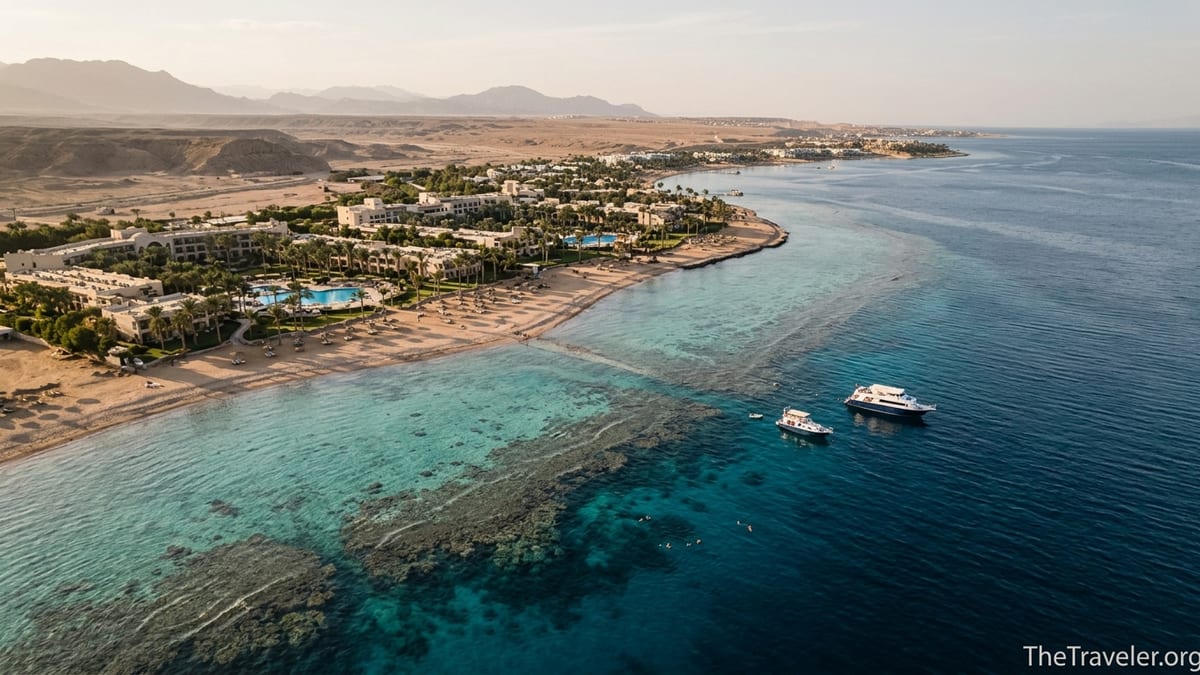
Egypt’s Red Sea Riviera stretches along the eastern coastline from the Sinai Peninsula down to Marsa Alam, with a chain of purpose-built resorts that share similar sunshine and sea but offer different flavors of holiday. Hurghada, the largest city on the Red Sea, anchors a cluster of resort zones such as El Gouna, Sahl Hasheesh, Makadi Bay and Soma Bay, while further south Marsa Alam caters strongly to divers and snorkelers seeking quieter reefs. Across the Gulf of Suez, Sharm el Sheikh dominates the southern Sinai coast and remains the main gateway for Ras Mohammed National Park and the Straits of Tiran.
Most travelers from Europe arrive on direct charter or low-cost flights into Hurghada, Sharm el Sheikh or, less frequently, Marsa Alam. From North America, it is more common to connect via Cairo, Istanbul, Frankfurt or Dubai then continue to the coast on a domestic flight operated by EgyptAir or a regional carrier. For itinerary planning, this means you can often choose whether to start your trip in Cairo then “finish” at the sea, or fly straight into a Red Sea airport for a pure resort-based holiday with optional cultural side trips.
Resorts themselves span everything from large all-inclusive complexes with water parks and nightly entertainment to smaller dive-focused hotels with in-house centers and simple half-board plans. In 2026, mid-range all-inclusive properties in Hurghada or Sharm el Sheikh often price from roughly 80 to 120 US dollars per room per night for two people outside peak holiday weeks, with higher rates in August and around Christmas. High-end names around Soma Bay, Makadi Bay or Nabq Bay in Sharm frequently start closer to 180 to 250 US dollars per night, particularly if they appear in European tour-operator award lists.
From a practical perspective, the key variables that shape your Red Sea itinerary are transfer times and your appetite for long day trips inland. A full day excursion from Hurghada to Luxor, for example, typically runs 16 hours door to door with about seven to eight hours spent in a coach. A similar long day from Hurghada to Cairo involves an early flight or an overnight coach. This guide weighs those realities against your total days on the ground to suggest when it makes sense to add Luxor or Cairo and when to keep your trip purely coastal.
Core Red Sea Bases: Sharm, Hurghada, Soma Bay & Marsa Alam
Sharm el Sheikh, on the tip of the Sinai Peninsula, is ideal for travelers who want dramatic desert backdrops and easy access to famous dive sites. Boat trips run daily to Ras Mohammed National Park and the Straits of Tiran, where advanced divers target sites like Shark Reef and Yolanda Reef, while snorkelers can join more relaxed full-day cruises that include equipment, lunch and several swim stops. In 2026, a typical shared boat trip with snorkeling and a single introductory dive from a Sharm resort might cost the equivalent of 70 to 120 US dollars per person depending on inclusions and whether hotel transfers and national park fees are bundled.
Hurghada and its satellite bays form the most versatile base for mixed-activity itineraries. Families gravitate to the large water-park resorts in Hurghada proper or Makadi Bay, while those wanting quieter beaches and better wind conditions for kitesurfing often look at Soma Bay, about 45 minutes south of Hurghada airport. From these hubs, you can book day boats to the Giftun Islands, Orange Bay or Mahmya Island for sandy beaches and easy snorkeling over shallow reefs. Giftun and Mahmya cruises commonly run around 8 hours and include lunch, soft drinks, equipment hire and hotel pickup, with prices for shared boats often starting around 40 to 70 US dollars per adult.
Marsa Alam sits further south with fewer flights but richer fringing reefs. This is a strong choice for travelers who prioritize snorkeling and diving over nightlife. House reefs at well-regarded resorts are often swimmable straight from the beach, and day trips head to celebrated sites like Sataya Reef or Dolphin House, known for frequent spinner dolphin encounters. Because of the distance, Sataya day trips usually mean very early departures and long boat rides, but many enthusiasts consider it worthwhile for the chance to spend hours in the water with wild pods in relatively uncrowded conditions.
When choosing a base for a short 5 or 7 day trip, Sharm and Hurghada win on flight availability and choice of excursions. For 10 or 14 days, splitting time between two bases, for instance a week in Hurghada or Soma Bay followed by several days in Luxor or Cairo, becomes practical without feeling rushed. The rest of this guide breaks down those time frames into realistic day-by-day suggestions.
5-Day Red Sea Itinerary: Short Escape with Maximum Water Time
With only five days, the priority should be minimizing transfers and maximizing enjoyment of the coast. The most straightforward plan is to base yourself entirely in one resort area such as Sharm el Sheikh, Hurghada or Soma Bay and resist the temptation to drive to Luxor or Cairo. You simply do not have enough time to make a 16 hour round-trip inland worthwhile without sacrificing rest and sea time.
A typical 5-day Sharm-based itinerary might begin with arrival and check-in on Day 1, followed by an easy hotel-beach day to decompress. On Day 2 you could book a shared full-day snorkeling and diving cruise to Ras Mohammed, including hotel transfers, lunch, soft drinks, snorkel gear and one introductory dive if you are a beginner. On Day 3, a half-day quad-bike and desert sunset trip into the Sinai plateau gives a break from salt water, while Day 4 can be reserved for either another boat trip, perhaps to Tiran Island, or a pool day combined with a relaxed walk around Naama Bay or the pedestrian areas of Soho Square. Day 5 is your departure, ideally with a late flight if you want a last swim.
For Hurghada or Soma Bay, the pattern is similar. Arrival and rest on Day 1, then a full-day boat to Mahmya or Orange Bay on Day 2, followed by a desert jeep and quad safari into the Eastern Desert on Day 3. On Day 4 you might join a shorter local snorkel trip to nearby reefs, or if you are a diver, arrange a two-tank dive with an in-house dive center that picks you up from the hotel jetty at around 8 am and returns by mid-afternoon. Prices for basic two-dive day boats in 2026 often start around 70 to 110 US dollars excluding equipment rental, which is typically charged per day.
Some operators market “Cairo by plane” day trips from Hurghada and Sharm even to guests staying four or five nights. While technically feasible, they start around 3 or 4 am and return close to midnight, with substantial time in airports and on coaches in Cairo. For a 5-day Red Sea holiday, it is usually more satisfying to keep the focus on the sea and desert, then plan a separate Nile Valley trip when you have more days to spare.
7-Day Red Sea Itinerary: Add Either Luxor or Cairo
A seven night stay gives enough room to fit in one major cultural day trip if you are prepared for a long day. From Hurghada or Makadi Bay, the most popular option is the coach excursion to Luxor, which in 2026 typically departs between 4 and 5 am and returns around 8 or 9 pm. The drive each way is roughly 3.5 to 4 hours under normal conditions, traversing the Eastern Desert before dropping into the Nile Valley. Standard group tours include the Valley of the Kings, the Temple of Hatshepsut, a stop at the Colossi of Memnon and several hours at Karnak Temple, with a simple lunch in Luxor. Prices vary widely by group size but a realistic range for a 2026 day trip from Hurghada is around 70 to 150 US dollars per adult.
For a balanced 7-day Hurghada itinerary, consider three days focused on water-based activities, one desert day and one big heritage day, with two gentler days around arrival and departure. For instance, Day 2 can be your Giftun or Mahmya snorkel cruise, Day 3 a pool-and-spa day, and Day 4 the Luxor coach excursion. Follow that demanding day with a slower Day 5 in-resort before a sunset quad safari on Day 6. Day 7 is departure, or if your flight is late, a final morning at the beach. This pattern avoids stacking very early starts back to back and gives some buffer in case of tiredness or minor sunburn.
From Sharm el Sheikh, you might choose instead to fly to Cairo for a day to visit the Pyramids of Giza and the Grand Egyptian Museum. Many tour companies packaging Sharm holidays offer this as a bolt-on, using early-morning domestic flights to Cairo, private or small-group guides through the museum and Giza Plateau, and an evening return. Expect a very long day similar in length to the Luxor trip from Hurghada, with prices typically starting in the low hundreds of US dollars per person once flights, tickets, guide and transfers are included.
Travelers who dislike 4 am wake-up calls can invert this pattern by dedicating the full week to the coast and planning their cultural immersion for a future trip. In that case, use two or three days for varied snorkeling and diving, another for a relaxed desert and Bedouin-style dinner experience, and intersperse quieter days where you simply use resort facilities. Around Soma Bay and Makadi Bay, for example, non-divers often enjoy combining a half-day catamaran cruise with a visit to a local kite station, while children gravitate to hotel water parks and kids’ clubs.
10-Day Itinerary: Combining Red Sea Resorts with Luxor
With ten days on the ground, you can move beyond day trips and actually sleep in Luxor without sacrificing too much beach time. A classic pattern is to split the trip between a Red Sea resort such as Soma Bay or Hurghada and two or three nights in Luxor, traveling between them by private minivan or group transfer. The road journey is still 3.5 to 4 hours one way, but spreading the temples over two days allows slower sightseeing and cooler early-morning visits to the West Bank.
One realistic 10-day route would begin with five nights at a resort in the Hurghada area. During this phase you can fit in at least two full-day snorkeling or diving boats, one desert experience and one mostly-rest day. On Day 6, arrange a morning pickup for the transfer to Luxor, arriving around lunchtime and checking into a Nile-side hotel on the East Bank. Rates in 2026 for mid-range properties with river views often start around 60 to 120 US dollars per night for a double room, significantly less than most Red Sea beachfront resorts.
Day 7 in Luxor might focus on the West Bank, with a private guide and driver visiting the Valley of the Kings, the Temple of Hatshepsut and one or two lesser-visited tombs if your ticket allows. The following day you can devote to Karnak and Luxor Temples, strolling the restored Avenue of Sphinxes in the cooler late afternoon light. Optional extras in Luxor include dawn hot-air balloon flights across the West Bank, usually priced from roughly 100 to 150 US dollars per person in 2026, and evening felucca sails on the Nile.
On Day 9, return to the Red Sea by road, either back to Hurghada for a final night near the airport or onward to a different coastal base such as Soma Bay or Makadi Bay for a quieter finale. This leaves your last day free for a final swim and packing, with only a short airport transfer to manage. Compared with doing Luxor as a single day from the coast, this structure reduces time spent on buses, spreads costs over multiple nights and allows more flexible touring that can accommodate heat and crowds.
14-Day Itinerary: Red Sea, Luxor and Cairo Without Rushing
Two full weeks in Egypt allow you to combine both the Red Sea and the Nile Valley without every day feeling like a race. A common pattern for independent travelers is to start in Cairo for three or four nights, continue to Luxor for several days, then finish with five or six nights at the sea. Others prefer to reverse the order and decompress on the Red Sea first, particularly after long-haul flights.
One balanced 14-day route begins with arrival in Cairo and three nights there. That gives time for a full day at the Pyramids of Giza, Saqqara and Dahshur, plus at least one long museum day and a gentle day exploring historic neighborhoods such as Islamic Cairo. From Cairo, you can fly to Luxor in under an hour, with domestic fares that fluctuate but are generally modest relative to the cost of an international ticket. Spend four nights in Luxor, splitting your time between West Bank tombs and temples and East Bank monuments, plus optional extras like a felucca sunset sail or a visit to the Luxor souk.
On Day 8 or 9, transfer from Luxor to the Red Sea. If you want variety on the coast, you might book three or four nights in a lively Hurghada or Sharm-style resort with a strong activity program, then shift to a smaller, quieter property such as one in Soma Bay or a dive-focused lodge near Marsa Alam for the final four nights. Along the way, aim for two to three full-day boats, one or two shorter local snorkel or dive outings, and at least one desert excursion adapted to your base, such as a stargazing night in the Eastern Desert or a camel ride and campfire dinner.
Travelers deeply into diving may also consider a 14-day plan that includes a three- or four-night liveaboard in the Red Sea. Liveaboards based out of ports near Hurghada, Marsa Alam or Port Ghalib typically offer intensive dive schedules at offshore sites like Elphinstone, Daedalus or the Brothers Islands, and can be slotted between time on land in Luxor and Hurghada. These trips require advance certification, careful scheduling around flight times and respect for no-fly-after-diving intervals, so they are best reserved for experienced divers who want their Red Sea days built almost entirely around diving.
However you structure your 14 days, the key is not to underestimate heat, transfers and jet lag. Build in recovery days after big overland or flying days, and use your Red Sea base for exactly what it offers best: warm water, relaxed evenings and as much or as little organized activity as suits your pace.
Practical Costs, Transfers and Booking Tips
While prices fluctuate with demand and currency movements, some patterns have emerged in the 2026 market. Full-day snorkeling and island trips from Hurghada or Sharm that include hotel pickup, lunch and basic gear frequently start in the 40 to 80 US dollar range per adult for shared boats. Entry-level scuba diving packages that include two boat dives, a guide and tanks but exclude rental gear often range from 70 to 120 US dollars per day. National park fees, such as those for Ras Mohammed or marine protected areas around Giftun, are sometimes added as a separate cash payment, so bringing a small amount of local currency is wise.
Desert safaris from Hurghada, Makadi Bay or Sharm typically combine hotel pickup, quad biking, short camel rides and an evening meal in a desert camp setting. In 2026, many operators advertise these between roughly 30 and 60 US dollars per person for shared excursions, with private versions costing more. Hot-air balloon flights in Luxor and additional optional tombs inside the Valley of the Kings add to daily budgets but can still represent good value compared to equivalent experiences elsewhere.
For transfers, private minivans between Hurghada and Luxor are widely arranged by local agencies and hotels. Travelers on forums in 2026 commonly report prices that are competitive with booking two separate long-distance taxis, especially when shared among three or four people. Shared coach excursions bundled with sightseeing remain the cheapest way to make the journey, though they offer less flexibility on timings and stops. Between Cairo and the Red Sea, flying is usually the most time-efficient choice when you are structuring a 10 or 14 day trip that strings multiple regions together.
When comparing packages, look carefully at what is truly included. Some “all-inclusive” resort deals cover only basic buffet meals and local soft drinks, with surcharges for specialty restaurants, imported alcohol or premium coffee. Similarly, a Red Sea boat trip listed at a very low base price may turn out to exclude mask and fin rental, wetsuit hire in winter months or the national park fee. Building a small contingency into your daily budget for such extras will help avoid surprises once on the ground.
FAQ
Q1. Is it realistic to visit Luxor as a day trip from Hurghada?
Yes, many visitors do Luxor as a long day trip from Hurghada or Makadi Bay, typically around 16 hours door to door with about seven to eight hours on the road, but it is tiring and families or slower travelers often prefer at least one overnight stay in Luxor instead.
Q2. How many days should I spend at the Red Sea versus Cairo and Luxor on a 14-day trip?
A balanced split is roughly five to six nights on the Red Sea, four nights in Luxor and three to four nights in Cairo, which allows unhurried sightseeing inland and several full days for snorkeling, diving and rest on the coast.
Q3. Which Red Sea base is best for first-time visitors?
For most first-time visitors, Hurghada and its nearby bays or Sharm el Sheikh work best because they offer frequent flights, a wide range of resort styles and easy access to popular boat trips and desert excursions, while Marsa Alam suits repeat visitors or those focused heavily on snorkeling and diving.
Q4. Can I combine a Red Sea resort with a Nile cruise in a 10-day itinerary?
It is technically possible but often feels rushed; most classic Nile cruises between Aswan and Luxor take four nights, so by the time you add airport transfers and at least three or four nights on the Red Sea, you have little margin for delays, making a 12 or 14 day trip more comfortable for adding a cruise.
Q5. Are Red Sea boat trips suitable for children and non-swimmers?
Yes, many shared boats to islands like Mahmya or Orange Bay cater specifically to mixed-ability groups, providing life jackets, shallow sandy entries and the option for some family members to stay on the boat while others snorkel, though parents should always check age and safety policies with the operator before booking.
Q6. What is the best season for a Red Sea and Luxor combination trip?
Late October to April usually offers the most comfortable balance, with warm Red Sea water and milder daytime temperatures around Luxor and Cairo; in high summer, inland sites can become extremely hot, making early starts and long midday breaks essential.
Q7. Do I need to be a certified diver to enjoy the Red Sea?
No, beginners can join introductory dives from many Red Sea resorts under close supervision or simply snorkel above shallow reefs that teem with fish, while certified divers have the option to join more advanced boat trips and liveaboards to offshore sites.
Q8. How far in advance should I book excursions like Luxor day trips or Ras Mohammed cruises?
For peak periods such as Christmas, New Year and major school holidays, it is wise to reserve key excursions several weeks in advance, while in shoulder seasons you can often book most Red Sea boat trips and coach tours one or two days ahead through your hotel or a reputable local agency.
Q9. Is it worth splitting my stay between two Red Sea resorts?
On trips of 10 days or longer, splitting between a livelier base like Hurghada or Sharm and a quieter bay such as Soma Bay or a Marsa Alam-area resort can add variety without heavy extra travel time, especially if the two properties share the same arrival airport.
Q10. Can I visit both Cairo and Luxor as day trips from the Red Sea?
You can, but this means two extremely long and expensive days, one involving domestic flights and the other a lengthy road journey; for most travelers it is more rewarding to build at least short overnight stays in Cairo or Luxor into a 10 or 14 day itinerary instead of treating both as day excursions from the coast.