


Few travel dilemmas are as common among Red Sea first-timers as choosing between Hurghada and Sharm El Sheikh. Both promise year-round sunshine, turquoise water and resort comforts, yet the experience on the ground feels very different. Whether you are a diver chasing legendary reefs, a family after big waterparks, or a couple planning a romantic winter-sun escape, picking the right base will shape your entire Egypt trip.
Overview: Two Very Different Red Sea Personalities
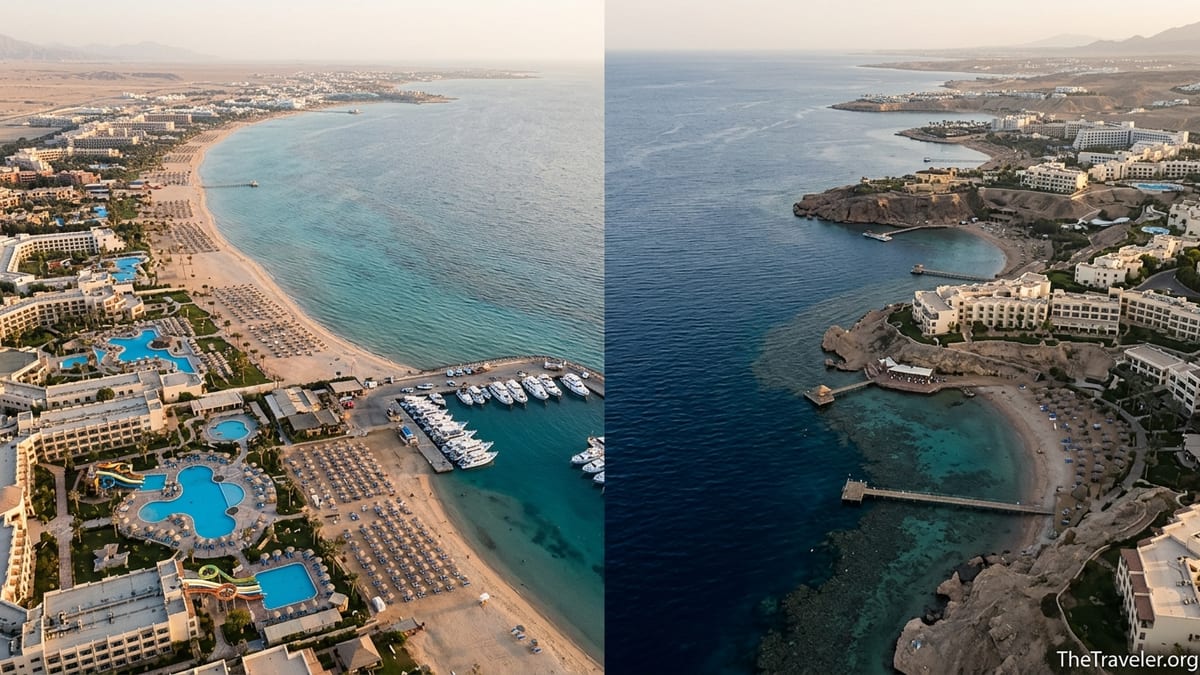
Hurghada and Sharm El Sheikh are Egypt’s two heavyweight Red Sea resorts, yet they sit on opposite sides of the sea and cater to slightly different travelers. Hurghada spreads along the mainland coast, about a five-hour drive southeast of Cairo and roughly three hours from Luxor, making it the easier choice if you want to bolt beach time onto a Nile itinerary. Sharm El Sheikh lies on the southern tip of the Sinai Peninsula, more secluded from the rest of Egypt and historically built as a self-contained resort hub with world-class coral reefs.
In practical terms, both destinations offer international airports with frequent charter and scheduled flights from across Europe and the Middle East. Hurghada International Airport (HRG) sits just inland from the resort strip, while Sharm El Sheikh International Airport (SSH) serves the Sinai side. Package guests often arrive on direct seasonal flights, while independent travelers typically connect through Cairo. From both airports you can be in a mid-range all-inclusive resort within 15 to 30 minutes by taxi or pre-arranged transfer.
On the ground, the trade-offs are clear. Sharm wins for headline reefs and polished, bay-style beaches backed by big five-star properties. Hurghada offers longer sandy stretches, easier wading for non-swimmers and a livelier, more lived-in Egyptian city atmosphere once you step beyond the hotel gates. Understanding these differences is key to matching the right resort to your priorities.
Beaches, Water & House Reefs
If your ideal Red Sea holiday means soft sand, shallow water and long shoreline walks, Hurghada generally has the edge. The main strip south of the city, plus satellite areas like Sahl Hasheesh and Makadi Bay, feature natural sandy entries and wide beaches where you can walk straight into the water without reef shoes. At large resorts such as Sunrise Garden Beach or Jaz Aquamarine, families spend full days rotating between multiple pools and broad hotel beaches with gently shelving water and minimal current.
Sharm El Sheikh’s coastline is more dramatic but also more demanding. Many hotels sit on rocky shelves or directly above coral, which protects the shoreline but means walkways and floating jetties are common. In bays such as Ras Um Sid or Sharks Bay, you descend ladders at the end of a jetty straight into deep blue water that drops to reef walls rich with fish. This is thrilling for confident swimmers and snorkelers, but can intimidate nervous bathers and young children who prefer to stand on the seabed. Some Sharm properties solve this with man-made lagoons or small sand coves set away from the main reef.
For casual snorkelers, Sharm tends to offer higher-impact marine life right off the beach. Guests at hotels overlooking Ras Mohammed National Park routinely report seeing clownfish, parrotfish and even turtles while hovering just a few metres from the jetty. In Hurghada the best house-reef style snorkeling is concentrated in specific areas like Sahl Hasheesh promenade or certain Makadi Bay and El Gouna hotels; elsewhere, you usually join a boat trip to offshore reefs or the Giftun Islands for the clearest water and coral.
Diving & Snorkeling: Reefs, Wrecks and Conditions
For serious divers, Sharm El Sheikh has long been the poster child of Egyptian diving, thanks to its proximity to Ras Mohammed National Park and the Strait of Tiran. From Naama Bay or Sharks Bay, day boats head to steep coral walls, drift dives and vibrant pinnacles where visibility often exceeds 20 metres and currents can be brisk. Iconic sites like Shark and Yolanda Reef reward experienced divers with schooling fish and occasional pelagic sightings, while easy shallower reefs closer to shore cater to Open Water courses and try dives.
Hurghada’s diving scene feels slightly more laid-back and is particularly strong for wreck enthusiasts. The Abu Nuhas reef system north of Hurghada, home to several shipwrecks lying between about 15 and 30 metres, is a full-day trip that many divers cite as a highlight of the northern Red Sea. Day boats from Hurghada and nearby El Gouna also visit local reefs dotted with hard coral gardens and sandy patches ideal for beginner courses. Prices for a two-tank day boat dive with equipment commonly start a little lower in Hurghada than in Sharm, reflecting the destination’s generally cheaper positioning, though exact costs vary by operator and season.
For mixed groups where some people dive and others only snorkel, Sharm’s jetty-access house reefs are hard to beat. A couple can stay at a mid- to upper-range hotel in Ras Um Sid or Nabq Bay, with the diver hopping onto a boat each morning while their partner spends hours snorkelling directly from the hotel. In Hurghada, a similar experience often means booking a resort with a particularly good house reef or planning dedicated boat days for everyone. Visibility and temperatures are comparable in both destinations across the main season, though the Sinai side usually feels a touch more exposed to currents and wind, part of what keeps the reefs in such good condition.
Resort Scene, Nightlife & Atmosphere
Hurghada grew from a small fishing town into a sprawling resort city, and that history is still visible in its mixed, sometimes chaotic urban fabric. Along Sheraton Road and in the older El Dahar district you find Egyptian cafes, shisha bars and local shops alongside souvenir stores tailored to tourists. South along the coast, purpose-built zones like Sahl Hasheesh and Makadi Bay feel more master-planned, each with clusters of large all-inclusive resorts, waterparks and beachfront promenades. Hurghada Marina is the social hub for many visitors, with relaxed waterfront bars, seafood restaurants and a family-friendly evening promenade.
Sharm El Sheikh, by contrast, was planned almost entirely as a resort destination. Areas such as Naama Bay, Hadaba, Sharks Bay and Nabq each form self-contained clusters of hotels, malls and promenades. Naama Bay is the liveliest, with open-air bars, lounges, casual clubs and shisha terraces that stay busy late into the night. SOHO Square near Sharks Bay offers a more polished, almost theme-park-like setting where families and couples wander between restaurants, ice cream stands, an ice rink and fountain shows. Away from these hubs, many Sharm resorts are effectively bubbles where guests spend nearly all their time inside the hotel gates.
When it comes to nightlife, Sharm typically stays open later and leans more into club-style venues, while Hurghada’s evening scene revolves around marina bars, hotel entertainment and a handful of late-closing pubs. A couple in their twenties looking for music and cocktails until the early hours will likely feel more at home in Naama Bay than in central Hurghada. Families and older couples who prefer a quiet drink after dinner and a stroll by the water might find Hurghada Marina or the pedestrian promenade in Sahl Hasheesh more their speed.
Families vs Couples: Who Thrives Where
For families with younger children who spend most of their time between the pool, slides and buffet, Hurghada is often the simpler, more affordable choice. Many of the big all-inclusive properties south of the city operate almost like miniature theme parks, with multiple kids’ pools, lazy rivers and splash zones. Resorts frequently bundle in free access to onsite or partner waterparks, making the up-front package cost good value once you factor in how little extra you need to spend on entertainment. The gently shelving beaches and calmer, sandier entries mean even small children can paddle safely under watchful eyes.
Sharm El Sheikh is also popular with families, especially with older kids and teens who are confident in the water and excited about snorkelling. Bays such as Nabq, Sharks Bay and Ras Um Sid offer house reefs where twelve-year-olds can float above clouds of anthias and watch clownfish in the anemones just a few fin kicks from the hotel jetty. Several resorts in Sharm run structured kids’ clubs, evening mini-discos and family-friendly entertainment, but the feel is a little more grown-up and, in many cases, a touch more expensive than comparable mass-market Hurghada options.
For couples, the choice hinges on mood. Those envisioning long lazy days on a near-private bay, followed by quiet dinners and perhaps a late drink with sea views, may gravitate toward Sharm’s more upscale enclaves in Sharks Bay, Hadaba or some adult-focused properties in Nabq. Honeymooners and anniversary travelers often choose Sharm specifically for its combination of stylish, bay-front resorts and outstanding snorkelling without needing to board a boat. Couples who are more budget conscious, or who want a mix of beach time and local Egyptian color, will often be happier in Hurghada, where it is easier to leave the resort for an inexpensive meal in town or a wander through a traditional market.
Excursions, Day Trips & Desert Adventures
Where you base yourself will significantly shape the day trips available. From Hurghada, one of the biggest advantages is access to Upper Egypt. Coach excursions and private transfers regularly run to Luxor, typically taking around three hours each way. This makes it realistic to see the Valley of the Kings, Karnak and Luxor Temple on a long day trip, or to add an overnight stay in Luxor before returning to the coast. For travelers planning a broader Egypt journey that already includes Cairo or a Nile cruise, basing the Red Sea leg in Hurghada keeps logistics and travel times manageable.
Sharm El Sheikh, set on the Sinai Peninsula, offers a different menu of excursions. Popular trips include sunrise or sunset hikes on Mount Sinai, visits to the St Catherine’s Monastery complex, and 4x4 safaris into the desert canyons and wadis with Bedouin-style dinners under the stars. Snorkelling and boat excursions to Ras Mohammed National Park and the Strait of Tiran depart from Sharm’s marinas and are often the highlight of a week-long stay. Overland travel between Sharm and mainland highlights such as Luxor is technically possible but long and logistically more complex, so most visitors pair Sharm either with Cairo by air or visit it as a standalone beach and diving holiday.
Both destinations also offer the familiar spectrum of Red Sea resort excursions: quad biking in the desert, camel rides at sunset, glass-bottom boat trips and evening shows with folkloric dancing. Prices for these tours are broadly similar, and in both places you can book either with your tour operator, through your hotel’s excursion desk or via independent agencies in town. In practice, Hurghada slightly edges things for culture and history day trips, while Sharm is stronger for desert landscapes and national park snorkeling or diving.
Getting There, Getting Around & Costs
For most travelers, flights are the biggest single cost. Both Hurghada and Sharm El Sheikh have busy international airports that see a heavy flow of charter flights from European cities in winter, alongside scheduled services that often route through Cairo or major Gulf hubs. Flight pricing fluctuates widely with season and demand, but in any given month you will usually find a similar spread of deals to each destination from major European markets. Travelers combining the Red Sea with Cairo can often pick up reasonably priced domestic legs between Cairo and either HRG or SSH operated by Egyptian carriers.
Airport transfers are straightforward in both resorts. Many package holidays include coach transfers in the price, but independent travelers can expect a typical taxi from Hurghada Airport to a hotel in the main resort strip to cost less than a taxi from Sharm Airport to more distant bays like Nabq, simply because Hurghada’s built-up area stretches more linearly along the coast. In both destinations it is sensible to agree or confirm the fare before getting into an airport taxi, or to pre-book a private transfer through your accommodation if you prefer a fixed price.
When it comes to everyday spending, Hurghada generally remains the more budget-friendly option. All-inclusive packages at large, family-oriented four- or five-star hotels often undercut comparable stays in Sharm by a noticeable margin, especially outside peak school holiday weeks. In-resort extras such as spa treatments, à la carte restaurant surcharges and drinks can also be a little cheaper. Sharm, with its slightly more upmarket positioning in areas like Naama Bay, Sharks Bay and some Nabq resorts, tends to price higher for similar room categories and for activities like private boat charters or high-end dining.
Within both resorts, transport and casual eating need not be expensive. Short taxi rides between neighborhoods, or to marinas and promenades, are usually affordable if you negotiate politely or ask your hotel for guidance on fair rates. Simple Egyptian meals, shawarma or falafel in local cafes, and fresh juices cost a fraction of hotel restaurant prices, making it easy to trim the daily budget if you are willing to eat outside your resort. Overall, travelers focused on value, particularly families needing multiple rooms or a long stay, often find their budget stretches a little further in Hurghada.
Which Destination Suits Which Traveler?
For pure beach relaxation on soft sand with easy water entry, Hurghada is usually the safer bet. First-time visitors to Egypt who are slightly nervous swimmers, older travelers and families with toddlers often feel more comfortable in Hurghada’s broad, shallow bays. The destination is also ideal if your trip includes or might include Luxor. A couple on a ten-night holiday, for example, could spend four nights in Luxor exploring temples and tombs, then transfer by road to Hurghada for a week of all-inclusive rest without backtracking through Cairo.
If your priorities revolve around snorkelling and diving quality, Sharm El Sheikh comes into its own. Confident snorkelers who like the idea of stepping off a hotel jetty into deep water above a coral wall will find the Sinai coastline extremely rewarding. Divers with a few dozen logged dives will appreciate the variety of drift and wall dives around Ras Mohammed and the Strait of Tiran, often combined with livelier nightlife in Naama Bay. Couples seeking a slightly more refined, bay-style resort ambience may also prefer Sharm, especially if they are content to fly in and out without trying to cover a wide swathe of Egypt in a single trip.
Budget-conscious families, long-stay guests and those wanting a stronger sense of local Egyptian life beyond the resort gates lean towards Hurghada. Shoppers can browse local markets in El Dahar or stroll Hurghada Marina in the evening, then retreat to large all-inclusive complexes where almost everything is included. On the other hand, groups of friends and divers who prioritize reef quality over price often view the extra spend in Sharm as justified for the underwater experience alone. The “right” answer is less about which resort is objectively better and more about which one aligns cleanly with your non-negotiables.
The Takeaway
Choosing between Hurghada and Sharm El Sheikh is less a matter of picking a winner and more about identifying the Red Sea personality that fits your travel style. Both destinations deliver warm seas, strong sun and a huge selection of resorts; where they differ is in reef access, surrounding landscapes, nightlife temperature and how easily you can plug them into a bigger Egypt itinerary.
As a rule of thumb, think of Hurghada if you want wide sandy beaches, good-value all-inclusive resorts, easy paddling for young children and straightforward access to Luxor’s temples and tombs. Consider Sharm El Sheikh if you are chasing Egypt’s headline snorkelling and diving, prefer compact bay-style resorts and do not mind paying a bit more for polished surroundings and livelier nights out.
In practice, either destination can anchor a memorable Red Sea escape. Start by listing your must-haves: house-reef snorkelling, gentle sand, nightlife, price, or proximity to ancient sites. Match those priorities to the strengths of each resort, and the decision between Hurghada and Sharm El Sheikh becomes far easier. Whichever you choose, the Red Sea’s clear water and desert-backed horizons will likely tempt you back to explore the other side on a future trip.
FAQ
Q1. Which has better beaches overall, Hurghada or Sharm El Sheikh?
Hurghada generally offers wider natural sandy beaches and easier walk-in access, while Sharm has more dramatic bay settings where many hotels use jetties over coral.
Q2. Where is snorkelling better, directly from the hotel beach?
Sharm El Sheikh usually wins for house-reef snorkelling, with many hotels built on coral shelves where you can see rich marine life a few fin strokes from the jetty.
Q3. Which destination is better for a first-time diver doing their certification?
Both work, but many beginners appreciate Hurghada’s calm, sandy-bottom training sites and slightly lower prices, while Sharm appeals once you are ready for more varied reefs.
Q4. Is Hurghada or Sharm El Sheikh better for families with young children?
Hurghada often suits younger kids thanks to gentler, sandy entries and big waterpark-style resorts, while Sharm works well for older children keen to snorkel.
Q5. Which is more suitable for couples looking for a romantic break?
For a quieter, slightly more upscale bay atmosphere with strong snorkelling, many couples choose Sharm, while value-focused pairs often prefer Hurghada’s bigger all-inclusive resorts.
Q6. How do costs compare between Hurghada and Sharm El Sheikh?
Hurghada is typically a little cheaper for all-inclusive packages and everyday spending, while Sharm usually commands higher prices for similar rooms and activities.
Q7. Which base is better if I want to visit Luxor or do more cultural sightseeing?
Hurghada is far better placed for Luxor and Upper Egypt, with regular overland day trips and overnights, making it easier to combine beach time with major ancient sites.
Q8. Is nightlife stronger in Hurghada or Sharm El Sheikh?
Sharm El Sheikh has the livelier late-night scene, especially around Naama Bay and SOHO Square, while Hurghada focuses on marina bars, hotel shows and quieter evenings.
Q9. Can I easily combine both Hurghada and Sharm El Sheikh in one trip?
It is possible but adds travel time; most visitors pick one base, though some longer itineraries link the two by domestic flight or overland transfers arranged through agencies.
Q10. If I mainly want to relax on the beach and swim, which should I choose?
Hurghada is usually the safer choice for straightforward beach-and-swim holidays, especially if you prefer standing-depth water and do not need a dramatic coral wall at your doorstep.