


The Egyptian Red Sea is one of the few places where a five-hour flight from much of Europe or a relatively short hop from the Gulf drops you into water that rivals long-haul destinations like the Maldives. Yet choosing between Sharm El Sheikh, Dahab, Hurghada, Safaga and Marsa Alam can feel daunting. Each area has its own personality, price point and underwater highlights. This guide breaks down the major Red Sea hubs from a practical diver’s point of view so you can pick the right base for your next trip.
Red Sea Overview: When to Go and What to Expect
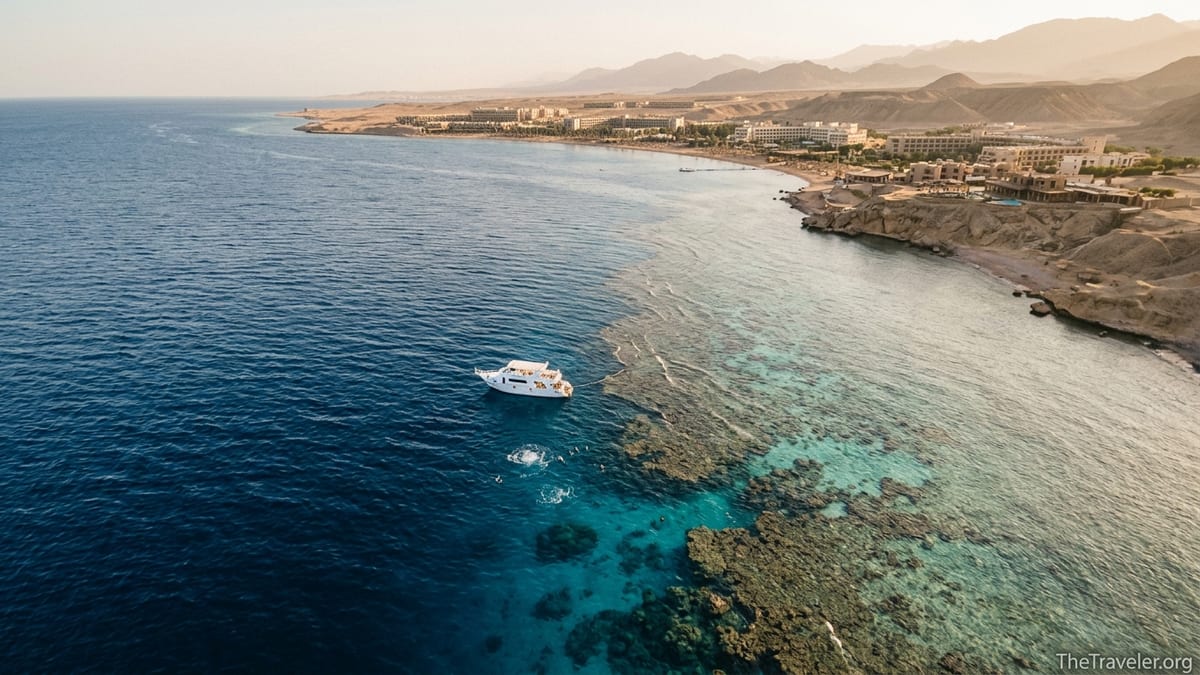
The Egyptian Red Sea runs for more than 1,000 kilometers, but most recreational divers focus on a handful of established hubs. Sharm El Sheikh and Dahab sit on the Sinai Peninsula in the north, while Hurghada, Safaga and Marsa Alam line the western mainland coast. All five regions share reliably clear water, with typical visibility around 20 to 30 meters and often higher on offshore reefs. Reef life centers on hard corals, clouds of anthias, fusiliers and wrasse, rather than large pelagic fish, though big encounters are possible in the south at sites like Elphinstone.
Water temperature ranges from about 22°C in February to 28°C or more in August. In practice this means many divers are comfortable in a 5 mm wetsuit during winter and a 3 mm or even shorty in late summer. Wind can be a factor along the exposed coasts, especially in spring. Beginners often prefer sheltered bays in Hurghada or Dahab’s Lighthouse reef, while advanced divers seek out current-swept walls and offshore plateaus off Marsa Alam and the Strait of Gubal.
Costs remain competitive compared with other warm-water destinations. As a rough guide in 2025 and 2026, a two-tank day boat from Hurghada or Safaga with lunch and transfers typically runs around 70 to 90 euros per person with your own gear, based on published price lists from established operators. In Dahab, guided shore dives are generally cheaper because you are entering from the beach rather than running a full-day boat, which makes it attractive for longer stays or courses on a budget.
Most visitors combine diving with resort downtime. Sharm and Hurghada have full-scale beach resorts, water parks and nightlife. Dahab is more low-rise and laid-back, with cafes lining the seafront promenade. Marsa Alam and Safaga often mean self-contained dive resorts or quiet hotels with in-house centers, where the main evening entertainment is swapping dive stories at the bar.
Sharm El Sheikh: Classic Northern Reefs and World-Famous Wrecks
Sharm El Sheikh built its reputation on dramatic wall dives and access to some of the most famous sites in the northern Red Sea. Ras Mohammed National Park, at the tip of Sinai, offers vertical drop-offs like Shark and Yolanda Reef, where schooling barracuda, jack and snapper gather in summer. On a calm June morning it is not unusual to hang at 20 meters and watch dense silver shoals circling in the blue while anthias flicker against the coral wall.
For wreck fans, Sharm is the primary jumping-off point for the SS Thistlegorm, a British World War II cargo ship resting in about 30 meters of water in the Strait of Gubal. The holds still contain trucks, motorbikes and railway carriages, making it one of the world’s best-known wreck dives. Day boats typically leave Sharm’s harbors before dawn and return in the late afternoon, with two or sometimes three dives on the site depending on experience and conditions. Many operators require at least Advanced Open Water certification and 30 or more logged dives because of depth and the potential for current.
Sharm’s house reefs and local sites can also work for beginners. Areas like the Temple and Ras Umm Sid offer sheltered conditions with rich coral gardens between 5 and 18 meters. Most large resorts in Naama Bay and Sharks Bay have an attached dive center, and it is common to see newly certified divers doing check dives straight from the hotel jetty before heading out on boats later in their stay. Expect full-day boat trips with two dives, lunch and hotel transfers to fall in the 80 to 110 euro bracket with your own equipment, depending on the operator and season.
On land Sharm feels like a mature mass-market resort. There are international hotel brands, nightclubs, malls and a busy airport with regular charter and low-cost flights from Europe. That convenience comes with crowds. Boats to Ras Mohammed and the nearby Tiran Strait can be busy in high season, and there is more boat traffic than in quieter hubs like Marsa Alam. Sharm suits divers who want a classic “fly and flop” beach holiday with high-quality diving, especially if wrecks like Thistlegorm or a Ras Mohammed wall have long been on the wish list.
Dahab: Shore-Diving Hub for Courses, Budget Trips and Blue Hole Adventures
Dahab, around an hour and a half north of Sharm by road, is a different world. The former Bedouin village has grown into a compact town of guesthouses, simple hotels and a few boutique properties, but the vibe remains relaxed. Most dives are shore entries from the rocky coastline rather than day boats. You load tanks onto a pickup truck at your dive center in the morning and drive five to 20 minutes along the coast to sites like Lighthouse, Eel Garden, The Canyon or the famous Blue Hole.
The lighthouse area in the center of town serves as Dahab’s training hub. Several PADI and SSI centers line the waterfront directly opposite a gently sloping reef where confined sessions and first open water dives take place just steps from the classroom. Visibility is usually over 20 meters, there is minimal current, and depths between 5 and 18 meters are packed with coral heads, seagrass patches and reef fish. This setup makes Dahab a strong candidate for Open Water and Advanced courses, especially for travelers who prefer walking to the water instead of commuting to a marina every day.
More advanced divers come for the Blue Hole and The Canyon. The Blue Hole is a near-vertical sinkhole just north of town, with a shallow saddle around 6 meters and a reef wall dropping to well beyond recreational depths. Technical divers descend deeper through the notorious arch, but recreational divers usually follow the Bells to Blue Hole route or explore the outer reef wall between about 15 and 30 meters with a standard deep or multi-level profile. The Canyon offers another signature dive, where a crack in the reef forms a tunnel-like passage that advanced divers can swim through under guide supervision.
Prices in Dahab remain among the lowest in Egypt for guided diving, in part because there is no big-boat overhead. Published 2025 and 2026 price lists from established centers show shore dives starting at roughly 30 to 40 euros per dive on small packages, dropping per-dive costs further when you book multiple days. Accommodation also skews affordable. It is common to find simple seafront guesthouses or diver-friendly hotels bundled with dive packages, and many long-stay visitors rent apartments and dive several times a week. Dahab suits budget-conscious travelers, digital nomads and anyone who prefers shore diving, small groups and a laid-back nightlife of beach bars and grill restaurants rather than clubs.
Hurghada and Safaga: Accessible Reefs, Northern Wrecks and All-Inclusive Resorts
Hurghada is the original Red Sea resort on the mainland coast and remains one of Egypt’s most accessible dive bases. The airport sits just outside town, and most hotels are within a 10 to 30 minute transfer. The local reef system stretches north toward El Gouna and south toward Safaga, with dozens of day-boat sites. Popular spots like Giftun Island, Abu Ramada and Carless Reef offer sloping coral gardens, pinnacles, plateaus and the occasional drift, usually with depths between 10 and 30 meters. Conditions tend to be gentle enough for new divers while still interesting for experienced ones, particularly when currents pick up and schooling fish gather on exposed corners.
Hurghada is also a gateway to notable wrecks in the northern Red Sea. While Thistlegorm trips are long days from Hurghada compared with Sharm, many centers run them regularly in calm weather for advanced groups, often combining the wreck with a reef like Ras Mohammed or Shaab Ali as a second dive. Closer at hand, the Abu Nuhas reef system near the Gulf of Suez is known for several historic wrecks lying on the same reef, including the Carnatic and Giannis D. These deeper, occasionally current-swept sites are better suited to Advanced divers and up, but they are a highlight for anyone serious about wreck diving.
In terms of logistics, Hurghada and nearby Safaga rely mostly on full-day boat trips. You are typically collected from your hotel around 8 am, board a large day boat with shaded deck and salon, then cruise one to two hours to the sites. Expect two dives, lunch, soft drinks and return transfers mid to late afternoon. Recent published price lists from Hurghada centers indicate packages around 115 to 240 euros for 2 to 5 days of diving with your own equipment, which works out at roughly 50 to 70 euros per day excluding gear rental. Introductory dives for non-certified guests tend to cost around 70 to 80 euros for two supervised dives from the boat.
Safaga, about an hour south of Hurghada by road, is quieter and often chosen by repeat visitors who want fewer boats and slightly less urban development. The local reefs include sites like Tobia Arbaa and Abu Kafan, which offer healthy coral, walls and the chance to visit the Salem Express wreck on longer day trips. Accommodation leans toward self-contained dive resorts or modest hotels with in-house operations rather than big nightlife. Both Hurghada and Safaga work well for mixed groups, where some travelers want to dive while others stick to the pool or try snorkeling and water sports.
Marsa Alam: Southern Reefs, House Reefs and Big Animal Encounters
Further south, Marsa Alam is less developed than Hurghada but has become a favorite among experienced divers. The coastline here is dotted with remote bays and purpose-built dive resorts such as those around Port Ghalib and south toward Hamata. Many properties feature a fringing reef directly in front of the hotel, with jetties or shore entries giving access to “house reef” dives. You can easily log two or three unguided house-reef dives per day with a buddy once the center has checked your skills, making Marsa Alam popular with photographers and independent divers who prefer flexible schedules.
The big underwater draw is the concentration of high-quality offshore reefs. Sites like Elphinstone, a narrow, current-washed reef rising from deep water, offer the chance of shark encounters for suitably qualified divers. Boats typically run Elphinstone as a half-day or full-day excursion from early-morning speedboats or larger day boats, with depths often down to 30 or more meters and significant current at times. Other offshore areas, including Fury Shoals further south, are usually reached by liveaboard trips departing from Port Ghalib or Marsa Alam itself, giving access to remote coral gardens, caverns and occasional dolphins or turtles.
Marsa Alam can work for beginners as well, but conditions on exposed reefs are more demanding. Many new divers complete Open Water courses in sheltered bays or lagoons with sandy bottoms and easy entries, then gradually progress to boat dives on nearby reefs. Experienced divers often combine shore-based days with a week-long liveaboard, building itineraries that focus on the “Deep South” or Brothers, Daedalus and Elphinstone circuits. On these routes, per-day diving costs on liveaboards advertised for 2025 and 2026 often fall between 150 and 220 euros per person including full board and up to four dives per day, although prices vary widely with boat standard.
On land Marsa Alam is quiet. Outside Port Ghalib and a few established resorts there is limited nightlife and shopping. Many guests stay on-site, enjoying all-inclusive packages where meals, soft drinks and sometimes limited alcoholic drinks are bundled with room and dive packages. This area suits dedicated dive holidays, underwater photographers, and couples or small groups who value time on the reef over dining options or clubs.
Beginners vs Advanced Divers: Matching Skills to Each Region
For beginners or those planning to qualify on their trip, the two stand-out choices are Hurghada and Dahab. Hurghada offers easy logistics, a wide choice of international-standard centers and plenty of shallow, sheltered reefs accessible from large, stable boats. It is common for new divers to complete a PADI Open Water course across three or four days with a mix of pool or confined sessions and boat dives, then stay on to enjoy a few fun dives at local sites around 12 to 18 meters.
Dahab, by contrast, shines for shore-based training. Walking straight into the water from the Lighthouse reef with your instructor is less intimidating than giant strides off the back of a boat for some people. Visibility is excellent, there is little current, and the absence of waves in the bay means conditions are often good even on windy days. For cost-conscious travelers, course prices in Dahab are often lower than in Sharm or Hurghada, with multi-day Open Water programs commonly advertised around the mid-300 to mid-400 euro range excluding accommodation, though exact rates change with season and exchange rates.
Advanced and technical divers will find the widest range of challenging sites by combining Sharm, Hurghada or Marsa Alam with a liveaboard. From Sharm and Hurghada, northern itineraries link Ras Mohammed, Abu Nuhas, Thistlegorm and other wrecks in a single week. From Marsa Alam and Port Ghalib, southern routes take in the Brothers, Daedalus and Elphinstone, where currents and depth call for confident buoyancy, gas planning and sometimes nitrox or technical training. Dahab’s Blue Hole and Canyon are classic sites for deeper or overhead specialty training, provided you dive with reputable technical instructors who understand the risks.
Safaga sits in the middle. Its local reefs are suitable for confident beginners and improvers, while the Salem Express wreck is reserved for those with more experience and a willingness to confront its somber history as a passenger ferry that sank with heavy loss of life. When planning your trip, consider not just your current certification but your goals. If you want to come home with a new card such as Advanced or a nitrox qualification, look for centers that clearly outline course structures in sheltered environments rather than combining training dives with long, deep or high-current boat trips.
Dive Centers, Courses and Accommodation: How to Choose
All five regions host a mix of long-established Egyptian operators and international-branded centers. In Sharm and Hurghada, names associated with global certification agencies often operate out of large resorts, while smaller independent centers cater to repeat guests who prefer earlier starts or more flexible itineraries. In Dahab, most centers are owner-managed outfits with a few instructors and a strong focus on shore logistics. Marsa Alam and Safaga lean heavily on in-house centers attached to dive resorts, where most guests book packages that combine room, meals and a set number of dive days.
For courses, ask specific questions before booking. Good signs include small class sizes, clearly stated maximum student-to-instructor ratios and the option to complete e-learning before arrival. For example, many Dahab centers now encourage guests to finish theory online so that most of the time in town is spent in the water. In Hurghada, check whether Open Water students will do their first open water dives on calm inshore reefs rather than on deeper or more challenging sites. In Marsa Alam, confirm that beginners will start on house reefs or sheltered bays rather than being taken straight to offshore currents.
Accommodation choices vary by hub. In Sharm and Hurghada, you can choose from budget guesthouses to five-star all-inclusive resorts with multiple pools and on-site dive centers. These larger properties often run package deals that bundle seven nights’ accommodation with 3 to 5 days of boat diving, airport transfers and meals. In Dahab, many divers stay in smaller hotels or simple seafront rooms above dive shops, paying per-dive or buying a weekly shore-diving package. In Marsa Alam and Safaga, it is common to book a dedicated dive resort where most guests are there to dive, with jetty access to house reefs and scheduled truck or boat trips.
Price transparency is improving, with many operators publishing 2025 price lists that show day rates, equipment rental and surcharges such as marine park or environmental fees. When comparing offers, look beyond the headline daily rate. Check whether nitrox, 15-liter tanks, lunch, soft drinks and local taxes are included. A 60-euro daily rate that includes everything can be better value than a 45-euro rate that adds surcharges for every extra. Reviews and recent trip reports can also help you identify centers that limit group sizes, respect depth limits and avoid over-diving popular sites, which directly affects your experience underwater.
The Takeaway
There is no single best Red Sea base for every diver, but there is probably a best match for your style of travel. If you want iconic wrecks and big, bustling resorts with plenty of non-diving activities, Sharm El Sheikh and Hurghada sit at the top of the list. Sharm brings you closer to Ras Mohammed and the SS Thistlegorm, while Hurghada combines easy airports with day boats to Giftun, Abu Nuhas and nearby reefs.
If your priority is relaxed shore diving, low costs and a café-lined seafront where you can walk to the water with your gear, Dahab is hard to beat. Its mix of easy training sites and advanced dives at the Blue Hole and Canyon makes it a place where you can grow as a diver across multiple trips. For quieter resort stays, healthy reefs and the option to join southern liveaboards, Marsa Alam and Safaga appeal most to divers who would rather log five great dives than visit five different nightclubs.
Whichever hub you choose, aim to match your itinerary to your skills, pick a reputable dive center with clear safety standards and allow at least 24 hours between your last dive and your flight home. Do that, and the Egyptian Red Sea delivers exactly what so many divers come for: warm, clear water, generous coral and the chance to step off a plane and be underwater with minimal fuss.
FAQ
Q1. Which Red Sea destination is best for first-time divers?
For a first dive trip, Hurghada and Dahab are usually the most forgiving. Both offer sheltered training sites, many reputable schools and relatively calm conditions, plus plenty of shallow reefs for low-stress fun dives after you complete your certification.
Q2. Where should I go if I mainly want to dive famous wrecks?
Sharm El Sheikh and Hurghada are the strongest bases for wreck divers. From Sharm you can reach the SS Thistlegorm and Ras Mohammed on long day trips, while from Hurghada you can add Abu Nuhas and, on special excursions, the Salem Express from Safaga-area operators.
Q3. Is Dahab’s Blue Hole safe for recreational divers?
The Blue Hole has a serious reputation because of past technical diving accidents at depth, but the standard recreational dives there stay well within safe limits. If you follow your guide, respect depth limits and dive conservatively, the outer wall and Bells-to–Blue-Hole routes can be done safely by appropriately trained advanced divers.
Q4. When is the best time of year to dive the Egyptian Red Sea?
You can dive year-round, but many visitors target March to May and September to November. Water temperatures are comfortable, air temperatures are moderate and winds are often lighter than in mid-winter or peak summer, though conditions always vary by year.
Q5. How much does a day of diving typically cost in Egypt?
As a ballpark, a two-tank day boat from Hurghada or Safaga with lunch and transfers usually runs around 70 to 90 euros with your own gear, while guided shore dives in Dahab can be cheaper. Courses and liveaboards are higher but often good value compared with other tropical regions.
Q6. Do I need Advanced Open Water certification for most Red Sea dives?
Open Water divers can enjoy many sites, especially in Hurghada, Dahab and sheltered areas of Sharm. Advanced certification becomes important for deeper wrecks like Thistlegorm, sites with stronger current such as Elphinstone, and for liveaboard itineraries that routinely exceed basic depth limits.
Q7. Which area has the healthiest coral reefs?
Conditions change over time, but many divers currently praise Marsa Alam, Safaga and parts of Dahab for relatively healthy coral and lower boat traffic compared with the busiest hubs. Offshore reefs reached by liveaboard often show the best overall coral cover due to limited daily visitors.
Q8. Can non-divers enjoy these destinations too?
Yes. Sharm El Sheikh and Hurghada, in particular, cater well to non-divers with beaches, pools, snorkeling trips, desert excursions and nightlife. In Dahab, Safaga and Marsa Alam, the focus is more on quiet relaxation, snorkeling and low-key evenings rather than big entertainment complexes.
Q9. How far in advance should I book diving and accommodation?
For peak holiday periods such as Easter, October half-term and late December, it is wise to book several months ahead, especially if you want a specific liveaboard or a popular dive resort. Outside peak dates, you can often find availability with a few weeks’ notice, though the best-reviewed centers and rooms still fill first.
Q10. Is it better to base myself in one hub or combine several?
If you have a week or less, staying in one hub usually makes more sense, as you will spend less time on transfers and more time in the water. With ten days or longer, many divers combine, for example, a few days in Dahab with a week in Sharm, or split time between Hurghada and a quieter resort in Safaga or Marsa Alam.