


The stretch of the Nile between Luxor and Aswan is where classic Egypt dreams come to life: temple hopping by day, river sunsets from the sundeck by evening. Choosing when to go is not just about picking a month. In Upper Egypt, temperatures can swing from pleasantly warm winter days to brutally hot summers, while cruise prices, crowds and even daily touring schedules shift with the seasons. This guide breaks down, in practical terms, the best time to visit the Nile for lower heat, comfortable sightseeing and the right balance between cost and atmosphere.
Understanding Nile Seasons: Winter Peak vs Summer Heat
Luxor and Aswan sit deep in Egypt’s desert south, and their climate is more extreme than Cairo’s. Across the year you can broadly think in three seasons for Nile travel. October to April is the main cruising season, with warm, dry days and cool to mild evenings. Within that, late December through February is peak season, when European winter holidays send visitor numbers and prices on a clear upswing. May, September and parts of October and April function as shoulder months, offering a compromise between heat, cost and crowds. June to August is true summer: very hot afternoons that can climb well above 40°C, but also the time when cruise fares and package deals are at their lowest.
Because rain is almost nonexistent in Luxor and Aswan, your decision is mostly about heat and human factors rather than worrying about storms. You will rarely, if ever, lose a sightseeing day to bad weather on the Nile. Instead, your experience shifts in subtler ways. In winter, you might need a fleece on early morning decks and a light jacket for night walks through Luxor Temple. In summer, guides routinely move major visits, such as the Valley of the Kings or Philae Temple, into the early morning, then retreat to the air conditioned ship or a pool through the midday furnace.
This seasonal pattern directly affects the feel of a cruise. A 4 night Luxor to Aswan sailing on a mid range ship that might cost around 750 to 1,000 US dollars per person in November can edge closer to 1,200 to 1,500 dollars over Christmas and New Year, and drop toward 500 to 650 dollars on the same ship in July, especially if you watch for last minute offers. Cheaper prices in summer buy you quieter decks and less competition for shade, but at the cost of shorter, more intense touring windows.
Temperatures and Comfort: Luxor vs Aswan
Luxor and Aswan share a broadly similar hot desert climate but with tiny differences you will feel on the ground. In winter, typical daytime highs in Luxor sit in the low to mid 20s Celsius, roughly mid 70s Fahrenheit, while nights can dip into the single digits Celsius, around low 40s Fahrenheit. Aswan, further south, is a touch warmer, with winter highs often nudging the mid to upper 20s Celsius and nights usually a few degrees milder. By March and April, highs in both cities climb into the high 20s to mid 30s Celsius, around the 80s to low 90s Fahrenheit, still very manageable for temple visits if you start early.
Summer brings a different level of heat. In June, July and August, average highs in Luxor and Aswan often exceed 40°C, over 104°F, with some afternoons pushing toward 45°C. Overnight lows can remain in the upper 20s Celsius, mid 80s Fahrenheit, so there is little relief other than air conditioning. You will still see cruises operating and tour buses filing into sites like Kom Ombo and Edfu, but many excursions are timed for 6 or 7 in the morning, and sunset visits become more attractive than midday marches across exposed temple courtyards.
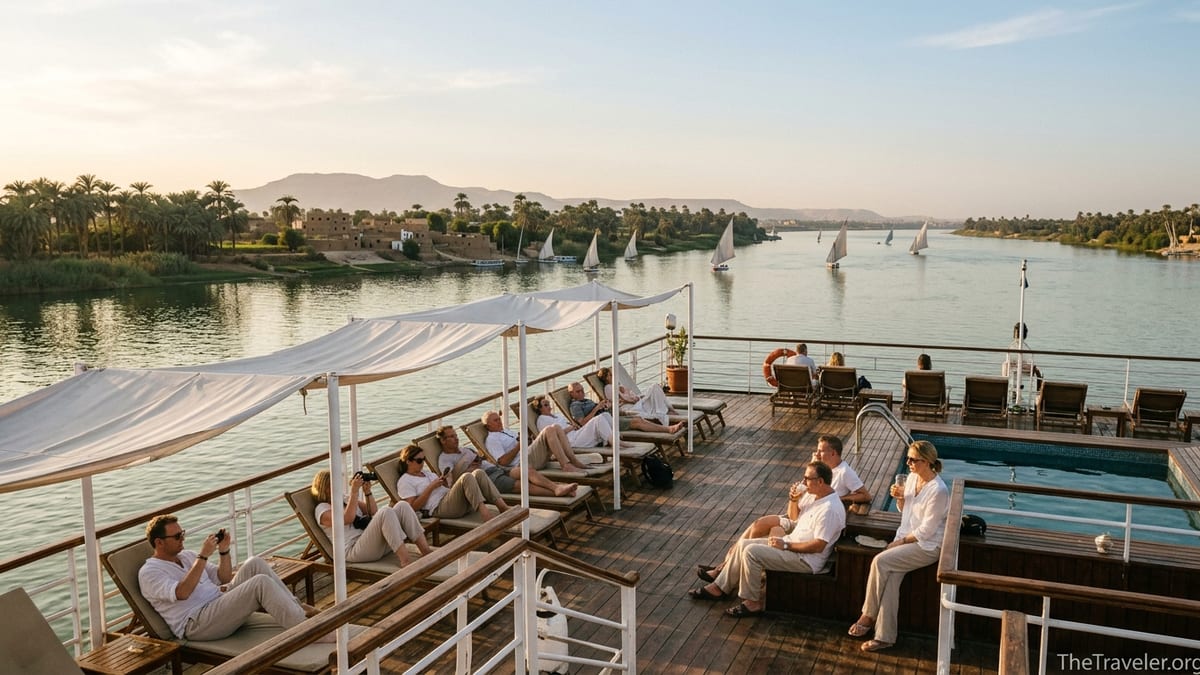
For travelers specifically looking for “lower heat,” the sweet spots are usually November, February, March and early April. In these months, a visit to the Valley of the Kings or Abu Simbel typically involves walking in temperatures somewhere between the high teens and high 20s Celsius, roughly upper 60s to low 80s Fahrenheit, with strong sun but not the crushing blast of summer. On board, it means you can comfortably sit on deck in the afternoon, perhaps under an awning, and watch the riverbank villages slide by without constantly retreating indoors.
Month by Month: What to Expect from October to April
October marks the informal opening of the main Nile cruising season. Days are hot but not fierce, often in the low to mid 30s Celsius, with cooler evenings. This is a favorite month for repeat visitors: there are enough ships on the river to create atmosphere without the full winter rush, and many operators still price it slightly below high winter levels. A typical three or four night cruise in October may run 600 to 900 US dollars per person on a well reviewed four or five star vessel, including full board and pooled guiding at key sites.
November, December, January and February are the classic “best time to go” for most travelers. November and early December bring comfortable warmth by day, with highs in the upper 20s to low 30s Celsius and chilly but pleasant evenings. Around Christmas and New Year, demand surges. Ships that were half full in early December can sail at or near capacity, and prices on popular lines jump noticeably. In January and February, days are milder, often low to mid 20s Celsius, and you may want a light jacket at Karnak Temple in the early morning. The air is crisp, and sunset felucca rides in Aswan or evening walks in Luxor can feel almost cool, especially if you are out on deck when the ship is moving.
March and April are shoulder months with an excellent blend of comfort and slightly easier pricing. Daytime highs rise into the high 20s and low 30s Celsius, and the sun begins to feel strong again. Many experienced operators quietly recommend these months as their personal favorites, particularly for travelers who like spending time on deck. Some occasional hot wind events can blow sand through the region in spring, but they are typically short lived. By April, Egyptian school holidays can add a layer of local families to the mix, especially on weekend sailings and at temples near Luxor.
Month by Month: What to Expect from May to September
From May, the mercury starts to move decisively upward. In Luxor and Aswan, average highs tip into the mid to high 30s Celsius, mid to upper 90s Fahrenheit, and sun exposure on open stone can feel severe by late morning. For many budget conscious travelers, however, May is a smart compromise month. Cruise prices usually step down from winter peaks but you are not yet in the most extreme heat. You might, for example, see a reputable four night Luxor to Aswan sailing listed at 450 to 700 US dollars in May that would cost several hundred dollars more in November. Tours to sites like Edfu and Kom Ombo will leave earlier, and you will appreciate wide brimmed hats and light, loose clothing.
June, July and August are genuinely hot and best for travelers who tolerate high temperatures well or who value savings over comfort. Temperatures regularly exceed 40°C during the day, and the stones at sites like Karnak and Philae radiate stored heat. On the plus side, the dry desert air means the heat is less humid than in many tropical destinations, and almost all ships serving the Luxor Aswan corridor are fully air conditioned with small pools on their sundecks. If you choose this period, expect a daily rhythm of pre dawn alarms for the Valley of the Kings or Abu Simbel, long siestas back on board and late dinners when the air has cooled slightly.
September is a transition month. The first half of the month still feels like summer, with highs hovering around the high 30s Celsius, but humidity stays low and the nights gradually lengthen. Crowds are usually lighter than in October or March, and deals are common as operators ramp up toward the main season. If your goal is to combine relatively calmer sites with prices closer to summer levels, late September can work well, provided you are ready to adjust your touring hours to start early and drink plenty of water.
Cruise Conditions, Crowds and Price Patterns
The physical river conditions on the Nile between Luxor and Aswan are relatively stable across the year for tourists. Modern cruises no longer live or die by the annual flood, and sailings generally operate year round except when individual boats go into dry dock. What changes most is how busy the river feels and how early you need to lock in the specific ship you want. In peak winter weeks, you may see dozens of large cruise vessels tied up side by side at Luxor’s corniche, with passengers crossing through lobbies of other ships to reach the shore. In lower season months, your boat may be one of only a handful at a given pier.
Crowds at key temples follow similar curves. At the Valley of the Kings, winter mornings can feel crowded at the main tomb entrances, and some of the most famous sites with special tickets, such as the tomb associated with Tutankhamun, may sell out for particular time slots. Lower visitor months such as May or September still bring organized groups, but the flow is lighter, and in high summer you may find yourself sharing a tomb with only a few other people for much of the visit. In Aswan, the iconic river islands and Philae Temple stay popular all year, but the number of tour buses at the dock drops in the hotter months.
Price patterns reflect this ebb and flow. In very broad terms, you can expect three to four night cruises in low to moderate season to start around 400 to 600 US dollars per person for a standard ship booked in advance, including meals and group touring. In peak windows, especially late December and early January, mid range and luxury vessels on the classic Luxor Aswan route often climb into the 900 to 1,500 US dollar range per person, with top tier boutique or ultra luxury options going significantly higher. At the budget end, travelers in July or August sometimes report securing last minute cabins on lesser known ships for under 350 US dollars, though quality and inclusions vary widely.
Sightseeing Comfort and Practical Strategies
No matter when you travel, the key to comfortable sightseeing along the Nile is timing. In summer, guides commonly schedule the Valley of the Kings for first thing in the morning, often departing the ship around 6 or 7 a.m. so that the most exposed walking and climbing happens before the sun is high. Even in January, an early start helps you enjoy a quieter, cooler experience before the bulk of tour buses arrive. Evening visits have their own charm. Winter night visits to Luxor Temple, lit by floodlights, can be magical and feel dramatically less hot and crowded than midday strolls.
On board, comfort is about balancing sun and shade. In winter, you may happily sit on the open sundeck in a sweater, nursing mint tea while watching farmers working tiny fields of sugarcane and banana. The air is cool enough that you can linger outdoors for hours. In summer, the same deck becomes a place for short, shaded visits and quick dips in the pool between air conditioned breaks. Many ships set up fabric awnings or shade sails during the hottest months and offer cool drinks at frequent intervals, sometimes including freshly squeezed hibiscus or mango juices in their all inclusive packages.
Clothing and hydration matter more here than in many temperate destinations. Breathable fabrics, a broad brimmed hat and high SPF sunscreen make a real difference in how enjoyable your day feels, especially walking the enormous courtyards of Karnak or trekking up to the high tomb entrances at the Valley of the Kings. In warmer months, most travelers find they drink several large bottles of water per day just during sightseeing, which guides or drivers often sell on buses at reasonable prices. Many mid range and higher end cruises now include unlimited bottled water and soft drinks in their fares, but on simpler boats you may still pay as you go.
Winter vs Summer: Advantages and Disadvantages
Winter’s main advantage is obvious: significantly lower daytime heat. This makes almost every classic Nile activity easier. Climbing the ramps at Hatshepsut’s temple, exploring the reliefs in Kom Ombo or wandering through the forest of columns in Karnak feels pleasantly warm rather than punishing. It also allows for more flexible daily plans. If you want to linger over photography at Luxor Temple in mid afternoon or enjoy a long felucca sail on the river in Aswan without wilting, winter is your friend. Another plus is social. If you enjoy meeting fellow travelers, winter cruises tend to carry a broader mix of nationalities and age groups, from retired couples to families escaping European winters.
The disadvantages of winter revolve mostly around cost and crowds. Fares on well known ships are highest between roughly late October and March, with particular spikes at Christmas, New Year and Easter. Shore sites can feel noticeably busier, especially in peak holiday weeks when school groups and international tour buses converge at similar times. Popular add ons such as sunrise hot air balloon flights over Luxor or Abu Simbel excursions can sell out days or weeks in advance. If your schedule is fixed in late December, booking several months ahead and being flexible on ship category gives you the best chances of getting the itinerary and cabin style you want.
Summer’s strength lies in value and space. With fewer visitors on the river, ships often sail below full capacity, meaning quieter dining rooms, more loungers available by the pool and a generally more relaxed onboard atmosphere. If you are used to hot climates or come from a very warm part of the world, you may find the dry desert heat manageable, especially when balanced with strong air conditioning. For some, the image of nearly empty temple courtyards and tomb corridors is worth shifting their routine to early mornings and late afternoons.
The downside of summer is the simple reality of stepping into 42°C heat on an open stone plateau at midday. Even with shade structures at some sites, the sun reflects sharply off pale stone surfaces, and extended time outdoors quickly becomes draining. Families with younger children, older travelers with health concerns and anyone sensitive to extreme heat are usually better served avoiding July and August. Power outages are not common but can be more uncomfortable if they occur during very hot weeks, particularly on older ships with aging air conditioning systems.
Choosing Your Ideal Month by Traveler Type
For first time visitors who want a classic Nile experience with minimal compromise, late October, November, February and March usually offer the best balance. The weather is generally warm but not severe, cruise options are plentiful and most major sites keep extended opening hours. A typical itinerary might include three or four nights sailing between Luxor and Aswan on a mid range ship, combined with two or three nights in Cairo. Booking your cruise a few months ahead through a reputable Egypt specialist or directly with a ship operator gives you time to compare inclusions such as private versus group touring and drink packages.
Budget focused travelers or long term backpackers might prefer May or September, when they can often secure better prices without the full extremes of high summer. It is not unusual for people in this category to book a basic four night sailing on arrival in Luxor or Aswan, bargaining directly at local travel agencies or along the riverfront. This approach can reduce costs but carries risk: ship quality varies widely and last minute availability on the better reviewed vessels is not guaranteed. If you are flexible and comfortable with simple accommodation, however, you may find very competitive deals in these shoulder months.
Heat tolerant travelers, photographers seeking emptier sites or those bound to school vacation calendars may gravitate toward June or late August. In these months, a private guide can help you structure days for comfort, arranging pre sunrise departures to key sites and building in air conditioned museum visits when outside temperatures are highest. You might also consider swapping a large cruise ship for a smaller dahabiya or traditional sailing vessel with fewer passengers. These boutique boats often cost more per night than a standard ship, but their slower pace and quieter decks can make the heat feel less hectic.
The Takeaway
There is no single perfect “best time” to visit the Nile, Luxor and Aswan, but there is almost certainly a best time for you. If lower heat and laid back sightseeing are your top priorities, target the cooler months between November and March and be prepared to pay higher cruise fares, especially around major holidays. For a classic balance of comfortable temperatures, manageable crowds and slightly softened prices, October, early November and March stand out as especially attractive.
If budget is your main constraint and you do not mind adjusting your daily rhythm, consider May or September, when savings can be substantial and the riverfront less crowded. True summer, from June through August, offers the quietest sites and lowest prices but demands serious heat tolerance and careful planning. Whatever month you choose, the essential elements remain the same: early starts, plenty of water, and a willingness to slow down and let life along the Nile dictate the pace of your days.
FAQ
Q1. What is the single best month to take a Nile cruise between Luxor and Aswan?
For most travelers, November offers the best combination of warm but not extreme temperatures, good daylight for sightseeing and cruise prices that are usually a little lower than the Christmas and New Year peak.
Q2. How hot does it actually get in Luxor and Aswan in summer?
In June, July and August, afternoon highs often exceed 40°C, and it can occasionally approach the mid 40s. The heat is very dry, but stone courtyards and open desert reflect the sun strongly, so even short walks can feel intense.
Q3. Is winter too cold to enjoy the Nile?
No. Winter days along the Nile are generally pleasantly warm, often in the low to mid 20s Celsius, though mornings and evenings can feel cool. A light jacket or fleece is usually enough for early temple visits and nights on deck.
Q4. When are Nile cruise prices usually lowest?
Prices typically dip in the hotter months from May through September, with some of the lowest fares in June, July and August. Late bookings in these months can sometimes secure particularly good value, though ship quality varies.
Q5. Are temple visits like the Valley of the Kings possible in July and August?
Yes, but they require careful timing. Most tours visit early in the morning to avoid the harshest sun. Inside the tombs the air is still warm and can feel stuffy, so bringing water and taking breaks is important.
Q6. Do cruises ever get canceled because of weather on the Nile?
Weather related cancellations between Luxor and Aswan are rare. The region is extremely dry, and modern cruise schedules are not dependent on seasonal floods. Operational changes are more likely to be due to maintenance or logistical reasons than climate.
Q7. How far in advance should I book a Nile cruise in peak season?
For travel over Christmas, New Year or Easter, it is wise to book at least three to six months in advance, especially if you want a specific ship, cabin type or a smaller boutique vessel such as a dahabiya.
Q8. Is it cheaper to book a Nile cruise on arrival in Egypt?
It can be cheaper, especially in shoulder or low season, but you will have less choice and more uncertainty about ship quality and inclusions. Booking ahead at a transparent, fixed price is usually safer for first time visitors.
Q9. Are there big differences in weather between Luxor and Aswan?
Aswan is generally a little hotter and drier than Luxor, but for most travelers the difference is modest. Both cities share very sunny, desert conditions with minimal rainfall and strong temperature contrasts between day and night in winter.
Q10. If I want the lowest heat possible, when should I visit the Nile?
Select January or February for the coolest daytime temperatures, accepting that you may need an extra layer in the mornings. If you prefer slightly warmer days but still want to avoid real heat, look at November or March as comfortable alternatives.