


The Nile between Luxor and Aswan is still one of the world’s great travel corridors, lined with pharaonic temples, Nubian villages and timeless river life. Yet once you start planning, you quickly face choices: Should you cruise or stay on land, book a private Egyptologist or join group tours, pre-book Abu Simbel or wait, and how much should you actually pay in 2025–2026 prices? This guide breaks down the main Nile River options with concrete examples so you can decide what to book in advance, what to arrange on the ground, and where to spend a little extra for a better experience.
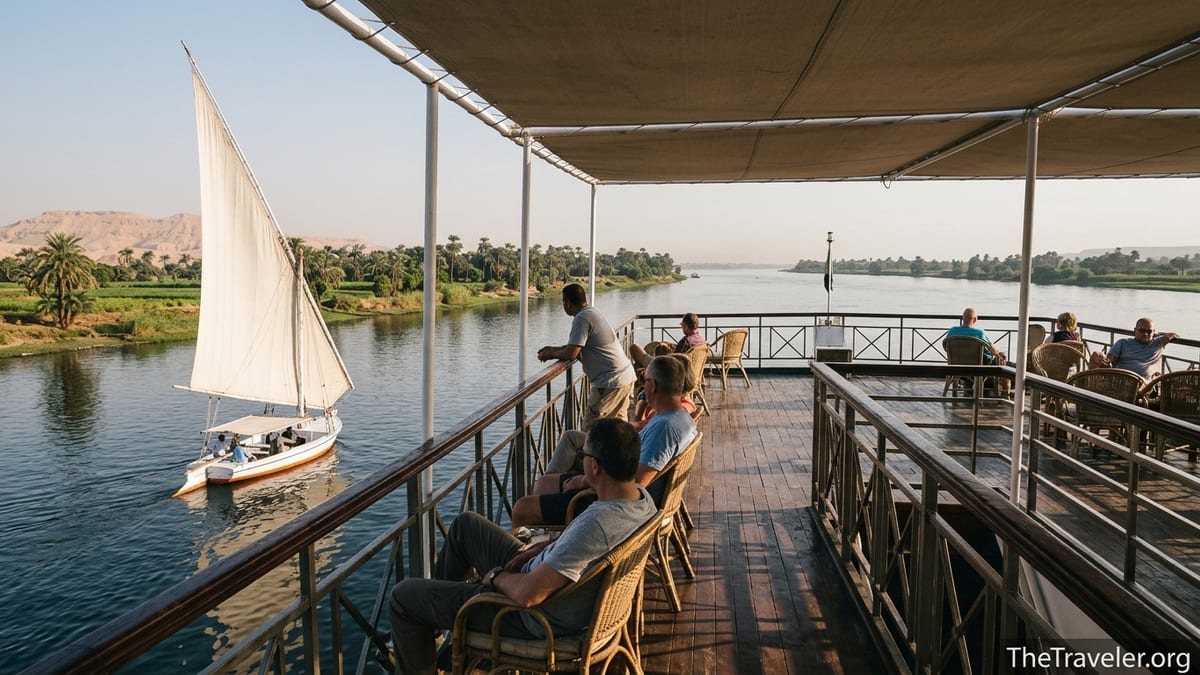
Understanding the Main Types of Nile River Experiences
Most travelers focus on the stretch of the Nile between Luxor and Aswan, where the big-name sights sit within a few hours of one another. You can explore this corridor via classic multi-night cruise, day trips by road, short felucca sails, or some combination of all three. A typical first-time itinerary might include three or four nights on a cruise between Luxor and Aswan, a full day on Luxor’s West Bank for the Valley of the Kings and related tombs, an afternoon at Karnak and Luxor Temple, a felucca sail in Aswan and a half or full day trip to Abu Simbel.
Multi-night Nile cruises run at several levels, from mid-range 4 and 5 star boats to boutique dahabiyas with fewer cabins. In 2025 and 2026, a 4 night Luxor to Aswan cruise in a mid-range cabin commonly runs in the region of several hundred US dollars per person on full board, with sightseeing either included as a supplement or purchased separately. Some packages quote per night rates around the low hundreds of dollars per person for foreigners on full board, with sightseeing often excluded and added as a set “sightseeing package” fee per cruise.
Independent travelers who dislike fixed schedules often base themselves in Luxor and Aswan and use private guides and drivers instead of cruising. A private full day tour covering both the East Bank and West Bank in Luxor, including a licensed Egyptologist and air conditioned vehicle, is frequently priced in the low to mid hundreds of US dollars per group rather than per person, plus entrance tickets. A similar level of service in Aswan for the High Dam, Unfinished Obelisk and Philae Temple is usually a bit cheaper, because the distances are shorter and there are fewer sites packed into a single day.
Whichever style you choose, felucca rides and Abu Simbel excursions tend to sit outside standard packages and require separate planning. Felucca prices in Aswan and Luxor vary widely depending on whether you book online, through your hotel or by bargaining on the corniche. Abu Simbel can be reached by very early morning road convoy from Aswan or by short flight, and most travelers find this is the one excursion that is worth locking in ahead of time because of permits, early departures and limited daily flights.
Temples along the Nile: Site-by-Site & How to See Them
On the Luxor side, the star attractions are Karnak Temple, Luxor Temple, the Valley of the Kings, Hatshepsut’s Temple at Deir el Bahri and the Colossi of Memnon. Many private tours combine Karnak and Luxor Temple into a half day East Bank visit, often timed for late afternoon when Luxor Temple lights up at dusk. West Bank itineraries typically include three open tombs in the Valley of the Kings plus Hatshepsut’s temple and photo stops at the Colossi, sometimes with optional add ons like the Valley of the Queens or the Tombs of the Nobles.
Farther south between Luxor and Aswan, classic cruise itineraries stop at Edfu’s Temple of Horus and Kom Ombo, the double temple dedicated to Sobek and Haroeris. These are usually visited in the early morning or late afternoon as the ship moves between ports. On most cruise programs, your guide simply walks you from the gangplank to the waiting coach and back, and the temple visits are shared with the same small group from your boat.
In Aswan itself, the major draw is Philae Temple, relocated to Agilkia Island when the Aswan High Dam was built. Standard city tours bundle this with stops at the High Dam and the ancient granite quarry containing the Unfinished Obelisk. Many travelers, however, choose to focus their time and budget on Philae, combining it with a sunset felucca ride rather than ticking every stop on the usual bus circuit.
Abu Simbel, near the Sudanese border, is in a different category altogether. The twin rock cut temples of Ramses II and Nefertari were carved directly into the cliff and later moved stone by stone to escape flooding by Lake Nasser. Because Abu Simbel lies about 240 kilometers from Aswan by road, reaching it requires either a pre arranged tour by bus or minivan, or a flight bundled with guided visits. This distance and logistical complexity are why Abu Simbel tours generally cost more than any single day excursion in Luxor or Aswan and why pre booking is strongly recommended for most travelers.
Luxor West Bank & East Bank Excursions: Group vs Private
In Luxor, you will find a spectrum of West Bank and combined East and West Bank tours. Group bus tours, often sold via online platforms or hotel desks, might advertise a full day West Bank program that includes transfers, an English speaking guide and several tombs for a relatively low per person price. These often exclude entry tickets and lunch, which can add substantially to the day’s real cost. The main advantages are low advertised prices and a ready made social group, but you are locked to a set schedule and may spend significant time waiting for others.
Private West Bank tours, booked directly with local agencies or through your hotel, usually supply a licensed Egyptologist, door to door transport and flexible timing. As a rough guide into current pricing, a private full day West Bank program for two or three people with hotel pickup, air conditioned vehicle and guide tends to sit in the low to mid hundreds of US dollars for the group, not including tickets. Costs scale with group size and itinerary complexity, and some operators offer add ons like hot air balloon flights at sunrise over the West Bank for an additional fee.
Combined East and West Bank private tours are often marketed as “Luxor in a day,” taking in the Valley of the Kings, Hatshepsut’s Temple, Colossi of Memnon, Karnak and Luxor Temple in a single long day. This option is appealing if your cruise only gives you one full day in Luxor, but many travelers find it rushed, especially in warmer months. If you have two or three nights in Luxor, consider splitting your sightseeing into a dedicated West Bank day and a separate half day on the East Bank, with evenings left free for wandering Luxor’s corniche or re entering Luxor Temple after dark.
One practical question is whether to hire guides on site or book them as part of a tour. At most major temples and tombs you will encounter freelance guides offering their services at the gate, typically for a negotiable cash fee. While some are excellent, the quality is inconsistent, and you may feel pressure to tip on top of the agreed price. If you value in depth explanation and predictable timing, pre arranged private guiding through a reputable agency or highly reviewed independent guide is usually worth the modest premium.
Aswan Experiences & Felucca Trips: What to Book Ahead
Aswan offers a slightly slower pace than Luxor and is one of the best places in Egypt to combine ancient sites with simple river time. Many visitors book a half day city highlights tour that includes a visit to Philae Temple, often reached by motorboat, plus panoramic stops at the High Dam. Others focus primarily on the river itself, using organized boat transport to reach Nubian villages on the islands or west bank, or arranging short felucca rides around the islands and along the gentle curves of the Nile.
Felucca prices in Aswan can vary significantly depending on whether you pre book a sunset sail online, ask your hotel to arrange it, or negotiate directly with captains along the corniche. Recent price examples suggest that a one hour shared felucca ride in Aswan typically costs the equivalent of roughly 20 to 30 US dollars per person when booked as a tour that includes hotel pickup and basic refreshments. If you prefer to bargain in person on the waterfront, it is often possible to secure a private boat for a one hour sunset sail for a group at a total price comparable to or slightly below online per person rates, especially if you pay in local currency.
Felucca rides in Luxor tend to be slightly cheaper and shorter, primarily serving as quick sunset or post dinner outings across the river rather than longer sails among islands. Because there is usually ample capacity, most travelers do not need to pre book simple one hour felucca rides weeks in advance; arranging them a day or even an hour ahead is normally enough. Exceptions include specialty experiences like multi hour felucca picnics or private sunset sails bundled with live music, which are best coordinated in advance with your hotel or a local operator.
Other Aswan experiences that may warrant advance reservations include afternoon visits to Nubian villages if you want a specific style of tour, such as a focus on local crafts or cooking classes, or if you are traveling during peak holiday periods when domestic visitors fill boats. In shoulder seasons, however, you can generally book High Dam and Philae Temple tours, Nubian village boat trips and basic felucca rides at short notice once you see the weather and your own energy levels.
Abu Simbel Excursions: Road, Flight and Pre‑Booking Strategy
Abu Simbel sits far enough from Aswan that it virtually always requires pre arranged transport. The two main options are early morning road trips by bus or minivan and short domestic flights bundled with guided temple visits. Road tours usually leave central Aswan around 4 to 5 am, arrive at Abu Simbel mid morning, allow two or three hours at the temples, and return to Aswan by mid afternoon.
Group road tours are the most budget friendly way to visit Abu Simbel. Advertised prices for shared bus tours with guide and hotel pickup often fall into the lower hundreds of US dollars per person range, sometimes excluding entry tickets. Private road transfers in a dedicated vehicle with your own Egyptologist guide cost more, but for couples or small groups the difference per person can be modest, especially if you value the flexibility to adjust temple time and stop en route.
Flight based Abu Simbel excursions cost noticeably more than road trips. Typical packages combine round trip transfers between your Aswan hotel or cruise ship and the airport, economy class flights to Abu Simbel and back, guided visits at the temples and entrance fees. Per person prices in recent seasons have commonly fallen into the mid hundreds of US dollars for these all inclusive air tours, with small year to year variations based on airline fares and fuel costs. Many river cruise lines and international tour companies sell these air excursions as optional add ons for passengers docked in Aswan.
Because both road and flight tours to Abu Simbel involve permits, fixed departure times and limited daily capacity, this is one experience most travelers should pre book before arriving in Aswan, particularly in cooler months when visitor numbers peak. If your schedule is tight, consider booking Abu Simbel before locking in the rest of your Nile itinerary so that your cruise or hotel nights align with the day you can secure seats.
Nile Cruise Packages vs Land‑Based Itineraries
Choosing between a multi night Nile cruise and a land based itinerary comes down to travel style, budget and how much structure you want. Standard 3 or 4 night cruises between Luxor and Aswan offer a bundled experience: accommodation, most meals and transport between major temple sites are all included in a single price. A typical mid range 4 night cruise might price out in the high hundreds of US dollars per person for foreign travelers on full board, with sightseeing added as a supplement covering guided visits to Karnak, Luxor Temple, the West Bank, Edfu, Kom Ombo and Philae.
The advantages of cruising include not having to repack each day, enjoying the river scenery from a deck chair and meeting the same fellow passengers at meals and on excursions. The main drawbacks are fixed schedules and limited flexibility. If your cruise group spends only a short time at a site you love, such as the Valley of the Kings or Philae, it is hard to linger. Also, some itineraries visit temples at crowded times of day, since all the boats tend to follow similar timetables between ports.
Land based itineraries, using hotels in Luxor and Aswan and moving between them by train, private car or domestic flight, can be more flexible and sometimes cheaper, especially for independent travelers comfortable arranging guides on site. For example, you might spend three nights in Luxor on the East Bank, hiring a private guide for one full West Bank day and a separate afternoon at Karnak and Luxor Temple, then travel to Aswan by daytime train and book a simple local hotel with views of Elephantine Island. From there, you can arrange Abu Simbel, felucca rides and Nubian village visits as needed, paying only for the specific tours and transfers you actually use.
A hybrid approach is increasingly popular: two or three nights in Luxor to see the major sites at your own pace, followed by a 3 night cruise down to Aswan. This lets you use the cruise primarily as relaxing transport and a way to see Edfu and Kom Ombo without long road detours, while still giving you flexibility in Luxor, where the highest concentration of important sites and optional extras like ballooning are located.
Private Guides, Pricing & What to Pre‑Book
For many travelers, hiring a private Egyptologist guide for key sites is the single most worthwhile splurge. Licensed guides in Luxor and Aswan typically have university level training in Egyptology or related fields and can provide context that transforms rows of hieroglyphs and reliefs into stories. Booking a full day with a guide usually includes a private vehicle and driver, and costs are quoted per group. As a ballpark, in 2025 and 2026 a full day private tour of Luxor’s East and West Banks for two or three people is often priced in the low to mid hundreds of US dollars for the group, with the exact figure varying by company, language and inclusions.
To keep costs in check, consider using private guides on the days when you are tackling the densest or most historically rich sites, such as your main West Bank day and Abu Simbel, and rely on audio guides or independent exploration at simpler stops like small museums or secondary temples. Couples or small groups can sometimes save money by booking a private guide directly rather than through a large international operator, provided you verify references and recent reviews.
As for pre booking strategy, experiences that benefit from advance reservations include multi night Nile cruises, Abu Simbel excursions, hot air balloon flights over Luxor and any specific guide you particularly want to work with. These all involve limited capacity and early morning departures or fixed sailing dates. In contrast, many city based experiences such as half day East Bank tours, basic felucca rides in Aswan or Luxor and standard visits to Philae or the High Dam can often be arranged a day or two ahead once you arrive, especially outside holiday peaks.
When comparing offers, pay attention to what is actually included. A “full day tour” might sound comprehensive but exclude entrance fees, meals and tips, which can easily add a significant percentage to the headline price. Ask clearly whether the price is per person or per group, whether transport is private or shared, and whether your guide will accompany you inside the temples and tombs or only handle logistics. Clarifying these details upfront helps avoid awkward negotiations on the ground and gives you a fairer basis for comparing private tours with cruise based group excursions.
The Takeaway
Planning Nile river travel is partly about logistics but mostly about priorities. A classic 3 or 4 night cruise between Luxor and Aswan remains a comfortable, time efficient way to see headline temples like Karnak, Edfu, Kom Ombo and Philae, especially for first time visitors who prefer an all in one package. Land based stays in Luxor and Aswan, combined with private guides and targeted day trips, offer more flexibility and can suit travelers who like to linger at specific sites or adjust plans day by day.
In terms of pre booking, it is wise to lock in your cruise or hotel dates, Abu Simbel excursion, and any must do experiences like a balloon flight or a specific private guide several weeks to a few months before you travel, particularly in cooler seasons. For felucca sails, standard city tours and many Luxor and Aswan experiences, leaving some space to decide on the ground can work in your favor, letting you respond to weather, crowds and energy levels while still knowing the general price ranges to expect.
Finally, remember that the real magic of the Nile often appears in the unscheduled moments: watching farmers water palm groves at dawn from a ship’s deck, drifting silently past reeds in a small felucca, or standing alone in a side chamber of a 3,000 year old temple after a group has moved on. Build a framework with sensible bookings and fair prices, then leave enough breathing room for the river itself to shape your journey.
FAQ
Q1. Do I need to pre book a Nile cruise, or can I arrange it after I arrive in Egypt? Most travelers should pre book cruises at least several weeks in advance, especially in cooler months, to secure sailing dates and cabin category. Last minute deals do exist, but they are less reliable if your vacation dates are fixed.
Q2. Is it cheaper to visit Luxor’s West Bank with a group tour or a private guide? Group tours advertise lower per person prices, but private tours can be good value for couples or small groups because the fee is per vehicle and guide. Private tours also let you control the pace and which tombs or temples you prioritize.
Q3. How much should I expect to pay for a felucca ride in Aswan? A typical one hour shared felucca ride in Aswan booked as a tour with hotel pickup often costs in the region of 20 to 30 US dollars per person. Negotiating directly with captains on the corniche can yield similar or slightly lower total prices for a small group paying in local currency.
Q4. Is Abu Simbel worth the extra cost and early start? Most visitors who make the trip consider Abu Simbel a highlight of their time in Egypt. The combination of colossal statues, intricate interior reliefs and the story of the temples’ relocation often justifies the higher price and very early departure.
Q5. Should I fly or go by road from Aswan to Abu Simbel? Road tours are usually more economical and are fine for most travelers comfortable with a long day. Flight based excursions cost more but shorten overall travel time and can be attractive if you have limited days in Upper Egypt or prefer to avoid several hours on the highway.
Q6. Can I explore temples like Karnak and Philae without a guide? Yes, you can visit independently by purchasing entry tickets at the gate and using maps or audio guides. However, a good Egyptologist can add significant context and help you navigate the most impressive reliefs and hidden corners in a limited time.
Q7. Are tips expected on Nile cruises and day tours? Gratuities are customary for guides, drivers and cruise staff. Some cruises operate a pooled tipping system added to your onboard account, while for day tours it is common to tip your guide and driver directly at the end of the service according to your satisfaction and local norms.
Q8. Is it better to stay on Luxor’s East Bank or West Bank? Most first time visitors base themselves on the East Bank, where the bulk of hotels, restaurants and transport connections are located. The West Bank offers quieter guesthouses close to the tombs and temples, which can appeal if you prefer a village atmosphere and do not mind longer trips into town.
Q9. How far in advance should I book a private guide for Luxor or Aswan? For peak travel periods, booking a private guide a month or more in advance gives you the best choice of English speaking Egyptologists with strong reviews. In shoulder seasons you can sometimes arrange a guide a few days ahead through your hotel or a local agency.
Q10. Are Nile cruises suitable for children and older travelers? Most standard Nile cruises welcome families and older guests and offer relatively gentle daily schedules. Parents should consider cabin layout, pool safety and mealtimes, while older travelers may want to confirm access issues, such as steps at temples and walking distances during group excursions.