


Planning a first trip to Egypt usually starts with the same shortlist of names: Cairo, Luxor, Aswan, Abu Simbel and “a Nile cruise.” The good news is that these legendary places fit together naturally into classic 7, 10 and 14-day itineraries that work for most travelers, from independent planners to those booking a fully escorted tour. The trick is choosing the right pace, routing and cruise length for your time and budget.
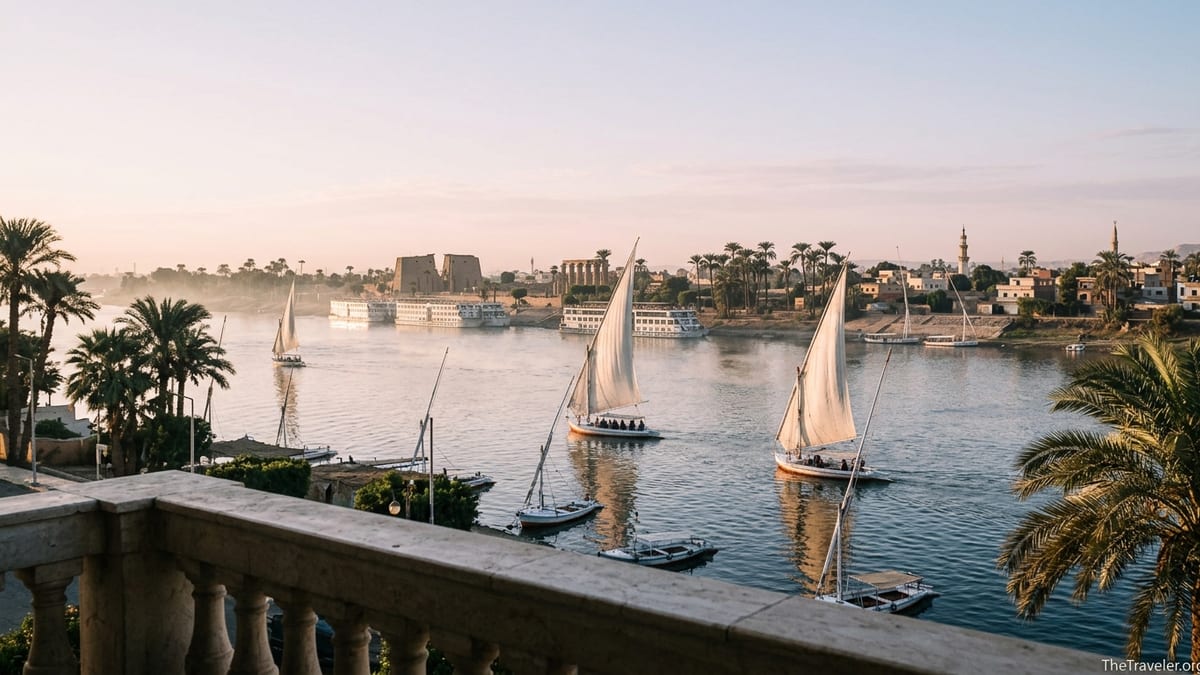
Why Cairo, Luxor and Aswan Form Egypt’s Classic Triangle
The Cairo–Luxor–Aswan route is the backbone of almost every first-time Egypt itinerary. Cairo delivers the headline icons: the Pyramids of Giza, the Sphinx and the major museums. As of late 2025, the Grand Egyptian Museum has fully opened near the pyramids, joining the National Museum of Egyptian Civilization in Old Cairo to create one of the densest collections of pharaonic artifacts anywhere in the world. For most visitors, two or three nights in Cairo is enough to see Giza, a major museum and some of the city’s historic neighborhoods.
Luxor, a one-hour flight or a long overnight train south from Cairo, was the ancient city of Thebes and holds many of the temples and tombs people picture when they think of Egypt. The East Bank is anchored by Karnak and Luxor Temple, often visited in the cooler late afternoon and evening, while the West Bank holds the Valley of the Kings, the Temple of Hatshepsut and newer openings such as the tombs at the Valley of the Queens. Ticket structures and opening hours shift periodically, but most travelers still plan on at least two full days to do Luxor justice.
Further south again, Aswan is both more relaxed and more compact. It is the usual embarkation or disembarkation point for 3 or 4-night Nile cruises and the jumping-off point for Abu Simbel, either by flight or an early-morning desert convoy. In town, visitors typically combine Philae Temple, the Unfinished Obelisk and a felucca sail among the granite islands, plus time at the Nubian Museum or a Nubian village. Because many cruise itineraries already include key Aswan sights, some itineraries give the city one overnight, while independent travelers may linger for three or four nights.
The most efficient Egypt plans use EgyptAir or Nile Air shuttles between Cairo, Luxor and Aswan. As of 2026, one-way domestic fares on popular dates often fall in the 80 to 160 US dollar range in economy, when booked directly and a few months ahead. Overnight trains from Cairo to Luxor or Aswan still run and can be a cultural experience, but once you factor in time and typical first-class sleeper prices, many visitors decide that flights are better value.
How Nile Cruises Work in 2026
The classic Nile cruise operates between Luxor and Aswan on large riverboats carrying roughly 60 to 120 passengers. The two standard patterns are a 4-night Luxor to Aswan sailing upstream and a 3-night Aswan to Luxor sailing downstream. A number of lines combine both legs into a 7-night round trip, which can work well in 10 or 14-day itineraries if you prefer to unpack once and let the river carry you to each site.
Prices vary widely. In 2026, mainstream 3 or 4-night cruises on shared big boats often start around 350 to 600 US dollars per person in a lower-deck cabin, including full board and group sightseeing at temples such as Edfu and Kom Ombo. Newer or more stylish vessels, and departures over New Year or Easter, can lift that to 800 to 1,200 dollars or more. Boutique dahabiya sailboats, which carry a dozen or so guests and rely more on wind power, typically cost several times that but appeal to travelers who want quiet decks and longer, slower stops in rural villages.
Most classic cruises include guided visits to at least Karnak and Luxor Temple at one end and Philae Temple and the High Dam at the other. The in-between days usually cover Edfu’s Temple of Horus, Kom Ombo’s riverside temple dedicated to Sobek and Haroeris, and a handful of quick stops at smaller sites. For example, a common 4-night Luxor to Aswan itinerary might leave Luxor on a Monday afternoon, visit Edfu and Kom Ombo on Tuesday and Wednesday, and arrive in Aswan on Thursday with time for Philae and a felucca sail before disembarkation on Friday morning.
If you prefer flexibility, it is still possible to travel between Luxor and Aswan by road or train and hire local guides and drivers for each site. This usually works out cheaper than a cruise for budget-minded couples or solo travelers willing to organize logistics, with private drivers on popular routes such as Luxor to Aswan or Aswan to Abu Simbel typically charging the equivalent of 80 to 150 US dollars for a full vehicle, depending on season and inclusions. However, you lose the convenience of having your “hotel” move with you and the relaxed pace of watching rural life drift past from the deck.
Classic 7-Day Cairo, Luxor & Aswan Itinerary
A week in Egypt gives you time to see the highlights of Cairo, sail the Nile briefly and touch the main temples, but you will need to prioritize. Many tour operators in 2026 sell 7-day packages that mirror the outline below, combining two or three nights in Cairo with a 3 or 4-night cruise. These typically exclude international flights but include domestic flights, guiding and many meals.
Day 1 in Cairo usually focuses on recovering from the flight and a first look at the city. If you arrive by midday, a typical real-world example would be checking into a mid-range Giza hotel in the 90 to 150 US dollar per night range, then heading to the Giza plateau for a late-afternoon pyramid visit, camel ride and sunset view of the Sphinx. Dinners might be simple local grills in Dokki or Zamalek or a hotel buffet, depending on your energy level.
Day 2 is often dedicated to Cairo’s museums and historic districts. In 2026, many travelers spend half a day at the Grand Egyptian Museum in Giza, exploring the Tutankhamun galleries and the main chronological displays, before transferring into central Cairo to walk the medieval streets around Khan el-Khalili, the mosques of Islamic Cairo or Coptic Cairo’s older churches. Entry tickets at the new museum are priced to reflect its global status, so many visitors choose a combination ticket that includes the main galleries and special exhibitions.
On Day 3 you typically fly to either Aswan or Luxor to start the cruise. One common pattern is Cairo to Aswan in the morning, transfer straight to the boat, lunch on board, then an afternoon visit to Philae Temple by motorboat followed by a sunset felucca sail. Days 4 and 5 are spent sailing downstream to Luxor via Kom Ombo and Edfu, with temple visits slotted between lunch and tea. On Day 6 you reach Luxor and explore Karnak and Luxor Temple, sometimes with an evening sound-and-light show. Day 7 is a concentrated West Bank tour, taking in the Valley of the Kings and Hatshepsut’s temple, before a flight back to Cairo and onward departure or an extra hotel night if schedules require.
Seven days can feel rushed, but for travelers with limited vacation days or those adding Egypt onto a trip to the region, this pattern delivers the essential “headline” experiences in a single week. If you need to shave a day, some budget packages compress Cairo into two nights, dropping one museum visit or limiting time in Islamic Cairo.
Balanced 10-Day Itinerary With Abu Simbel
Ten days allows you to catch your breath, add Abu Simbel and build in some free time for rooftop dinners or sunset walks along the Corniche. A realistic 10-day plan usually extends the 7-day structure rather than reinventing it. For example, you might spend 3 nights in Cairo, 1 in Aswan before or after a 3-night cruise, and 3 in Luxor, with one final night in Cairo before departure if flight times demand it.
On a 10-day route, Day 1 to 3 roughly mirror the 7-day version in Cairo, but you have more freedom to add lesser-known sites such as Saqqara and Dahshur. A private driver for a half-day trip to these “step pyramid” and “bent pyramid” sites from Giza might cost the equivalent of 40 to 80 US dollars for a car in 2026, depending on negotiation and whether your hotel or a tour agency arranges it. Many travelers report that Saqqara ends up being a highlight equal to Giza, thanks to fewer coach groups and more atmospheric desert surroundings.
From Cairo, Day 4 is a flight to Aswan and an overnight stay on land rather than boarding the cruise immediately. This gives you time for the Nubian Museum, sunset drinks overlooking the river and dinner on a floating restaurant. Day 5 is often the Abu Simbel excursion: a pre-dawn convoy or a short flight. Road trips usually involve a 3 to 3.5-hour drive each way through the desert, with tour prices in 2026 often quoted around 80 to 150 US dollars per person for a small group including transport and guiding, excluding entry tickets. Flights cost more but save time and energy, and many travelers combine them with a few free hours back in Aswan.
Day 6 to 8 can then follow a 3-night Aswan to Luxor cruise, visiting Kom Ombo, Edfu and arriving in Luxor with at least one full day for the West Bank plus time for Karnak and Luxor Temple. Extra days in Luxor allow you to add the less-visited tombs at the Valley of the Queens, Medinet Habu or an early morning hot air balloon ride over the West Bank, which in 2026 typically costs somewhere between 80 and 150 US dollars per person through reputable operators. Day 9 is free for revisiting a favorite temple or simply enjoying a pool day, and Day 10 is your departure, often routed Luxor to Cairo to your home country.
This 10-day format is often the sweet spot for travelers from North America and Europe, balancing jet lag, cost and variety. It is also easier to match to existing group tour templates, whether with a larger operator that includes international flights and several meals or with a local Egyptian company that sells land-only packages including domestic flights and guiding.
Immersive 14-Day Egypt Itinerary With Side Trips
With two full weeks, you can slow down and layer in more of Egypt’s diversity. Many 14-day itineraries maintain the Cairo–Luxor–Aswan spine but add a Red Sea beach break, extra time in Luxor’s countryside, or side trips to Abydos and Dendera. This is especially appealing to travelers who rarely repeat destinations and want to make a single comprehensive visit.
A typical 14-day route might allocate 4 nights to Cairo, 4 to Luxor, 3 to Aswan and 3 to either a Nile cruise or the Red Sea. In Cairo, that extra time allows for neighborhood walks in Zamalek, food-focused experiences in Downtown, or a day trip to the lesser-visited pyramids at Meidum. Museum lovers can split their time between the Grand Egyptian Museum, the National Museum of Egyptian Civilization and smaller collections such as the Museum of Islamic Art.
From Luxor, a long but rewarding full-day trip to Abydos and Dendera gives context to the rest of the ancient sites, showing off richly colored reliefs and a less touristed slice of Upper Egyptian countryside. Private car and guide quotes for this double visit commonly fall into the 120 to 200 US dollar range for up to three or four people in 2026, depending on your hotel and the agency. Many visitors pair this with a quieter West Bank base in a family-run guesthouse, which can cost 40 to 80 US dollars per night and include home-cooked breakfasts and rooftop views.
Aswan can absorb several extra days gracefully. With more time you can explore the islands by small motorboat, visit a Nubian village in unhurried fashion, or cross the High Dam to see the larger engineering projects from the 20th century that reshaped the region. If you choose not to do a full Nile cruise, you can still arrange a one or two-night stay on a traditional felucca between Aswan and Kom Ombo, sleeping on deck under simple covers, though this remains very much a rustic experience.
Many 14-day itineraries finish with three or four nights on the Red Sea at resorts like Hurghada, El Gouna or Marsa Alam. Depending on season, mid-range beach resorts often advertise nightly rates in the 100 to 200 US dollar range for double rooms with breakfast or half-board. The contrast between temple-hopping and reef snorkeling can be striking and makes the overall trip feel like both an adventure and a holiday.
Costs, Passes and Practical Planning Tips
Costs for a classic Cairo–Luxor–Aswan route vary widely depending on comfort level, transport and whether you book a package. In 2026, a realistic per-person budget excluding international flights for a 7-day itinerary might range from roughly 900 to 1,500 US dollars for a traveler using mid-range hotels, a standard Nile cruise cabin, internal flights and some private guiding. Ten and 14-day itineraries scale up from there, though longer stays can spread out fixed costs like visas and airport transfers.
Egypt periodically adjusts entry ticket prices, and there are combination passes that can save money in Luxor and Cairo if you plan to see many sites. For example, the Luxor Pass has historically offered bundled access to major West and East Bank monuments, with a higher-priced tier including famed tombs such as that of Tutankhamun. Pricing and inclusions shift, so it is wise to check the latest details shortly before your trip through official monument authorities or up-to-date guide services rather than relying on older print guidebooks.
On the ground, you will encounter a wide range of informal offers for guiding, camel rides, carriage rides and boat trips. Agreeing on prices before you start is essential. As a rough guide, short felucca sails in Aswan or Luxor might be quoted around the equivalent of 10 to 30 US dollars for an hour or so in 2026, depending on your bargaining skills, the number of passengers and whether your hotel or a local tout organizes it. For most visitors, paying a little more for a trusted recommendation or a boatman linked to your hotel is worth the peace of mind.
Season matters. The most popular months for classic Egypt itineraries are usually from late October to early April, when daytime temperatures are milder and evenings along the Nile can be pleasantly cool. Shoulder seasons can offer a reasonable compromise between heat, crowd levels and price. During peak dates such as Christmas and New Year, expect hotel and cruise prices to climb sharply, and consider booking key elements three to six months ahead if your schedule is inflexible.
The Takeaway
Cairo, Luxor, Aswan and Abu Simbel form a natural arc that can fit into a focused 7-day sprint, a well-paced 10-day journey or an immersive 14-day exploration. The right choice depends on how intensely you want to sightsee, how comfortable you are with internal flights and how much flexibility you need. A week gives you the “headline” experiences, ten days balances depth and rest, and two weeks lets you venture further and work in the Red Sea or lesser-visited temples.
What has changed in recent years is not the core route but the experience around it. The opening of the Grand Egyptian Museum, new cruise offerings on the Nile and shifting ticket structures at key sites have all nudged itineraries toward more structured planning. Yet the essential pleasures remain the same: standing in the shadow of the Great Pyramid at Giza, tracing carved figures along the columns of Karnak, and watching the sun set over the Nile from the deck of a boat or the terrace of a simple guesthouse.
If you approach Egypt with realistic pacing, a clear sense of must-see sites and a willingness to leave some things for next time, any of the classic 7, 10 or 14-day itineraries can be deeply rewarding. Building in small pockets of unscheduled time, whether for an impromptu felucca ride, a rooftop tea in Luxor or a quiet hour in a less-visited museum gallery, often produces the memories that stay with you long after your flight home.
FAQ
Q1. Is a 7-day Cairo, Luxor and Aswan itinerary enough for a first visit to Egypt?
For many travelers, 7 days is just enough to see Cairo’s main sights and take a short Nile cruise between Aswan and Luxor, but it will feel busy. If you can stretch to 10 days, you gain breathing room for Abu Simbel, extra time in Luxor and a more relaxed pace.
Q2. Should I book a Nile cruise in advance or wait until I arrive in Egypt?
In high season from roughly November to March, it is usually safer to book your preferred cruise category in advance, especially if you want specific sailing dates or a boutique boat. In hotter low-season months, you may find last-minute deals through local travel agencies, but you will need flexibility and some time on the ground to shop around.
Q3. How much does a typical Nile cruise cost in 2026?
Most standard 3 or 4-night cruises between Luxor and Aswan in 2026 fall somewhere around 350 to 600 US dollars per person in a basic cabin with full board and group sightseeing. Newer boats, suites and peak holiday dates can push that into the 800 to 1,200 dollar range or more, while high-end dahabiya sailings are usually more expensive again.
Q4. Is it safe to travel independently between Cairo, Luxor and Aswan?
Many visitors travel independently using domestic flights and trains, booking local guides only at major sites, and report few issues beyond the expected hassles of bargaining and busy streets. Using reputable airlines, pre-arranged airport transfers and recommended drivers from your hotel or a known agency can help smooth logistics and improve your sense of security.
Q5. Do I need a guide at every site, or can I explore on my own?
You can enter most temples and museums without a guide, relying on signage and guidebooks, and some independent travelers choose this to keep flexibility and costs down. However, hiring a licensed guide, even just for a single day in Luxor or a museum visit in Cairo, often adds significant context and helps you navigate ticket options and timing.
Q6. How far in advance should I book Abu Simbel from Aswan?
For road convoys, most travelers arrange the trip at least a day or two in advance through their hotel or a local agency in Aswan, while flights can sell out earlier on popular dates. If Abu Simbel is a non-negotiable highlight for you, consider booking flights or a tour that includes it at the same time you confirm your domestic flights or cruise.
Q7. Which direction is better for a Nile cruise, Luxor to Aswan or Aswan to Luxor?
Both directions visit the same main sites, but 4-night Luxor to Aswan itineraries give you a bit more time on the river and slightly gentler pacing. Three-night Aswan to Luxor sailings are more compact and may work better if your schedule is tight or you prefer to spend extra nights on land in Luxor or Aswan.
Q8. What is the best time of year for a classic Egypt itinerary?
The most comfortable time for Cairo, Luxor and Aswan is usually between late October and early April, when daytime temperatures are more manageable and evenings can be cool. Travel in the hotter months can still be rewarding if you plan early morning site visits and allow for midday rest, but expect intense heat at exposed desert temples.
Q9. How much should I budget per day for food and incidentals?
Outside of hotel and tour costs, many travelers find that 20 to 40 US dollars per person per day covers simple restaurant meals, bottled water, tips and small extras in 2026. Spending more allows for rooftop dinners at nicer venues, premium coffee and occasional splurges, especially in Cairo and at resorts.
Q10. Is it better to book a package tour or arrange everything myself?
Travelers who prefer simplicity and predictable costs often choose a package tour that bundles domestic flights, cruises, guiding and many transfers. Independent planners can save money and gain flexibility by booking flights, hotels and local guides separately, but this approach requires more research, comfort with shifting information and a willingness to handle on-the-spot changes.