


Choosing where to stay in Egypt shapes your entire trip. The right base can mean sunrise over the pyramids from your balcony, lazy Red Sea afternoons between snorkel trips, or walking from your hotel straight onto a Nile cruise boat. The wrong one can mean long transfers, traffic and missing the best light at Egypt’s star sights. This guide compares the main bases Cairo, Giza, Luxor, Aswan, Hurghada, Sharm El Sheikh and a few rising alternatives so you can match each stop to your style, budget and plans.
Cairo vs Giza: Best Bases for the Pyramids and City Sights
Most first visits to Egypt start in Greater Cairo, and your first major choice is whether to sleep in central Cairo or out by the Pyramids of Giza. Giza puts the pyramids, Sphinx and the new Grand Egyptian Museum right on your doorstep, which is ideal if your priority is an early-morning visit before the tour buses arrive and, if your budget allows, a room with a pyramid view. In 2026, several mid range guesthouses and high end hotels along the eastern side of the plateau offer terraces where you can watch the evening sound and light show without leaving your hotel, though nightly rates for rooms with full views can run significantly higher than courtyard or city view categories.
Cairo proper works better as a base if you want a broader city experience. Downtown, Garden City and Zamalek give you easy access to the Nile corniche, Islamic Cairo, Coptic Cairo and the main restaurant and café districts. Zamalek in particular is popular with first time visitors and digital nomads because it combines leafy residential streets with embassies, cafes and several international chain hotels, from upper mid range properties with Nile views to luxury options that often bundle airport transfers and breakfast into their nightly rate. With rideshare services common and inexpensive, many travelers now stay in central Cairo and make the pyramids a half day trip.
For a short stay of three or four nights, a split can work well. A common pattern is one night in Giza for the classic balcony view and sunrise visit, followed by two or three nights in central Cairo for museums, food tours and walking the historic lanes of Khan el Khalili. In practice that means checking into a Giza hotel with rooftop terrace on arrival day, scheduling an early morning pyramid visit and museum stop the next day, then transferring into town by midday to a Zamalek or Garden City hotel that puts you within a short taxi ride of most sights and restaurants.
Budget plays a role too. At the upper end, international five star hotels in Cairo often price similarly to major European capitals in peak months, especially during winter and school holidays, while well reviewed three star hotels or serviced apartments in Downtown or Maadi can come in far lower while still offering air conditioning, modern bathrooms and decent soundproofing. Around the Giza plateau, simple guesthouses a short walk from the main gate are often far cheaper than full service resorts but may trade away facilities like pools or on site gyms, so it pays to think carefully about how much time you will actually spend at the hotel.
Luxor: Ideal Base for Temples and Many Nile Cruises
Luxor is the heart of ancient Thebes and the main boarding point for many Nile cruises heading to Aswan. The city is split by the river into East Bank and West Bank, and your choice of side matters. The East Bank is the working city, home to Luxor Temple, the Avenue of Sphinxes, shops, restaurants and most larger hotels. For first time visitors and Nile cruise passengers, staying along the East Bank corniche keeps things simple, since many cruises dock within walking distance of major hotels and the town center. Long established properties here range from business style riverfront hotels to historic grand hotels with gardens overlooking the Nile.
The West Bank, across the river, is closer to the Valley of the Kings, Valley of the Queens and the Memorial Temples, and it has a quieter, more rural feel. Small guesthouses and boutique hotels in villages like Ramla and around the fields attract repeat visitors and independent travelers who want a slower pace, sunset views over the fields and easier pre dawn starts for tomb visits. You may trade away large hotel pools and multiple restaurants for more personal service, rooftop terraces and the sound of roosters rather than city traffic.
If a Nile cruise is part of your plan, build in at least one night in Luxor off the boat. For example, a common seven night itinerary might start with a night at a riverside hotel, followed by four nights on a cruise between Luxor and Aswan, then a final night again in Luxor to revisit favorite sites or simply rest before a flight or Red Sea transfer. Many travelers use this last night to stay in a storied historic hotel facing Luxor Temple for the experience, even if they chose a simpler place at the start.
Prices in Luxor generally run lower than in Cairo for comparable quality, particularly outside of major holiday periods. A clean, air conditioned mid range hotel along the corniche can often cost the equivalent of a modest European city guesthouse, while character properties in the West Bank villages may be even better value. The main premium is seasonal: winter, especially from late December through February, brings higher occupancy and rates, so booking early is wise if your dates are fixed.
Aswan and Upper Egypt: Quiet Luxury and Scenic Cruising
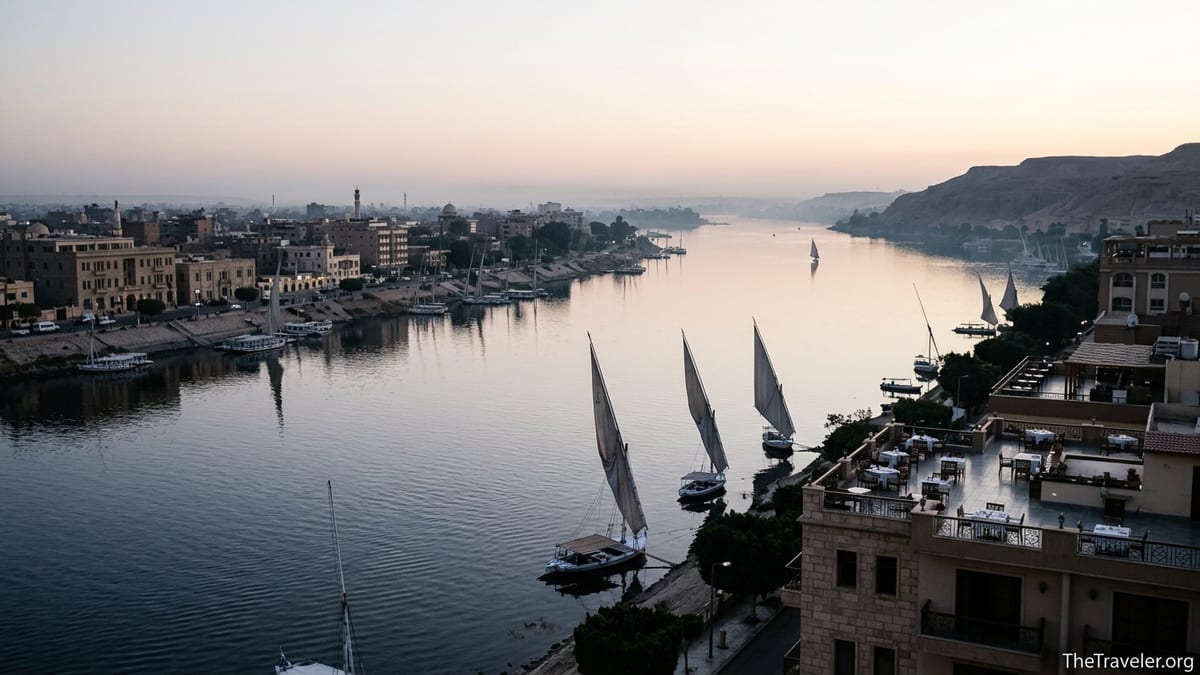
Further south, Aswan is smaller and more relaxed than Cairo or Luxor, making it a favorite base for travelers seeking calmer days, Nubian culture and some of the most beautiful Nile scenery in Egypt. The main hotel choices line the East Bank corniche, with a handful of well known properties on islands in mid river accessed by private boat. These island resorts often appeal to couples and higher end travelers because they combine gardens, pools and sweeping river views with a sense of separation from the city bustle, while still being a short boat ride from the souq and riverside promenade.
Aswan also anchors many shorter cruise itineraries. Some travelers sail northward toward Luxor on traditional style boats, while others use Aswan as a base for day trips to Philae Temple or the High Dam and then fly or drive to Abu Simbel. If you plan to visit Abu Simbel on an early morning excursion, it is worth choosing a hotel that can easily arrange packed breakfasts and reliable transfers, which usually means a mid range or better property familiar with handling tour groups and independent travelers alike. This is a classic example of paying not just for a room but for smooth logistics.
Compared with Cairo and Luxor, Aswan’s accommodation scene leans more toward mid range and high end than shoestring. Many visitors treat it as the splurge portion of an Egypt itinerary, booking one of the grand hotels or well reviewed riverside resorts for two or three nights to enjoy pool time and sunsets between temple visits. Budget travelers still find guesthouses in the Nubian villages on the West Bank, where painted houses and simple rooms give a very different feel from the larger city hotels, though commuting across the river adds time to each day’s sightseeing.
For those prioritizing tranquility, a common pattern is two nights in Aswan at a river view hotel after a busy stretch in Cairo and Luxor, followed by either a flight out or a transfer to a Red Sea resort. The smaller scale, evening strolls along the corniche and felucca sails at sunset often stand out in trip memories as much as the larger monuments, which is why Aswan works particularly well for couples and slow travelers who value atmosphere.
Hurghada: Red Sea Gateway for Families and Nile Extensions
On the Red Sea coast, Hurghada has grown into a major resort zone with long strips of sandy beach, all inclusive hotels and easy domestic connections to both Cairo and Upper Egypt. For families, one of its biggest advantages is the number of gently shelving sandy beaches, which make it easier for younger children to paddle and swim compared with some parts of Sinai where reefs come very close to shore. Large resorts south of the original town, including those in areas like Sahl Hasheesh or Makadi Bay, often feature multiple pools, kids’ clubs and on site snorkel centers that arrange half day boat trips to nearby reefs and islands.
Hurghada’s competitive hotel market usually translates to good value, especially outside of peak European school holidays. A week in a mid range all inclusive resort with pools and basic water slides can often price lower than an equivalent stay in Sharm El Sheikh, particularly when booked as part of a package that includes charter or low cost flights. This makes Hurghada a favorite for travelers who want a beach break to follow a cultural circuit of Cairo and Luxor, with several tour operators and domestic airlines offering direct transfers between Luxor and Hurghada to avoid backtracking through Cairo.
The trade off is that Hurghada, particularly around the older central districts, can feel more functional than picturesque, with development sprawling along the coast road. If you want a quieter or more upmarket feel, focusing on the newer self contained bays south of town often makes sense. Here you find resorts with landscaped grounds, private beaches and on site dive centers, as well as a growing number of aparthotels and serviced apartments aimed at longer staying guests who may combine remote work with diving and kitesurfing.
For first time visitors planning both Nile and Red Sea time, a popular route is Cairo, Luxor and then Hurghada, finishing with three to five nights by the sea. For instance, you might spend three nights split between Giza and central Cairo, three nights including a short cruise or day boat on the Nile between Luxor and Aswan, then transfer by road to Hurghada for a four night all inclusive stay where you rarely need to leave the resort except for a snorkel boat or a short taxi ride to the marina.
Sharm El Sheikh: Dramatic Reefs, Nightlife and Couples’ Escapes
Sharm El Sheikh, on the Sinai Peninsula, is the other giant of Egyptian beach tourism and works particularly well for couples, divers and travelers who want dramatic reef scenery combined with a lively evening scene. Unlike much of Hurghada’s coast, many Sharm hotels sit directly on rocky or coral rich shorelines, with jetties leading out to deep water. This is ideal for confident swimmers and snorkelers who want to drop straight into colorful reefs, but families with small children may find it less suitable for paddling. As a result, Sharm attracts a high proportion of dive groups and adult oriented resorts, especially around areas like Sharks Bay and Hadaba.
The resort zones in Sharm each have a different feel. Naama Bay is the traditional center, with a promenade, bars, shisha cafes and a cluster of mid range international hotels. Newer areas such as Soho Square offer shopping centers, fountains and more polished evening entertainment. Many four and five star properties here double as self contained enclaves, with multiple restaurants, pools and spa facilities where guests rarely need to step outside. Prices vary widely by season, but in general Sharm’s higher end resorts tend to price above comparable properties in Hurghada, reflecting their reef access, extensive facilities and strong demand from European package markets.
Sharm also works as a standalone base for travelers who want a simple fly and flop break with a few classic excursions rather than a full Nile itinerary. Typical day trips include boat excursions to the reefs of Ras Mohammed National Park, quad bike rides into the desert and evening visits to nearby entertainment complexes. Some visitors pair a week in Sharm with a separate short city break in Cairo on different tickets rather than trying to link everything in one overland route, especially since Sinai is separated from the Nile Valley by long desert drives.
For couples planning a two center honeymoon, a common pattern is to spend four or five nights split between Cairo and perhaps a short cruise or luxury stay in Aswan, followed by a week in a higher end Sharm resort with a good house reef and spa. This lets you front load the more intense sightseeing before winding down completely by the sea, with enough time for both dive trips and lazy days by the pool.
Matching Bases to Trip Types: First Timers, Families and Luxury
Once you understand the character of each base, matching them to your style and priorities becomes easier. For first time visitors focused on the classic highlights, a sensible structure is to combine a city base, an Upper Egypt base and a Red Sea base. In practice that often means three or four nights in Cairo or a Cairo and Giza split, three or four nights in Luxor and or Aswan including a short cruise segment, then three to six nights by the Red Sea in either Hurghada or Sharm El Sheikh. This pattern balances temples and tombs with downtime and limits repeat long drives.
Families typically prioritize easier logistics, kid friendly food and safe swimming. For them, central Cairo or Zamalek paired with a night in Giza, a simple two or three night stay in Luxor at a hotel with a good pool, and then a longer stay in Hurghada at a resort with sandy beach access and water slides often works best. Many Red Sea hotels now offer family rooms or two bedroom suites that give parents some privacy while keeping children close by, and some bundle in kids’ clubs, supervised activities and simple buffets that can be less stressful than navigating busy city streets every evening.
Luxury and special occasion travelers can lean more on atmospheric or historic properties. That might mean booking a true pyramid view suite in Giza for one night, choosing a grand historic hotel in Luxor or Aswan with Nile facing balconies, then finishing with a higher end adults oriented resort in Sharm El Sheikh or an upscale bay south of Hurghada. In this bracket, many travelers choose smaller boutique Nile cruises or dahabiya style boats that carry fewer passengers and spend more nights docked at quieter stretches of the river, trading some big ship amenities for a more intimate feel.
Budget travelers, by contrast, may prioritize areas with strong guesthouse and hostel options. Downtown Cairo, parts of Giza just off the main pyramid access road, Luxor’s West Bank and Nubian villages near Aswan all offer simple, locally run stays at lower prices, often with breakfast included and the chance to book tours or drivers directly. The main trade offs are fewer facilities, occasional quirks in plumbing or finishes, and the need to arrange your own transport more actively, but for many, these factors are offset by cost savings and a closer feel for local life.
The Takeaway
No single base is objectively best in Egypt. Cairo gives you energy, museums and food, Giza grants that bucket list pyramid view, Luxor and Aswan deliver temples and river sunsets, and Hurghada and Sharm El Sheikh supply warm seas and resort downtime. The skill is in sequencing them to match your time, budget and interests. If you only have a week, focus on Cairo and Upper Egypt or Cairo and the Red Sea. With ten days or more, consider a three part trip that samples all three regions.
Think in terms of experiences rather than dots on a map. Do you want to step onto your balcony at dawn and see the pyramids, or is it more important to walk out of your door in the evening into a lively neighborhood of cafes and bookstores. Would your children be happier with an all inclusive pool and beach routine after a few intense days of temples. Does a historic riverfront hotel or a modern resort with every amenity feel more like your idea of a splurge. Once you answer those questions, the choice between Cairo and Giza, Luxor and Aswan, Hurghada and Sharm El Sheikh becomes much clearer.
Whichever bases you choose, build in at least one or two lighter days with no major sightseeing so Egypt’s rhythm can sink in. Sit in a café in Cairo watching the traffic ebb and flow, linger on the upper deck of a Nile boat as fields slide by, or watch the sky turn from orange to purple over the Red Sea. With the right mix of places to stay, your nights in Egypt will feel as memorable as the days.
FAQ
Q1. For a first trip to Egypt, is it better to stay in Cairo or Giza for the pyramids.
For most first timers, a split works best one night in Giza for the view and early access, then the rest in central Cairo for museums, food and historic neighborhoods.
Q2. How many nights should I spend in Luxor if I want to see the main temples and tombs.
Plan on at least two full days, which usually means three nights. One day can cover the West Bank tombs and one the East Bank temples and museum, with time left for an evening stroll.
Q3. Do I need to stay in Aswan as well as Luxor, or can I just do a day trip.
Aswan deserves at least one or two nights of its own for the calmer pace, Nubian villages and boat trips. While some tours rush through, staying overnight makes it far more enjoyable.
Q4. Which Red Sea resort is better for young children, Hurghada or Sharm El Sheikh.
Hurghada usually suits younger kids better because more beaches are sandy and gently shelving, and many family oriented resorts offer water slides, kids’ clubs and simple buffet dining.
Q5. Is Sharm El Sheikh or Hurghada better for couples who want both reefs and some nightlife.
Sharm El Sheikh often edges ahead for couples thanks to its dramatic reefs, lively areas like Naama Bay and Soho Square, and a wide choice of adults oriented and spa focused resorts.
Q6. Can I combine a Nile cruise with a Red Sea stay without flying back through Cairo.
Yes, many itineraries link Luxor directly with Hurghada by road, so you can cruise between Luxor and Aswan, then transfer overland to the Red Sea without returning to Cairo in between.
Q7. Are pyramid view hotels in Giza worth the higher price.
For some travelers they are, especially if a balcony view of the pyramids at sunrise or during the evening light show is a lifelong dream. Others prefer to spend that budget on a nicer hotel in central Cairo.
Q8. Is it safe to stay in local guesthouses on the West Bank of Luxor or in Nubian villages near Aswan.
These areas are established on the tourist trail and many guesthouses are family run and welcoming. As with any destination, choose well reviewed places and follow normal common sense precautions.
Q9. How should I split my time if I have ten days in Egypt.
A balanced option is three or four nights between Cairo and Giza, three or four nights split between Luxor and or Aswan including a cruise segment, then three to five nights at the Red Sea.
Q10. Do I need to book hotels and cruises far in advance for peak season.
For travel from late December through February and during major holidays, booking several months ahead is wise, especially for popular Nile cruises and historic or high end hotels in Luxor and Aswan.