


Egypt is one of those rare destinations that lives up to its myths. The pyramids rise from the desert, the Nile still shapes daily life, and Red Sea reefs glow with color just offshore. For first-time visitors, though, the country can feel overwhelming: sprawling Cairo, complex transport, intense summer heat and a dizzying range of tours and prices. This practical guide focuses on what new travelers really need to know in 2026 to plan a smooth, memorable trip covering the classic highlights.
When to Go and How Long to Stay
The most comfortable months for a first trip are generally from late October to April, when daytime temperatures in Cairo and along the Nile are usually pleasant enough for sightseeing. In February in Luxor and Aswan, for example, many travelers report cool mornings, dry, sunny afternoons and light layers at night, which makes temple visits feel far less draining than in summer. Shoulder months like March, April, late October and November often balance good weather with slightly lower prices and fewer domestic holiday crowds.
From May to September, especially in Upper Egypt around Luxor, Aswan and Abu Simbel, temperatures routinely climb well above 40°C (104°F). Traveling then is still possible, and many independent travelers do it, but you need to adapt your schedule: think 6:00 a.m. starts for Valley of the Kings, midday breaks by the pool or indoors at the Luxor Museum, and late-afternoon felucca rides on the Nile instead of walking around open archaeological sites at noon.
For a classic “first time in Egypt” route that includes Cairo, Giza, a Nile cruise between Aswan and Luxor and time by the Red Sea, most visitors aim for 10 to 14 days. A common pattern is 3 nights in Cairo (for the pyramids and the new Grand Egyptian Museum once fully open), 3 or 4 nights on a Nile cruise, 2 or 3 nights in Luxor or Aswan on land, and 3 to 4 nights in Hurghada, El Gouna, Sharm El Sheikh or Dahab. If you only have a week, it usually makes sense to choose between a Nile cruise or Red Sea time rather than trying to do both.
Shorter city breaks are possible as well. A 4- or 5-day trip based in Cairo can comfortably include a full day at Giza, another day for Saqqara and Dahshur, and a day exploring Islamic and Coptic Cairo, with perhaps a side trip to Alexandria by train if you do not mind early departures.
Visas, Safety and First-Time Practicalities
Most travelers from Europe, North America and many parts of Asia either qualify for an e-visa arranged online in advance or a visa on arrival at Cairo International Airport. In 2026, the single-entry e-visa and standard visa on arrival are typically around 30 US dollars, with a multiple-entry option at a higher fee. Your passport should be valid for at least six months from your date of arrival, and officials may ask to see onward or return travel. Always confirm the latest rules with an official Egyptian consulate or the government visa portal before you fly, as policies can evolve.
In terms of safety, major tourist circuits such as Cairo, Giza, Luxor, Aswan and established Red Sea resorts like Hurghada and Sharm El Sheikh are heavily policed and see large numbers of organized tours. Visitors routinely describe visible security checkpoints at hotel entrances, around the Giza Plateau and at airport-style scanners when entering big museums or malls. As in any large city, petty theft and scams are more common concerns than violent crime. Standard precautions apply: use hotel safes where available, keep a photocopy of your passport, take registered taxis or ride-hailing apps, and avoid displaying large amounts of cash or expensive jewelry.
First-time visitors are often surprised by the level of touting around the main sights. At Giza, for instance, you can expect offers for camel rides, “shortcut” tickets, unofficial guiding and persistent souvenir sales. A firm but polite “la, shukran” (no, thank you) while continuing to walk is usually enough. Booking a licensed Egyptologist guide through your hotel or a reputable agency for your first day in Cairo can help you understand local etiquette, tipping practices and how to say no comfortably.
Health-wise, Egypt’s tap water is chlorinated in major cities but generally not recommended for drinking by short-term visitors. Most travelers buy large bottles of water from supermarkets or kiosks and use them for drinking and brushing teeth. Street food can be excellent, but if you are not used to it, start with popular, high-turnover spots rather than random stalls. Pharmacies are easy to find in city neighborhoods, and it is wise to carry your own supply of any regular prescriptions plus basic rehydration salts and stomach remedies in case of a change-of-diet upset.
Cairo, Giza and the Nile Valley Highlights
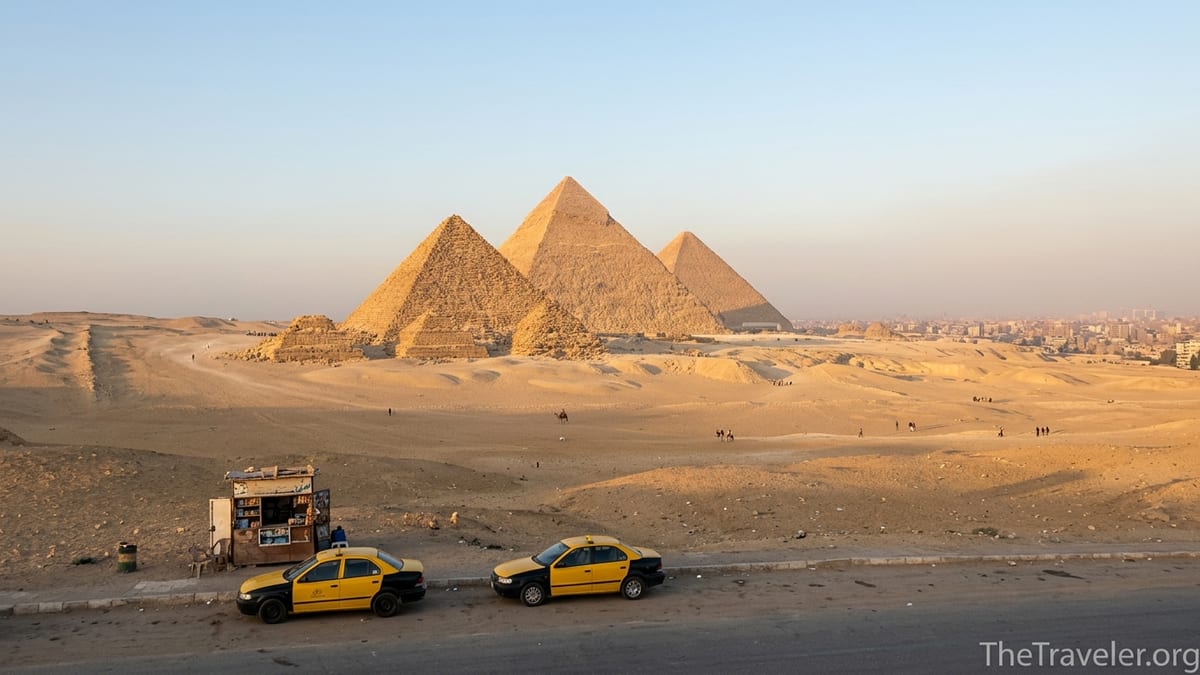
Cairo is usually your entry point and deserves at least two full days on any first itinerary. One full day often goes to the Giza Plateau, where you can visit the Great Pyramid of Khufu, the slightly smaller pyramids of Khafre and Menkaure, and the Great Sphinx. Travelers who want to go inside the Great Pyramid pay a separate fee; capacity is managed by timed slots, so it is worth asking your guide or hotel to confirm the latest arrangements. Many visitors pair Giza with a late-afternoon visit to a nearby rooftop cafe for views back over the plateau as the light softens.
Within greater Cairo, Islamic Cairo’s historic mosques and medieval streets, from the Citadel and Mosque of Muhammad Ali down toward Khan el Khalili bazaar, give you a sense of the city’s layered history. Meanwhile, the Coptic Cairo district, including the Hanging Church and the Church of Saints Sergius and Bacchus, showcases Egyptian Christian heritage. Many first-timers choose to stay in central neighborhoods such as Downtown, Zamalek or Garden City to be reasonably close to both historic areas and the newer Grand Egyptian Museum district across the river.
South along the Nile, Luxor is essentially an open-air museum. On the West Bank you find the Valley of the Kings, where you can enter several tombs on a standard ticket and pay extra for special ones such as Tutankhamun’s, as well as the Temple of Hatshepsut and the Colossi of Memnon. On the East Bank are Karnak Temple, with its forest of columns, and Luxor Temple, magical at dusk when it is lit and the air has cooled. A typical guided day tour of the West Bank by air-conditioned minivan, including a few tombs and major temples, might cost in the range of 40 to 80 US dollars per person in a small group, plus entrance fees and tips.
Further upriver, Aswan has a slower pace and Nubian cultural influences. Many visitors take a short motorboat ride to Philae Temple on its island, sip tea at the Old Cataract Hotel terrace at sunset or walk through colorful Nubian villages on Elephantine Island. From Aswan, pre-dawn excursions by bus or domestic flight to Abu Simbel are a highlight, though they require a very early start and extra cost. You can expect an organized Abu Simbel day trip by road from Aswan to add roughly 50 to 100 US dollars per person to your budget, depending on group size and inclusions.
Nile Cruises, Red Sea Resorts and Desert Experiences
For many first-time travelers, a 3- or 4-night Nile cruise between Aswan and Luxor is the centerpiece of the trip. Modern cruise boats typically include a cabin with private bathroom, full board meals and a schedule of shore excursions to temples such as Kom Ombo and Edfu. Prices vary widely by season and level of comfort. A reasonable ballpark for a mid-range cruise in 2026 might be 700 to 1,200 US dollars per person for four nights, with entrance fees and guiding often included in a package price. Luxury vessels with fewer cabins, more spacious decks and gourmet dining can cost significantly more, especially in peak winter season.
The Red Sea coast offers a very different side of Egypt, with diving, snorkeling and relaxed resort stays. Hurghada and Sharm El Sheikh are the biggest hubs, with large all-inclusive resorts, aquaparks and nightlife. Independent travelers often gravitate toward slightly smaller, more self-contained developments like El Gouna near Hurghada, or Dahab on the Sinai Peninsula, where the atmosphere is more laid-back. A mid-range sea-view room at a four-star resort in Hurghada or Sharm can be similar in price to a good city hotel in Cairo, while more modest guesthouses and apartments often undercut that if you are willing to be a few streets back from the beach.
If you have extra time and a taste for adventure, desert trips can be a highlight. Popular options include overnight camping excursions in the White Desert near Farafra, where surreal chalk formations rise from the sand, or jeep safaris out of Hurghada that combine dune driving with Bedouin-style meals. These trips are best arranged through established local operators that provide proper vehicles, safety equipment, food and water. Prices tend to be quoted per vehicle or per person; an overnight White Desert trip from Cairo, for instance, might run from a couple of hundred US dollars per person in a small group, including transport, permits, meals and camping gear.
Whether to book these experiences independently or in a package often comes down to your comfort level. First-time visitors who value predictability may prefer a tour operator that bundles a few nights in Cairo, a Nile cruise and a Red Sea stay with domestic flights and transfers. More experienced travelers or those on tighter budgets sometimes piece together the same route using public transport, local guesthouses and day tours booked on the ground, trading convenience for flexibility and potential savings.
Getting Around: Flights, Trains, Metro and Taxis
Egypt is a long country, and distances between the main tourist clusters are greater than many first-time visitors expect. To maximize your time, especially on a 7- to 10-day itinerary, domestic flights are often the most practical option between Cairo, Luxor and Aswan. A one-way ticket on a national carrier between Cairo and Luxor or Cairo and Aswan commonly falls somewhere between roughly 80 and 250 US dollars per person depending on season, demand and how far ahead you book. Some tour packages include these flights in the overall price, which can simplify logistics.
For those who prefer to keep costs down or want to experience the landscape at ground level, Egypt’s rail network connects Cairo with Alexandria to the north and with Luxor and Aswan along the Nile. The most comfortable long-distance trains are branded as air-conditioned express services, with different classes. Many independent travelers from Cairo to Luxor choose an evening or overnight train with reserved seats and then use taxis or arranged transfers at the other end. It is important to buy tickets through official counters or reputable agencies and to confirm the current schedule, as timings can shift.
Within Cairo, the metro system is one of the fastest ways to move between central districts, especially at rush hour when surface traffic can be heavy. As of 2026, tickets use a distance-based fare system; short rides of up to about nine stations cost around the local equivalent of a few US cents to a dollar, increasing with distance. Trains are frequent, and some carriages are reserved for women. For visitors, the metro is particularly useful to reach areas such as Coptic Cairo or to connect between bus terminals and central neighborhoods without sitting in traffic for hours.
Taxis and ride-hailing apps like Uber and local equivalents operate in major cities and are often the simplest way for new arrivals to get from airports to hotels or between sights that are not well linked by public transport. In Cairo, a ride from the airport to central districts like Downtown or Zamalek might cost in the range of 10 to 20 US dollars depending on traffic and time of day. Around tourist zones such as Giza, some drivers may prefer to negotiate a fixed rate in cash, especially for half-day or full-day hires. Agreeing the total price in advance, and clarifying whether it includes waiting time and any tolls or parking, avoids most misunderstandings.
Accommodation, Daily Costs and What Things Really Cost
Egypt offers a wide range of places to stay, from simple guesthouses on Luxor’s West Bank to palace-style hotels overlooking the Nile. A realistic mid-range budget in 2026 for a private double room with air-conditioning and private bathroom in a centrally located Cairo hotel could be around 80 to 150 US dollars per night. In tourist-heavy areas near the Giza Pyramids or in high-end Red Sea resorts, comparable hotels may charge more in peak winter season, while rates in hotter summer months or shoulder periods can drop noticeably.
On a day-to-day level, Egypt can feel very affordable once you have covered flights and larger tours. Travelers keeping an eye on spending might aim for a daily budget of roughly 30 to 50 US dollars per person if staying in budget guesthouses, eating mainly at local restaurants and using public transport. A mid-range traveler who prefers comfortable hotels, some guided day tours and a mix of casual and sit-down meals may plan more in the realm of 100 to 200 US dollars per day. These broad ranges include food, local transport, entrance fees and modest souvenirs, but not large extras like high-end shopping or diving courses.
To give a sense of specific prices, a simple meal of koshary or falafel sandwiches with a soft drink at a local spot might cost the equivalent of a few US dollars. A sit-down dinner for two at a mid-range restaurant in Zamalek or El Gouna with mains, dessert and non-alcoholic drinks might run 20 to 40 US dollars depending on what you order. Entrance fees to major sites vary: tickets for the Giza Plateau, the main halls of the Grand Egyptian Museum once fully open, and combined passes for Luxor sites add up, so it is worth checking current prices and considering whether a bundled pass or guided package offers better value for how much you plan to see.
Tipping is an expected part of the service culture and can surprise first-time visitors. Hotel porters, housekeeping, drivers, guides and restaurant staff generally appreciate small, regular tips in Egyptian pounds. Many travelers keep a separate envelope of small notes specifically for tips so they are not caught without change. For example, you might tip a driver the equivalent of a few US dollars after an airport transfer, or a guide 10 to 20 US dollars per day depending on group size and your satisfaction.
Alexandria, Coastal Breezes and City Contrasts
Alexandria, about 200 kilometers north of Cairo on the Mediterranean, offers a very different atmosphere from the capital. Temperatures are usually milder, sea breezes take the edge off the heat, and the city’s wide corniche and European-influenced architecture reflect its 19th- and early 20th-century history. Many visitors come for a day trip from Cairo by early-morning train, returning in the evening after visiting the modern Bibliotheca Alexandrina, the Qaitbay Citadel on the harbor and one or two small museums or catacombs.
Spending a night or two in Alexandria allows you to slow the pace. You might book a sea-view room in a mid-range hotel along the corniche, walk to a traditional fish restaurant where you choose your catch from an ice-filled display, then linger in a historic cafe that once served writers and intellectuals. Local trams and rideshares make it straightforward to move between the central district, the Stanley Bridge area and quieter residential neighborhoods, giving a more rounded impression of coastal Egyptian life.
Compared with Red Sea resorts, Alexandria’s beaches are less about snorkeling and more about local families enjoying the water, especially during school holidays. If you are visiting in July or August, the city can feel crowded with domestic tourism and room rates can rise accordingly, even though the weather further south in Luxor and Aswan may be uncomfortably hot for many foreign visitors. In cooler months, however, Alexandria can be an appealing add-on for travelers who enjoy cities and history more than poolside time.
For a first-time itinerary of around 10 days that already includes Cairo, Giza, a Nile cruise and a Red Sea stop, Alexandria is often best treated as either a focused overnight trip or saved for a future visit. If your interests lean strongly toward Mediterranean history and you are less keen on snorkeling or resort stays, though, you could reasonably swap a few Red Sea days for two or three days in Alexandria instead.
Planning Your First Egypt Itinerary
When you begin to map out your own route, it helps to decide early what kind of experience you want most: ancient history, slow river travel, beach time, city culture or a bit of everything. A traveler fascinated by archaeology might prioritize extra days in Luxor to explore less-visited tombs and temples, while someone drawn to diving might spend the bulk of their time in Dahab or Sharm El Sheikh and keep Cairo to two or three days around arrival and departure flights.
For many first-timers, a balanced 10-day plan could look like this in outline: arrive in Cairo and spend two full days on Giza, Saqqara and Islamic or Coptic Cairo; fly to Aswan for one night and a visit to Philae Temple; board a 3- or 4-night Nile cruise to Luxor, stopping at Kom Ombo and Edfu; then transfer overland to Hurghada or fly to Sharm El Sheikh for three nights at the Red Sea before returning to Cairo for your final night. Adjustments depend on flight availability, budget and whether you prefer to end the trip in a city or by the sea.
Booking strategy can also shape your experience. Some travelers reserve only the first few nights in Cairo and a Nile cruise, leaving the rest open to adjust once they are in the country and have a feel for it. Others, particularly those with limited time or traveling with children, appreciate the predictability of a fully pre-booked package that locks in transfers, domestic flights, guides and hotels. Either approach can work in Egypt; the key is to be realistic about travel days, heat and how much moving around you personally enjoy.
Finally, consider pacing and rest. Even in winter, visiting multiple archaeological sites back-to-back can be mentally and physically tiring. Building in slower afternoons on a Nile felucca, a quiet evening at a rooftop cafe in Cairo or a completely unstructured day at a Red Sea resort gives you space to absorb what you have seen. Those pauses often become as memorable as the big-ticket sights themselves.
The Takeaway
Egypt rewards curiosity, patience and a willingness to adapt to its rhythms. For first-time visitors in 2026, the essentials are straightforward: plan for cooler months if you can, allow at least 10 days for a classic route, be realistic about distances and temperatures, and choose a mix of structured tours and unhurried time. Understanding how visas, transport, tipping and touts work in practice will help you feel more in control from the moment you land in Cairo.
Whether you are standing inside the shadowed passages of the Great Pyramid, watching sunrise over the Nile from a cruise deck, or floating above coral gardens off the Red Sea coast, the country’s variety can surprise even seasoned travelers. With thoughtful planning and flexible expectations, your first trip to Egypt can be both manageable and deeply rewarding, setting the stage for return visits to explore beyond the classic circuit.
FAQ
Q1. How many days do I really need for a first trip to Egypt?
Most first-time visitors are happiest with 10 to 14 days, which allows time for Cairo and Giza, a Nile cruise or stays in Luxor and Aswan, plus a few days at the Red Sea or in Alexandria without feeling rushed.
Q2. Is Egypt safe for solo travelers and first-time visitors?
Major tourist areas like Cairo, Giza, Luxor, Aswan and established Red Sea resorts are heavily visited and have visible security. Normal big-city precautions, using reputable transport and being cautious with valuables are usually sufficient for a smooth trip.
Q3. What is a realistic daily budget in Egypt?
Budget travelers who use guesthouses, local restaurants and public transport often manage on about 30 to 50 US dollars per person per day, while mid-range travelers who prefer comfortable hotels and guided tours typically plan around 100 to 200 US dollars daily, excluding international flights.
Q4. Do I need to book a Nile cruise in advance?
In the cooler high season from roughly October to April, it is wise to book a Nile cruise several weeks or months ahead, especially if you want a specific ship or cabin type. In hotter months, last-minute deals are more common, but availability on the best-reviewed boats can still be limited.
Q5. Can I visit Egypt in summer, or is it too hot?
You can visit in summer, but expect extreme heat in Upper Egypt. Plan very early morning sightseeing, long midday breaks indoors or by the pool, and be especially careful about hydration, sun protection and listening to your body.
Q6. Is it better to stay in Cairo city center or near the Giza Pyramids?
Staying near Giza gives you easy morning access to the pyramids, while city-center neighborhoods like Downtown, Zamalek or Garden City are better for exploring museums, historic districts and restaurants. Many travelers split their stay between the two areas if they have enough nights.
Q7. How should I get from Cairo to Luxor and Aswan?
Domestic flights are fastest and save time on shorter trips. Air-conditioned express trains are a more economical option and can be a good experience if you book through official channels and are comfortable with longer travel days.
Q8. Do I need a guide for the pyramids and temples?
You can visit independently, but a licensed Egyptologist guide adds context and helps manage logistics, touts and timing. Many first-time visitors hire a guide at least for Cairo and their first day among the Nile-side temples.
Q9. What should I wear to respect local culture and stay comfortable?
Lightweight, breathable clothing that covers shoulders and at least to the knee works well for both comfort and modesty. A wide-brimmed hat, sunglasses and a scarf are useful for sun and occasional visits to religious sites.
Q10. Is the tap water safe to drink in Egypt?
In most cities the tap water is treated but not recommended for short-term visitors. It is safer to drink bottled or filtered water and use it for brushing teeth, while still using tap water for washing and showers without concern.