


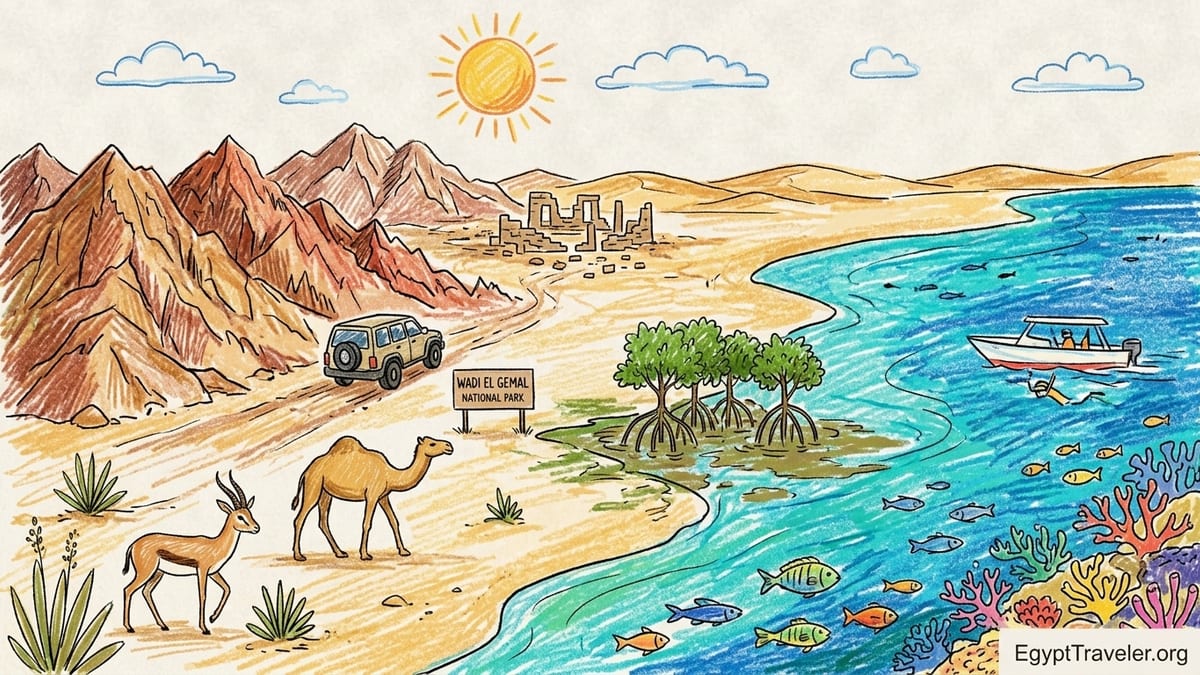
South of Marsa Alam, Wadi El Gemal National Park stretches from jagged desert mountains to the reefs and mangroves of the Red Sea. Covering more than 5,000 square kilometers of land and sea, it is one of Egypt’s most important nature destinations in its own right, not just a side excursion. This guide treats Wadi El Gemal as a stand-alone Egyptian Riviera experience, helping you understand its coastal and desert landscapes, how to visit Qulaan and the mangroves, what to expect at the emerald mines, and how to choose between day trips and longer expeditions.
Understanding Wadi El Gemal as a National Park, Not a Side Trip
Wadi El Gemal National Park lies roughly 40 to 90 kilometers south of Marsa Alam town, with the protected area spanning both a wide section of Red Sea coastline and a large block of the Eastern Desert interior. Official Egyptian environment material describes a total area of around 7,450 square kilometers, with over 4,000 square kilometers of land and more than 2,000 square kilometers of marine habitats. The park includes coral reefs, islands, seagrass meadows, mangroves and long beaches on the sea side, plus rugged mountains, wadis and ancient mines inland.
Because many Marsa Alam hotel brochures sell Wadi El Gemal as an add-on to a standard beach holiday, it is easy to underestimate how much there is to see. Within the park boundaries you find Ras Hankorab, also known as Sharm El Luli, a white-sand lagoon often compared to the Maldives, Qulaan Bay with its mangrove forest and low islands, and the inland emerald-mining district historically known as Mons Smaragdus. There are also lesser-known rock art sites and high desert plateaus where you may encounter dorcas gazelle, Nubian ibex or wild camels if you are patient and conditions are right.
The park is managed under Egyptian protected areas legislation, including Law 102 of 1983 and environmental law updates that regulate access, commercial operations and camping. In practice, this means that most visitors experience Wadi El Gemal through organized excursions that already include the necessary permits and fees, especially for boat trips, guided 4x4 routes and archaeological visits. Independent travelers can still visit accessible coastal spots, but should be aware of checkpoints, entrance fees and restrictions on off-road driving, camping and wildlife disturbance.
For planning purposes, think of Wadi El Gemal as a small region within the wider Egyptian Riviera, rather than a single viewpoint or half-day outing. A week in Marsa Alam could easily include one full coastal nature day in the park, one desert and archaeology day, and a specialist wildlife or overnight trip, with time in between to rest at your resort or dive center.
Coastal Nature: Reefs, Mangroves and Qulaan from Marsa Alam
The coastal strip of Wadi El Gemal is one of the Red Sea’s standout marine landscapes. North of the small port of Hamata, Ras Hankorab or Sharm El Luli offers a sweeping curve of white sand and shallow turquoise water. Day tours from Marsa Alam and Port Ghalib typically pick up around 7:30 to 8:00 in the morning, drive about 45 to 60 minutes south, then spend several hours snorkeling or swimming directly from the beach. Operators describe the reef here as close to shore, with sandy entries that make it accessible even for first-time snorkelers.
Further south, Qulaan Bay protects what is commonly described as the largest mangrove forest on the Egyptian Red Sea coast. Boat itineraries marketed as Hamata or Qulaan Islands trips usually depart from Hamata harbor, roughly a two-hour transfer from central Marsa Alam. Example programs run about 8 to 9 hours in total, including transfers, and feature two or three snorkeling stops plus time on a sandbar or beach near the mangroves. Prices at the time of writing commonly start around the low hundreds of US dollars per person for small-group boat trips from Marsa Alam hotels, including national park fees, mask and snorkel, lunch and soft drinks.
A shore-based Qulaan outing feels different from the boat-based island tours. Some operators drive guests directly to Qulaan Beach, about 50 kilometers south of Marsa Alam, to walk beside the mangroves and swim from the stone-free shoreline. These trips tend to be slightly shorter, often returning to hotels by mid-afternoon, and appeal to travelers who prefer less time on boats. In contrast, the Hamata and Qulaan Islands boat days involve more open water time and are better suited to those who enjoy multiple snorkeling sessions and do not mind longer transfers.
Whichever option you choose, it is important to remember that wildlife sightings offshore are not guaranteed. Green turtles, dugongs and dolphins do inhabit the area, and some tour descriptions mention possible encounters, but local guides and national park messaging are clear that you may or may not see them on any given day. Treat turtles or dolphins as a bonus rather than a promise, and prioritize operators who emphasize reef conservation, keep respectful distances and prohibit guests from touching animals or standing on coral.
Desert Nature and Wildlife: From Mountain Wadis to Hamata and Beyond
Inland, Wadi El Gemal’s desert section protects a network of dry riverbeds, rocky plateaus and mountain ranges that are part of the Eastern Desert spine. A standard coastal visitor will see only a glimpse of this landscape from the main Marsa Alam to Shalateen highway. To experience the interior properly, you need a guided 4x4 excursion with a licensed operator who has permission to use designated tracks and who understands seasonal conditions.
Daytime temperatures from late spring through early autumn can climb well above 35 degrees Celsius, with little natural shade away from the wadis. For this reason, many desert-focused trips start very early, leaving Marsa Alam resorts around sunrise in convoy-style 4x4s or rugged pickups. Typical schedules include a stop at a viewpoint in the lower mountains, tea with a local Ababda or Bishari community, and short walks into side wadis where acacia trees, shrubs and occasional pools support wildlife.
The park’s flagship land mammals include dorcas gazelle, Nubian ibex and wild or semi-feral camels. Sightings are possible but not guaranteed, especially on short day trips that focus heavily on driving between scenic stops and cultural visits. Guides report that gazelles are more likely to be seen in quiet side valleys at dawn or dusk, while ibex favor steeper, rockier slopes that require either patience from a distance or limited scrambling. Camels are more easily encountered, both in feral groups and as domestic animals belonging to local herders.
Travelers considering a wildlife-focused desert outing should understand that Wadi El Gemal is not a safari park with predictable game drives. Instead, it is a functioning wilderness and pastoral landscape where animals move freely. The experience is more about immersion in the desert environment, reading tracks in the sand, spotting birds of prey on thermals and understanding how local people use the land, than about ticking off a fixed list of species. Longer overnight trips increase your chances of seeing more elusive wildlife because you can be out at the right times of day and reach more remote valleys.
Archaeology and the Emerald Mines of Mons Smaragdus
One of Wadi El Gemal’s most distinctive features is the presence of ancient emerald mines in the inland mountains. The main complex, known to the Romans as Mons Smaragdus, lies about 20 to 30 kilometers inland from the Red Sea coast. Within this zone, sites such as Sikait preserve the remains of Roman and possibly earlier mining settlements, temples and extraction areas where emeralds and green beryl were worked for centuries.
Modern archaeological research has documented temples dedicated to deities such as Serapis, terraced housing, mine shafts and workshops scattered across several valleys. However, this is still an active research area rather than a fully developed tourist circuit. Access is controlled, signage can be minimal and there are few if any formal visitor facilities on site. In practice, visitors typically reach these ruins through specialist desert tour operators, sometimes as part of broader Eastern Desert itineraries that also include Roman roads or other mining sites.
Given the fragility of the archaeological remains and their location in a protected area, visiting the emerald mines on your own is not recommended. There may be locked gates, checkpoints or seasonal restrictions, and track conditions can change after rare but intense desert rains. Licensed operators coordinate with the Red Sea regional antiquities authorities and the Egyptian Environmental Affairs Agency for the necessary permissions, vehicle routes and guiding requirements.
For travelers interested in history but not able to commit to a full emerald mines expedition, some 4x4 excursions from Marsa Alam offer shorter stops at more accessible ruins within the broader Wadi El Gemal landscape. These might include remnants of ancient caravan routes, small chapels or lookout structures closer to the coast. When booking, ask your operator specifically whether archaeological elements are included, how long is spent walking among ruins, and what kind of interpretation is provided on site.
Excursions, Permits and What Can Be Done in One Day
Because Wadi El Gemal covers such a large area, combining everything in a single outing from Marsa Alam is not realistic. In practice, most visitors choose between three main styles of day trip: a coastal nature and snorkeling day, a mangrove-focused Qulaan or Hamata boat day, or a desert and culture 4x4 day that may or may not include archaeology. Trying to visit Qulaan, Ras Hankorab and the emerald mines in one day would involve long hours in vehicles and leave little time on the ground.
Concrete examples from current operators highlight what is achievable. A combined Sharm El Luli and Qulaan Bay trip by minibus generally departs Marsa Alam around 8:00 and returns by roughly 16:00. The day is split between snorkelling at Ras Hankorab and relaxing or wading beside the mangroves at Qulaan, with lunch served on the beach or under simple shade structures. In contrast, a Hamata and Qulaan Islands boat trip often requires pick-up around 5:30 to 6:30, a two-hour drive to Hamata harbor, then a full boat program with two or three reef stops and arrival back at hotels around 17:00 or later.
Desert 4x4 excursions vary more widely. Shorter programs from Marsa Alam may run from mid-afternoon to after sunset, combining limited off-road driving with a visit to a Bedouin-style camp, a simple meal and stargazing on the return leg. More serious Wadi El Gemal safaris, focused on nature and archaeology, tend to be full days of 10 to 12 hours with early starts. These longer trips sometimes include a wadi walk, a community visit and stops at selected ruins. Because distances are significant and speeds on unpaved tracks are low, operators often caution guests that itineraries can change according to weather, track conditions and official instructions.
Regarding permits, national park entry fees are usually bundled into coastal and mangrove day-trip prices and collected at gates into managed beach zones such as Hankorab and Qulaan. Boat-based trips require licensed vessels and guides that comply with Red Sea protected area regulations. For activities such as scientific research, commercial filming, specialist trekking routes and any overnight camping within the park, separate written permissions are required from the Egyptian Environmental Affairs Agency or the relevant regional authority. Public information from official sources emphasizes that camping inside Wadi El Gemal is not allowed without prior special permission, and conditions can change, so travelers should confirm the current rules with their tour operator or directly with park authorities before planning an overnight stay.
Practicalities: Heat, Water, Shade and Reef Protection
Environmental conditions in Wadi El Gemal can be demanding, especially away from the sea breeze. From May to September, midday heat in both coastal and desert sections can reach levels that are uncomfortable for prolonged activity. Even in winter, the sun remains strong and reflection from pale sand and water intensifies exposure. Visitors should bring high-factor reef-safe sunscreen, a wide-brimmed hat, sunglasses and lightweight but covering clothing. Long-sleeved shirts and loose trousers or long shorts help protect both against sunburn and occasional brush with rocks or vegetation.
Hydration is critical. Most organized excursions include bottled water and soft drinks, but it is wise to carry extra, particularly on desert 4x4 days or combined outings that spend time away from main facilities. A practical example is a full Hamata boat trip, which can last 9 to 10 hours door to door. Even with drinks provided, guests who bring their own refillable bottle and drink regularly throughout the day tend to feel significantly better on the long drive back to Marsa Alam. Heat-sensitive travelers should consider planning coastal excursions earlier in their stay, before cumulative sun exposure and travel fatigue set in.
Shade infrastructure along the Wadi El Gemal coast is fairly simple. At popular beach zones like Ras Hankorab or Qulaan there are often rustic shelters made of palm fronds or wood, but they may not accommodate all visitors in busy periods. Personal sun protection in the form of rash vests for snorkeling and light cover-ups for the beach is more reliable than assuming plentiful umbrellas. Bathrooms in these areas are usually basic, sometimes consisting of simple toilets near the parking area rather than fully serviced changing blocks.
Reef protection is a central theme throughout the park. Regulations prohibit anchoring on coral, collecting shells or coral fragments and harassing marine life. Many snorkeling sites allow water entry only through marked sandy channels to minimize contact with coral heads. Operators commonly brief guests not to stand on coral, even in shallow water, and to keep a respectful distance from turtles, rays and reef fish. Choosing a mask and fin set that fits comfortably, or renting better-quality equipment from a reputable dive center in Marsa Alam before your trip, can help you stay relaxed in the water and avoid accidental damage.
Respectful Interaction, Photography and Long Vehicle Journeys
Wadi El Gemal is not an empty wilderness. It is part of the homeland of communities with deep histories in the Eastern Desert, including Ababda and Bishari groups, as well as migrant workers in tourism and mining. Many desert excursions from Marsa Alam include tea, bread baking or simple meals in Bedouin-style tents or at small encampments. While these visits are designed for tourism, they still take place in or near real living and working areas.
As a visitor, it is courteous to ask permission before photographing people, animals or private spaces. Some hosts are happy to be in photos, others prefer not to. Children may be present, and extra sensitivity is important. Small purchases of tea, handicrafts or snacks can be a respectful way to support local livelihoods, but aggressive bargaining over very small sums often leaves both sides uncomfortable. Carry some small denomination Egyptian banknotes if you wish to tip your hosts or your driver in addition to any included service charge.
Photography of landscapes, reefs and wildlife is generally welcomed, but be cautious near infrastructure such as checkpoints, communication towers or government buildings. Regulations in Egypt restrict photography of certain strategic sites, and security personnel can be wary of large telephoto lenses pointed at installations, even unintentionally. When in doubt, it is safer to put the camera down and ask your guide. Many travelers find that a compact mirrorless camera or a modern smartphone in a waterproof case is sufficient for both desert and snorkeling days.
Finally, be prepared for the long journeys that come with visiting a vast park from a resort base. A Marsa Alam guest staying north of town might spend nearly four hours in vehicles on a round-trip to Hamata harbor. Similarly, reaching more remote desert valleys or the emerald-mining region involves hours of driving on paved and unpaved roads. Comfortable, closed footwear such as lightweight hiking shoes or sturdy trainers is better than open sandals for these days, both in the vehicle and when walking on sharp rock or hot sand. If you are prone to back discomfort, choosing a small-group trip with newer vehicles and limiting yourself to one or two very long days can make the experience far more enjoyable.
Choosing Your Style of Wadi El Gemal Experience
With so much on offer, it helps to frame Wadi El Gemal visits around four core experiences: a coastal nature day, an archaeological desert day, a wildlife-focused trip and an overnight expedition for deeper immersion. Each draws on different parts of the park and requires a different level of preparation.
A coastal nature day suits travelers who primarily want to enjoy clear water and reefs with manageable journey times. A typical example is a Sharm El Luli and Qulaan shore excursion that runs roughly 8 hours including transfers. You might snorkel a shallow reef straight from the beach in the morning, eat a simple grilled lunch under a shade shelter, then wade in calm, shallow water among mangrove-fringed lagoons in the afternoon before returning to your hotel. This type of trip works well for families, casual snorkelers and anyone with limited desert experience.
An archaeological desert day is aimed at those with a strong interest in history, geology and desert landscapes. This could mean a long 4x4 loop from Marsa Alam that includes a wadi hike, a visit to a desert community and time at accessible ruins, or it could be part of a specialist itinerary that reaches the Mons Smaragdus region with the benefit of expert guiding. Expect early starts, significant driving and more time on your feet among rocks and ruins. Good footwear, sun protection and a willingness to forgo conventional bathrooms for much of the day are essential.
Travelers who prioritize wildlife might book a desert itinerary that emphasizes early-morning or late-afternoon time in quieter wadis, or a mangrove and seagrass-focused day that increases the chance of seeing birds, turtles or dugongs. Even then, no operator can guarantee specific species, and responsible guides will say so up front. The reward is the possibility of unexpected encounters, from a group of ibex silhouetted on a ridge to a ray gliding across a sandy patch on a snorkeling stop.
Finally, overnight expeditions inside or around Wadi El Gemal appeal to photographers, keen naturalists and repeat visitors who want to go beyond the standard day trips. Because official information stresses that camping inside the national park requires special permission, these programs are usually offered only by a limited number of experienced operators who work closely with the authorities. Accommodation might take the form of fixed eco-lodges just outside core zones, basic tented camps under the stars or a mix of both. If you are considering such a trip, ask very specific questions about permits, safety, bathroom arrangements and the balance between driving and time on foot. Given the heat and distances involved, an overnight trip is best undertaken after you have tested your comfort level on at least one shorter day excursion.
The Takeaway
Wadi El Gemal National Park is a major nature destination on the Egyptian Riviera, combining some of the Red Sea’s most photogenic beaches and mangroves with rugged desert landscapes and unique archaeological sites. Approached as more than a quick detour from Marsa Alam, it offers enough variety to fill several days or form the core of a dedicated trip. The key is to match your plans to your interests, fitness level and tolerance for heat and long drives.
If you are drawn mainly to turquoise water and easy snorkeling, start with a coastal nature day around Ras Hankorab and Qulaan, using a reputable operator that includes park fees and emphasizes reef protection. If history fascinates you, look for a desert day that incorporates ruins and expert guiding, and be prepared for basic facilities and early starts. Wildlife-focused travelers should prioritize trips that maximize dawn and dusk time in quiet areas, while understanding that sightings can never be guaranteed. Those seeking deeper immersion can explore carefully arranged overnight or multi-day expeditions that secure the necessary permissions for camping or remote access.
Across all options, sensible preparation goes a long way: bring sufficient water, protect yourself from the sun, wear suitable footwear and treat both marine and desert environments with respect. With thoughtful planning and realistic expectations, Wadi El Gemal becomes not just a name in a Marsa Alam brochure, but a rich, layered landscape where sea, desert, culture and history meet.
FAQ
Q1. Do I need a permit to visit Wadi El Gemal National Park?
For standard coastal visits and common day trips, individual travelers usually do not arrange permits themselves; licensed tour operators include national park fees and necessary permissions in the excursion price. Special activities such as scientific research, commercial filming, off-track expeditions or any camping inside the park require prior written authorization from the relevant Egyptian authorities, so always confirm current rules with your operator before booking.
Q2. Can I camp overnight inside Wadi El Gemal?
Overnight camping inside the national park requires special permission and is not generally available on a walk-up basis. A small number of experienced operators sometimes organize permitted overnight programs or use eco-lodges just outside sensitive zones. If camping or sleeping under the stars is important to you, discuss options in detail with a reputable agency well in advance and be prepared for plans to change if regulations or conditions shift.
Q3. What is the difference between a Qulaan mangrove outing and a full desert 4x4 trip?
A Qulaan mangrove outing is primarily a coastal nature experience focused on calm, shallow water, mangrove views and easy beach time, often reached by minibus or boat from Marsa Alam with limited walking and gentle conditions. A full desert 4x4 trip spends most of the day inland on rougher tracks, visiting wadis, viewpoints and sometimes archaeological sites, with higher heat exposure, more dust and less access to shade and facilities.
Q4. How long does it take to reach Wadi El Gemal from Marsa Alam?
Travel time depends on where you are staying and which part of the park you are visiting. Resorts south of Marsa Alam can be as little as 25 to 40 minutes from Ras Hankorab, while hotels further north might require 60 minutes or more. Reaching Hamata harbor for Qulaan Islands boat trips often involves around two hours each way, and inland desert tracks to archaeological or wildlife areas extend total journey times for desert safaris.
Q5. What should I wear for a day in Wadi El Gemal?
Choose lightweight, breathable clothing that covers shoulders and thighs, a wide-brimmed hat, sunglasses and sturdy closed shoes or sandals with good soles. For coastal trips, bring a swimsuit, a rash vest or T-shirt for snorkeling and something dry to change into. For desert days and archaeological visits, long trousers or leggings and light long sleeves protect you from sun, rough rock and occasional wind-blown sand.
Q6. Are there bathrooms and changing facilities in the park?
Basic toilets are usually available at popular beach access points such as Ras Hankorab and Qulaan, often near the parking area, but they may be simple and not always stocked with paper or soap. Changing facilities can be limited to basic shelters or your vehicle. Inland desert and archaeological sites frequently have no formal bathrooms, so be prepared for very simple conditions and follow your guide’s instructions on how to minimize environmental impact.
Q7. How can I protect the reefs and mangroves while visiting?
Use reef-safe sunscreen, avoid standing on or touching coral, and enter the water only through designated sandy channels when snorkeling. Do not break or collect coral, shells or live organisms, and maintain a respectful distance from turtles, rays and other marine life. On mangrove and beach sections, stay on established paths or sandbars, avoid stepping on mangrove roots, and take all litter back out of the park.
Q8. Is Wadi El Gemal suitable for children and less experienced travelers?
Many coastal trips, especially those to Sharm El Luli and Qulaan by road or boat, are suitable for families and first-time snorkelers, with shallow, calm areas and provided life jackets. Desert 4x4 excursions can be more tiring because of heat, dust and long drives, so they are best for school-age children and adults who are comfortable with basic facilities. When booking, explain your group’s ages and abilities so the operator can recommend the most appropriate option.
Q9. Will I definitely see wildlife such as turtles, dolphins or gazelles?
No operator can guarantee wildlife sightings in Wadi El Gemal. Green turtles, dugongs, dolphins, gazelles, ibex and many bird species do live in and around the park, but whether you see them on a particular day depends on weather, tides, time of day and simple luck. Treat any encounter as a privilege rather than an entitlement, and choose guides who respect animals by keeping a safe distance and never encouraging chasing or touching.
Q10. How do I choose between a coastal nature day, desert archaeology, wildlife trip or overnight expedition?
Consider your main priorities, your tolerance for heat and long drives, and how comfortable you are with basic facilities. If you want relaxed swimming and easy snorkeling, choose a coastal nature day at Ras Hankorab and Qulaan. If history and landscapes matter more, opt for a long 4x4 route that includes ruins and mountain wadis. For wildlife, select itineraries that maximize dawn or dusk time in quiet areas, while accepting that sightings are uncertain. If you already enjoy desert travel and want deeper immersion, discuss permitted overnight or multi-day programs with a specialist operator after you have tried at least one shorter excursion.