


Choosing where to stay along the Nile can shape your entire Upper Egypt experience. The same temples and tombs feel very different depending on whether you wake up in busy Luxor, a quiet West Bank village, laid back Aswan or on the deck of a moving cruise ship. This guide compares the main options and gives concrete examples so you can match your accommodation to the trip you actually want, whether that is intensive sightseeing, poolside downtime, romantic Nile sunsets or an independent, flexible itinerary.
Understanding the Nile Accommodation Landscape
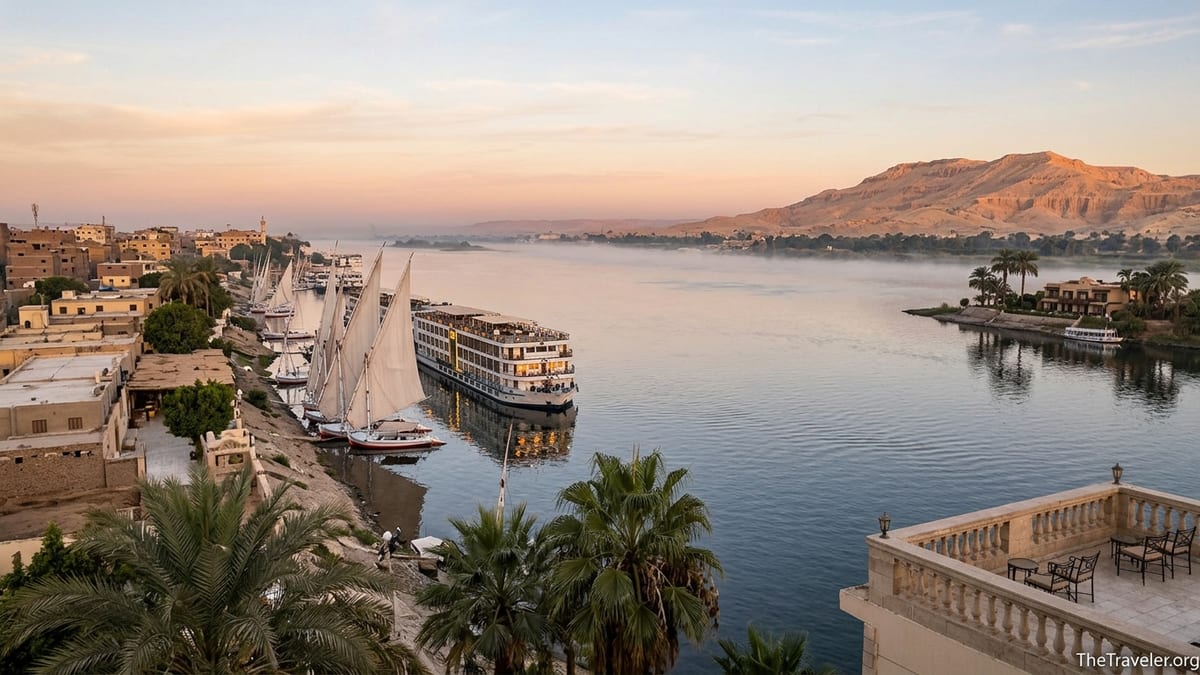
Most classic itineraries in Upper Egypt orbit three bases: Luxor, Aswan and a Nile cruise between them. Luxor splits into two very different worlds on either side of the river. The East Bank is the working city, with the bulk of hotels, restaurants and transport, and immediate access to Luxor Temple and Karnak. The West Bank is quieter and more rural, closer to the Valley of the Kings and other tombs, with a growing number of small guesthouses and boutique villas.
Aswan, around 200 kilometres south of Luxor, is smaller and more relaxed. Its appeal lies in island resorts in the middle of the Nile, Nubian guesthouses with colourful facades and river views, and Corniche-side city hotels that make sightseeing very straightforward. It is also the main departure point for trips to Abu Simbel and for shorter felucca or motorboat excursions.
The third option is not a place but a moving hotel. A typical Nile cruise runs between Luxor and Aswan over three or four nights, with temple visits built into the program and full board on board. You can pair a cruise with city-based stays on either end, or skip hotels almost entirely if you prefer to unpack once and let the ship carry you between the main sights.
Each base suits a slightly different type of traveller. A couple who want sunset cocktails, strong air conditioning and effortless logistics will have different needs from a family with small children, or a photographer who wants to be at the Valley of the Kings at opening time. The rest of this guide unpacks how Luxor East Bank, Luxor West Bank, Aswan and cruise accommodation compare on location, atmosphere, practicalities and budget.
Luxor East Bank: Best for First Timers, Short Stays and Nightlife
Most visitors still book on Luxor’s East Bank, particularly along the Corniche between Luxor Temple and the larger resort hotels to the south. Recent area guides estimate that roughly four out of five tourists sleep on this side, mainly because it concentrates services: ATMs, pharmacies, tour offices, railway station and a broad range of restaurants and rooftop cafes. You can often walk from your hotel to Luxor Temple in 10 to 15 minutes, which makes it easy to see it floodlit after dark without worrying about taxis.
For couples and travellers who value atmosphere, one of the most iconic addresses is Sofitel Winter Palace Luxor, a 5 star historic hotel dating from the late 19th century set in lush gardens directly on the Nile just south of Luxor Temple. It offers traditional rooms, a large riverside pool and high ceilings and terraces that feel like a period film set. Next door, the Pavillon Winter Luxor shares the same grounds but has more modern rooms and often slightly lower night rates, which can make it appealing for longer stays where you still want the gardens and pool but do not need a formal historic suite.
Several modern riverside properties provide a more contemporary style. Steigenberger Nile Palace, for example, sits on the southern Corniche with a large pool terrace facing the Nile and West Bank cliffs, multiple restaurants and mid to upper mid range pricing. In winter high season, double rooms with breakfast in such East Bank 5 star hotels often price in the region of 150 to 250 US dollars per night, with shoulder season deals dropping lower and late December peaks higher. For families, these resorts usually offer connecting rooms, kids pools and in house tour desks that can organise private drivers to the West Bank or balloon flights.
The trade off with the East Bank is that while it is extremely convenient for city temples and services, you are still around 35 to 50 minutes from the Valley of the Kings once you add up a taxi to the ferry, the cross river ride and the approach roads on the West Bank. For travellers who want to be on the first tickets at opening time, or who prefer a more village feel and less persistent selling, that daily commute can start to feel repetitive. The cityside Corniche is also the centre of horse carriage touting and shop calls, which some visitors find tiring by the second or third night.
Luxor West Bank: Best for Tomb Access, Quiet Stays and Independent Travellers
Across the river, Luxor’s West Bank feels like a different destination. The main tourist village of El Gezira, near the local ferry landing, mixes simple houses, date palms and a growing choice of guesthouses and small hotels. Independent travellers and repeat visitors often choose this side because most of the major necropolis sites are here. From a West Bank base you can usually reach the Valley of the Kings, Hatshepsut’s temple at Deir el Bahari, Deir el Medina and the Nobles Tombs in 10 to 20 minutes by taxi or hired driver, compared with 40 minutes or more when starting from typical East Bank hotels.
Accommodation on the West Bank is less about grand lobbies and more about personalised stays. Many properties have 6 to 20 rooms, roof terraces overlooking the fields or the river and owners who can arrange drivers, sunrise balloon rides or packed breakfasts to take to the tombs. Nightly rates tend to be significantly lower than equivalent comfort on the East Bank. It is not unusual to find clean, air conditioned rooms with breakfast in the 30 to 70 US dollar bracket, and self catering apartments or villas suitable for families from around 80 to 150 US dollars per night depending on season and view.
The West Bank works well for families and travellers who enjoy some independence. You can rent bicycles for short rides through palm groves, eat at small local restaurants rather than buffet hotels, and step out of your door into a relatively calm rural area rather than city traffic. Several recent trip reports describe the West Bank as quieter, more relaxed and better for meeting local residents in an everyday setting, albeit with fewer formal hotel facilities like gyms or large pools.
The main drawback is logistics in the evening. If you want to see Luxor Temple or the souq after dark, you will need to cross the river by public ferry or motorboat and factor in the time and a modest fare. Organising early morning airport departures also requires a bit more planning, since most flights leave from the East Bank. For some travellers these small frictions are a fair price for tombside convenience and a local feel. For others, especially those on a first short visit, they are a reason to base on the East Bank and visit the West Bank on day trips instead.
Aswan: Best for Relaxed Nile Views, Culture and Romantic Breaks
Aswan has a very different character from Luxor. It is smaller, with a strong Nubian identity, and framed by granite boulders and islands that make this part of the Nile especially scenic. Many visitors describe it as their favourite stop on an Egypt itinerary, particularly in winter, because of the warm weather, slower pace and sunsets over the river. Where you stay in Aswan shapes the mood of your trip even more than in Luxor.
If you prioritise convenience, staying along the Corniche on the East Bank places you near the railway station, river docks and the souq. Several mid range hotels line this stretch, with double rooms typically ranging from about 80 to 150 US dollars in high season, depending on age, view and included meals. From here it is straightforward to arrange motorboats to Philae Temple, taxis to the High Dam or sunrise departures for Abu Simbel tours, which often leave around 4 or 5 in the morning.
For river views and a resort feel, island hotels are Aswan’s signature. A well known example is the Movenpick Resort Aswan on Elephantine Island, which occupies a long strip of riverbank with landscaped gardens, pools and rooms facing both the city and the desert. Guests reach it by private boat and enjoy more seclusion than in town. Island stays suit couples who want quiet evenings with sunset drinks, but they require a short boat ride each time you go into the city for dinner or shopping, which is worth factoring into your plans.
Budget minded travellers and those interested in culture often opt for Nubian guesthouses in areas such as Gharb Aswan on the West Bank or in villages near the islands. These are usually family run, painted in bright colours and may offer home cooked dinners on a set menu. Nightly rates can start well under 70 US dollars including breakfast, rising for particularly stylish or well located properties. You trade the full service features of big hotels for atmosphere and local contact, and you may rely more on taxis or arranged transfers rather than stepping out directly into the city centre.
Nile Cruises: Floating Hotels Between Luxor and Aswan
Nile cruises remain one of the most popular ways to experience Upper Egypt, and there is a wide range of standards and formats. Classic three or four night sailings between Luxor and Aswan on large ships usually include full board, a cabin with a window or small balcony, a sun deck with pool and a program of guided visits to sites such as Edfu and Kom Ombo along the way. Many departures in 2026 price a standard 5 star cruise in the region of 600 to 1,500 euros per person for a four night itinerary, depending on season, ship and whether excursions are included in the fare.
At the premium end, small sailing boats known as dahabiyas offer a slower, more intimate experience, often with only 6 to 12 cabins. These vessels are typically pulled when there is no wind and anchor at quieter spots on the river. Recent price guides suggest that a four night luxury dahabiya can cost from around 1,200 to 1,800 US dollars per person or more, rising for longer itineraries. In return you get a high crew to guest ratio, more personalised guiding and a different rhythm to the day, with longer stretches simply watching river life from a deck chair.
Budget travellers can still find attractive cruise deals, especially outside peak months. Some travellers report booking standard cabins on older ships for around 40 to 70 euros per person per night on full board packages when buying through regional agencies or as part of a larger tour. In such cases, the ship may be less modern but still offers the core advantage of a moving base that visits multiple temples without constant packing and unpacking.
For families and couples who want an easy structure, a cruise can be ideal because sightseeing is bundled into the schedule and a guide typically accompanies the group to each temple. The main limitation is flexibility. Once you are on board, you follow the ship’s timetable, which can mean visiting major sites at popular hours. If you are a photographer or independent traveller who prefers dawn at Kom Ombo or long quiet sessions at Edfu, pairing a shorter cruise with extra nights in Luxor or Aswan on land can give you the best of both worlds.
Which Base for Sightseeing, Couples, Families and Independent Trips
If your priority is intensive sightseeing, such as maximising time in the tombs and temples, then think in terms of door to door travel times. For the West Bank tombs around the Valley of the Kings, a West Bank guesthouse can put you within 15 minutes of the ticket office, making it realistic to be at the gates at opening time in cooler morning temperatures. For Luxor Temple, Karnak and the Luxor Museum, an East Bank hotel near the Corniche places you a short walk or quick taxi ride away, which is helpful if you want to see temples both in daylight and illuminated after dark.
Couples often face a choice between period charm, resort comfort and romantic seclusion. Historic hotels like Sofitel Winter Palace Luxor on the East Bank offer high ceilings, lawns and old world service that suits honeymoon style stays. Modern riverside resorts in both Luxor and Aswan provide infinity pools, spa facilities and direct Nile views from private balconies. In Aswan, island hotels and Nubian guesthouses with roof terraces create particularly memorable sunset settings, with feluccas sailing past and the desert glowing across the water.
Families usually value space, shade and straightforward food options. Large East Bank and Aswan Corniche hotels often have kids pools, room service menus with familiar international dishes and on site tour desks that can arrange child friendly day trips with car seats if requested in advance. Self catering apartments or small villas on Luxor’s West Bank suit families who prefer to prepare some meals themselves and have separate bedrooms, as long as the adults are comfortable arranging boats and taxis rather than relying entirely on packaged excursions.
Independent travellers, including photographers and history enthusiasts who like to set their own pace, often split time between different bases. One practical pattern is to spend two or three nights on Luxor’s West Bank focused on tombs and balloon rides, one night on the East Bank for a final evening at Luxor Temple and the souq, a three or four night cruise and then two or three nights in Aswan on an island or in a Nubian village. This kind of itinerary balances structure and freedom and reduces backtracking, while still giving you varied accommodation styles and perspectives on the river.
Budget, Seasonality and Booking Tips
Room and cruise rates along the Nile vary strongly by season. The main high season runs roughly from late October through early April, when daytime temperatures in Luxor and Aswan are more comfortable. During these months, Nile side 5 star hotels in Luxor or Aswan can command nightly rates of 200 US dollars or more for Nile view rooms, and popular cruise dates around Christmas and New Year often see surcharges or longer minimum stays. Summer sees significantly lower hotel prices but much higher daytime temperatures, frequently over 40 degrees Celsius in exposed sites, which can make midday sightseeing challenging.
On a moderate budget, a common pattern is to combine a few nights in a mid range city or Corniche hotel with several nights in simpler local accommodation. For example, you might book two nights at a mid range East Bank hotel with a pool for around 120 to 160 US dollars per night including breakfast, then switch to a West Bank guesthouse at 50 to 80 US dollars per night while you spend long days at the tombs. In Aswan, staying one or two nights on a slightly pricier island resort for the views and pool, and then moving to a Nubian guesthouse for one or two nights, can keep overall costs reasonable while still providing variety.
When comparing cruise prices, look carefully at what is included. Some seemingly low fares exclude entrance fees and guiding, which can add several hundred dollars per person once you include Karnak, Luxor Temple, Edfu, Kom Ombo, Philae and other stops. University and tour operator rate sheets for the 2025 to 2026 season show wide ranges, from under 400 euros per person for basic 3 night sailings to over 6,000 euros for extended luxury programs, so it is worth clarifying cabin category, full board versus soft drinks, and whether airport transfers are part of the package.
Booking conditions also matter. Many Egyptian hotels and cruise operators still work extensively with regional agencies, and allocation on a given ship can change until close to departure. If you care about the specific vessel or wing of a hotel, reserve through channels that confirm exact names and not just a class level. Reputable modern booking platforms and established tour operators or boutique agencies that specialise in Egypt usually provide clearer documentation than generic budget package adverts.
The Takeaway
There is no single best place to stay along the Nile. Instead, the ideal base depends on how you like to travel, your tolerance for logistics and your budget. Luxor’s East Bank works well for first time visitors, short stays and anyone who likes to walk to temples, cafes and the train station. The West Bank is the choice for tomb focused trips, quieter nights and independent travellers who enjoy arranging their own drivers and ferries. Aswan adds a softer, more scenic note to an Upper Egypt journey, especially for couples and those interested in Nubian culture.
Nile cruises connect these destinations and can simplify an itinerary, particularly for travellers who want a structured program with guiding and full board. Pairing a cruise with land based stays on either side allows you to enjoy both the rhythm of the river and the flexibility of city or village life. Whichever combination you choose, try to match your accommodation not only to your budget but also to the specific experiences you want. Whether that is drinking coffee on a historic terrace above Luxor Temple, watching the sun set from a Nubian roof terrace in Aswan or waking before dawn steps from the Valley of the Kings, the right place to sleep along the Nile will frame the memories you bring home.
FAQ
Q1. Is it better to stay on the East Bank or West Bank in Luxor for a first visit?
For a first short visit of two or three nights, most travellers find the East Bank more convenient because it concentrates hotels, restaurants, banks and transport, and puts Luxor Temple and the station within easy reach. You can still visit the West Bank on organised day trips or with hired drivers without needing to change hotels.
Q2. How many nights should I spend in Luxor versus Aswan?
A common pattern is three or four nights in Luxor and two or three in Aswan, whether or not you add a cruise. Luxor has a higher concentration of major sites, especially on the West Bank, so it usually deserves the longer stay, while Aswan provides a more relaxed finale with river views and a day trip to Abu Simbel if you choose.
Q3. Are Nile view rooms worth the extra cost?
For many visitors, Nile view rooms are worth paying a modest premium, especially in Luxor and Aswan where sunset over the river and West Bank cliffs can be a highlight of the trip. If the price difference is large, consider booking one or two splurge nights with a view and balancing them with cheaper city or village rooms on other nights.
Q4. Is a Nile cruise suitable for families with children?
Yes, many Nile cruises are family friendly, with pools and flexible meal times. The main considerations are safety around open deck areas and the fixed sightseeing schedule, which can mean early starts and hot midday visits. Families with younger children may prefer a slightly shorter cruise and to add hotel days with more pool time at each end.
Q5. Can I stay in a Nubian village in Aswan and still see the main sights easily?
Staying in a Nubian village guesthouse is a good option if you are comfortable using boats or taxis to reach the city and main sights. You will depend more on arranged transfers than if you stayed on the Corniche, but guesthouse owners are usually experienced at organising boats to Philae, the souq or the railway station at agreed times and prices.
Q6. Do I need to book accommodation and cruises far in advance?
For peak season dates from late October to early April, and especially for Christmas and New Year sailings, it is wise to book popular hotels and cruises several months ahead. Outside those periods, you will often find more last minute availability, though specific boutique guesthouses or small dahabiyas can still sell out early because they have few rooms.
Q7. Is it safe to take local ferries and boats between the banks of the Nile?
Local passenger ferries and registered motorboats used between the East and West Banks in Luxor and Aswan are a routine part of daily life and widely used by residents and tourists. As with any small craft, follow crew instructions, avoid overcrowded boats and step carefully when boarding, particularly at night or if water levels are low.
Q8. Should I base entirely in one city and do day trips, or change hotels?
If you have limited time and dislike packing, basing mostly in one city and adding a cruise or long day trip can work. However, changing bases once or twice, for example between Luxor and Aswan or between the two banks of Luxor, usually reduces daily travel time and gives you more varied experiences of the Nile and local neighbourhoods.
Q9. What is a realistic daily accommodation budget along the Nile?
For a mid range trip in 2026, a realistic budget might be around 80 to 150 US dollars per night for a comfortable hotel room in Luxor or Aswan, less for simple guesthouses and more for luxury properties or Nile view suites. Cruises add a different cost structure because they include full board and guiding in the price.
Q10. Are Airbnbs or private rentals recommended in Luxor and Aswan?
Experiences with informal rentals in Egypt are mixed. Many frequent visitors recommend established hotels, licensed guesthouses and reputable local apartments over casual short term rentals, because you benefit from on site staff, better security and local support if you need help with taxis, early transfers or changes to your sightseeing plans.