


Few destinations pack in as much variety as Egypt. Within one trip you can stand before the pyramids, sail between Nile temples, drift above Luxor by hot-air balloon, dive coral walls in the Red Sea and watch the sun set over an oasis lake in the desert. Choosing where to go is the hardest part. This guide compares Egypt’s main regions and cities, with practical examples of what each offers for history lovers, divers, couples, families and first-time visitors.
Cairo & Giza: Big-city energy and the pyramids on your doorstep
Most trips to Egypt start in Cairo, a 21-million-strong megacity where ancient sites sit alongside glass towers and traffic that rarely sleeps. For first-time visitors, a typical stay is three to four nights, enough to see the Pyramids of Giza, the Egyptian Museum or Grand Egyptian Museum, Islamic Cairo and Coptic Cairo while still leaving time for a Nile dinner cruise or a rooftop sunset. Many organized tours now build in two full sightseeing days plus an extra evening for travelers to explore on their own.
Where you stay changes your experience. Areas such as Downtown Cairo, Zamalek and Garden City are currently the most popular bases for visitors because they balance safety, walkability and access to the sights. In Zamalek, on Gezira Island, you can step out from a mid-range hotel like the Cairo Marriott into a neighborhood of cafes, bookstores and galleries, then take a 15-minute taxi to the Egyptian Museum or to the bridge for Nile sunset views. Garden City offers a quieter, embassy-lined feel, with high-end hotels such as the Four Seasons Nile Plaza fronting the river.
For many, waking up to a pyramid view is non-negotiable. The Giza plateau area has a cluster of small guesthouses and mid-range hotels facing the Great Pyramid where a double room with breakfast can often be found for the price of a mid-range city hotel room in Europe. You trade centrality for atmosphere: traffic to Downtown or Islamic Cairo can easily take 45 minutes or more in rush hour, but you can walk to the pyramid gates in under 10 minutes and watch the Sound and Light Show from your rooftop without buying a ticket.
Cairo is best suited to travelers who do not mind urban chaos and want a strong dose of contemporary Egyptian life alongside the headline monuments. Families often appreciate booking guided day tours that include private transport and skip-the-line tickets to reduce stress. Couples who prefer quieter evenings may choose just one or two nights in Giza for the pyramid views, then move to Zamalek or Garden City before flying south to Luxor or Aswan.
Luxor & Aswan: Nile temples, tombs and classic cruises
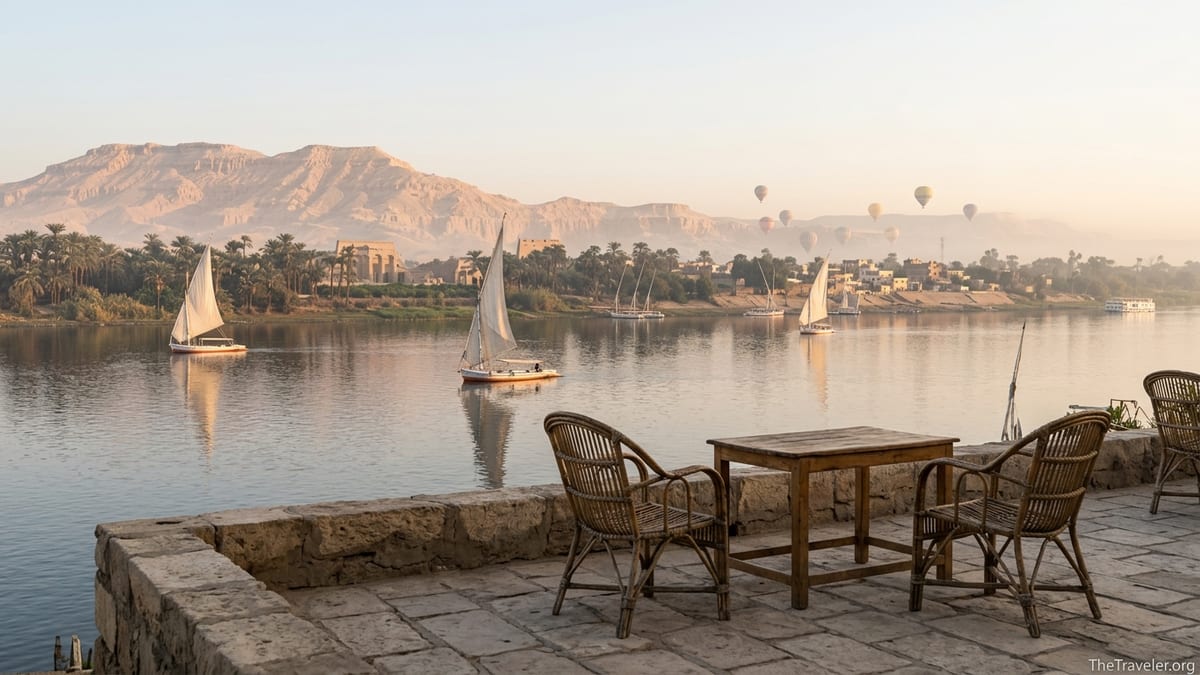
Luxor is Egypt’s open-air museum, built on the site of ancient Thebes. Most travelers spend at least two full days here, but history enthusiasts and photographers often wish they had three or four. On the East Bank you have the modern city, Luxor Temple beautifully lit at night and the sprawling Karnak Temple complex, where even a short one-hour walk takes you past colossal columns and obelisks. On the West Bank, reached by a short ferry or road bridge, you enter the landscape of the Valley of the Kings, the Temple of Hatshepsut and the Colossi of Memnon.
Staying on the Nile corniche places you within a 10 to 15 minute taxi ride of most major sites. Visitors on a moderate budget often book family-run hotels around the souq or mid-range riverfront properties with pools, where winter room rates can compare favorably with Mediterranean city hotels. An increasingly popular option is to base on the rural-feeling West Bank in a small guesthouse among sugarcane fields, then hire a local driver for early morning visits to the Valley of the Kings before the tour buses arrive.
Further south, Aswan has a distinctly different mood: smaller, warmer and more relaxed, with strong Nubian culture and villages along the riverbanks. Many travelers come for one or two nights primarily to see Philae Temple, which sits on an island reached by motorboat, and to sail a felucca at sunset between the granite boulders and sand dunes opposite the Old Cataract Hotel. Market streets are compact enough to browse spices, textiles and handicrafts in a single evening stroll.
A classic way to experience both cities is by Nile cruise, typically three or four nights between Luxor and Aswan with stops at Edfu and Kom Ombo temples en route. Modern cruise boats are usually full-board, and prices fluctuate with season and ship quality, but as a benchmark many travelers report paying roughly the cost of a mid-range European city hotel per night, with guided sightseeing and domestic flights sometimes bundled. For couples interested in temples but not keen on constant packing, a cruise offers an efficient, largely hassle-free way to see Upper Egypt.
Abu Simbel & Southern Nubia: Bucket-list temples at the edge of the Sahara
Abu Simbel, near Egypt’s southern border, is home to the monumental rock-cut temples of Ramesses II and Nefertari, relocated block by block in the 1960s to save them from the rising waters of Lake Nasser. Many visitors describe walking through the colossal seated statues at sunrise as a highlight of their entire Egypt trip. From Aswan, you can visit either as a day tour by early-morning bus convoy or a short domestic flight, or stay overnight in the small settlement to see the complex in softer afternoon light.
In practice, most first-time visitors fold Abu Simbel into an Aswan stay, adding one extra day. Commercial day tours often bundle hotel pickup in Aswan, transport to Abu Simbel, guided tour and return in a 9 to 10 hour schedule. While this is efficient, it can feel rushed, especially in peak winter season when hundreds of visitors descend on the site at similar times. Travelers who value calm photography or time to absorb the visitor center film about the relocation might prefer to stay one night in a simple local hotel and visit outside the busiest hours.
The wider Lake Nasser region also attracts a smaller number of repeat visitors interested in multi-day lake cruises to see lesser-known Nubian temples such as Amada and Wadi es-Sebua. These cruises are fewer than the classic Luxor–Aswan runs and tend to be priced accordingly, appealing mainly to archaeology enthusiasts or travelers on longer itineraries. If your main goal is to see Egypt’s headline monuments on a 10 to 12 day trip, a single long day or overnight at Abu Simbel is usually enough.
For families and more casual temple-goers, Abu Simbel is still worthwhile but not mandatory if time or budget is tight. If you are trying to choose between an extra Red Sea beach day or the long journey south, consider your group’s interests: a teenager who loves ancient history may remember Abu Simbel forever, while younger children may find a shorter itinerary that ends by the sea more enjoyable.
Red Sea Riviera: Hurghada, Sharm El Sheikh & Marsa Alam
Egypt’s Red Sea coast offers a very different holiday style, focused on beaches, snorkeling and diving. Hurghada and Sharm El Sheikh are the two most developed hubs, with large all-inclusive resorts, family-friendly waterparks and busy marinas lined with restaurants and bars. Hurghada’s location on the western shore makes it a common add-on after a Nile cruise, with direct road links from Luxor that typically take around four hours by private transfer or tour bus.
Hurghada works especially well for mixed groups where some people want to dive and others simply want to relax. Many travelers book four or five nights in an all-inclusive resort with pools and private beaches, then arrange day trips to snorkeling spots like Giftun Island or yacht excursions that include lunch and equipment rental. For divers, there are dozens of established operators offering daily boat trips and multi-day packages, with options ranging from easy reef dives to more advanced wrecks.
Sharm El Sheikh, on the Sinai Peninsula, is best known for its access to the coral walls of Ras Mohammed National Park and the Straits of Tiran. Divers come for clear water, abundant marine life and the variety of sites reachable in short boat rides, while non-divers make use of resort spas, shopping centers and evening entertainment. Sharm also suits winter sun seekers from Europe, with direct charter flights in peak season and many properties aimed squarely at package-holiday travelers.
Further south, Marsa Alam remains quieter and more spread out, with resorts strung along the coast and an emphasis on house reefs and natural bays. It attracts repeat visitors and dedicated snorkelers who appreciate dugong and turtle sightings in places like Abu Dabbab Bay and who do not need nightlife beyond a beachfront bar. In recent seasons, regulations around Red Sea diving and marine protection have been tightening, with new fees and rules intended to reduce reef damage, so it is wise to budget a little extra for national park permits and to choose operators that brief guests clearly on responsible practices.
Alexandria & Siwa: Mediterranean breezes and desert oases
Alexandria, on the Mediterranean coast, offers a cooler, more European-feeling contrast to Cairo and Luxor. Many Egyptians treat it as a summer escape, and foreign visitors often drop in for one or two nights at the start or end of a trip. Instead of pharaonic temples, you come here for the Corniche seafront, seafood restaurants, the modern Bibliotheca Alexandrina and glimpses of layered history in sites like the Catacombs of Kom el Shoqafa or the Roman Amphitheatre. A comfortable train ride from Cairo usually takes around two and a half to three hours, making it feasible as an overnight or even a very long day trip.
Accommodation in Alexandria ranges from restored heritage hotels on the waterfront, where sea-view rooms can still be more affordable than comparable stays in Western Europe, to simpler city hotels clustered around busy squares. Couples often appreciate a mid-range seafront hotel where they can walk the Corniche in the evening and eat grilled fish at a local institution before returning to a quiet room. Alexandria also works for families seeking milder summer temperatures and beach clubs, although the sea and public beaches can be very busy in peak Egyptian holiday periods.
Far to the west near the Libyan border, Siwa Oasis offers palm groves, freshwater springs and mud-brick architecture set amid sweeping dunes. It once drew increasing numbers of independent travelers and honeymooners looking for boutique eco-lodges lit by candles and starlight. In recent years, however, security advisories from several foreign ministries have included parts of the Western Desert and routes around Siwa, sometimes discouraging non-essential travel and restricting safaris or camping in surrounding desert regions.
If you are considering Siwa, it is important to check your own government’s latest travel advice before making firm plans and to work only with reputable, locally based operators who understand current regulations about permitted routes and activities. Given the long travel time from Cairo, often 8 to 10 hours by road with checkpoints, most visitors who do go allow at least three nights to justify the journey. For many first-time visitors on shorter itineraries, a Nile-and-Red-Sea combination currently offers a more straightforward introduction to Egypt, with Siwa and the Western Desert better suited to a dedicated future trip when conditions are favorable.
How to match destinations to your travel style
Choosing “the best place” in Egypt depends less on any single ranking and more on the balance of history, relaxation and comfort you want. A common first-time itinerary for a 10 to 12 day trip includes three nights in Cairo or Giza, a three or four night Nile cruise between Luxor and Aswan and three or four nights on the Red Sea in Hurghada or Sharm El Sheikh. This gives a taste of the country’s main faces without excessive one-night stops, and many tour operators and independent travelers follow some variation of this pattern.
If your priority is ancient history, allocate more time to Luxor and possibly an extra day in Cairo’s museums rather than extending your beach stay. For example, a history-focused couple might spend four nights in Luxor with a private guide, allowing for a dedicated day at the West Bank tombs, another for Karnak and Luxor Temples, and a sunrise balloon ride over the Nile floodplain. In contrast, a family with school-age children might prefer shorter temple visits and more downtime in resort pools, choosing two nights in Luxor, one night in Aswan and five or six nights split between Hurghada and Cairo.
Beach and diving enthusiasts who have less interest in cities sometimes invert the classic route. They might fly straight to Sharm El Sheikh or Marsa Alam for a week of diving and snorkeling, then add a two-night stopover in Cairo on the way home purely to see the pyramids and one major museum. With more airlines now connecting Red Sea airports to Europe and the Gulf, this style of trip is increasingly viable, especially for repeat visitors who have already explored the Nile.
Budget also plays a role. In general, Cairo and Luxor can feel surprisingly affordable once you adjust to local prices for meals and taxis, while high-end Red Sea resorts and luxury Nile cruises can approach or exceed Mediterranean resort pricing, especially at Christmas, New Year and Easter. Travelers keeping costs down often choose locally run guesthouses in Luxor and Aswan, use trains or domestic buses between cities and reserve their splurge for one or two nights in a Nile-view room in Cairo or at a Red Sea resort where they plan to spend most of their time by the pool.
The Takeaway
Egypt rewards both quick highlights trips and slower, more focused itineraries. For most first-time visitors, the most satisfying mix combines Cairo and Giza for their headline monuments and modern energy, Luxor and Aswan for concentrated Nile history and a Red Sea stay in Hurghada, Sharm El Sheikh or Marsa Alam for rest and water-based activities. Alexandria adds Mediterranean flavor if you have a couple of spare days, while Abu Simbel turns a classic Upper Egypt route into a true bucket-list journey.
Destinations such as Siwa and the wider Western Desert remain tempting for their landscapes and oasis culture, but travelers should monitor current security advice and consider leaving these for a dedicated second or third trip. Within each region, your choice of neighborhood or resort can significantly shape your experience, from Zamalek’s walkable cafes to a quiet Marsa Alam bay or a family-friendly waterpark in Hurghada.
However you structure your route, building in a mix of guided days and free time, early starts for major sites and relaxed evenings by the Nile or sea will help you cope with Egypt’s sensory intensity. With thoughtful planning and realistic expectations about travel times and crowds, you can design an itinerary that suits your interests, whether that means tracing pharaohs and queens, logging Red Sea dives, or simply watching the sun set over desert and water.
FAQ
Q1. How many days do I need for a first trip to Egypt?
Most first-time visitors find 10 to 12 days comfortable, allowing for Cairo and Giza, a Luxor–Aswan segment and several nights on the Red Sea without rushing.
Q2. Is Cairo or Giza better as a base for seeing the pyramids?
Giza is best if waking up to pyramid views is your priority, while central Cairo areas like Downtown or Zamalek work better for museums and city exploring.
Q3. Do I need a guided tour, or can I travel independently?
Independent travel is possible using domestic flights, trains and local guides hired on the spot, but many travelers prefer pre-arranged tours for simpler logistics.
Q4. Which Red Sea resort is best for families?
Hurghada is a strong choice for families thanks to its all-inclusive resorts, waterparks and easy access to beginner-friendly snorkeling trips and boat excursions.
Q5. Where should divers focus their time in Egypt?
Certified divers often favor Sharm El Sheikh and Marsa Alam for access to Ras Mohammed, the Straits of Tiran and healthy house reefs with abundant marine life.
Q6. Is Abu Simbel worth the long journey from Aswan?
Many travelers consider Abu Simbel a trip highlight, especially history enthusiasts, but on very short itineraries some choose to skip it in favor of extra rest days.
Q7. Can I combine Alexandria with a classic Nile and Red Sea route?
Yes, if you have 12 to 14 days you can add one or two nights in Alexandria, usually reached by train from Cairo, without sacrificing core Nile or Red Sea time.
Q8. Is Siwa Oasis currently recommended for tourists?
Siwa’s appeal is high, but changing security advice and long travel times mean it is usually better for a dedicated future trip than a short first-time itinerary.
Q9. What is the best time of year to visit Egypt?
From roughly October to April temperatures are more comfortable for sightseeing, with December and January usually the busiest and priciest months.
Q10. How should couples and honeymooners choose between Red Sea resorts?
Couples wanting nightlife often choose Sharm El Sheikh, while those seeking quieter, more natural settings tend to prefer smaller bays near Hurghada or Marsa Alam.