


Egypt’s Western Desert is at its best when most visitors imagine the Sahara at its worst. While summer can push temperatures over 40°C, the cooler months transform Siwa, Bahariya and the deep desert around the White Desert into one of North Africa’s most rewarding regions for multi-day trips and camping. The right season makes the difference between a slow, shimmering ordeal and a trip where you can soak in hot springs, wander palm gardens and sleep comfortably under star-filled skies.
Understanding Western Desert Seasons: Heat, Light and Long Distances
The Western Desert covers a huge area, and conditions around Siwa and Bahariya are notably more extreme than in Cairo or even Luxor. In broad terms, October to April is the practical window for most travelers who care about manageable daytime heat and comfortable camping, with summer best left to hardy repeat visitors or travelers focusing on air-conditioned resorts rather than the open desert.
In Siwa Oasis, recent climate data shows average daytime temperatures climbing from around the low 20s Celsius in February to the high 20s by April and over 30°C by May. Midwinter averages may sound mild but come with very brisk nights, often near or just above 5°C before dawn. Bahariya, the main gateway to the White and Black Deserts, follows a similar pattern: winter daytime highs usually sit in the low 20s, rising toward 30°C in spring and early autumn.
For trip planning, this means the sweet spot for lower heat and active sightseeing typically runs from late October through April. During these months, walking the ruins of Shali Fortress in Siwa at midday or climbing viewpoints over Bahariya’s date-palm depression is still comfortable, and sun on chalk formations in the White Desert feels warm rather than punishing. Outside this window, daytime activities quickly become limited to early morning and late afternoon, and long drives across empty gravel plateaus feel much harsher.
The other key variable is day length. In December and January the sun sets early, so a typical overnight White Desert tour will serve dinner by firelight before 7 p.m., and most guests are in sleeping bags by 9 or 10 p.m. By March and April you gain an extra hour or so of usable daylight, which matters if you want to combine longer 4x4 drives, photo stops at Crystal Mountain and time for sandboarding before nightfall.
Autumn (October–November): Best Overall Balance for Siwa and Bahariya
If you want warm days, cool but not freezing nights and relatively moderate crowds, autumn is often the best all-round choice. By late October, the brutal summer heat has backed off, but the desert floor has not yet lost all its stored warmth, so evenings around campfires in the White Desert or under the palm trees of Siwa feel pleasantly cool rather than biting cold.
In practical terms, a late October visit to Siwa usually means daytime temperatures around the high 20s Celsius. You can cycle dusty streets to Cleopatra’s Spring in the late morning, float in the high-salinity salt lakes in the early afternoon, then watch sunset over Fatnas Island without constantly seeking shade. In Bahariya and the White Desert, a typical two-day camping trip from Cairo in November will see you in a light fleece at night but still sleeping reasonably comfortably in standard-issue tour sleeping bags and blankets.
Autumn also works well financially. Major holiday surges cluster around late December and New Year, so October and early November often sit in a shoulder season. A private two-day White Desert camping tour from Cairo that might run roughly 250 to 350 US dollars per person in peak holiday weeks often appears closer to the lower end of that range in late October, especially when booked in a small group. Multi-day Western Desert packages that connect Cairo, Bahariya and Siwa tend to have more vehicle and guide availability before the Christmas rush, giving you better leverage to negotiate extras like upgraded camp setups or an additional night at an ecolodge.
Crowd levels are another advantage. While tours do run steadily in October and November, it is still common to arrive at famous chalk formations such as the “Mushroom” or “Chicken and Tree” in the White Desert and share them with only one or two other jeeps. In Siwa, heritage lodges and eco-hotels are in demand but not yet fully booked out for holiday season, so you have a better chance of securing atmospheric rooms in places built from local kershef rather than settling for generic concrete hotels.
Winter (December–February): Cool Days, Cold Nights and Peak Prices
Winter is when most travelers instinctively aim for Egypt’s Western Desert, and for daytime activities they are right. From December through February, daytime highs in Siwa and Bahariya usually hover in the high teens to low 20s Celsius. This is ideal weather for hiking dunes along the Great Sand Sea north of Siwa or scrambling up black volcanic hills near Bahariya’s “English Mountain” lookout without overheating. Glare is softer, making winter light particularly attractive for photography of sand ridges and sculpted limestone.
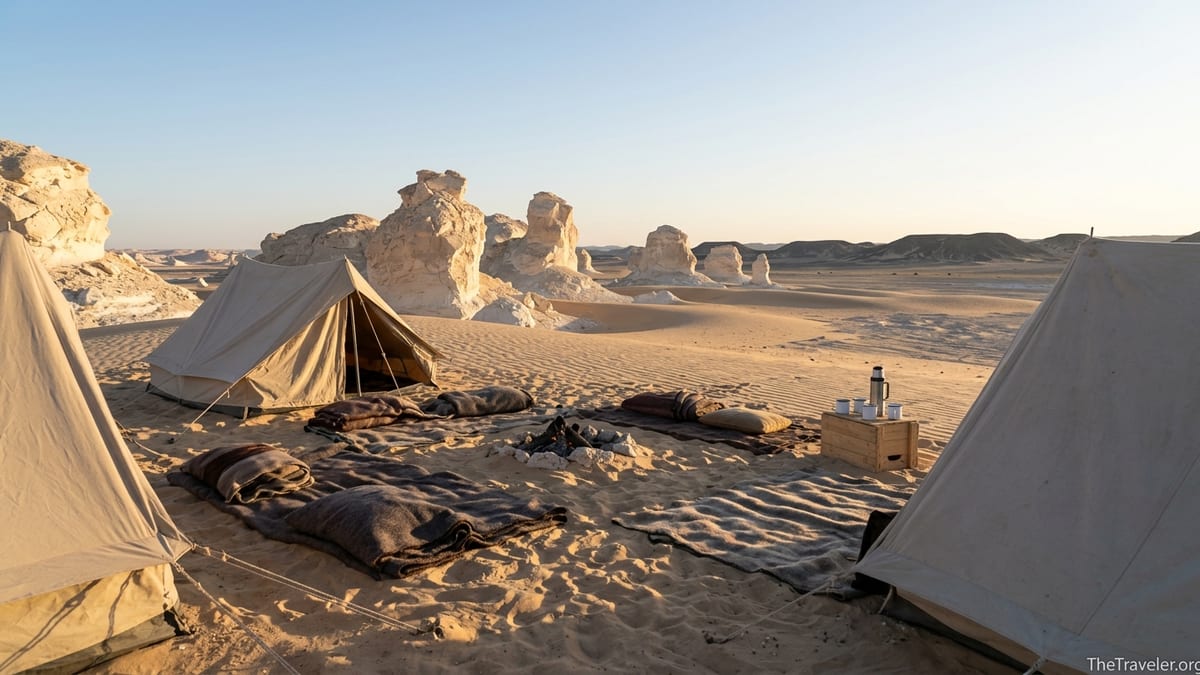
The trade-off comes after sunset. Deserts radiate heat quickly, and clear skies mean overnight lows often drop close to freezing. In January, it is common on White Desert camping trips for guests to wear thermal base layers, a fleece, a down jacket, a beanie and gloves while eating dinner on low carpets around the campfire. Standard tour sleeping bags and extra blankets usually keep you warm enough, but the experience feels more like lightweight winter camping than a balmy desert night.
Conditions like this are manageable if you come prepared. For example, travelers on recent two-day Bahariya and White Desert safaris in January often report that adding their own compact down liner inside the supplied sleeping bag, plus a hot drink before bed, makes a noticeable difference. Choosing a reputable operator that provides windbreaks, extra blankets and thick mattresses also pays off. On very cold nights, some outfitters will erect windproof canvas screens around the open-air camp to reduce wind chill, which can be considerable on the flat chalk plain.
Winter is also the high season for prices and crowds. Late December through early January, and again during European school holidays in February, often sees a shortage of 4x4 vehicles and experienced drivers. A two-day White Desert trip that might cost around 250 dollars per person in November can climb by 20 to 30 percent during Christmas week, especially if you insist on a private camp. In Siwa, characterful eco-lodges that rely on candlelight and salt-brick architecture are frequently booked out months in advance for New Year, and rates are at their highest.
Spring (March–April): Warmer Days and Comfortable Camps
Spring is arguably the most comfortable overall time for Western Desert camping, especially if you dislike very cold nights but can tolerate warmer daytime temperatures. By March, Siwa and Bahariya often see daytime highs in the mid to high 20s Celsius, occasionally nudging over 30°C in April, yet nights typically sit in the high single digits or low teens rather than near freezing.
This makes a noticeable difference in camp. On March and April White Desert safaris, many travelers find that a medium-weight jacket over a long-sleeve base layer is enough for evenings, and some even sleep partly unzipped in the supplied sleeping bags. Sitting out to watch constellations or photograph the Milky Way becomes more inviting when you are not constantly worrying about numb fingers. Around Bahariya, spring is also a pleasant time to explore village life, visit date gardens or climb low escarpments above the oasis without battling winter winds or summer heat.
Spring does carry a few potential downsides. The khamsin wind season occasionally brings hot, dusty southerly winds that can reduce visibility and make a day in the open desert feel draining. These episodes are usually short-lived, but they can coincide with your planned safari. Tour operators in Bahariya often keep a close eye on forecasts and may recommend adjusting departure times to avoid the worst of the dust or choosing more sheltered camp locations near low rock outcrops instead of wide-open chalk fields.
From a budget perspective, March and April typically sit between winter’s high prices and summer discounts. Tour operators still have solid booking volumes, especially around Easter and spring school holidays, but outside these peak weeks you may find modest discounts or added-value offers. It is common to see three-day private Siwa tours from Cairo that include desert safaris priced more keenly in early March than in late December, and combined Siwa–Bahariya itineraries often have more flexibility for tailoring side trips, such as detours to World War II sites near El Alamein, at this time of year.
Comparing Siwa, Bahariya and the Deeper Desert
While Siwa and Bahariya share a broadly similar climate, they serve different kinds of trips and that affects how seasonality plays out. Siwa lies about 560 kilometers from Cairo and realistically requires at least three to four days if you want time for hot springs, the salt lakes and a half-day sandboarding safari into the nearby dunes. Bahariya, at roughly 365 kilometers from Cairo, is more straightforward for one- or two-night escapes that focus on the White and Black Deserts.
In Siwa, more of your time is spent in and around the oasis itself. That means cycling or riding tuk-tuks through palm groves, climbing mud-brick ruins at Shali Fortress, or soaking in hot sulfur springs like Bir Wahed. Autumn and spring are particularly appealing because you can comfortably enjoy midday activities such as floating in salt pools or walking the narrow lanes of the old town without seeking constant shade. In midwinter, cold morning air can make early dips in open-air springs less tempting, though bright sun often warms things quickly by late morning.
By contrast, Bahariya is primarily a staging point. Most travelers overnight in a simple guesthouse or desert camp near the oasis, then spend long blocks of time in 4x4s driving out to the Black Desert, Crystal Mountain and the White Desert. In winter, the closed vehicle cabins are welcome when temperatures are in the low teens and cold winds whistle across the plateau; in spring and autumn, driving with windows partially open and warm air flowing through feels pleasant rather than harsh.
The so-called deeper desert around the White Desert is where seasonal differences are most acute. Outside October to April, daytime temperatures on exposed chalk plains can become dangerously hot, and tours either shift to dawn and dusk activities or do not operate at all. In the prime season, however, you might spend hours wandering through snowy-white rock pillars, climbing low dunes and sitting quietly on ridges to watch the light change color on the formations, without worrying about heat stress. For multi-day expeditions that link Bahariya, Farafra and sometimes even the long off-road track to Siwa, spring and late autumn provide the safest blend of tolerable temperatures and longer daylight hours for remote driving.
Camping Comfort: Gear, Sleep Quality and Practical Tips
Seasonality in the Western Desert is felt most keenly at night, when your comfort in camp depends on both the month and the quality of equipment your operator provides. Most reputable Bahariya-based outfitters offer thick foam mattresses, heavy blankets, windbreaks and basic but filling meals. In winter, they typically add an extra layer of blankets and may set up low canvas walls to block wind; in shoulder seasons, they may leave the camp more open so guests can enjoy the sky.
For a November or March camping trip, you can usually sleep well with a standard-issue sleeping bag rated to around 0°C, plus a fleece or light down jacket. Travelers who feel the cold, especially those heading out in December or January, often report that bringing their own compact liner or an additional thin sleeping bag to nest inside the provided one is worthwhile. A simple example is packing a lightweight mummy-style liner at home and using it every night in the desert, then relying on lodge bedding once back in Siwa or Bahariya.
Footwear and clothing choices should also track the season. In autumn and spring, many visitors are comfortable in breathable hiking pants, a long-sleeve shirt and sandals or trail shoes during the day, switching to trainers, socks and a fleece after sunset. In winter, you may want thermal leggings, a beanie and gloves for camp evenings, particularly if you plan to stay up late for astrophotography. Operators often provide long wool cloaks or heavy Bedouin-style blankets to wrap around yourself near the fire, but having your own base layers underneath makes a big difference.
Some travelers underestimate how dry the Western Desert is in cooler months. Even when temperatures are moderate, the combination of sun, wind and zero humidity can lead to cracked lips and mild dehydration. Bringing a reusable bottle and actually drinking through the day, not just at mealtimes, is essential. Most desert safaris include ample bottled water, but if you are spending longer in Siwa’s salt pools or Bahariya’s hot springs, you will want your own supply on hand between formal tour stops, especially in autumn and spring when the temptation to stay outside is strongest.
Costs, Crowds and Booking Strategy by Season
The same seasonal forces that shape comfort also shape costs. In winter high season, short-notice bookings for Western Desert tours can be challenging, and the best operators and ecolodges are often spoken for weeks in advance. A three-day Siwa package from Cairo that includes transport, accommodation and desert activities may list at a similar base price year-round, but in practice travelers see more last-minute discounts and promotions in late autumn and early spring than over Christmas, New Year and Easter.
For Bahariya and the White Desert, recent pricing examples show that a standard two-day, one-night camping tour from Cairo with a reputable provider typically clusters somewhere in the mid hundreds of US dollars per person depending on group size, vehicle exclusivity and camp standard. Budget-conscious travelers often look for small-group departures in shoulder months such as November or March, when demand is strong enough to form groups but not so intense that everything sells out. Those who want private departures with upgraded camps, flush toilets and dedicated cook staff usually pay a premium, which feels more justified in cooler months when you will spend more time in camp.
Tour availability also varies by season. In July and August, some Western Desert operators reduce departures or focus on custom trips for hardy clients, since even locals prefer not to guide in extreme heat. By contrast, from October through April, you can browse a wide range of options from Cairo-based agencies, Bahariya locals and specialist Western Desert outfitters. Many of these companies also bundle in other services, such as private transfers from Cairo to Siwa, making it easier to combine oases without having to piece together public transport legs.
If your priority is to minimize cost while still enjoying reasonable conditions, consider planning for the fringes of peak season: late October to mid November, or late February to mid March. These windows often offer a helpful combination of manageable temperatures, thinner crowds in headline sites like Siwa’s oracle temple and slightly softer prices for both camps and ecolodges. Booking major elements like 4x4 safaris and signature eco-accommodation at least a month ahead is wise in any season, but in deep winter it is often essential.
The Takeaway
Egypt’s Western Desert rewards travelers who think in seasons rather than single dates. For Siwa, Bahariya and the deep desert around the White Desert, the broad window from late October to April is where most visitors will find the best balance between daytime warmth and nighttime comfort. Within that window, autumn offers golden light and moderate prices, winter delivers cool days but very cold nights and higher costs, and spring provides comfortable camps and longer daylight with only occasional dust-wind interruptions.
If your dream is floating in Siwa’s salt lakes, cycling between palm groves and finishing with a mild overnight in the dunes, target late October, November or March. If you are focused on hiking and photography in crisp air and can tolerate freezing nights in exchange for low-angle winter sun, December through February is your time, provided you book well ahead and bring proper layers. For deeper multi-day expeditions linking Bahariya, Farafra and occasionally the long desert track between Bahariya and Siwa, shoulder seasons also offer safer temperatures and more flexibility.
Whatever dates you choose, the essentials remain the same: partner with a reputable Western Desert operator, take the gear advice seriously, and leave enough unstructured time in your itinerary to sit quietly among the dunes or under the stars. In the right season, the Western Desert is not just a side trip from the Nile but a destination in its own right, where cooler air and wide horizons reshape your sense of Egypt as completely as any ancient temple.
FAQ
Q1. What is the single best month to visit the Western Desert for lower heat and camping?
Many travelers find November the best compromise, with warm but not hot days, relatively mild nights, and fewer peak-season price spikes than late December.
Q2. Is winter too cold for camping in the White Desert?
No, but you need to be prepared. December to February nights can drop near freezing, so warm layers, a good sleeping bag and a wind-protected camp are essential.
Q3. How many days do I need for Siwa compared with Bahariya?
Siwa realistically deserves at least three to four days because of the long journey and variety of springs and dunes, while Bahariya and the White Desert can work as a one- or two-night escape from Cairo.
Q4. Are autumn or spring better for beginners who have never camped before?
Autumn and spring are both excellent, but many first-time campers prefer March and April, when nights are less harshly cold and camp life feels more relaxed.
Q5. When are tour prices highest for Western Desert safaris?
Prices tend to peak around Christmas and New Year and during major European school holidays in winter and early spring, when demand for 4x4 vehicles and guides is strongest.
Q6. Can I visit Siwa or Bahariya in summer if I really hate crowds?
It is possible, but daytime heat can be extreme, activities are often limited to early morning and evening, and some operators reduce or suspend extended desert camping trips.
Q7. Do I need special gear for a November or March Western Desert trip?
You can rely on gear from reputable operators but should still bring a warm jacket, a hat, a scarf or buff, and ideally a compact sleeping bag liner for extra warmth.
Q8. Are hot springs and salt lakes enjoyable in winter, or is the air too cold?
In midwinter the water often feels pleasantly warm, but stepping out into cold air can be bracing; many visitors time swims for late morning or early afternoon when the sun is strongest.
Q9. How far in advance should I book Western Desert tours in peak season?
For trips over Christmas, New Year or Easter, booking key elements such as White Desert camping and Siwa ecolodges at least six to eight weeks ahead is sensible.
Q10. Is it safe to camp deeper in the desert on multi-day expeditions?
Multi-day routes are safe when run by licensed, experienced operators who know the terrain and travel in well-maintained 4x4s; conditions are most favorable between late October and early April.