


The Western Desert of Egypt stretches from the Nile Valley to the Libyan border, a huge sweep of golden dunes, chalk formations and palm-fringed oases. In recent years, operators have expanded their 4x4 safaris, oasis circuits and camping trips, giving travelers more ways than ever to reach places like the White Desert and Siwa Oasis. This guide breaks down the main tour types, what they really include on the ground, and how to compare options before you book.
Understanding Egypt’s Western Desert & Key Oasis Hubs
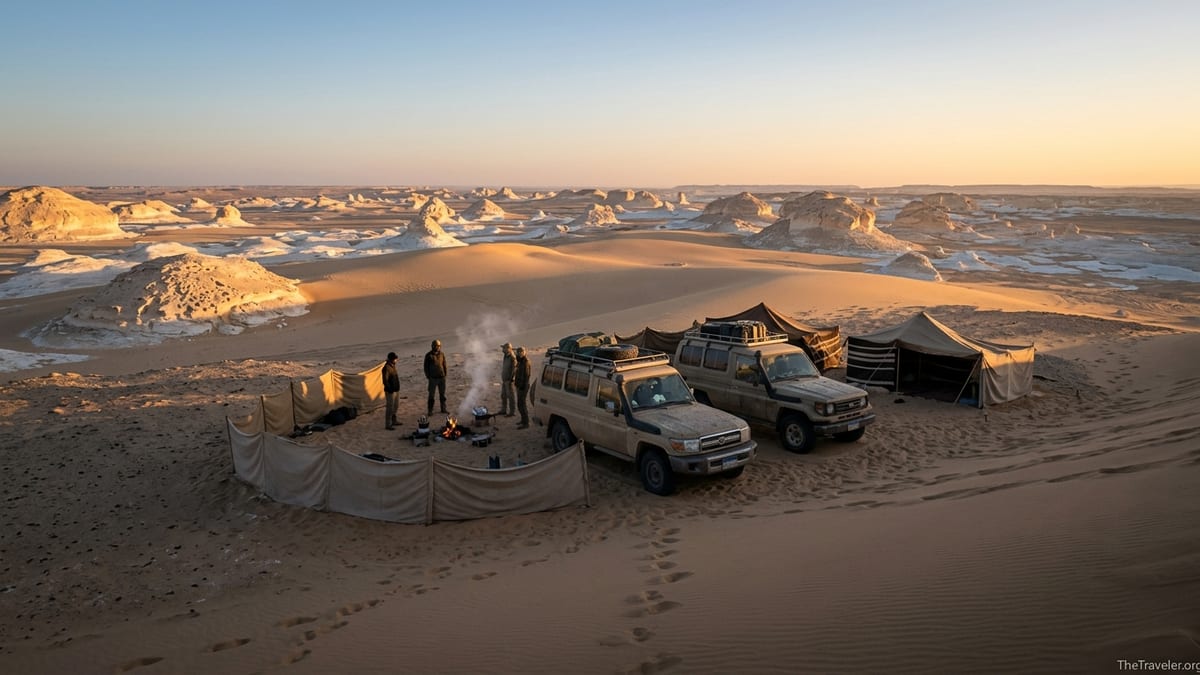
Egypt’s Western Desert covers most of the country west of the Nile, but for travelers it usually means a circuit of oases and protected areas linked by long desert highways. The core arc of oases runs from Siwa in the far northwest down through Bahariya, Farafra, Dakhla and Kharga, with side trips into the Black Desert, White Desert and surrounding dunes. White Desert National Park, near Farafra and usually reached via Bahariya, is the star attraction for first-time visitors, with its surreal white limestone formations and easy overnight camping options.
Most short Western Desert safaris depart from Cairo and focus on Bahariya and the White and Black Deserts over one or two nights. Longer “oasis circuits” might add Farafra and Dakhla or push all the way to Siwa, demanding more driving hours but rewarding you with palm gardens, hot springs and remote mudbrick villages. Siwa itself sits roughly 560 kilometers west of Cairo and has become one of Egypt’s most sought-after desert destinations, with ecolodges, salt lakes and the Great Sand Sea for 4x4 dune bashing.
Because distances are long and independent driving is challenging, most travelers rely on organized tours. These range from basic small-group camping trips using shared jeeps to high-end private safaris that combine 4x4s, comfortable lodges and Bedouin-run desert camps. Understanding how these models differ in practice is crucial to getting the experience, comfort level and price point you expect.
Access is also shaped by regulations and permits in protected areas. White Desert National Park has specific camping rules and entry fees, and you cannot just pitch your own tent in random locations. In practice, this means joining a licensed operator with the correct 4x4 vehicles, safety gear and permits is the simplest and often the only realistic way to experience the classic Western Desert landscapes.
Private 4x4 Safaris vs Small-Group Desert Tours
For most travelers, the first big decision is whether to book a private 4x4 safari or a place on a small-group tour. A typical private overnight White Desert safari from Cairo might cost in the region of 300 to 450 US dollars per person based on two people sharing, with prices often dropping for groups of four or more. For example, some Bahariya-based operators quote around 3500 Egyptian pounds per person for a two-day, one-night White Desert camping trip that includes transport from Cairo, jeep safari, camping gear and meals, with supplements for solo travelers.
Small-group tours, often sold through international platforms, tend to be cheaper per person, especially for one- or two-night White Desert trips. Operators advertise shared 4x4 transport, a fixed itinerary through the Black Desert, Crystal Mountain and the Valley of Agabat, and a communal campsite in the White Desert. Group sizes are often between 8 and 16 participants. You typically trade flexibility for price, accepting set departure dates and standard schedules in exchange for lower costs and ready-made travel companions.
Private safaris, by contrast, usually mean your own 4x4, driver and desert guide. This allows more control over timing, photo stops and pacing. If you want to linger at a particular rock formation at sunset, detour to a quieter dune field or adjust meal times, private is the better fit. This can be especially important for photographers, families with children or travelers sensitive to heat who need more breaks and shade stops.
When comparing options, look beyond the headline price. Ask how many passengers are in each vehicle, whether the driver is also your guide or if there is a dedicated guide, and how much flexibility you have to adjust the program. A small-group tour might seem cheaper, but if it means four or five people squeezed into the back of a 4x4 with limited legroom and little say over stops, a slightly more expensive private jeep shared between four friends may deliver far better value.
Oasis Circuits: Bahariya, Farafra, Dakhla, Kharga and Siwa
Short overnight tours focus on a single area, but “oasis circuits” string multiple oases together across several days. A classic four- or five-day Western Desert circuit from Cairo might include Bahariya, the Black and White Deserts, and Farafra, with options to push further south into Dakhla and Kharga. These trips are built around a mix of jeep stages and longer highway sections, staying in simple hotels or guesthouses in the oases and tents in the desert.
In practice, these circuits are more common as part of specialist itineraries sold by regional tour operators rather than quick add-ons. For example, some agencies advertise six- to eight-day “Western Desert and Oases” routes that overnight in Bahariya, Farafra, Dakhla and Kharga, crossing the desert in 4x4 convoys and visiting hot springs, ancient mudbrick villages and remote Roman sites. Vehicles are usually Toyota Land Cruisers or similar, with a maximum of four passengers per car for comfort and weight distribution on off-road segments.
Siwa can be approached as a stand-alone trip or as the capstone of a longer oasis circuit. Three-day Siwa tours from Cairo often combine an overnight bus or private minibus transfer with a day of 4x4 desert activities in the Great Sand Sea and time at the salt lakes. More immersive programs run four to eight days and include cultural visits to the Temple of the Oracle, mountain tombs, local markets and ecolodges surrounded by palm gardens. A three-night, four-day Siwa package sold by local operators typically bundles transport from Cairo, accommodation, entrance fees, a desert tour and most meals.
Because oasis circuits involve more remote roads and longer driving days, vehicle quality and driver experience matter even more than on short safaris. When reviewing a multi-night circuit, pay attention to whether there are backup vehicles in convoy, how many hours per day you can expect to spend in the car, and where overnights will be split between basic hotels, ecolodges and wild camping. A slightly higher price often reflects safer planning and better overnight stops rather than unnecessary luxury.
Camping Trips & White Desert Overnights: What’s Really Included
For many travelers, the highlight of a Western Desert tour is a night under the stars in the White Desert. A standard two-day, one-night camping program from Cairo typically includes round-trip transport to Bahariya by minibus or car, transfer into 4x4s for the off-road portion, visits to the Black Desert and Crystal Mountain on day one, sunset in the White Desert and a basic Bedouin-style camp. Dinner is often a grilled meal prepared on-site, followed by tea, music and sleeping in thick blankets or simple tents under the open sky.
Inclusions on reputable White Desert camping tours normally cover all meals from lunch on day one to breakfast on day two, drinking water, camping equipment and permits. Some tours add sandboarding or short hikes. Prices in 2025 and early 2026 for these overnights frequently fall in the 150 to 250 US dollar per person range for small groups, with private versions costing more. One Bahariya-based company, for instance, advertises a two-day White Desert camping trip for around 3500 Egyptian pounds per person, including 4x4 transport, guides, park fees, meals and camping gear, with departures from Cairo in the morning and return around early evening the next day.
Comfort levels vary. The simplest camps are “wild camps” set up specifically for your group using mattresses on the sand, windbreaks and portable kitchens. Slightly costlier programs might use semi-fixed Bedouin camps with more structured shelter, a few basic toilets and slightly better bedding. Very high-end desert experiences are possible too, but are less common in the Western Desert than in some other countries; they might feature larger tents, private setups for couples and more elaborate meals, generally marketed through specialist agencies at much higher prices.
Before booking, check whether your tour includes sleeping bags, foam mattresses, pillows and wind shelters or whether you need to bring a liner or additional layers. Ask specifically how toilets are handled, how rubbish is removed from the camp, and whether guides follow “leave no trace” practices. In the winter months from November to February, nights can be cold, so confirming that extra blankets and windbreaks are provided can make the difference between a magical night and a very uncomfortable one.
Siwa & Great Sand Sea Tours: 4x4 Adventures and Local Life
Siwa Oasis has its own style of desert touring distinct from the Bahariya and White Desert circuits. Once you arrive in the town, operators based in Siwa coordinate 4x4 trips into the Great Sand Sea, visits to hot and cold springs, and sunset picnics overlooking the salt lakes. A full-day desert tour in Siwa for four to six people in a 4x4 commonly includes dune bashing, sandboarding, a visit to Bir Wahid hot spring and stops at fossil-rich areas in the dunes, usually with lunch or a light meal included. Local companies quote in both Egyptian pounds and US dollars, and a full-day private desert outing for a small group is often priced competitively compared with multi-day safaris starting from Cairo.
From Cairo, three-day Siwa packages typically bundle nighttime bus or minivan transfers, two nights of accommodation in town, breakfasts, one or two main desert excursions and guided visits to sites like the Temple of the Oracle and the Mountain of the Dead. Tour descriptions often highlight swimming in the salt lakes or sulfur springs and a 4x4 ride over the dunes. Prices vary widely depending on accommodation standard, but travelers regularly see offers in the range of a few hundred US dollars for a basic three-day, two-night Siwa tour including transport, and more for more comfortable ecolodges or boutique hotels.
For longer Western Desert journeys, Siwa can be combined with Bahariya and the White Desert in six- to eight-day itineraries that loop from Cairo through one or more oases and finish with two or three nights in Siwa. These circuits are logistically more complex and often arranged as private or small-group expeditions with dedicated guides. You may stay at a desert ecolodge near Bahariya on the way out, camp one night in the White Desert, then continue west to Siwa for several nights in a mudbrick ecolodge built with local materials, experiencing both off-grid quiet and the town’s growing café and guesthouse scene.
When comparing Siwa tours, consider how much genuine local contact and downtime you want. Some fast-paced itineraries race from activity to activity, leaving little time to wander through the palm gardens or sit quietly by a spring. Others build in long afternoon breaks during the heat of the day and emphasize slower travel. Small differences in structure can have a big impact on how restorative or rushed your Siwa experience feels.
What to Check Before Booking: Guides, Vehicles, Meals and Permits
With so many operators and booking channels, doing due diligence before you commit is essential. One of the most important elements is guide quality. In the Western Desert, your guide is not only an interpreter of geology and culture but also a safety manager in a remote environment. Look for tours that specify English-speaking (or your preferred language) desert guides with years of experience in that specific area and, where relevant, local Bedouin teams who know the tracks, weather patterns and safe camping spots.
Vehicle standards are another key comparison point. Most serious operators use well-maintained Toyota Land Cruisers, Nissan Patrols or similar high-clearance 4x4s, ideally with air conditioning and recent service records. Ask how often vehicles are checked, whether there is a second vehicle in convoy on more remote routes, and what safety gear is carried. Items like satellite phones, GPS, recovery gear and extra water are standard on better expeditions. If an offer seems much cheaper than others, it can be a sign that corners are being cut on vehicles and safety rather than just on marketing or commissions.
Meals and water provision vary between tours. In the White Desert and on camping trips, reputable operators provide all main meals plus drinking water and hot drinks. Some include snacks, juices and fresh fruit, while budget tours may stick to simpler menus. In Siwa and the oases, breakfast is usually included with accommodation, while lunches and dinners may be split between included meals and free time in local restaurants. Clarify how many meals are actually covered on each day of your itinerary and whether special diets can be accommodated reasonably, especially if you are vegetarian, vegan or gluten-free.
Permits and park fees are another area to examine closely. White Desert National Park in particular has clear regulations, including entry fees per person and per vehicle and rules about where camping is allowed. Some agencies itemize these fees separately, while others fold them into an “all-inclusive” price. Ask explicitly whether all necessary permits and fees are included and whether there is anything you might need to pay in cash on arrival. Operators who work regularly in the area will be familiar with up-to-date regulations and should be able to explain how they comply.
Comparing Prices and Inclusions Across Operators
Because Western Desert trips are often sold through both local agencies and international booking platforms, prices for similar-looking itineraries can vary. For example, an overnight White Desert camping trip from Cairo advertised on a major international platform might cost in the range of 180 to 250 US dollars per person for a shared group, while a similar trip bought directly from a Bahariya-based operator might be quoted in Egyptian pounds at a slightly lower equivalent rate, especially if you are sharing a jeep with friends. On the other end of the spectrum, more elaborate three- or four-day circuits with extended stops and higher-end accommodation can rise to several hundred dollars per person.
Siwa packages also demonstrate the importance of reading the fine print. A three-day Siwa tour priced around 300 US dollars might include round-trip transport from Cairo, two nights in a basic guesthouse with breakfast, one main desert tour and a guided visit to key archaeological sites, but leave several meals at your own expense. A more expensive itinerary could bundle private transfers, a boutique ecolodge, additional 4x4 excursions and entrance fees to multiple sites, resulting in a higher upfront price but fewer on-the-ground surprises.
When comparing offers, sketch out a simple side-by-side list of inclusions. Note how many nights are in the desert versus in towns, whether park fees and camping equipment are included, how many people share a 4x4, which meals are provided and whether there are any optional extras like sandboarding or hot springs that might carry surcharges. It is also worth checking cancellation conditions, deposit requirements and what happens if weather or road conditions force itinerary changes, since desert windstorms and occasional closures can occur.
Finally, keep currency fluctuations in mind. Many local operators price primarily in Egyptian pounds, while international agents quote in US dollars or euros. Depending on when you pay and how exchange rates move, paying in local currency on arrival or by bank transfer to an Egyptian account might offer savings, but you should balance this against the extra protection that can come from paying via a major international platform that offers clear customer support and review systems.
The Takeaway
Western Desert Egypt tours now range from quick overnight White Desert camping escapes to weeklong circuits linking multiple oases and the remote Siwa Oasis. Choosing the right format for you depends on how much time you have, how comfortable you are with basic camping, and how important flexibility and privacy are compared with price. Private 4x4 safaris give you control over pace and stops, while small-group tours deliver solid value and ready-made social interaction.
Across all options, careful attention to details like guide experience, vehicle standards, meal plans and permit handling will help you separate solid, safety-conscious operators from offers that look cheap on paper but cost more in comfort or peace of mind. Taking time to compare inclusions, ask specific questions and read recent traveler feedback will set you up for a journey that matches your expectations.
Whether you spend one night under the stars in the White Desert, roam the dunes of the Great Sand Sea near Siwa or cross multiple oases on a longer circuit, the Western Desert rewards those who approach it with curiosity and respect. With thoughtful planning and the right tour partner, it can become one of the most memorable chapters of your time in Egypt.
FAQ
Q1. How many days do I need for a Western Desert safari from Cairo?
For a first visit focused on the White Desert, two days and one night from Cairo is the minimum that feels worthwhile. This allows you to drive to Bahariya, transfer to 4x4s, visit the Black Desert and Crystal Mountain, camp overnight in the White Desert and return the next afternoon. If you want a slower pace or to add more oases, plan three to five days.
Q2. Is it safe to camp in the White Desert and Western Desert?
Most travelers who camp in the White Desert or on organized Western Desert safaris do so safely with licensed operators. Risks come primarily from remoteness, weather and vehicle issues rather than from crime. Choosing reputable guides, well-maintained 4x4s, and tours that travel in convoy on longer routes significantly reduces risk. Independent, unguided camping is not recommended and is restricted in protected areas.
Q3. When is the best time of year to visit the Western Desert and Siwa?
The most comfortable months are generally from late October through April, when daytime temperatures are milder and nights are cool. Winter nights, especially in December and January, can be cold in the White Desert and Siwa, so you will need warm layers. Summer trips are possible but bring intense heat, limited mid-day activities and a greater need for air-conditioned vehicles and accommodation.
Q4. Do I need special permits to join a Western Desert tour?
As a visitor on an organized tour, your operator normally handles park entry fees and permits for places like White Desert National Park and protected areas around some oases. You should not need to arrange anything yourself if you book with a licensed company. If you are planning something unusual or very remote, clarify with your operator in advance that all necessary permissions are included in the quoted price.
Q5. What kind of vehicles are used on Western Desert safaris?
Serious operators use high-clearance 4x4 vehicles such as Toyota Land Cruisers or similar models, often with modifications for desert driving and extra storage for water and camping gear. Transfers between Cairo and the oases may use minibuses or standard cars before you switch to 4x4s for off-road sections. Check that your tour limits passengers per vehicle to ensure both safety and comfort.
Q6. What should I pack for a Western Desert or Siwa camping trip?
Pack light, breathable clothing for daytime, a warm layer or fleece and hat for nights, sturdy closed shoes, sunglasses, sunscreen, a scarf or buff for wind and sand, and any personal medication. Many tours provide sleeping bags and blankets, but bringing a thin sleeping bag liner or extra base layer can improve comfort. A small headlamp, power bank and reusable water bottle are also useful.
Q7. Are meals and drinking water usually included on these tours?
On most Western Desert camping trips, main meals and drinking water are included from the time you leave the oasis until you return. In Siwa and the oases, breakfast is commonly included with accommodation, while some lunches and dinners may be on your own. Always confirm how many meals per day are included and whether snacks and hot drinks are provided around camp.
Q8. Can vegetarians or people with dietary restrictions join Western Desert tours?
Yes, many operators can accommodate vegetarians and some other dietary needs if informed in advance. Desert meals often feature grilled meats alongside rice, vegetables and salads, so removing meat is usually straightforward. More complex requirements such as gluten-free or strict vegan diets require more communication, and choice may be limited in remote areas, so it is wise to bring some suitable snacks.
Q9. How do Western Desert and Siwa tours compare in price to Nile-focused trips?
Per day, Western Desert and Siwa tours can be comparable in cost to mid-range Nile cruises or private day tours around Cairo and Luxor, especially when you factor in 4x4 vehicles and camping logistics. Short overnight White Desert trips can be relatively affordable, while longer oasis circuits and high-end ecolodge stays in Siwa push prices higher. In general, the more remote and customized the itinerary, the more you can expect to pay per day.
Q10. Is it better to book Western Desert tours in advance or on arrival in Egypt?
For peak season months and fixed travel dates, booking in advance is sensible, especially if you want a specific operator, private jeep or particular ecolodge in Siwa. If your dates are flexible and you are comfortable shopping around, you can compare offers in Cairo or in the oases themselves. However, even if you book on arrival, allow at least a day or two to research companies, read recent reviews and confirm exactly what is included before paying.