


A White Desert tour from Cairo is one of Egypt’s most memorable side trips: a journey from the city’s traffic to wind-carved chalk formations, volcanic hills and a night under an immense desert sky. This guide walks you through how to get from Cairo to Bahariya Oasis, what a typical overnight 4x4 safari includes, how camping actually works on the ground, and how to choose between a fast one-night escape and deeper multi-night expeditions.
Cairo to Bahariya Oasis: Transfers and Travel Time
Most White Desert safaris start with a road transfer from Cairo to Bahariya Oasis, the main gateway to the protected area. The distance is roughly 360 to 420 kilometers depending on your Cairo pickup point and the route your driver takes. In normal conditions, the drive by private car or minivan takes about 4 to 5 hours each way. Many operators arrange pickup from central Cairo or Giza hotels around 6.30 or 7.00 in the morning so you can reach Bahariya in time for lunch and an afternoon 4x4 departure into the desert.
In practice, travelers usually do not book the Cairo to Bahariya leg separately. Most tour companies bundle round-trip transfers in an air-conditioned vehicle together with the 4x4 safari and camping. For example, recent overnight packages sold through local operators or platforms like major global tour marketplaces often include hotel pickup in Cairo, highway transport to Bahariya, and return at the end of the tour for about 120 to 220 US dollars per person on a shared basis, depending on group size and season. Private trips with a dedicated vehicle and guide typically cost more but can be more flexible with departure times and stops.
The road is paved and straightforward, but this is still a long highway run across the Western Desert. Fuel and rest stops are limited, so drivers usually plan one or two short breaks for bathrooms, tea and snacks at small roadside cafes popular with truck drivers and other safari groups. Because conditions can change, it is sensible to confirm the current driving time with your operator a few days before departure and to avoid scheduling a same-evening flight out of Cairo on your return day.
Independent travelers occasionally ask whether they can take a public bus or shared minibus to Bahariya and then arrange a safari locally. While this is sometimes possible for experienced travelers with flexible schedules, it is less practical for high-intent visitors on tight itineraries. Most operators that run White Desert camping trips prefer to coordinate the entire route from Cairo for permit and timing reasons, and this has the added benefit of predictable costs and pickup arrangements.
4x4 Safaris and Typical White & Black Desert Stops
From Bahariya Oasis, you usually switch from the highway vehicle to a 4x4, typically a Toyota Land Cruiser or similar, driven by a local Bedouin driver-guide. These vehicles handle the mix of tarmac, gravel, and soft sand between the oases, the Black Desert and the White Desert. Camps, tour agencies and guesthouses in Bahariya maintain fleets of these jeeps and often work together, so you might see several groups traveling roughly the same route but spaced out enough that camps still feel isolated.
Almost all itineraries include at least a short visit to the Black Desert, a striking area of dark volcanic hills and sand covered with black basalt pebbles. Many tours drive up a low hill for a viewpoint over the dunes before continuing. Another frequent stop is Crystal Mountain, a natural outcrop of quartz and calcite on the roadside where travelers hop out for photos. Between Bahariya and the White Desert, many 2-day and 3-day tours also detour through Agabat, a valley of creamy limestone towers and dunes that has become a highlight for sunset and sandboarding sessions.
Once you reach the White Desert National Park itself, the landscape shifts to bright chalk and limestone formations shaped by wind and sand. Guides usually spend an hour or two weaving through different clusters of formations with informal names like “mushroom,” “chicken and tree” or “ice-cream cones,” often chosen by travelers and guides over the years. It is common for a group to stop multiple times, allowing you to walk short distances and take photos while the 4x4 waits nearby, rather than staying in the vehicle continuously.
A standard overnight safari will combine several of these stops in a logical sequence to make the most of the light. For example, you might see the Black Desert in the later afternoon when shadows give the hills more definition, then reach the White Desert just before sunset for the soft golden light on the chalk formations. On the way back to Cairo the next day, many operators include a soak in a Bahariya hot spring or a short visit to oasis date palm gardens if time and permits allow.
Camping Setup, Meals and What to Expect at Night
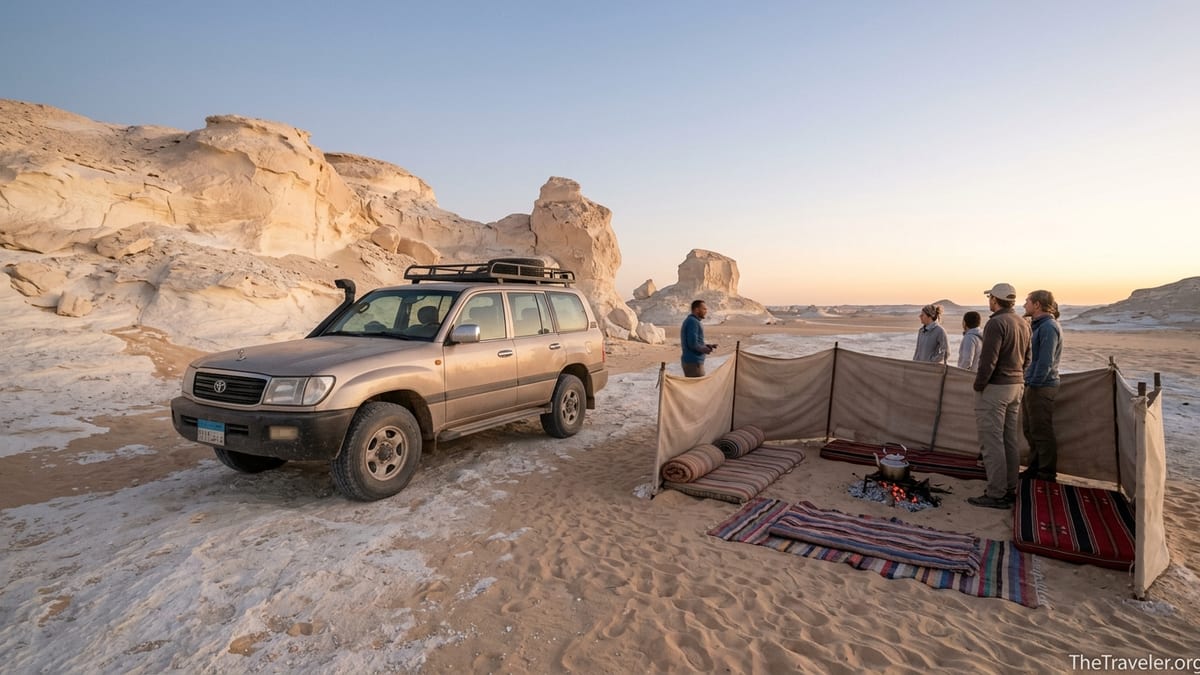
Camping in the White Desert is typically wild camping rather than a fixed, fenced campsite. Your driver and camp crew choose a spot among the formations where vehicles are allowed, taking into account wind direction, soft sand patches and how much moonlight or darkness you want for stargazing. They then unload rolled mattresses, blankets and tents from the roof of the 4x4 and set up a simple camp on the sand. Many visitors are surprised by how quickly a flat patch of desert turns into a comfortable, if basic, outdoor bedroom.
Most standard tours provide shared two-person dome tents or windbreak shelters made from canvas and blankets. In cooler months, especially from November to February, you can expect thick mattresses and multiple heavy blankets, but nights can still be cold, sometimes close to freezing, so bringing your own thermal base layers, beanie and socks is strongly recommended. In warmer months, some travelers choose to sleep fully outside on mattresses under the stars, with the tent available as backup in case of wind or unexpected chill.
Dinner is usually cooked on-site over charcoal or a small gas stove. Typical menus include grilled chicken or kofta, rice or pasta, vegetable stews, salads, and fresh flatbread. Tea is almost always black tea with fresh mint, and many guides offer an evening round of sweet Bedouin tea around the campfire. Breakfast the next morning might be eggs fried in a pan, soft cheese, jams, fava beans and more bread, along with tea and instant coffee. Vegetarian travelers are commonly catered for, but if you have stricter dietary needs, it is important to tell your operator in advance and ideally again to the crew when you meet them in Bahariya.
Sanitary conditions are basic. There are no built toilets in remote camping spots, so guides designate an area at a distance from camp and provide a shovel and sometimes a simple privacy screen. Drinking water is normally carried in large jerrycans or multiple small bottles, and your tour price typically includes enough for cooking and basic drinking, though heavy water drinkers in summer may want to bring an extra personal supply from Cairo. There is no mobile coverage in many areas of the park and no fixed lighting, so a headlamp or small flashlight is essential once the sun sets.
One-Night vs Multi-Night Tours: How Long Do You Need?
The classic White Desert experience from Cairo is a one-night, two-day itinerary: drive from Cairo to Bahariya in the morning, transfer to a 4x4, visit the Black Desert and Crystal Mountain, camp in the White Desert, then watch sunrise and explore more formations before returning to Cairo the next afternoon or evening. This format is widely available and works well for travelers with limited time or those fitting the desert in between a Nile cruise and longer stays in Cairo or Luxor.
For many visitors, this short itinerary delivers the essentials: a taste of Bahariya Oasis life, a sunset and sunrise among the chalk formations, a night under visible Milky Way skies when conditions are right, and a comfortable but adventurous 4x4 drive. Recent traveler reports mention paying the equivalent of around 150 to 250 US dollars per person for this style of tour when booked with a reputable local operator, including meals, camping gear, Cairo transfers and park fees. Private prices run higher, but often allow more time at photo stops and an itinerary shaped around your interests.
Multi-night tours, typically 2 or 3 nights in the desert within a 3 to 5 day program, appeal to travelers who want slower days, quieter campsites and perhaps an extra oasis or two in their itinerary. For example, some 3-day itineraries spend the first night near the sand dunes and rock spires of Agabat, the second night deeper inside the White Desert, then stop for a second soak in hot springs before returning to Cairo. Longer programs of 5 to 7 days sometimes link Bahariya with other Western Desert oases like Farafra or even Siwa, combining the White Desert with ancient ruins, salt lakes and more varied desert landscapes.
As you add nights, cost per day can decrease slightly on a shared basis, but total trip cost rises and weather becomes a bigger consideration. Summer heat can make noon activities uncomfortable, so multi-night safaris are often more enjoyable in the cooler months from October to April. With more time you can also build in rest periods at Bahariya guesthouses with private bathrooms and hot-spring pools, which is helpful for families or older travelers who may not want consecutive nights of wild camping.
Booking, Pricing and How to Choose an Operator
Most travelers book a White Desert tour with an Egypt-based agency or a Bahariya specialist that organizes all logistics: Cairo transfers, permits, 4x4, camping equipment, guides, meals and park fees. You will find options on major global booking platforms and direct websites for local companies based in Cairo or Bahariya. Reviews from the last one or two years are useful for checking how well operators handle safety briefings, weather changes and special dietary needs.
As of recent seasons, typical prices for a one-night group tour from Cairo with camping, meals and shared 4x4 start around the equivalent of 120 to 180 US dollars per person for a simple setup, rising to roughly 200 to 300 dollars per person for small-group or private itineraries with more comfort and flexibility. Multi-night journeys that combine several oases or include extra activities such as sandboarding, hot-spring visits and extensive detours often run 400 to 700 dollars per person or more, depending on duration and group size. Luxury versions with fixed desert camps or upgraded accommodations between drives are priced even higher and are better discussed directly with specialist agencies.
When comparing offers, look closely at what is included. A lower headline price may exclude key items like park entrance fees, the Cairo to Bahariya transfer, or sleeping bags, which you would then need to rent. Transparent offers specify the number of meals, type of vehicle, whether drinking water and soft drinks are included, and whether you have a dedicated private jeep or are sharing. For example, a sample mid-range private two-day itinerary might include door-to-door pickup in Cairo in a sedan, one night camping, all meals from lunch on day one through lunch on day two, entrance fees, and a private 4x4 at a quoted rate per person based on two or four travelers.
It is generally worth favoring operators that work with local Bedouin drivers and guides from Bahariya. Not only does this support the oasis community, but local drivers are more experienced at reading sand conditions, sudden wind shifts and the best sheltered camping spots. Before paying a deposit, ask for confirmation about safety equipment such as spare tires, radios or mobile contacts, and how the company handles rare but possible itinerary changes due to weather or government instructions.
Pickup Arrangements, Permits and Safety Basics
Pickup in Cairo is usually from your hotel or a central meeting point in areas such as downtown, Zamalek or Giza. For travelers staying near the airport or in New Cairo, some agencies may charge a small extra fee, while others include these areas as standard. The driver typically contacts your hotel the evening before to reconfirm the pickup time, or you receive a message via your booking platform. On the morning of departure, your luggage is loaded into the highway vehicle, and you keep a smaller daypack with essentials like water, sunglasses, sunscreen and a camera within reach.
Permits to enter the White Desert National Park and some checkpoints along the route are handled by your tour company. As a visitor, you usually only need to carry your passport and, in some cases, provide passport details in advance so the operator can complete paperwork. Checkpoints between Cairo and Bahariya are routine and your driver will handle the formalities; you may be asked occasionally to show your passport to an officer. Entry rules and procedures can change, so reliable operators monitor the situation and adjust departure times or routes if needed.
From a safety perspective, desert travel is generally straightforward when handled by experienced drivers, but the environment is still remote. It is important to listen carefully to your guide’s instructions about where it is safe to walk, especially near soft sand or rocky ridges, and to avoid wandering out of sight of camp after dark. Weather can shift quickly: sandstorms, though not everyday events, can reduce visibility, and in that case drivers may pause or modify plans until conditions improve. Good operators will cancel or re-time trips if a serious storm is forecast; when booking, ask what happens in the case of weather-related changes.
Basic medical facilities exist in Bahariya Oasis, but anything more advanced requires returning to Cairo. Travelers with specific medical conditions should carry necessary medications, a simple personal first-aid kit and ensure their travel insurance covers desert excursions. Because there is often no mobile signal at camp, sharing your itinerary with someone at home before departure is sensible, even on well-organized tours.
When to Go, What to Pack and Practical Tips
The White Desert is visitable year-round, but the feel of a tour changes with the season. October to April is generally considered the most comfortable period for camping, with cooler days and cold but manageable nights. December and January can be surprisingly cold after dark, so you will appreciate thermal layers and windproof outerwear. From May to September, daytime temperatures can be intense, and most activity shifts to early morning and late afternoon, with longer midday breaks in the shade of rock formations or at oasis guesthouses.
Packing smartly makes the difference between a comfortable experience and a distracting one. At minimum, bring a warm layer for the evening, a light windbreaker, closed shoes suitable for sand and small rocks, a hat, sunglasses, sunscreen, a headlamp or flashlight, a power bank and any personal toiletries you need for a night without a bathroom. Many travelers appreciate having a light scarf to protect against dust and sun, especially in windy conditions. If you are sensitive to cold, consider carrying a compact sleeping bag liner for extra warmth, even if the tour provides blankets.
Photography enthusiasts will find early morning and late afternoon to be the prime hours in the White Desert, with soft light bringing out textures on the chalk formations. A mid-range zoom lens and enough battery power for two days without charging are helpful, as is a dry bag or zip-top pouch to protect gear from fine sand. Tripods are welcome on most tours and can be especially useful for astrophotography on moonless nights, but be mindful of leaving them set up where other guests might trip in the dark.
Cash is still useful along this route. While the main tour cost is usually paid online or in Cairo, small amounts of Egyptian pounds are handy for tipping drivers and camp crew, buying tea or snacks at highway stops, or renting extra blankets from a Bahariya guesthouse if you are traveling in the coldest months. Wi-Fi is limited or absent once you leave Cairo, so download maps, translation tools and offline entertainment before departure.
The Takeaway
A White Desert tour from Cairo is more than a quick photo stop; it is a compact desert expedition that combines long highway drives, 4x4 tracks, wild camping and some of Egypt’s most surreal scenery. With a bit of planning around transfers, operator choice, season and packing, it fits neatly into a broader Egypt itinerary without requiring expedition-level skills or equipment from travelers.
For high-intent visitors who value clarity, the key decisions are straightforward. First, choose how long you want to be out: a one-night, two-day escape delivers the essentials, while multi-night programs dive deeper into the Western Desert. Second, decide whether you prefer a budget shared jeep or a private 4x4 with flexible timing. Finally, pick an operator that is transparent about inclusions, uses experienced local drivers and responds clearly to questions about permits and weather plans. With those pieces in place, the logistics largely disappear, leaving you free to focus on the silence, stars and alien white landscapes that make this corner of Egypt so memorable.
FAQ
Q1. How long does the drive from Cairo to the White Desert take?
The main driving leg from Cairo to Bahariya Oasis typically takes about 4 to 5 hours by private car or minivan, followed by roughly another hour in a 4x4 to reach the core White Desert area, depending on road conditions and stops.
Q2. Is a one-night White Desert tour from Cairo enough?
For most travelers, a one-night, two-day tour is enough to experience the key highlights: Black Desert viewpoints, Crystal Mountain, the main White Desert formations, sunset, sunrise and a night of camping. Those seeking slower days, extra photography time or additional oases often prefer 2 or 3 nights.
Q3. What is usually included in a standard White Desert camping package?
A typical package includes round-trip transfers from Cairo, 4x4 transport from Bahariya, camping equipment, dinner and breakfast at camp, drinking water, a local guide or driver-guide, and park entry or permit fees. Some tours also add lunch in Bahariya, sandboarding and hot-spring stops.
Q4. How much does an overnight White Desert safari cost?
Recent prices for a shared one-night tour from Cairo generally range from about 120 to 220 US dollars per person, depending on comfort level and group size. Private tours and longer or more luxurious itineraries cost more and are usually priced individually by operators.
Q5. Is camping in the White Desert safe?
When arranged with reputable operators and experienced local drivers, camping in the White Desert is considered safe for most travelers. Guides monitor weather, choose appropriate camping spots, handle permits and maintain vehicles, although the environment remains remote and basic precautions are important.
Q6. What should I pack for a White Desert tour from Cairo?
Pack comfortable clothing for hot days and warm layers for cold nights, closed shoes, a hat, sunglasses, sunscreen, a headlamp, personal toiletries, necessary medications, and a power bank. In winter, thermal layers and a light sleeping bag liner are very helpful.
Q7. Are toilets and showers available at the campsite?
Most wild camps in the White Desert do not have built toilets or showers. Guides designate a basic toilet area away from camp, and washing is limited to bottled water. Some itineraries include guesthouse stays in Bahariya before or after camping for proper bathrooms and hot showers.
Q8. Can children or older travelers join a White Desert safari?
Many families with children and older travelers successfully join White Desert tours, especially when choosing private trips with flexible pacing and possibly staying in an oasis guesthouse instead of or in addition to camping. It is important to discuss mobility or health concerns with the operator in advance.
Q9. When is the best time of year to visit the White Desert?
The most comfortable months for camping are generally from October to April, when daytime temperatures are milder and nights, while cold, are manageable with proper clothing. Summer visits are possible but require careful planning for heat and sun exposure.
Q10. Do I need to arrange permits myself for the White Desert?
No. Tour operators usually handle all required permits and park entry formalities. You normally only need to provide your passport details in advance and carry your passport with you for checkpoints on the way between Cairo, Bahariya and the White Desert.