


A night under the stars in Egypt’s Western Desert ranks among North Africa’s most memorable travel experiences. The chalk towers of the White Desert glow in moonlight, the Milky Way spills across the sky, and your campfire dinner is cooked on the sand. Yet this is also an extremely remote, fragile environment where temperatures swing sharply and independent camping is heavily restricted. Careful planning and the right operator will determine whether your overnight safari is magical or miserable.
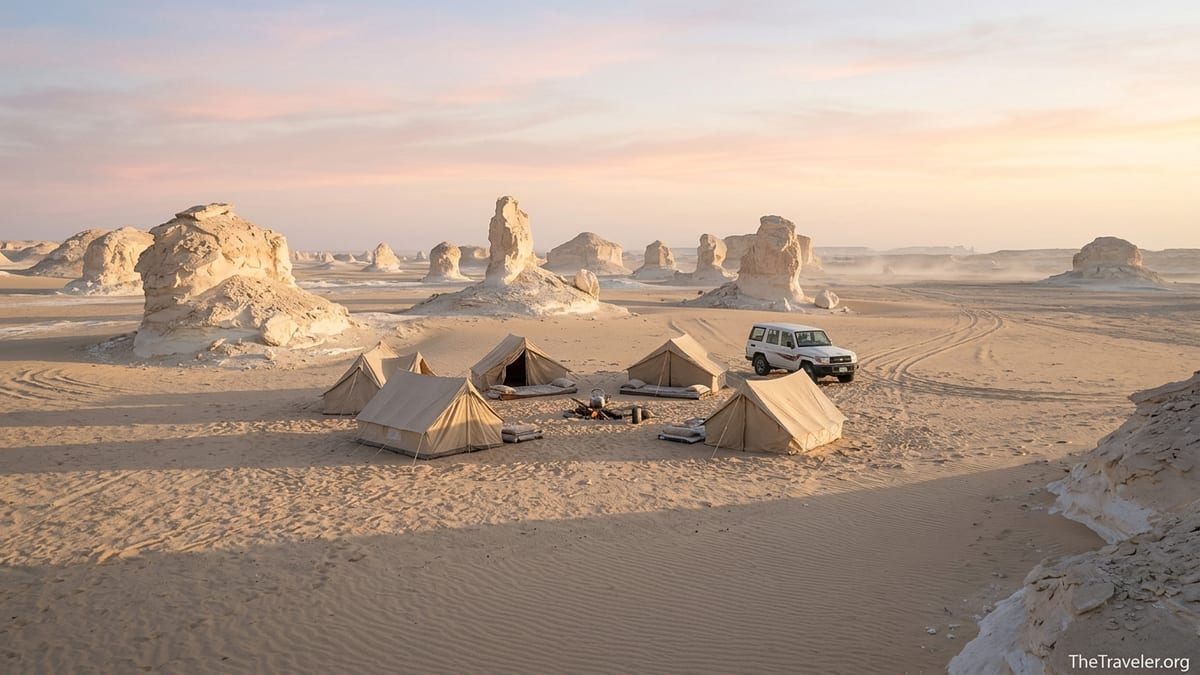
Understanding Egypt’s Western Desert and the White Desert
The Western Desert covers much of Egypt west of the Nile, but for most travelers “desert camping” here means overnight safaris around Bahariya and Farafra oases, including the White Desert National Park. The White Desert lies about 45 kilometers north of the small town of Farafra, and roughly a 4 to 5 hour drive from Cairo via Bahariya Oasis. It is famous for surreal chalk formations carved by wind and sand into shapes that resemble giant mushrooms, icebergs and abstract sculptures scattered across a pale plateau.
These trips usually link several distinct landscapes in one loop. Leaving Bahariya, 4x4 convoys often cross the dark volcanic hills of the Black Desert, stop at Crystal Mountain with its quartz veins, then reach the sand dunes of the Agabat Valley before entering the heart of the White Desert in late afternoon. By sunset, most groups are setting up camp among low chalk outcrops chosen for shelter from the wind.
Although maps show obvious roads between Cairo, Bahariya and Farafra, the camping areas themselves are deep off-road. There are no public facilities, shops or reliable phone signal once you leave the oasis towns. This is why responsible camping here is always arranged with licensed desert guides who know the terrain, the park boundaries and the latest rules for overnight stays.
Climate is another critical factor. The Farafra and Bahariya depressions have a hyper-arid desert climate with almost no rain year-round. In winter, daytime temperatures are pleasantly mild but nights can drop close to freezing, particularly in January. In late spring and summer, daytime highs routinely sit near or above 37 to 40 degrees Celsius with strong sun, while nights remain relatively warm but still cooler than the day. These swings shape everything from the clothes you pack to the thickness of your sleeping bag.
Why camping logistics should run through experienced operators
On paper, the Western Desert might look like a place where a confident driver could rent a 4x4, throw a tent in the trunk and head off into the dunes. In practice, regulations and safety realities make self-organized camping a poor choice. White Desert National Park and surrounding protected areas operate permit systems for overnight stays. These permits are normally obtained by registered Egyptian operators or local guides based in Bahariya or Farafra, who know which zones are currently open and what group sizes are allowed.
Most Cairo-based travelers book a 2-day, 1-night White Desert safari as a package through tour platforms or local agencies. Typical pricing for a shared 4x4 camping trip runs in the region of 160 to 250 US dollars per person, depending on group size and whether hotel nights in Bahariya are included. Private departures, especially for couples or families who want a dedicated vehicle, can cost more but include more flexibility for photo stops, sandboarding or extra nights.
What these packages buy you is more than just a driver. Reputable operators arrange door-to-door transfers from Cairo to Bahariya in air-conditioned minibuses, then provide fully equipped 4x4s, an Arabic and English speaking desert guide, park permits, camping gear, drinking water and meals. Established adventure firms and local outfits in Bahariya operate this route weekly during the main October to April season, fine-tuning departure times around weather, sandstorms or newly issued park guidelines.
Attempting to bypass an operator often backfires. Travelers who try to rent a city 4x4 and improvise logistics quickly discover that police and military checkpoints between Cairo and Bahariya routinely request proof of bookings, and that camping in unregulated spots can lead to fines or being turned back. Even if you could reach the White Desert on your own, there are no marked camping pitches, no signposted tracks through soft sand and no public toilets, water points or rangers on standby for stranded vehicles. In this landscape, an experienced operator is less a luxury and more a safety essential.
Types of White Desert camps and what to expect
Most overnight safaris use simple mobile camps rather than permanent tented lodges. Guides bring the camp with them on roof racks: canvas sleeping tents or windbreaks, foam mattresses, blankets, cooking gear and low tables. On arrival at the chosen spot, the crew will unload the vehicle and set up a dining area on carpets or rugs, ringed by lanterns and the campfire, with sleeping mattresses either inside small dome tents or as open-air beds tucked behind windbreaks.
Comfort levels vary. At the most basic end, expect shared two-person tents with thin mattresses and heavy wool blankets, and a simple cotton sheet or sleeping bag liner. Some midrange Bahariya-based operators now market “glamping” style setups in peak season, with taller walk-in tents, thicker mattresses, extra pillows and more atmospheric lighting, but these are still fundamentally mobile desert camps without fixed plumbed infrastructure. It is rare to find hotel-standard beds or en suite bathrooms in the White Desert itself.
Travelers concerned about hygiene or dust sometimes request private tents in advance. On shared departures, couples are usually given their own tent, while solo travelers may be matched with a same-gender tent mate unless they pay a modest single supplement for a private tent. Families with young children can often be accommodated in a larger multi-bed tent. It is worth confirming these arrangements when you book, rather than assuming.
It is also worth clarifying where you will actually sleep on chilly nights. Many operators spread mattresses under the stars when the weather is clear, then pitch tents as a windbreak or for privacy. In winter, once the temperature drops, most guests prefer the extra shelter of a tent, while in shoulder seasons you may have the option to sleep entirely outdoors. Having your own thin sleeping bag in addition to operator blankets can significantly increase comfort in February or March.
Food, water, toilets and day-to-day camp life
Meals on Western Desert camping trips are usually hearty and simple. Dinners often center on grilled chicken or meat cooked over the fire, served with rice, vegetable stews, fresh salads, tahini and flatbread. Vegetarian travelers are commonly offered lentil soup, vegetable tagines or grilled vegetables. Breakfast the next morning may include eggs, cheese, jam, bread, fruit and sweet tea. Lunch on the first day tends to be a picnic or plate meal at a roadside café near Bahariya, or a cold meal in the desert depending on your departure time.
Clean drinking water is always brought in large jerrycans or plastic bottles from the oasis town. Operators typically supply water for drinking and basic washing, but not enough for long showers or hair washing. Travelers used to generous hotel water use should adjust expectations. Bringing a personal one-liter reusable bottle and a small supply of purification tablets or a travel filter is useful, especially during hotter months, although the water provided by established companies is generally safe and bottled.
Toilets in mobile camps are rudimentary but manageable if you are prepared. Many operators set up a small privacy tent at a discrete distance from camp with a hole dug in the sand and a seat or simple arrangement over it, then cover waste with sand and remove tissue to a rubbish bag. Others rely on the classic “walk away with a shovel,” expecting guests to dig a small hole and cover it themselves. In both cases, packing your own biodegradable wipes, hand sanitizer, small headlamp and a roll of toilet paper in a dry bag makes the experience far more comfortable.
Evenings in camp usually revolve around the fire. After dinner, guides might play traditional music, tell stories about life in the oases or simply sip tea while guests photograph star trails. There is no mobile reception and no electricity beyond a few rechargeable lanterns and headlamps, so phone charging opportunities are limited to what you can manage with your own power bank. The lack of connectivity is part of the appeal for many visitors, but anyone who relies on their phone for photos or navigation should manage battery use carefully.
Temperatures, seasons and the reality of stargazing
The Western Desert is genuinely a place of extremes, and understanding seasonal patterns helps you choose the right travel window. Broadly, the prime camping season runs from October to April, when daytime temperatures are more forgiving for hikes among the chalk formations and nights are crisp enough to enjoy a campfire. In these months, daytime highs in the Bahariya and Farafra areas usually sit somewhere in the low to mid 20s Celsius in midwinter, climbing toward the low 30s in autumn and spring. Nights can be surprisingly cold from December to February, with temperatures sometimes nearing freezing in low-lying areas.
From May through September, the combination of high temperatures and stronger desert winds can make overnight camping uncomfortable for many travelers. Daytime highs around 37 to 40 degrees Celsius or more are common in mid-summer, and while nights are cooler they often remain warm and dry. Some operators still run trips in June, July and August, timing activities early and late in the day and resting in shade at midday, but most international visitors aim for cooler months unless their travel dates are fixed.
Stargazing is one of the Western Desert’s greatest rewards. With no light pollution and usually clear dry air, the Milky Way is often visible as a bright band overhead in the darker weeks of the lunar month. On moonless nights between October and March, guides will often switch off all lanterns after dinner to let your eyes adjust, revealing layers of stars rarely seen from cities. Travelers who have camped here describe it as one of the most intense night skies they have seen, rivaling desert regions in Jordan or Morocco.
That said, conditions are not identical every night. A bright full moon can wash out fainter stars but create a magical silver glow on the white chalk formations, transforming the landscape into something akin to a polar scene. Light cloud, dust in the air after a khamsin wind, or humidity near oases can also soften the view. If stargazing is a priority, consider checking a lunar calendar when choosing travel dates and lean toward darker moon phases, while remaining flexible about what nature delivers.
What to pack for an overnight Western Desert safari
Even on fully supported trips, your packing choices can make or break your comfort. Most operators provide the basics: tents or canvas shelters, mattresses, blankets, cooking equipment and communal lighting. You will, however, want your own clothing layers, sleep system tweaks and personal items tailored to the desert environment. A common mistake is packing only lightweight summer clothes on the assumption that “it is the Sahara,” then shivering once the sun sets.
As a rule, plan for hot days and cold nights. Pack at least one warm fleece or light down jacket, a beanie, and warm socks for evenings around the fire between November and March. During the day, breathable long-sleeved shirts and loose trousers protect against sun and sand far better than shorts and tank tops. A wide-brimmed hat, high SPF sunscreen and sunglasses with good UV protection are essential. Closed-toe walking shoes or light hiking boots cope better on rock and in cool nights than sandals alone, though sandals are comfortable around camp.
For sleeping, a lightweight travel sleeping bag or liner can complement or replace the blankets supplied by your operator. If you know you feel the cold, choose a compact bag with a comfort rating slightly below expected night temperatures, and use the camp’s blankets as extra insulation. Eye masks and soft earplugs help lighter sleepers if wind flaps tent fabric. Consider also packing a thin scarf or shemagh, which doubles as sun protection during the day and neck warmth at night.
Small personal extras make desert life smoother. A reliable headlamp with fresh batteries is far more useful than a hand-held torch when dealing with toilets or zips at night. A power bank keeps cameras and phones alive. Bring any personal medications in original packaging, plus simple remedies for stomach upsets and headaches. Moisturizing cream, lip balm and saline eye drops can alleviate the drying effect of desert air, especially for contact lens wearers. Finally, a compact cloth or microfiber towel and a small bag to keep dust off your clothes add comfort during the return to Cairo.
How to choose and vet a safari operator
Given how remote and regulation-driven the Western Desert is, the choice of operator matters. Many travelers book through well-reviewed adventure companies that specialize in overnight safaris from Cairo to Bahariya and the White Desert, or through local Bahariya-based outfits that focus almost entirely on this region. When comparing options, look beyond headline price and pay attention to what is included, how safety is handled and how they describe their environmental practices.
Start by checking whether overnight camping permits and park entry fees are included or paid locally. Transparent operators will spell this out clearly, while vague descriptions can lead to unexpected cash payments at short notice. Confirm the type of vehicle that will be used for desert driving and how many passengers will share each 4x4. Many shared tours use a limit of around four to six guests per vehicle for comfort; if you see a much higher number, ask how space is managed.
Reviews on booking platforms and independent forums can reveal practical details brochures gloss over. Look for recent comments about the condition of tents and mattresses, the quality of food, guide communication in your language and how the team responded to weather changes. Travelers regularly note when an operator went above and beyond, for example by adjusting the itinerary to avoid a sandstorm or providing extra blankets for unexpectedly cold nights. Such specifics are more valuable than generic five-star ratings.
Finally, ask direct questions before you pay a deposit. Good operators are comfortable answering how they handle waste in camp, what backup they have if a vehicle breaks down, whether there is a satellite phone or radio in the convoy, and what their policy is if weather or authorities force last-minute route changes. Their responses will tell you as much about their professionalism as any glossy photo of a chalk pillar at sunset.
The Takeaway
Camping in Egypt’s Western Desert, and especially in the haunting landscapes of the White Desert, is one of those rare experiences that feel both otherworldly and deeply grounded. The combination of chalk sculptures, empty horizons and immense night skies leaves a lasting impression long after you have returned to Cairo’s bustle. Yet this same remoteness means that details matter, from permits and vehicles to how much water your guide carries.
By working with experienced, regulation-aware operators, choosing a season that suits your tolerance for heat or cold, and packing thoughtfully for big temperature swings, you give yourself the best chance of a safe, comfortable and rewarding overnight safari. Expect simple infrastructure rather than luxury, embrace the rhythm of campfire evenings and early starts, and treat the desert with the respect a fragile environment deserves. Do that, and your night under the Western Desert stars will likely become a highlight of your time in Egypt.
FAQ
Q1. Is it possible to camp independently in Egypt’s White Desert without a guide?
Independent camping is strongly discouraged and in many zones not allowed. Overnight stays usually require permits handled by licensed operators, and the terrain, lack of facilities and remote location make guided trips the safest and most practical option.
Q2. How many days do I need for a White Desert camping trip from Cairo?
The classic itinerary is a 2-day, 1-night safari from Cairo, with morning departure, afternoon arrival in the White Desert, and a return the next afternoon. Travelers with more time sometimes add an extra night in the desert or in Bahariya Oasis, but one night is enough for most first-time visitors.
Q3. What does a typical White Desert camping package include?
Most packages include round-trip transport from Cairo to Bahariya, 4x4 transport in the desert, a guide, park permits, tents or sleeping setups, mattresses, blankets, dinner and breakfast, and drinking water. Entrance fees or tips may sometimes be listed as additional, so it is important to read the inclusions carefully.
Q4. How cold does it get at night in the Western Desert?
In winter months, night temperatures in the Bahariya and Farafra areas can drop close to freezing, even when days feel mild. From October to April you should be prepared for cold evenings and pack warm layers and possibly a light sleeping bag to supplement the blankets provided.
Q5. Are there toilets and showers at White Desert camps?
Mobile desert camps do not have plumbed facilities. At best, you will have a simple sand toilet under a privacy tent and limited water for basic washing. Showers are usually only available back at hotels in Bahariya or Cairo, so plan for one night without full bathroom comforts.
Q6. Is Western Desert camping suitable for children and older travelers?
Healthy children and older travelers who are comfortable with rustic conditions can enjoy the experience, provided they are well prepared for temperature changes and simple facilities. Choosing a private or small-group tour with flexible pacing and clear communication about comfort levels is especially important for families and seniors.
Q7. What should I wear for a White Desert overnight safari?
Wear lightweight, breathable long sleeves and trousers for sun protection during the day, a wide-brimmed hat and closed shoes for walking on rock and sand. In the evening, add a fleece or jacket, warm socks and a beanie between roughly November and March, when nights can be much colder than many visitors expect.
Q8. Is stargazing guaranteed on a White Desert trip?
Stargazing is usually excellent thanks to low light pollution and clear air, but it is not guaranteed. A bright full moon, high cloud, dust or haze can reduce visibility of stars. Planning around darker phases of the moon improves your chances, but you should still be ready to enjoy the landscape even if the sky is less dramatic than hoped.
Q9. How much does a Western Desert overnight safari typically cost?
Prices vary by season, group size and comfort level, but shared 2-day, 1-night safaris from Cairo commonly fall somewhere around the low to mid hundreds of US dollars per person. Private trips, extra nights and premium comfort setups cost more, while very low prices may indicate corners being cut on safety or equipment.
Q10. What is the best time of year to camp in Egypt’s Western Desert?
The most comfortable period for camping is generally October through April, when daytime temperatures are moderate enough for exploring and nights are cool but manageable with the right clothing. Summer months are far hotter and often windy, so most travelers avoid June, July and August unless they are accustomed to extreme heat.