


On Egypt’s northeastern edge, where the Damietta branch of the Nile works its way toward the Mediterranean, two neighboring destinations offer a very different kind of Egyptian escape. Damietta is a busy river port and furniture-making city with a lived-in Nile Corniche, fish markets and wood workshops, while Ras El Bar is a seasonal resort built around summer holidays, family villas and the narrow tongue of land at Al Lisan where river and sea finally meet. Together they make a compact, revealing journey through the eastern Nile Delta, especially for travelers curious to see Egyptian coastal life beyond the country’s famous Red Sea and North Coast resorts.
Getting Oriented: Damietta, Ras El Bar and the Eastern Delta
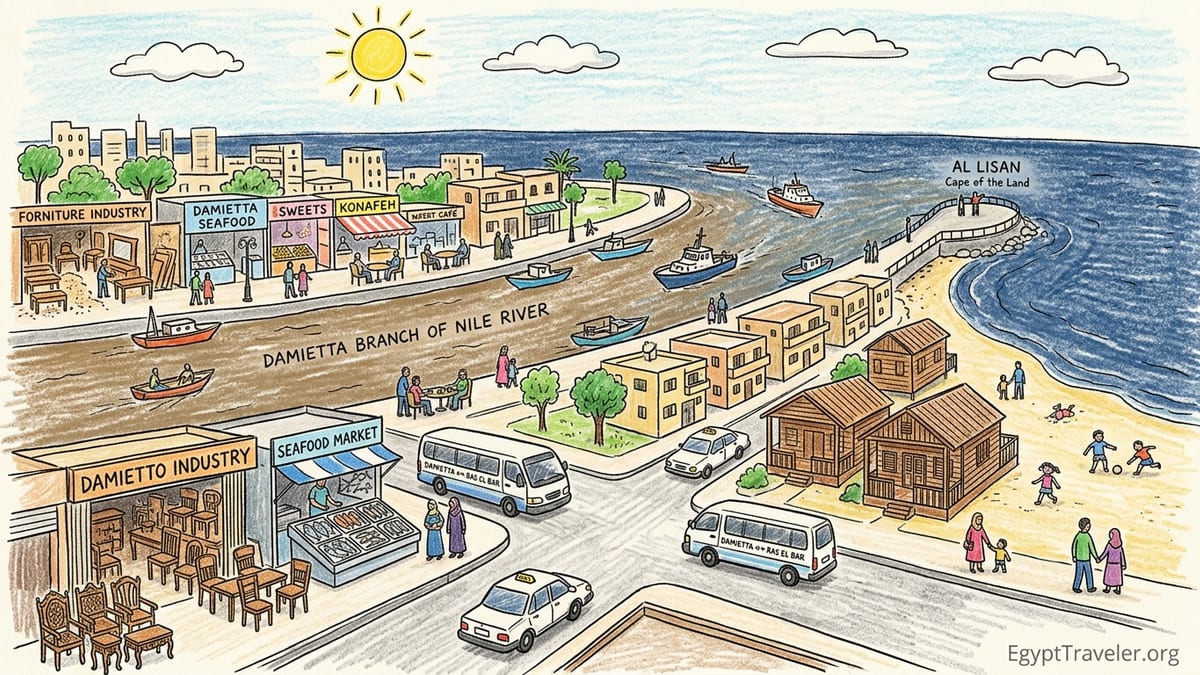
Damietta sits on the eastern branch of the Nile Delta, roughly 15 kilometers inland from the Mediterranean and a few hours’ drive north of Cairo. It has long been a strategic port and market city and today is best known across Egypt for its furniture industry, riverfront corniche and seafood. Moving north from the city, the Damietta branch flows through fertile farmland and low-lying villages before reaching Ras El Bar, a compact resort town on a triangular strip of land between river and sea.
Ras El Bar, whose name is often translated as “Cape of the Land,” is a district within Damietta Governorate and functions primarily as a summer resort. It has a small year-round population that swells dramatically during school holidays. In July and August many Cairo and Delta families move into seasonal apartments or old wooden chalets and treat the town as a weeks-long base, filling its beaches, Nile promenade and evening cafés. This strongly seasonal pattern is one of the main differences visitors notice compared with Hurghada or Sharm El Sheikh, which cater to international tourism year-round.
The key geographical feature here is Al Lisan, the sliver of land at the very tip of Ras El Bar where a concrete promenade and viewing platform mark the point where the Damietta branch of the Nile meets the Mediterranean. On a calm day you can see the brownish river water sliding into the darker sea, with small fishing boats and pilot craft cutting through the junction. For many Egyptian visitors that simple line, where river waves collide with sea swell, is the main reason to come.
Because Damietta and Ras El Bar are so close, travelers do not have to choose between a city stay and a beach holiday. You can sleep in a Nile-side business hotel in Damietta and take day trips to Ras El Bar, base yourself in a Ras El Bar apartment and head into the city for markets and furniture shopping, or split a few nights between both as part of a wider loop that might also include Port Said, Mansoura or Alexandria.
Damietta’s Corniche, Markets and Furniture Heritage
The heart of modern Damietta for visitors is the Nile Corniche, a curving riverfront boulevard lined with family cafés, sweets shops and casual restaurants. In the late afternoon, locals stroll along the promenade, buy ice cream or konafa from neighborhood patisseries and sit at outdoor tables overlooking the water as barges and small cargo boats pass. Many cafés cluster near central stretches of the corniche; visitors will find basic espresso, fresh juices and shisha rather than international coffee chains, and prices remain modest by Egyptian city standards.
Seafood is central to the local food culture. In and around Damietta, wholesale fish markets handle fresh catches from Lake Manzala, nearby fish farms and the Mediterranean, supplying small restaurants across the governorate. A traveler might visit one of the city’s well-known fish houses and order a tray of grilled mullet or sea bass, fried calamari, shrimp and rice for a price that often comes in lower than equivalent platters in Alexandria or Cairo. Portions tend to be generous, and it is common to see multi-generational families sharing big metal trays at plastic-topped tables.
Damietta is equally associated with furniture. For decades, small workshops and family-run factories have produced much of the ornate wooden furniture sold across Egypt and exported to neighboring countries. Today the sector remains a pillar of the local economy, supported by projects such as Damietta Furniture City, a purpose-built industrial zone on the edge of town with clusters of workshops, showrooms and support services. Visiting travelers will mostly encounter this industry in long streets of shopfronts displaying carved bedroom sets, dining tables and living-room suites that range from highly traditional gilded designs to restrained contemporary lines.
For visitors interested in seeing how the furniture is made, it is possible to spend a morning walking through areas where carpentry workshops are concentrated. Many operate with doors open to the street, with sawdust in the air, chisels ringing on wood and apprentices sanding chair legs on the sidewalk. Some larger showrooms, including newer brands aiming at both Egyptian and export buyers, maintain polished display floors in modern buildings along or near the corniche. Even if you are not looking to ship a bedroom set home, browsing these spaces is a window into one of Egypt’s most important craft industries.
Ras El Bar and Al Lisan: Where Nile Meets Mediterranean
Ras El Bar itself feels very different from Damietta city. The town grid is low-rise, airy and easy to walk, with wide streets lined by seasonal villas and apartment blocks, many of which are shuttered and quiet outside summer. In high season, these same streets fill with parked cars, street vendors selling roasted corn, cotton candy and sunflower seeds, and families on evening promenades, particularly along the Nile-side corniche and the sea-facing corniche on the opposite edge of the strip.
Al Lisan is the defining attraction. It is reached via the Nile corniche, which runs north until the land narrows and the river and sea draw closer together. At the tip a paved square, protective breakwaters and a simple monument mark the meeting point. Travelers often come at sunset, when the light is softer, the breeze picks up and the silhouettes of fishing boats cut across the horizon. On busy summer evenings, informal photographers offer to take souvenir shots, and food carts sell tea, roasted chickpeas and simple snacks, while loudspeakers from nearby cafés play Egyptian pop music.
Beyond Al Lisan, Ras El Bar’s beaches are broadly divided between public stretches and organized areas. In summer, rows of umbrellas and plastic sunbeds fill the main public beach, often rented by the day at prices that domestic visitors regard as reasonable compared with upscale Red Sea resorts. Families typically arrive with cool boxes and snacks, children play in the shallows and young men ride horses along the wet sand near sunset. Modest swimwear is common, though you will see everything from full-length burkinis to standard swim shorts depending on the crowd.
For a quieter experience, visitors coming outside peak months, such as late May, September or early October, may find long sections of sand almost empty, especially on weekdays. The sea here can be choppier and cooler than the sheltered Red Sea, and there are days with strong wind and current; most travelers will be more comfortable swimming near lifeguard posts or where local families have gathered. Even without swimming, long walks on the damp sand at low tide, with the line of apartment blocks behind you and the Mediterranean stretching out ahead, give a vivid sense of the Egyptian summer coast.
Practical Transport Between Damietta and Ras El Bar
One advantage of pairing Damietta and Ras El Bar is the short and straightforward journey between them. The distance is roughly 15 kilometers, and the road runs through flat agricultural land and small settlements. By car or taxi, the drive typically takes around 15 to 25 minutes depending on traffic. Ride-hailing apps are still developing in smaller Egyptian cities, so visitors will most likely use local white taxis, hotel-arranged cars or informal microbuses.
For many travelers staying in Damietta, the simplest option is to ask the hotel reception to arrange a taxi to Ras El Bar and agree on a price before departure. Fares quoted to foreign visitors are usually higher than what local residents pay but remain low in absolute terms by international standards. Some drivers will offer a return arrangement, waiting in Ras El Bar for a few hours while you walk, swim or dine before driving back in the evening. This can be worthwhile if you are visiting at busy times, when finding a taxi back from Ras El Bar may take longer.
More independent travelers may choose to use shared microbuses, which typically depart from informal stands or small terminals in Damietta and drop passengers at central points in Ras El Bar. This is the cheapest way to travel and offers a close-up view of local daily life, though you may need some basic Arabic to manage payment and confirm destinations. Buses can be crowded during peak hours, especially on summer weekends when thousands of residents head for the coast.
For those arriving from Cairo or other Egyptian cities, Damietta is the more straightforward entry point, with regular bus services operated by major ticketed companies as well as smaller operators. From Cairo’s main bus terminals, journeys to Damietta usually take around four hours depending on traffic and stops. A common pattern is to spend the first afternoon exploring Damietta’s corniche and markets, then head to Ras El Bar early the next morning for a full sea-and-river day.
Where to Stay: City Hotels, Summer Villas and Simple Guesthouses
Accommodation choices in Damietta and Ras El Bar reflect their different roles. In Damietta city, visitors will find mid-range hotels along or near the Nile Corniche that mainly serve business travelers, government visitors and families coming to buy furniture. These properties often offer river views, air-conditioned rooms, basic breakfast buffets and simple lobbies with cafés. Decor can range from dated to recently renovated, but prices are generally lower than in Alexandria or Cairo for similar levels of comfort.
Because Damietta is not a major international tourist hub, you will not find large resort complexes or global hotel chains on the scale of Hurghada or the Red Sea Riviera. Instead, expect independent Egyptian-run hotels, some of which advertise their proximity to furniture markets and workshops. For travelers planning to shop for furniture or textiles, staying in Damietta puts you close to the showrooms and makes it easy to arrange delivery or follow up with craftspeople.
Ras El Bar’s accommodation scene is heavily seasonal. The town’s traditional wooden chalets and newer apartment buildings are mostly owned by families who use them in summer and rent them out when not in use. Short-term rentals are often arranged informally through local agents, social media listings or word of mouth, though a growing number appear on international booking platforms. In high season, nightly prices can rise sharply, especially for units with clear sea or Nile views or those close to Al Lisan and the main corniches.
There are also a handful of hotels and simple guesthouses in Ras El Bar, ranging from older seafront properties with balconies over the promenade to budget-friendly backstreet inns. These tend to fill up fast during July and August and on national holiday weekends, so advance planning is wise if your dates are fixed. Outside the main summer period, however, room rates drop and it is often possible to negotiate discounts directly, particularly if you plan to stay several nights and visit midweek.
Food, Atmosphere and Summer Crowds
Damietta and Ras El Bar share a love of fish and seafood but express it in different settings. In Damietta city, seafood restaurants often sit along busy streets or just back from the Nile, with tiled floors, display counters loaded with fresh fish and fast, no-frills service. You point to the fish you want, choose whether it should be grilled, fried or baked in clay pots with vegetables, then sit down to plates of tahini, salad and warm baladi bread while it cooks. Prices vary depending on species and weight but are usually posted clearly, and many places cater to both working residents and visiting families.
In Ras El Bar, seafood and grilled meats are woven into the holiday ritual. Many families cook in their rented apartments, preparing trays of rice and fish bought from local markets, then eating together on balconies after a long beach day. Street food stands sell liver sandwiches, falafel and shawarma to evening strollers, while ice cream parlors and dessert shops stay open late, their neon signs reflecting off car windows. On busy August nights, the streets near the sea corniche can feel almost like a small festival, with music, colored lights and the constant movement of families in holiday clothes.
Crowds are a key part of the experience in high summer. Between late June and early September, particularly during school holidays and around Eid, Ras El Bar can feel packed. Traffic jams build up on access roads on Thursday afternoons as people arrive for the weekend; beach umbrellas stand almost shoulder to shoulder; and favorite cafés on both Nile and sea corniches fill every evening. For some travelers, this is precisely the appeal: a chance to immerse in Egyptian seaside culture and people-watching rather than seek solitude.
Visitors who prefer quieter conditions might choose shoulder seasons. In late spring or early autumn, temperatures are still warm enough for evening promenades and paddling in the sea but without the intense midday heat and crowds of peak summer. Damietta city remains lively year-round, but its riverfront feels more relaxed outside domestic holiday periods. At these times, travelers may find it easier to chat with café staff, linger in furniture showrooms or photograph Al Lisan with relatively few people in the frame.
How Damietta and Ras El Bar Differ from Red Sea and North Coast Resorts
Travelers who know Egypt primarily through Hurghada, Sharm El Sheikh or the modern North Coast resorts near El Alamein will find a very different mood in Damietta and Ras El Bar. The Red Sea Riviera has grown around international tourism, with large all-inclusive hotels, organized diving trips, private beaches and staff accustomed to foreign visitors. Many complexes are physically separated from surrounding towns, so guests may spend most of their stay inside resort gates, interacting mainly in English or other European languages.
By contrast, Damietta and Ras El Bar are rooted in domestic life. Hotel staff, café waiters and shopkeepers are used to dealing with Egyptians from Cairo, the Delta and other governorates, and while many younger people speak some English, services are not tailored primarily to foreign expectations. Instead of organized excursion desks, you are more likely to find local taxi drivers giving informal advice or a restaurant owner recommending a nearby fish market. This can be refreshing for travelers who want to feel part of the everyday rhythm rather than on a standard tourist circuit, though it also requires more flexibility and patience.
The physical environment is also different. The Mediterranean here is cooler and often rougher than the sheltered lagoons and reefs of the Red Sea, so snorkeling and diving are not mainstays of the local tourism economy. Instead, the focus is on swimming when conditions allow, playing on the sand, strolling along corniches and enjoying breezes after hot inland days. Rather than waterfront nightclub districts or high-end international restaurants, evening entertainment centers on simple cafés, family-oriented amusement rides and local pastry shops.
Compared with North Coast developments that feature gated compounds, golf courses and upscale beach clubs, Ras El Bar feels older and more informal. Its grid of chalets and apartments, some dating back generations, tells a story of Egyptian families returning every year to the same street rather than seasonal investors rotating through branded hotels. Damietta city, for its part, has more in common with working river and port towns elsewhere in the Mediterranean than with leisure-built resorts, making this twin destination appealing for travelers interested in how Egyptians actually live and vacation.
Planning Your Trip: Should You Stay in Damietta, Ras El Bar or Both?
Choosing where to base yourself depends on your priorities. If you are primarily interested in local industry, markets and Nile atmosphere, staying in Damietta city makes sense. A typical two-night stay might involve an afternoon and evening on the corniche, a morning visiting furniture workshops and showrooms, and a half-day trip to Ras El Bar for Al Lisan and a beach walk before returning to your Nile-side hotel. This pattern suits travelers who want city services, easy access to intercity buses and the option to continue onward to other Delta destinations.
If your priority is sea air, lazy beach time and an immersion in Egyptian summer life, Ras El Bar is the better base, especially between June and September. You could rent an apartment or book a small hotel for three or four nights, spending most of your days on the beach or strolling the corniches, then make one or two day trips into Damietta to try prominent seafood restaurants or browse furniture quarters. This arrangement offers a more relaxed feel, though getting to and from intercity buses or trains requires an extra taxi ride.
Travelers with a bit more time might choose to divide their stay. For example, you could spend one night in Damietta on arrival, two or three nights in Ras El Bar for the coastal experience, then perhaps loop toward Port Said or Mansoura before returning to Cairo. This kind of itinerary works well for visitors who have already seen Egypt’s headline sites and want to dedicate a second or third trip to the Delta and Mediterranean coast. Because tourism infrastructure here is primarily domestic, maintaining some flexibility with dates and being willing to adjust plans based on local advice can enhance the experience.
Whichever base you choose, it is worth remembering that Damietta and Ras El Bar are not polished resort environments. Sidewalks can be uneven, traffic can feel chaotic, and services such as card payments or online booking are less consistent than in major tourist centers. At the same time, many visitors remember the friendliness of café owners, the taste of simply grilled fish and the sight of the Nile widening into the sea at Al Lisan as highlights of their trip. For travelers seeking a grounded, regionally focused experience of Egypt, these two destinations reward the effort.
The Takeaway
Damietta and Ras El Bar offer a window into a part of Egypt that most first-time visitors never see: a working Nile Delta city anchored by craft and commerce, and a long-loved domestic resort town defined by family rituals and the meeting of river and sea. They are close enough to combine in a short trip yet distinct enough to provide rich contrasts in rhythm and atmosphere.
Where Egypt’s Red Sea and North Coast resorts are designed around international leisure expectations, this corner of the Delta invites travelers to adapt instead to local patterns. Days follow the heat and the light, with late breakfasts, midday rest, and social evenings on the corniche. Furniture workshops and fish markets replace temple complexes and museum galleries as focal points of exploration.
For visitors willing to trade polished resort infrastructure for authenticity, engaging conversations and a strong sense of place, Damietta and Ras El Bar can be a rewarding addition to a wider Egyptian journey. Whether you come for a single day to watch the Nile meet the Mediterranean at Al Lisan, or plan several nights to explore both city and shore, you will leave with a clearer picture of how the country’s great river shapes not only its monuments but also its modern coastal life.
FAQ
Q1. Is Damietta or Ras El Bar better for a first-time visitor to the area?
For a short first visit, many travelers base in Ras El Bar for the sea air and holiday atmosphere, then make a day trip into Damietta for its corniche, markets and furniture showrooms. Those more interested in city life and industry might reverse the balance and sleep in Damietta instead.
Q2. How much time should I plan for Damietta and Ras El Bar together?
A minimum of two full days allows a basic overview, but three to four days is more comfortable. With three nights you can spend one focused day in Damietta, one enjoying Ras El Bar’s beaches and Al Lisan, and a flexible day to revisit whichever place you preferred.
Q3. Is it easy to travel between Damietta and Ras El Bar without a car?
Yes. Local taxis connect the two in about 15 to 25 minutes, and shared microbuses run frequently during the day. Most visitors find it straightforward to arrange a round-trip taxi through their hotel or by negotiating with a driver on the street.
Q4. When is the best time of year to visit Ras El Bar?
For the full domestic summer experience, late June through August is peak season, with crowded beaches and lively evenings. For milder weather and fewer crowds, late May, September and early October offer a more relaxed version of the resort while still providing warm temperatures.
Q5. Are there international-style resorts or major hotel chains in Damietta and Ras El Bar?
No. Accommodation is dominated by independent Egyptian-run hotels in Damietta and apartments, chalets and small guesthouses in Ras El Bar. Travelers expecting large all-inclusive complexes like those in Hurghada or Sharm El Sheikh will not find them here.
Q6. Is the area suitable for non-Arabic-speaking travelers?
Many younger locals and hotel staff have some English, and basic tourism interactions are usually manageable. However, signage, menus and transport information skew toward Arabic, so patience, a translation app and a willingness to gesture and smile go a long way.
Q7. Can I combine Damietta and Ras El Bar with more famous Egyptian destinations?
Yes. Many travelers visit after time in Cairo or Alexandria, using long-distance buses to reach Damietta and then connecting onward to other Delta cities or back to the capital. The area works especially well as part of a second or third trip to Egypt focused on the north.
Q8. What should I wear on Ras El Bar’s beaches?
Local norms lean modest. Many women wear full-length swimwear or long shorts and tops, while men usually wear standard swim shorts. Western-style bikinis are less common but may be seen in more mixed or private settings. When in doubt, slightly more coverage is generally appreciated.
Q9. Is swimming safe where the Nile meets the Mediterranean at Al Lisan?
The exact junction point at Al Lisan is more a viewing spot than a swimming area, as currents and boat traffic can be significant. Most people come to walk, take photographs and enjoy the breeze, then swim on the main sea beaches where lifeguards and other bathers are present.
Q10. Is Damietta mainly worth visiting for furniture shopping?
Furniture is a major draw, especially for Egyptians furnishing homes, but Damietta also offers a pleasant Nile waterfront, strong seafood scene and an interesting look at a working Delta city. Even travelers not planning major purchases often find the visit worthwhile for its atmosphere and local life.