


Linking the Pyramids of Giza with a Nile cruise between Luxor and Aswan is the classic first-timer route through Egypt. With smart use of domestic flights, a handful of well-chosen hotel nights and a four or five day sailing, you can see the Cairo skyline from a rooftop in downtown, walk inside a pyramid, stand among the columns of Karnak and watch feluccas drift past in Aswan, all within about ten to twelve days. This guide shows how to put those pieces together in practice, using real-world schedules, typical prices and example itineraries that work now.
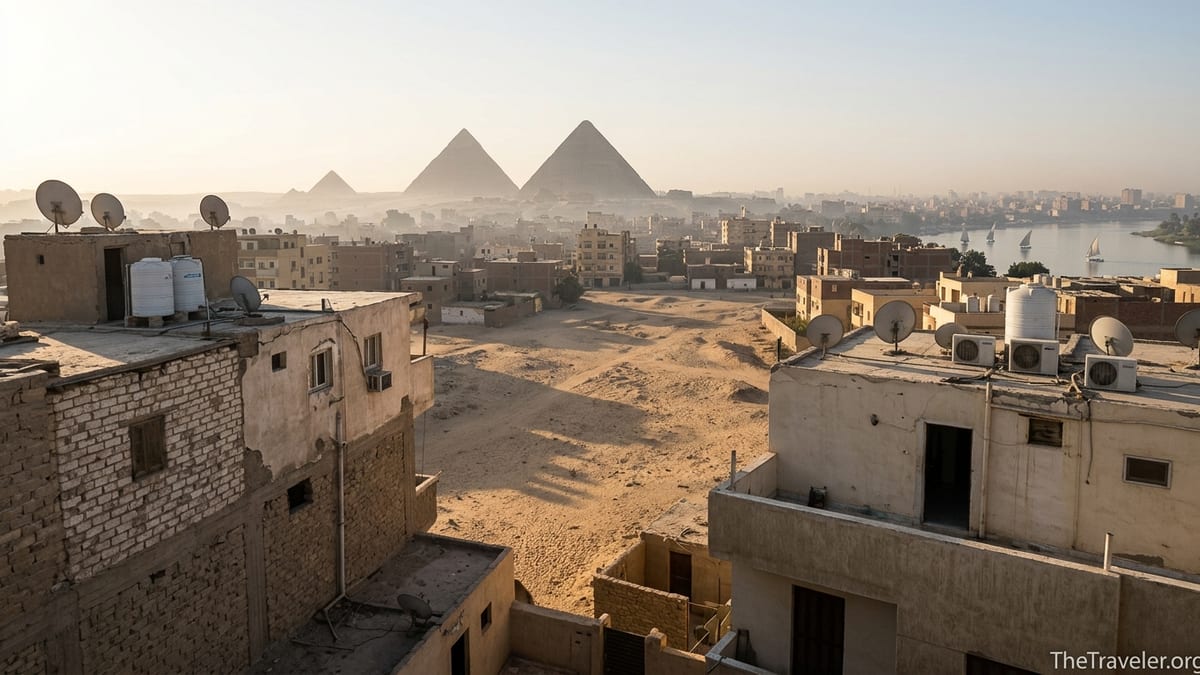
Why Combine Cairo, Giza and a Luxor to Aswan Nile Cruise
For a first trip to Egypt, combining Cairo and Giza with a Luxor to Aswan Nile cruise delivers a concentrated version of the country’s highlights without trying to see everything. In practical terms, it means two bases on land, Cairo and either Luxor or Aswan, joined by a domestic flight, with your hotel moving with you for several days while you cruise the Nile. That structure helps you handle Egypt’s heat, distances and occasional travel fatigue more comfortably than a string of one-night hotel stays.
On the ground, the Pyramids of Giza and the Egyptian Museum or Grand Egyptian Museum in Cairo cover the Old Kingdom and the golden mask era that most people dream about before they book a ticket. Luxor and Aswan add the New Kingdom temples and tombs that are just as impressive, from Karnak’s forest of columns to the Valley of the Kings and Philae Temple. The Nile in Upper Egypt is also calmer and more scenic than the busy riverfront in Cairo, so the cruise days naturally slow your pace after the energy of the capital.
Financially, a cruise can be surprisingly good value once you factor in that it includes full-board meals, guided temple visits and the equivalent of three or four hotel nights. In 2026, mid-range four night cruises between Luxor and Aswan commonly price from around 450 to 700 US dollars per person in a double cabin, depending on season and ship category, with five star and small dahabiya sailings running higher. When you compare that to booking separate hotels, transfers and guides, it often makes sense as the backbone of an Egypt itinerary.
Most importantly, this combination flows well in a ten to twelve day window, which is how long many travelers can realistically spare. Two or three nights in Cairo and Giza, followed by a four night Luxor to Aswan cruise and either one or two extra nights on the river, plus an optional three night Red Sea finale, produces an itinerary that feels rich but not rushed.
How Long to Spend: Ideal Trip Lengths and Budget Ranges
The most workable length for a first Egypt trip that includes Cairo, Giza and a Luxor to Aswan cruise is ten to twelve nights on the ground, not counting long-haul flights. At the short end, eight nights can work if you keep a tight schedule and skip a Red Sea extension. At the long end, fourteen nights allows slower days in Cairo and extra time by the sea.
A typical ten night structure might look like this in outline. Night 1 and 2 in Cairo or Giza, Night 3 on a Cairo hotel after a full day in the city, Nights 4 to 7 on a four night Luxor to Aswan cruise, Night 8 in Aswan, and Nights 9 and 10 at a Red Sea resort such as Hurghada or El Gouna before you fly out. If you prefer not to add the coast, you can reallocate those last nights to Cairo and Luxor for a deeper city and temple focus.
For budgeting, visitors who choose pleasant but not lavish accommodation can often keep a ten to twelve day trip in the range of 1,800 to 2,800 US dollars per person excluding international flights, based on sharing a room or cabin. That would typically mean a mid-range Cairo hotel around 80 to 150 US dollars per night, a four night cruise in the 500 to 800 US dollar bracket per person including most sightseeing, domestic flights around 60 to 140 US dollars per leg booked in advance, and a Red Sea hotel starting from roughly 70 US dollars per room per night in shoulder seasons. Upscale properties in Giza, on the Nile and on the coast can double or triple those nightly figures.
Season influences both price and comfort. October to April is the prime window for this itinerary, with daytime highs in the 20s or low 30s Celsius in Upper Egypt rather than the intense heat of high summer. Christmas, New Year and Easter weeks sell out earliest and carry the highest cruise rates. Travelers willing to come in late September or early May can sometimes secure lower prices while still avoiding the most oppressive temperatures.
Domestic Flights and Logistics Between Cairo, Luxor and Aswan
The backbone of any Cairo plus Nile cruise itinerary is the domestic flight network. In 2026, Egypt’s main internal routes for this trip are Cairo to Luxor and Cairo to Aswan, both operated primarily by EgyptAir and its subsidiaries. Flight times are around one hour to Luxor and one hour and twenty minutes to Aswan. Morning and evening departures are common, which gives you flexibility when linking flights to cruise embarkation and disembarkation times.
For example, if you plan a four night Luxor to Aswan cruise that embarks in Luxor on a Monday afternoon, you might book a Sunday evening flight from Cairo to Luxor. That gives you a buffer in case of delays and lets you see Luxor Temple at night. On the last day, if your ship arrives in Aswan on Friday morning, you can often connect to a late afternoon Aswan to Cairo flight, arriving in the capital in time for dinner and an overnight before an international departure the next day.
Fares vary by season and how far ahead you book, but return tickets between Cairo and either Luxor or Aswan are frequently available in the range of 120 to 250 US dollars per person. Many travelers choose to fly into one Upper Egyptian city and out of the other to avoid backtracking. A common pattern is Cairo to Luxor by air, cruise upstream to Aswan, then Aswan to Cairo or direct onward to a Red Sea hub by road. Some tour operators include domestic flights in their packages, which can simplify logistics if you prefer a single point of contact.
Because Nile cruise departures are tied to specific weekdays, it is important to check cruise dates before locking in domestic flights. Many ships sail Luxor to Aswan on a Monday embarkation for four nights, with others starting on Saturday or Thursday. Once your cruise dates are set, you can add a Cairo to Luxor flight that arrives at least half a day before boarding and choose a return leg that leaves several hours after scheduled disembarkation from Aswan.
Day-by-Day Example: 10-Day First-Timer Itinerary
The following sample ten day itinerary shows how a first trip might unfold in practice for travelers flying into Cairo. It assumes a four night Luxor to Aswan cruise starting on a Monday, but the same rhythm works with other departure days by shifting the dates.
Day 1: Arrive in Cairo. Check into a centrally located hotel near Tahrir Square or on the island of Zamalek. After an overnight flight, many visitors keep this afternoon light, perhaps with a short walk along the Nile corniche and an early dinner at a simple Egyptian grill or koshari restaurant before turning in.
Day 2: Giza Plateau and Old Cairo. Arrange a private guide and vehicle or join a small group tour that starts early for the Pyramids of Giza. As of 2025, standard tickets for foreign adults to enter the plateau cost in the low hundreds of Egyptian pounds, sold separately from optional entry to the Great Pyramid or other interiors. Plan three or four hours to view the pyramids, approach the Sphinx and, if you wish, go inside one of the pyramids with a timed ticket. In the afternoon, head back into Cairo for a walk through the alleys of Coptic Cairo or Khan el Khalili market.
Day 3: Museum morning and flight to Luxor. Spend the morning at the Egyptian Museum in Tahrir or, if your travel dates fall after the full public opening, the Grand Egyptian Museum near Giza. Aim to reach the airport by mid-afternoon for an early evening Cairo to Luxor flight. In Luxor, either overnight in a simple guesthouse on the West Bank or check in directly to your cruise ship if embarkation is open the night before sailing.
Day 4 to Day 7: Four night Luxor to Aswan cruise. A typical schedule includes a Visit to Karnak and Luxor Temples, West Bank tour of the Valley of the Kings, Hatshepsut’s temple and the Colossi of Memnon, sailing via Esna to Edfu and Kom Ombo, and arrival in Aswan for Philae Temple and the High Dam. Most ships include a licensed Egyptologist guide and all main temple entrance fees in the cruise price. Cabins function as your hotel room on the river with air conditioning, private bathrooms and full board meals.
Day 8: Aswan and optional Abu Simbel. After disembarking in Aswan, spend a night at a Nile-facing hotel or guesthouse. Many travelers use this day for an early morning excursion to Abu Simbel, either by a short domestic flight or by road in a convoy, returning in the early afternoon. In the evening, a sunset felucca ride around the islands or a walk through Aswan’s souq rounds out the day.
Day 9 and Day 10: Red Sea extension or return to Cairo. For a Red Sea finale, arrange a private car transfer or combined bus and flight to Hurghada or El Gouna on the coast and spend two nights snorkeling, diving or simply resting by the water before flying home. If you prefer to keep the trip focused on antiquities, fly back to Cairo on Day 9, add another museum or neighborhood walk, and keep Day 10 free for last-minute shopping and a relaxed departure.
Choosing a Nile Cruise: Length, Direction and Ship Type
Most first-time visitors opt for a three or four night cruise segment between Luxor and Aswan. Four nights, which gives you five calendar days onboard, is the sweet spot because it includes all the major temple stops while leaving time for a leisurely afternoon or two on the sundeck. Three night versions compress the schedule and may feel rushed, especially if you want plenty of time inside the Valley of the Kings or to photograph Edfu and Kom Ombo at different times of day.
The most traditional direction is Luxor to Aswan, sailing upstream with the current against you and arriving at your southernmost point near the end of the itinerary. This direction tends to pair well with a Cairo first, cruise in the middle, Red Sea or extra Aswan time at the end structure. Aswan to Luxor sailings also exist and can be convenient if your flights align better that way, but they are less common on some ships.
Ship type will shape the feel of your cruise days. Larger standard Nile cruise ships resemble river hotels with perhaps 40 to 80 cabins, a rooftop pool, buffet restaurant and lounge. They are widely available in different categories from basic three star to polished five star, and in 2026 many travelers report paying under 600 to 800 US dollars per person for a four night mid-range option including most sightseeing and meals. Smaller dahabiyas, which are elegant sailing boats with fewer cabins and a more intimate atmosphere, typically cost more per night but trade the bustle of big ship life for quieter moorings and slower travel.
When comparing operators, look closely at what is included. Some advertise a low bare cruise rate and then add mandatory sightseeing packages, guide fees or service charges later. Others roll everything into a single per person price, including transfers between airport, hotel and ship. Reading recent traveler reports and asking precise questions about inclusions helps you avoid unexpected costs once onboard.
Where to Stay in Cairo, Giza, Luxor and Aswan
Your choice of hotels at each end of the cruise has a big impact on how the itinerary feels. In Cairo, many first-time visitors divide their nights between downtown or Zamalek and the Giza side. A central hotel near Tahrir Square places you within a short drive of the Egyptian Museum, the Nile corniche and several established restaurants, and it reduces transfer times to Cairo International Airport. A night or two in Giza, particularly in small guesthouses with rooftop terraces facing the pyramids, trades the city buzz for direct sunrise and sunset views of the plateau.
Budget ranges in Cairo and Giza are wide. Simple guesthouses a short walk from the Giza entrance can start under 60 US dollars per night for a double room, often including breakfast. Well-known chain hotels in downtown Cairo or on the Giza corniche can range from around 150 to well above 300 US dollars per night depending on brand, room type and season. For many travelers, mixing one or two splurge nights with more modest stays keeps the average nightly cost manageable.
In Luxor, you can choose between the East Bank, where most cruise docks, shops and restaurants are located, and the quieter West Bank, which feels more rural and puts you closer to the tombs and temples beyond the river. Many travelers spend pre or post-cruise nights at small West Bank guesthouses overlooking sugarcane fields, then step into the more structured environment of a cruise ship once the itinerary begins. Aswan tends to have an even more relaxed atmosphere, with several mid-range hotels lining the corniche and a handful of island guesthouses that look directly onto the Nile.
If you plan a Red Sea extension, Hurghada and nearby El Gouna offer a range of all-inclusive resorts and smaller hotels. Typical mid-range properties might charge from about 80 to 150 US dollars per room per night, with full-board and all-inclusive options incurring higher, but still often reasonable, rates relative to what many travelers are used to in Europe or North America.
Optional Red Sea Extensions: Hurghada and El Gouna
Adding a Red Sea finale after a Nile cruise is particularly attractive for travelers who enjoy snorkeling, diving or simply relaxing by clear water. Hurghada, one of the largest resort areas on the Red Sea coast, and El Gouna, a purpose-built lagoon town slightly to the north, are the most common choices for those coming off a Luxor or Aswan cruise. Both have frequent flight connections to Cairo and established transfer routes from Upper Egypt.
In practical terms, the easiest routing from Aswan is usually by road north to Hurghada, a long but straightforward day that many tour operators arrange in private cars or air-conditioned minibuses. From Luxor, the cross-country drive to the coast is shorter, and some Nile cruise packages already include onward transfer to Hurghada at disembarkation. Once at the Red Sea, you can settle into a resort schedule of boat trips to local reefs, waterfront dinners and unstructured downtime after early temple starts.
Guests who prefer to keep flying rather than drive can route back through Cairo. One common pattern is Aswan to Cairo by morning flight, then Cairo to Hurghada or Sharm El Sheikh later in the day on a separate ticket. This introduces an extra airport change but can work well for those on tighter timetables or who prefer to avoid long road transfers. In all cases, padding your schedule with an extra overnight before your international departure reduces stress if a domestic leg is delayed.
For many, three nights on the Red Sea is enough to decompress without extending the trip too far. Divers might opt for four or five nights to allow for multiple dive days and appropriate surface intervals before flying. Non-divers often find that two full days of sea and sun after a busy cultural program is exactly the right balance.
The Takeaway
Linking Egypt’s headline sights into a single, logical route is less complicated than it first appears. By treating Cairo and Giza as one cluster, Luxor and Aswan plus the cruise as a second, and any Red Sea time as an optional third, you can build a ten to twelve day trip that never feels like a relay race. Domestic flights knit the pieces together in under ninety minutes, while a four night cruise acts as both your hotel and your transport between the great temple cities of Upper Egypt.
In real-world terms, the most resilient itineraries are those that respect the weekly rhythms of Nile cruise departures, leave buffers around flight days and avoid trying to see every site listed in a guidebook. Spending more time at fewer locations, such as an unhurried morning among the pyramids, a long afternoon in the Valley of the Kings or a sunset from the deck in Aswan, often yields better memories than racing between stops. With realistic expectations around cost, climate and pace, a first journey that combines the pyramids and a Nile cruise can feel both richly layered and surprisingly manageable.
FAQ
Q1. How many days do I need for Cairo, Giza and a Luxor to Aswan Nile cruise?
Most first-time visitors find that ten to twelve days on the ground works well, with two or three nights in Cairo and Giza, four nights on a Nile cruise, and one or two extra nights in Luxor, Aswan or at the Red Sea.
Q2. Is it better to cruise Luxor to Aswan or Aswan to Luxor?
Both directions work, but Luxor to Aswan is the more traditional and widely available option, and it fits neatly between a Cairo start and an Aswan or Red Sea finish.
Q3. How far in advance should I book my Nile cruise?
For travel in peak months such as late October, November, February and March, booking three to six months ahead is sensible, especially if you want a particular ship or a dahabiya with limited cabins.
Q4. What is a realistic budget for a mid-range Egypt itinerary with a Nile cruise?
Excluding international flights, many travelers spend roughly 1,800 to 2,800 US dollars per person for ten to twelve days, including mid-range hotels, a four night cruise, domestic flights, guides and entrance fees.
Q5. Are domestic flights between Cairo, Luxor and Aswan reliable?
Schedules can shift, but the main routes are frequent and generally reliable. It is still wise to leave several hours between a domestic flight and an onward international departure.
Q6. Do I need a guide, or can I visit temples and pyramids on my own?
You can buy entrance tickets and visit independently, but many travelers find that hiring a licensed Egyptologist guide, either privately or through a cruise package, adds significant context and helps navigate logistics.
Q7. Is it safe to drink the water and eat street food on this route?
Tap water is not recommended for drinking. Most visitors stick to bottled or filtered water and choose busy, well-regarded food stalls and restaurants to reduce the risk of stomach upsets.
Q8. When is the best time of year for a Nile cruise?
October to April offers the most comfortable temperatures, with particularly pleasant weather in November and March. Summer can be extremely hot in Luxor and Aswan.
Q9. Can I add the Red Sea without extending my trip too much?
Yes. Two or three nights in Hurghada or El Gouna after your cruise is usually enough to enjoy the water and decompress before flying home, and it fits easily into a ten or twelve day schedule.
Q10. Should I keep cash on hand, or will cards be widely accepted?
Major hotels and many cruise ships accept credit cards, but it is still useful to carry local currency for tips, small shops, taxis and entrance fees where card facilities may be limited.