


Planning a trip to Egypt today means choosing from a crowded menu of options, from all-inclusive escorted tours that bundle Cairo, Luxor and Aswan to flexible Nile cruises and laid-back Red Sea resort weeks. The right choice depends less on a single “best” way to see Egypt and more on your appetite for independence, your budget and how deeply you want to explore beyond the pyramids. This guide compares the main styles of Egypt tours now on offer, with real-world examples of itineraries and prices, so you can decide when it makes sense to book an organized trip and when you can confidently go it alone.
Escorted Egypt Tours: Maximum Convenience, Minimum Admin
Escorted Egypt tours are the classic first-timer choice. A typical 10 to 14 day itinerary combines several nights in Cairo with visits to the Giza Plateau and the Egyptian Museum, a short domestic flight south for a Nile cruise between Luxor and Aswan, and sometimes an extension to Alexandria or the Red Sea. You travel in a fixed group, usually 15 to 35 people, with an Egyptologist guide and a tour manager who shepherds you through airports, hotel check-ins and site entrances. For many travelers, that hand-holding is worth paying for in a country where language, tipping and bargaining can feel intimidating.
Pricing for mid-range escorted tours that include a Nile cruise generally starts around 2,000 to 3,000 US dollars per person for about 10 days in shoulder seasons, with premium brands charging 4,000 dollars or more, especially for 5-star cruise boats and high-end Cairo hotels. Inclusive pricing usually covers domestic flights, most meals on the cruise, entrance fees to key sites like the Valley of the Kings and onboard tipping pools. You still need cash for personal tips, some lunches and extras such as entry to the pyramids’ inner chambers, hot air balloon rides over Luxor or an Abu Simbel side trip.
This format makes sense if you want a “one and done” Egypt experience without wrestling with timetables or aggressive touts. For example, a typical university alumni tour running in 2025 bundles four nights in Cairo, four nights on a Nile cruise and several days of additional touring for a price well above what a backpacker would pay, but with door-to-door airport transfers, luggage handling and curated dining. Retirees, travelers with mobility concerns and those nervous about safety or logistics often find the reassurance of an escorted group worth the premium.
The main trade-off is flexibility. Escorted groups move on tight schedules, leaving the Giza pyramids after two hours even if you wish you had four, or spending a long morning in a perfumery demonstration that you might have skipped on your own. You are tied to group departure dates and may have limited say over hotel categories beyond “standard” or “deluxe” packages. If you value independence and lingering in places that speak to you, a private or small-group trip could be a better fit.
Private Tours: Tailored Itineraries for Couples, Families and Friends
Private tours sit between escorted trips and fully independent travel. You still book a package with a local operator or international brand, but the vehicle and guide are just for your party. This model is common for 7 to 10 day Cairo and Luxor packages, where a couple might have three nights in Cairo, fly to Luxor for sightseeing and perhaps do a short cruise or stay in a Nile-side hotel, before flying back to Cairo. A driver and licensed guide meet you at each airport and accompany you on day tours to sites like Saqqara, Karnak and the Valley of the Kings.
Pricing varies widely with hotel standard and season, but a realistic starting point for a custom 8 to 10 day private tour, including domestic flights and some meals, is often in the range of 1,800 to 3,000 US dollars per person for two people sharing, with per-person costs dropping if you are a family or group of four or six. Local Egyptian agencies can sometimes quote lower prices than global brands for similar itineraries, particularly if you are willing to stay in locally run 4-star hotels in areas like Giza, Zamalek or Luxor’s East Bank instead of international chains.
Private touring is particularly attractive for travelers who care about pacing. If you know you want a full half day inside the Egyptian Museum or the new Grand Egyptian Museum once it is fully open to the public, you can build that in. If you are traveling with children, a private guide can adapt to shorter attention spans, break up temple days with felucca sails on the Nile or pool time, and adjust timings to avoid midday heat. Families often choose private drivers between Luxor and Hurghada or Marsa Alam on the Red Sea, combining ancient sites with beach downtime in a way that would be cumbersome with a fixed group.
The main risks with private tours are inconsistency and research time. Operator quality ranges from excellent Egyptologist-run outfits to bare-bones agencies that quote low prices but outsource to sub-contractors, leading to last-minute guide switches or dated vehicles. It is worth reading recent trip reports and looking for clear, written inclusions around tipping, domestic flight times and which archaeological sites are covered. Asking for sample daily schedules before paying a deposit can avoid disappointment later.
Small-Group Trips: Social Travel Without the Coach Crowds
Small-group tours, generally capped at 12 to 18 travelers, attempt to balance the social side and logistical ease of an escorted trip with a bit more flexibility and authenticity. These tours often use centrally located boutique hotels in Cairo and smaller vessels or premium decks on larger Nile cruise ships. A sample 9 day small-group program might include two nights in Cairo, a flight to Aswan, a three or four night cruise to Luxor and a final night back in Cairo before departure.
Because group size is smaller, there is more opportunity to ask questions at sites, linger for photography and adjust the schedule when weather or crowds dictate. For example, a small group might switch its Luxor West Bank visit to an early-morning start if the forecast predicts extreme heat, or add a spontaneous stop at a lesser-known site such as Medinet Habu if the group is particularly interested in temple reliefs. Many small-group companies also weave in street food tastings in downtown Cairo or walks through less touristy neighborhoods like Garden City.
In price terms, small-group offerings can be comparable to or slightly higher than larger coach tours, especially if they emphasize higher-end cruise boats and hotels. Expect prices often in the 2,500 to 4,000 US dollar range for around 9 to 12 days, depending on whether premium extras like internal flights in business class or special-access tours inside tombs are included. For solo travelers, these tours can significantly reduce costs compared to booking a purely private itinerary, because hotel rooms can be matched on a twin-share basis or single supplements kept modest.
This style works well if you enjoy meeting other travelers, but still want enough intimacy to feel you can shape the experience. It is for the solo traveler who does not want to haggle over every taxi in Cairo, or the couple who want some peers to share a glass of wine with on the Nile deck at sunset. If you bristle at fixed schedules, however, even a small group may occasionally feel constraining, particularly on busy days that combine multiple major sites.
Nile Cruise Tours: The Spine of Most Egypt Itineraries
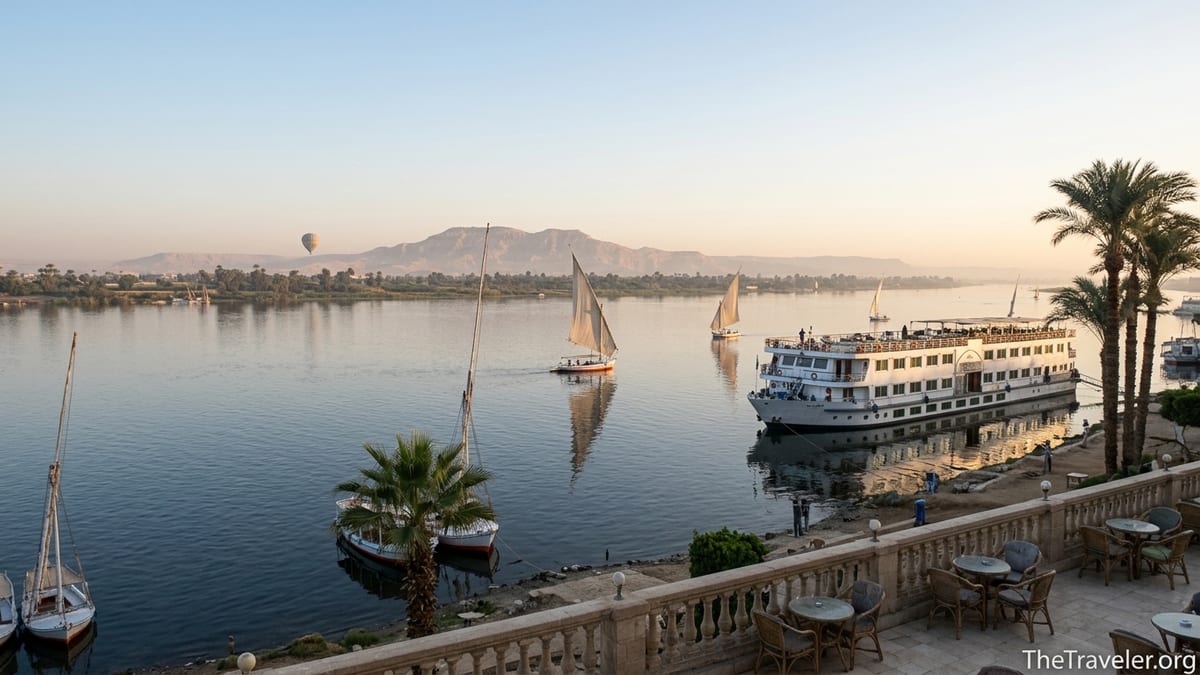
A Nile cruise between Luxor and Aswan remains one of Egypt’s signature experiences. The most common format is a four night, five day sailing, either Luxor to Aswan or the reverse, with stops at Esna, Edfu and Kom Ombo along the way. Onboard, you typically have a full board arrangement: buffet breakfast, lunch and dinner, plus afternoon tea, with additional charges for drinks. Days are structured around early-morning site visits followed by sailing, with time on the sun deck watching rural life unfold along the riverbanks.
Prices for mid-range Nile cruises have a wide spectrum. Recent examples from regional travel providers suggest that four night cruises on 5-star standard boats can start around the equivalent of 450 to 600 US dollars per person in low season for a double cabin, rising to over 800 dollars or more in peak periods, excluding domestic flights. Premium or boutique vessels, including intimate dahabiya sailing boats with fewer than a dozen cabins, can charge 300 to 500 dollars per person per night, especially for charters, putting a three night sailing in the 900 to 1,500 dollar range before flights.
The advantage of a cruise-based tour is that your hotel moves with you. Instead of packing and unpacking in Luxor and Aswan, you sleep in the same cabin and let the temples come to you. This works particularly well for travelers who appreciate a slower pace, such as older visitors or those recovering from long-haul flights. Operators usually bundle shared guiding and transport to sites like Philae Temple, the High Dam, Kom Ombo Temple and the West Bank tombs. Some itineraries also offer optional overland or flight excursions to Abu Simbel from Aswan.
However, a cruise is not the only way to experience Upper Egypt. Staying in fixed hotels in Luxor and Aswan can give you quieter evenings and more freedom to choose your own restaurants, especially if you enjoy exploring local eateries or sitting in riverfront cafes. A hybrid approach is popular: spend two or three nights in a Nile-side hotel in Luxor, then join a three or four night cruise, or vice versa. If you are particularly sensitive to crowds or prefer ultra-flexible schedules, you might favor land-based stays with private drivers instead of a fully packaged cruise tour.
Red Sea Extensions: Hurghada, Sharm el Sheikh and Beyond
Many Egypt itineraries now finish with a Red Sea extension, trading hieroglyphs for house reefs. The most popular add-ons are Hurghada and nearby resorts like El Gouna and Soma Bay on the mainland coast, and Sharm el Sheikh or Dahab on the Sinai Peninsula. After several days of intense sightseeing in Cairo and Upper Egypt, a three to five night stay at an all-inclusive resort with pools, dive centers and private beaches can be a welcome contrast.
Packages that combine Nile cruising with Red Sea stays are widespread. For example, a two week program might include three nights in Cairo, a four night Nile cruise between Luxor and Aswan, one night in Luxor, then a transfer by road to Hurghada for five nights at a 4-star or 5-star resort, before flying back to Cairo. Pricing for such combined packages in 4-star hotels and 5-star cruise categories can run from roughly 1,400 to 2,000 US dollars per person from Cairo, before international flights, with upgrades to high-end beach resorts raising costs further.
For independent travelers, booking the Red Sea portion separately is straightforward. Domestic flights between Cairo and Hurghada or Sharm el Sheikh are frequent and often priced in the range of 70 to 150 US dollars one way for foreign visitors, although fares fluctuate with demand and season. Private transfers between Luxor and Hurghada typically take around four to five hours by road, arranged through hotels or local drivers, giving you the option to end a Luxor stay with a direct hop to the beach instead of looping back via Cairo.
Security-wise, many Red Sea resorts operate as self-contained enclaves with visible checkpoints and restricted access, which can feel reassuring but also insular. Official travel advisories periodically urge a high degree of caution in certain parts of the country, yet also acknowledge that key tourist areas such as Luxor, Aswan and major Red Sea resorts have heavy security around hotels and archaeological sites. Sensible precautions such as avoiding isolated areas at night, booking reputable dive or boat operators and keeping abreast of the latest government advice from your home country remain important.
Cairo and Luxor City Packages: Urban Egypt in Focus
Not every trip needs to include a cruise or the Red Sea. City-focused packages that bundle Cairo, Giza and Luxor offer dense cultural immersion in a shorter time frame, often six to eight days. A typical 7 day city package might include three nights in Cairo for the pyramids, Saqqara and Islamic Cairo, followed by a flight to Luxor for three nights exploring the West Bank tombs, Karnak Temple and Luxor Temple, plus an optional hot air balloon ride or day trip to nearby sites.
These packages are often priced lower than cruise-inclusive tours because they use hotels throughout. For example, a mid-range operator might quote around 1,200 to 1,800 US dollars per person for a week-long Cairo and Luxor itinerary with 4-star accommodation, breakfast, airport transfers, domestic flights and guided day tours. If you choose local guesthouses or 3-star hotels, especially in shoulder season, you may be able to assemble a similar week with a local agency or DIY bookings for closer to 800 to 1,000 dollars in ground costs, plus flights.
City packages work well for travelers who prefer to settle into a place and return to the same hotel each night. In Cairo, staying in areas like Downtown, Zamalek or near the Giza Plateau allows you to explore cafes, bookshops and local restaurants in the evenings, rather than being confined to a cruise ship dining room. In Luxor, Nile-front hotels on the East Bank or smaller guesthouses on the West Bank give very different vibes. A package with a private guide can help you navigate ticket systems and choose which tombs to prioritize among the many options in the Valley of the Kings and surrounding necropolises.
If you only have a week and do not care about the Red Sea, focusing on Cairo and Luxor often yields a richer experience than racing through multiple cities. You can spend a full morning at Saqqara’s Step Pyramid complex without glancing nervously at a group departure time, or linger at sunset inside Luxor Temple as the lights come on. Whether you book a city package with a tour company or DIY with selective day tours, this style suits travelers who value depth over breadth.
Independent Travel in Egypt: Who It Suits and What to Expect
Independent travel in Egypt has become more common, especially among experienced travelers and budget-conscious visitors. The core tourist route of Cairo, Luxor, Aswan and the Red Sea is well-trodden, with frequent domestic flights, long-distance trains and buses, plus ride-hailing apps in major cities. It is increasingly feasible to book your own hotels, flights and day tours online, then assemble a loose itinerary with a mix of guided and unguided days.
Costs can be lower if you are comfortable piecing things together yourself. For example, you might find a Nile cruise by contacting a boat or booking platform directly, paying perhaps 350 to 600 US dollars per person for a basic 3 or 4 night package in low or shoulder season, then arrange your own Cairo to Luxor or Aswan flights separately. In Cairo and Luxor, organizing private drivers and licensed guides on a day-rate basis can be cheaper than a packaged tour, particularly when splitting costs between two or more travelers.
That said, independent travel in Egypt comes with frictions that do not exist to the same degree in some other destinations. Street-level touts around popular sites, overpricing of taxis for foreigners, variable standards on some trains and occasional last-minute schedule changes can be tiring. Solo travelers, especially women, may encounter persistent attention or unwanted offers of help, although many report that firm boundaries, modest dress and pre-booked transfers reduce stress significantly.
A hybrid model often works best. You can book your own flights and hotels, then reserve targeted tours where expertise and logistics really matter: a full-day guide in Cairo for the pyramids and museum, a 2 day private guide in Luxor, and a fully organized Nile cruise with excursions included. For the rest of your time, you can wander Khan el-Khalili market, visit contemporary galleries in Cairo, or simply sit with a coffee overlooking the Nile, all on your own schedule.
When Organized Touring Is Worth Booking
Organized tours, whether escorted, small-group or private, are most valuable when they meaningfully reduce friction or unlock experiences you could not easily organize yourself. Egypt’s concentration of world-class archaeological sites, combined with desert climate and busy urban environments, means there are several scenarios where paying for structure makes sense. Travelers arriving on tight schedules, such as a 9 or 10 day vacation from North America, often benefit from having airport transfers, domestic flights, cruise arrangements and key site visits pre-planned so they can focus on the experience rather than logistics.
Age, mobility and travel style are also important. If your party includes older relatives, young children or anyone who tires easily in the heat, a private or small-group tour with air-conditioned vehicles, flexible sightseeing times and guaranteed shade and rest stops can dramatically improve comfort. Similarly, if you are particularly interested in in-depth explanations of hieroglyphs or ancient history, an Egyptologist guide who accompanies you throughout will add context you might miss with only guidebooks or audio tours.
Cost is another consideration. While organized tours can cost more upfront, the difference is sometimes smaller than it appears once you factor in domestic flights, entrance fees, transfers and the time cost of planning. For example, independently booking round-trip flights between Cairo and Luxor or Aswan, a mid-range Nile cruise with excursions, decent hotels and a handful of guided days can add up to 1,500 to 2,000 US dollars per person or more over 9 to 10 days, not vastly below some group tour prices. If the extra few hundred dollars buys you certainty, support in emergencies and the company of like-minded travelers, it may be money well spent.
On the other hand, long-term travelers, backpackers, or those who already know they enjoy navigating local transport and bargaining may find fully independent travel more rewarding. If you have three or four weeks, you can afford the occasional misstep, such as a delayed train or a hotel that looks better online than in person. In those cases, booking only a few key components as organized tours, such as a Nile cruise or desert excursion, and leaving the rest flexible can offer both savings and a stronger sense of discovery.
FAQ
Q1. How many days do I need for a first trip to Egypt?
Most first-time visitors find that 9 to 12 days allows enough time for Cairo, a Nile cruise between Luxor and Aswan, and perhaps a short Red Sea or Alexandria extension without feeling rushed.
Q2. Is a Nile cruise better than staying in hotels in Luxor and Aswan?
Neither is objectively better; cruises offer convenience and a relaxed rhythm, while hotels give more flexibility with dining and sightseeing. Many travelers choose a hybrid of two or three hotel nights plus a short cruise.
Q3. What is a realistic budget for a mid-range Egypt tour with a Nile cruise?
A typical 9 to 12 day mid-range tour including Cairo, a 3 or 4 night Nile cruise and domestic flights often falls in the range of about 2,000 to 3,500 US dollars per person, excluding international flights.
Q4. Can I travel independently in Egypt and just book day tours?
Yes. Many travelers now book flights and hotels themselves, then add private or small-group day tours for complex sites like the pyramids or Luxor’s West Bank, and perhaps a separate Nile cruise.
Q5. Are Red Sea extensions like Hurghada or Sharm el Sheikh worth it?
If you enjoy beaches, snorkeling or diving, adding three to five nights on the Red Sea after intensive sightseeing can be a highlight, offering warm water, coral reefs and a slower pace.
Q6. How far in advance should I book an Egypt tour or Nile cruise?
For peak seasons such as late October to April, it is wise to book key components at least three to six months ahead, especially if you want specific cruise boats or boutique hotels.
Q7. Is Egypt safe for solo travelers, especially women?
Many solo travelers visit Egypt without serious problems, but they often report that pre-booked transfers, vetted guides, modest dress and choosing central accommodations help minimize hassle and unwanted attention.
Q8. Do I need a guide at every site, or just some of them?
Guides add the most value at complex archaeological areas like Saqqara, Karnak and the Valley of the Kings. In cities, you may prefer a mix of guided days and independent exploration.
Q9. What is the best time of year to take an Egypt tour?
The most comfortable months are generally from late October through April, when daytime temperatures are milder. Summer travel is possible but requires careful planning around heat.
Q10. Should I book an escorted tour through an international brand or a local Egyptian operator?
International brands often provide strong consumer protection and familiar standards, while reputable local operators can be more flexible and sometimes better value. Comparing recent reviews and detailed itineraries is the best way to decide.