


Egypt’s Red Sea coast has become one of the world’s most popular places for all inclusive beach holidays, easy-access coral reefs and winter sun escapes. Yet the region is far from one-size-fits-all. Hurghada, Sharm El Sheikh, Marsa Alam and El Gouna each offer a different balance of price, atmosphere, reef quality and resort style. This guide compares the main Red Sea hubs to help you choose the right base, whether you are chasing house-reef snorkeling, family friendly aqua parks or quiet luxury for two.
Red Sea Riviera at a Glance
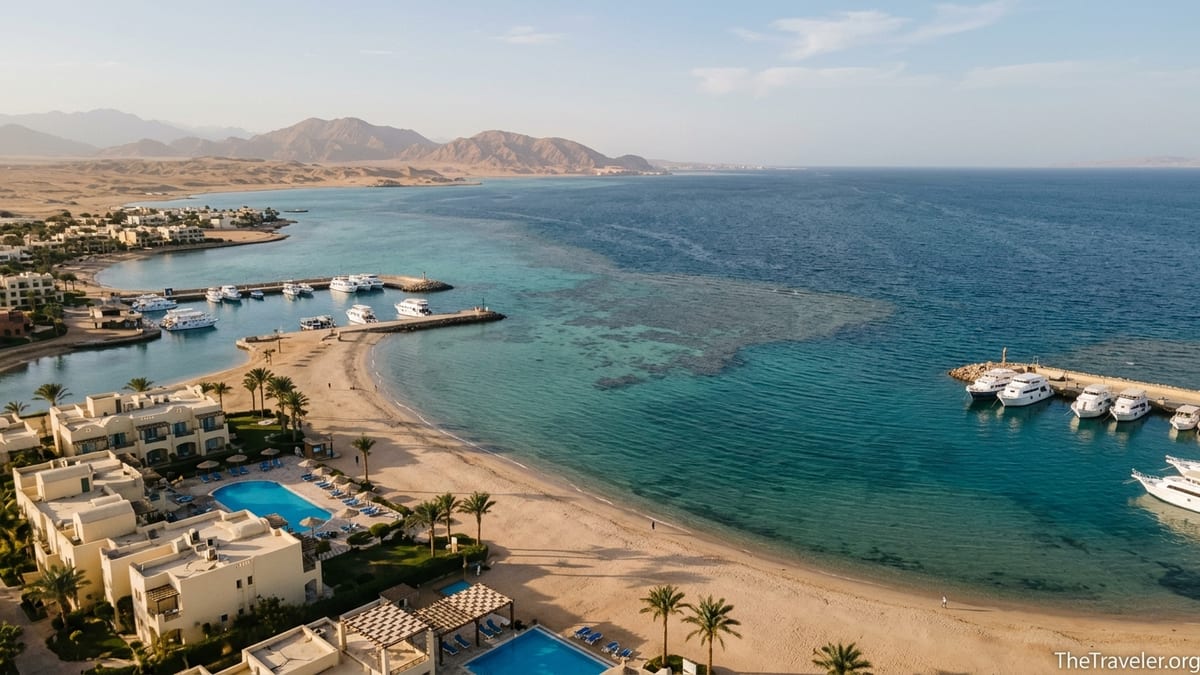
The Egyptian Red Sea Riviera stretches from the Sinai Peninsula down to the southern reefs near Sudan. Sharm El Sheikh sits at the southern tip of Sinai with dramatic desert mountains behind it and some of Egypt’s best preserved reefs just offshore. On the mainland coast opposite lies Hurghada, now a sprawling city resort with satellite bays such as Sahl Hasheesh and Makadi Bay that host many of the most popular all inclusive hotels. Further south again are the quieter, more remote beaches around Marsa Alam, where resorts are strung out along the coast with long house reefs and far fewer town distractions.
El Gouna is a special case. Around 25 kilometers north of Hurghada, this purpose built lagoon town has been positioned as a more upscale, planned community. Instead of one long strip of hotels, you find compact resorts and apartments around marinas and man made lagoons, with golf courses, beach clubs and a small-town feel. It tends to attract independent travelers, kitesurfers and couples who prefer boutique style over classic package tourism.
Across the region, the appeal is consistent: year round sunshine, sea temperatures that stay warm enough for swimming in winter, and easy direct charter and low cost flights from much of Europe and the Middle East. Prices remain competitive compared with the Caribbean or Indian Ocean. For example, in late 2025 many mainstream European tour operators were still advertising seven night all inclusive packages to Hurghada or Sharm from under 800 US dollars per person outside peak holidays, including flights and transfers, while higher end week long packages to El Gouna or southern Marsa Alam often start closer to 1,200 to 1,500 dollars per person depending on season.
Sea conditions vary by location and time of year. Sharm and Hurghada sit in more sheltered gulfs, while some Marsa Alam hotels face fully open sea that can be windier and choppier in winter. If you plan to do a lot of snorkeling directly off your hotel beach, this influences which bay or resort you choose just as much as the branding on the gate.
Hurghada & Surrounding Bays: All Inclusive Heartland
Hurghada is the original Egyptian Red Sea resort city and today stretches for many kilometers along the coast. The main strengths here are sheer choice and convenience. You will find everything from simple three star city hotels popular with domestic tourists to sprawling five star all inclusive complexes in Sahl Hasheesh or Makadi Bay, many with waterparks, multiple pools and private beaches. Large resorts such as the Desert Rose Resort or some of the Pickalbatros branded properties have become classics for families who return year after year because they know the formula: large buffets, kids’ clubs, evening shows and short transfers from Hurghada airport.
For snorkeling and diving directly from the beach, Hurghada is more mixed. Central city beaches are often sandy with seagrass and limited coral. If you want good house reefs, you usually look a little further south around Sahl Hasheesh, Soma Bay or Makadi Bay. Locally popular examples include Gorgonia style resorts and smaller hotels near Sharm El Naga and Soma Bay, where fringing reefs come closer to shore and you can sometimes wade out from the sand into clear coral gardens. Many visitors still opt to stay in a mainstream all inclusive and book low cost full-day boat trips from the marina to snorkel spots around the Giftun Islands or Dolphin House, where wild dolphins are seen reasonably often.
Hurghada is also the most “city like” of Egypt’s Red Sea options. The main Sheraton Road strip and the newer Marina Boulevard have shopping malls, casual cafes and shisha bars, while the El Dahar district retains a more local feel with markets and Egyptian restaurants. This makes Hurghada a good choice if you like to leave your resort bubble at night or want the option of inexpensive local seafood dinners rather than relying entirely on buffet meals. On the flip side, traffic and noise are higher than in more self contained destinations such as El Gouna or some Marsa Alam bays.
Prices in Hurghada tend to be among the lowest in the region. In shoulder seasons it is common to find five star all inclusive resorts marketed in Europe from about 70 to 120 dollars per person per night on package deals, sometimes less for late bookings. Keep in mind that the official “star” rating is not always a perfect guide to quality. A newer four star hotel in Sahl Hasheesh may feel more modern and better maintained than an older five star in the city center. Traveler reviews that mention recent renovation dates and specific feedback on food quality and beach condition are often more useful than the number of stars alone.
Sharm El Sheikh: Reefs, Bays and Nightlife
Sharm El Sheikh, at the tip of the Sinai Peninsula, is where diving tourism on the Red Sea first went truly global. Today it is still the easiest base for combining resort comfort with access to iconic dive sites such as Ras Mohammed National Park and the coral walls around Tiran Island. Sharm’s coastline is broken into distinct bays, each with its own personality. Naama Bay is the original tourist center, with a walkable promenade of shops, shisha cafes and restaurants behind a wide sandy beach lined with midrange resorts. Slightly north are Sharks Bay and the area around Soho Square, where many hotels sit on rocky headlands and offer jetty access to rich house reefs. Further north again lies Nabq Bay, with long sandy beaches and newer family resorts.
House reef snorkeling is one of Sharm’s main selling points. Several well known hotels along the Ras Um Sid headland and Sharks Bay are chosen specifically for their reef. For instance, resorts such as Jaz Fanara or Renaissance Sharm El Sheikh are frequently mentioned by divers because their jetties drop you directly onto a steep coral slope with good visibility and a high chance of turtles or rays. In recent traveler reports, regular guests often highlight that corals in Sharm, particularly along these headlands, appear in better condition than many easily accessed reefs around Hurghada, making Sharm especially attractive for underwater enthusiasts.
Sharm also offers a more self contained, resort town feel than Marsa Alam while feeling less urban than Hurghada. Soho Square has become a modern entertainment zone with ice bars, bowling and music, while Naama Bay keeps its slightly more relaxed, old school resort atmosphere. In the evenings, it is easy to walk out for a drink, take a taxi to a seafood dinner by the water or enjoy a coffee along the pedestrian promenade. For many visitors, this blend of strong coral, choice of nightlife and availability of organized excursions into the Sinai Desert or to St Catherine’s Monastery makes Sharm a comfortable first taste of the Red Sea.
Pricing is similar to Hurghada but with a greater spread. You can still find basic Naama Bay hotels, including places that cater to divers, for under 50 dollars per person per night on bed and breakfast outside of high season. At the other end of the scale, some of the best located five star headland resorts with private beaches and premium all inclusive dining frequently run at 200 to 300 dollars per room per night or more in popular months, particularly around European school holidays and during the Christmas and New Year period.
Marsa Alam: Quiet Reefs and Remote Luxury
Marsa Alam, several hours’ drive south of Hurghada on the mainland coast, is a different proposition altogether. Here resorts are scattered along a relatively undeveloped shoreline, with the desert very close behind. The atmosphere is much quieter. There are no big towns in the immediate area, only a small airport and scattered bays. Travelers come primarily for uncrowded beaches, long house reefs and easy access to offshore dive sites such as Elphinstone, which is famous in diving circles for its steep walls and occasional oceanic whitetip shark sightings.
Many Marsa Alam hotels are built around a central house reef. Resorts such as Gorgonia Beach, Shams Alam or the various Sentido and Reef Oasis properties south of El Quseir are regularly mentioned by divers because you can step off the beach or a short jetty into a rich coral garden suitable for both snorkelers and experienced underwater photographers. Dive centers often advertise “unlimited house reef diving” packages, where guests can make several self guided dives per day on the home reef after a check dive, which can be cost effective compared with booking boat trips for every immersion.
The trade off is remoteness. Outside your hotel there may be little to do beyond desert or sea excursions organized through the resort. If you like independent restaurants, shopping streets or nightlife, Marsa Alam may feel too quiet. Winds and currents can also be stronger on this part of the coast, particularly in winter, when red flags and temporary closures of hotel jetties for safety are not unusual. Families with small children or nervous swimmers should look for hotels built around more sheltered coves or artificial lagoons, and read recent reviews mentioning how often the sea is calm enough for swimming in the months you plan to travel.
Prices in Marsa Alam vary based on how specialized a resort is. Traditional four and five star all inclusives can be similar to Hurghada pricing, often around 80 to 150 dollars per person per night, but small dive lodges and higher end boutique properties that include guided diving in their packages can reach significantly higher nightly rates. Because flight and transfer capacity is more limited than to Hurghada or Sharm, availability in peak dive season from October to November and again from March to May can tighten quickly. Booking several months ahead is advisable if you are targeting a specific house-reef resort and want a particular room category close to the water.
El Gouna: Lagoons, Lifestyle and Boutique Comfort
El Gouna, sometimes called the “Venice of the Red Sea,” is a master planned lagoon town north of Hurghada. Instead of one continuous strip of hotels, it is made up of neighborhoods around marinas, golf courses and man made lagoons connected by bridges and channels. Sandy lagoon beaches such as Zeytouna Beach offer calm shallows ideal for relaxed swimming, while sea facing hotels have access to the open Red Sea for snorkeling, kitesurfing and boat trips. Well known properties include the Mövenpick Resort & Spa El Gouna, a low rise complex spread along the shoreline with several pools and direct beach access, as well as smaller design focused hotels around Abu Tig Marina.
El Gouna’s atmosphere feels more like a Mediterranean coastal town than a conventional all inclusive zone. There is a walkable marina with independent restaurants, cocktail bars and cafes, plus a small downtown area with everyday services. Many visitors stay on bed and breakfast or half board and eat out in the evenings, trying different venues along the marina promenade. This makes El Gouna particularly attractive to couples, digital nomads and repeat visitors who value variety and local atmosphere more than a fully self contained resort bubble.
In terms of snorkeling and diving, El Gouna is a hybrid. The lagoons themselves are sandy and shallow, not coral rich, so proper reef snorkeling generally involves walking or taking hotel boats to outer beaches or joining boat trips run by local dive centers. Day boats from El Gouna head to reefs that are part of the wider Hurghada area. The plus side is that marinas are close to hotels, so it is easy to join early morning trips without long transfers. Kitesurfing is a major draw thanks to steady winds and wide, shallow training areas, which has helped establish a strong community of water sports enthusiasts.
El Gouna usually prices slightly higher than typical Hurghada resorts when comparing like for like room categories, reflecting both the design standards and the more upmarket positioning. A midrange hotel around the marina on bed and breakfast might cost the equivalent of 120 to 200 dollars per night for a double room in winter high season, while larger beachfront resorts such as Mövenpick can sit above that, especially for sea view rooms. That said, out of main holiday periods there are often good deals, particularly when booking directly with hotels or through partners offering long stay rates of two weeks or more.
Matching Resorts to Travelers: Families, Couples, Divers and Beach Lovers
When choosing between Hurghada, Sharm El Sheikh, Marsa Alam and El Gouna, it helps to start with your priorities. For families seeking easy, good value all inclusive holidays with short transfers and plenty of slides and kids’ clubs, Hurghada and its satellite bays are often the most practical bet. Large resorts with aqua parks and lazy rivers, such as many of the Pickalbatros or Sunrise branded hotels in Hurghada and Makadi Bay, are designed around children’s facilities and all day entertainment. Package prices that include flights, transfers and all inclusive boards can be lower here than at similar standard properties in Sharm or Marsa Alam, especially outside school holidays.
Couples or small groups of friends who care more about atmosphere and nightlife than waterparks might lean toward Sharm El Sheikh or El Gouna. In Sharm, Naama Bay still offers one of the liveliest promenades on the Red Sea with bars, music and late opening cafes, while headland resorts near Soho Square strike a balance between reef quality and access to evening entertainment. El Gouna, by contrast, is lower key but more curated: marina side dinners, craft cocktail bars, outdoor movie nights and beach clubs. It works well for travelers who enjoy wandering between venues rather than spending every evening in the same lobby bar.
Divers and serious snorkelers often put reef quality first. In recent years many underwater enthusiasts have favored Sharm and Marsa Alam for more intact fringing reefs accessible from hotel jetties, while using Hurghada and El Gouna primarily as gateways to offshore boat sites. Choosing a hotel closely linked to a respected dive center, or one known for an excellent house reef, can make a big difference. Examples regularly cited by divers include long established Marsa Alam properties with on site dive bases that offer unlimited shore diving packages, or Sharm headland hotels perched above classic shore dive sites where you can do a sunrise snorkel before breakfast.
Beach lovers who want soft sand and easy entry into shallow water should study hotel descriptions and traveler photos closely. Some of Sharm’s best reefs sit on rocky shores with deep drop offs and access only via jetties, which can intimidate less confident swimmers and are not ideal for toddlers. In those cases, long sandy bays in Hurghada, Sahl Hasheesh, Soma Bay or Nabq Bay might be more comfortable. Alternatively, lagoon beaches in El Gouna offer warm, shallow water with minimal waves, though at the cost of dramatic coral scenery unless you head out by boat.
Practical Tips for Booking Red Sea Resorts
Whichever part of the Red Sea you choose, a few practical considerations will help you get better value and avoid disappointment. First, pay attention to the resort’s exact location rather than just the overall destination label. “Hurghada” on a brochure can mean a downtown city hotel with a small beach, or a purpose built resort 30 kilometers away in Makadi Bay. Similarly, “Sharm El Sheikh” could place you right in Naama Bay, in quiet Hadaba above Ras Um Sid, or in Nabq Bay, which is a significant taxi ride from the old town. Studying a map and reading how recent guests describe transfers to marinas, dive centers or town can prevent surprises.
Second, look beyond the headline all inclusive label to understand what is actually included. In the Red Sea it is common for more premium all inclusive plans to cover a mix of buffet and limited à la carte dining, some branded alcoholic drinks and included activities such as non motorized water sports, while more basic packages might focus on three buffet meals and local soft drinks. For example, a midmarket Hurghada resort priced at around 90 dollars per person per night might include one à la carte dinner per week and charge extra for espresso coffee or fresh juice, whereas a higher positioned El Gouna or Sharm property at 160 to 200 dollars per person per night may offer more generous included options.
Third, factor in the cost of the activities that matter most to you. A diver staying in Marsa Alam might be better off booking a resort that sells an unlimited house-reef dive package for a fixed supplement than choosing a cheaper hotel where every boat dive adds 40 to 60 dollars to the bill. Families who plan to spend several days at an aqua park might value a hotel with its own slides and lazy rivers rather than paying daily entry at an external waterpark plus taxis. Snorkelers who hope to visit offshore reefs such as the Giftun Islands or sites near Tiran Island should check whether their chosen hotel has an on site dive and snorkel center with daily excursions, and what typical prices per day trip look like at the time they book.
Finally, pay attention to seasonality and weather. Winter months from November to March are popular for mild air temperatures compared with colder European climates, but sea breezes can make evenings cool and some open sea locations around Marsa Alam or exposed Hurghada headlands feel windy. Reef access via jetties may be temporarily closed when waves are too strong. Late spring and autumn, particularly April to early June and October, often offer the best compromise of warm water, settled weather and moderate prices. Peak heat in July and August brings the warmest sea but also higher air temperatures, which can be intense away from the water or without strong air conditioning.
FAQ
Q1. Which Red Sea resort is best for first time visitors to Egypt?
For a first visit, many travelers choose either Hurghada for value and ease or Sharm El Sheikh for stronger house reefs and a compact resort town feel. Hurghada works well if you want simple, good value all inclusive hotels and boat trips to nearby islands, while Sharm adds more dramatic snorkeling directly from resort jetties and a clear choice of nightlife areas such as Naama Bay or Soho Square.
Q2. Where are the best house reefs for snorkeling straight off the beach?
Sharm El Sheikh’s headlands around Ras Um Sid and Sharks Bay, along with several Marsa Alam resorts built around fringing reefs, generally offer the richest snorkeling directly from hotel jetties. In Hurghada, you usually need to look south toward Sahl Hasheesh, Makadi Bay or Soma Bay, or plan boat trips to offshore reefs, whereas central city beaches are mostly sandy with limited coral.
Q3. Is El Gouna suitable for families, or is it mainly for couples?
El Gouna suits both, but in different ways. Families appreciate the safe lagoon beaches and short distances between hotels, marinas and downtown, along with calm shallow water for younger children. Couples often choose El Gouna for its more boutique atmosphere, independent restaurants and marina nightlife. If you want big waterparks and all day kids’ clubs, Hurghada or Sharm usually offer more choice, but El Gouna can be ideal for older children who enjoy exploring a compact town.
Q4. How do prices compare between Hurghada, Sharm El Sheikh, Marsa Alam and El Gouna?
Hurghada tends to be the most budget friendly overall, with a wide range of all inclusive resorts and frequent package deals. Sharm El Sheikh is similar but with a broader spread that includes some higher priced headland hotels. Marsa Alam can be comparable for standard all inclusives but may cost more when you factor in specialized dive packages or limited flight options. El Gouna usually sits at the higher end for equivalent room categories, reflecting its more upmarket, master planned setting and focus on design and service.
Q5. Which area should divers choose if they want boat diving and house reef options?
Divers who want both strong house reefs and access to famous offshore sites often prioritize Sharm El Sheikh or Marsa Alam. Sharm offers day boats to Ras Mohammed and Tiran alongside excellent shore diving from certain headland resorts. Marsa Alam provides long, often uncrowded house reefs and boat trips to deep wall sites like Elphinstone. Hurghada and El Gouna remain good for boat based diving, particularly to the Giftun Islands and wrecks in the northern Red Sea, but many hotels there have more modest house reefs.
Q6. Are Red Sea all inclusive resorts suitable for travelers who like to explore local culture?
They can be, but your choice of base matters. Downtown Hurghada allows easy access to Egyptian markets, mosques and local restaurants, giving a stronger sense of everyday life beyond the resort gates. Sharm and El Gouna feel more like self contained resort towns, though you can still arrange day trips into the Sinai Desert or towards Luxor on the Nile. Marsa Alam is the most isolated, best for people who are happy to spend most of their time between hotel, reef and organized excursions.
Q7. How far in advance should I book a Red Sea resort?
For peak travel periods such as late December, Easter and major European school holidays, booking three to six months ahead is sensible, especially if you want a specific hotel or room type near the beach. Dive focused resorts in Marsa Alam and popular reef hotels in Sharm can sell out early in prime diving seasons from March to May and October to November. Outside these windows, deals are often available closer to departure, but last minute bargains are never guaranteed.
Q8. Is it better to book a package holiday or arrange everything independently?
For many travelers from Europe or the Middle East, package holidays that combine flights, transfers and accommodation in a single price can be cost effective, particularly in Hurghada and Sharm El Sheikh where large tour operators charter planes. Independent travelers, especially those adding a Red Sea stay onto a Cairo or Luxor trip, may prefer to book hotels and internal flights separately for flexibility. Comparing both options for your dates and departure airport is worthwhile before committing.
Q9. Are there adults only or quiet zones for couples who want to avoid crowds?
Yes, several Red Sea resorts either market themselves as adults only or offer adults only wings and pools. These tend to be more common in Hurghada, Sahl Hasheesh and Sharm El Sheikh. El Gouna also has smaller, design led hotels that naturally skew toward adults and couples. When booking, check the hotel description carefully, and look at recent guest reviews mentioning noise levels and whether there are dedicated quiet pools away from main entertainment areas.
Q10. What is the best time of year to visit the Red Sea for comfortable weather?
For most visitors, the most comfortable months are from late October to early December and from March to early May, when daytime temperatures are warm but not extreme and the sea is pleasant for swimming. January and February can be cooler and windier, especially around exposed Marsa Alam bays, while July and August bring very hot air temperatures, though the sea is at its warmest. Whenever you travel, good sun protection and hydration are essential due to the strong desert sun.