


Drifting from Luxor to Aswan on the Nile remains one of the classic journeys in travel. Between temple visits at Edfu and Kom Ombo, sunsets over palm groves and the soft hum of the ship at night, a Nile cruise can be magical. It can also be confusing to book. Cabin classes, “standard” versus “luxury” ships, inclusions, tipping policies and varying itineraries all affect what you actually experience once you step on board. This guide focuses specifically on the Luxor to Aswan route and breaks down what you can realistically expect in 2026, with concrete examples to help you choose and book the right cruise for your style and budget.
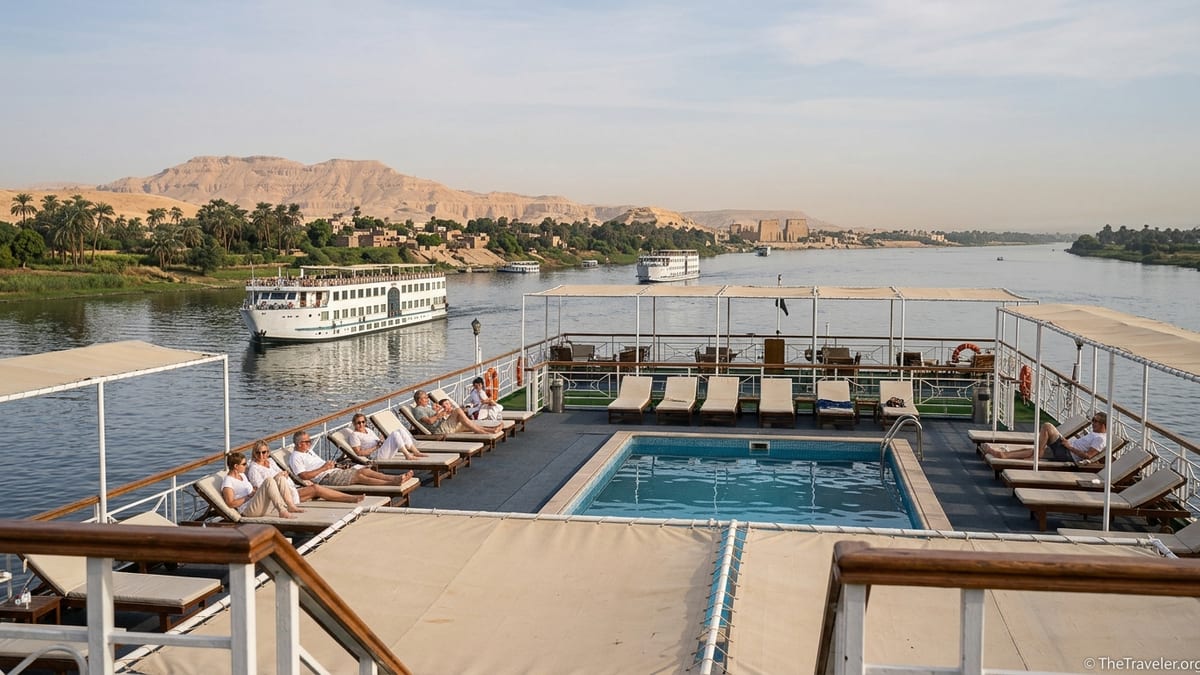
Typical Luxor to Aswan Cruise Lengths and Itinerary
The most common one-way Luxor to Aswan cruise is 4 days and 3 nights, usually running Monday to Thursday or similar midweek patterns. Many operators also offer a 5 days and 4 nights version that adds more relaxed sailing time or extra sightseeing in Luxor or Aswan. For example, the 5-day Historia Nile Cruise program lists a Monday Luxor embarkation with disembarkation in Aswan on Friday, including four full nights on board with breakfast, lunch and dinner each day.
A standard 4-night Luxor to Aswan itinerary typically begins with check-in on the ship in Luxor around midday, a visit to Karnak and Luxor Temple, then an overnight onboard in Luxor. Day two usually covers the West Bank highlights, such as the Valley of the Kings and the Temple of Hatshepsut, before sailing south to Esna. Day three is commonly reserved for Edfu’s Temple of Horus in the morning and Kom Ombo in the late afternoon or evening, depending on lock timings and river traffic. The final day or day-and-a-half focuses on Aswan’s sights like Philae Temple and the High Dam, with disembarkation by late morning.
Prices vary widely depending on ship category and season. As a rough 2026 guideline, a standard 5-star ship might start around 600 to 800 US dollars per person for a 3-night Luxor–Aswan segment in low season, while newer or boutique luxury ships such as the Oberoi Philae, the Historia or select Sonesta vessels can be quoted in the thousands of dollars per person for four nights, particularly in peak months from October to April. Many tour packages bundle flights, Cairo hotels and guiding into a single figure, so ask for a clear per-night cruise breakdown when comparing offers.
One important nuance is that most local tour operators do not own the ships. They contract space on a pool of vessels that rotate on the same schedule. This means two travelers who book through different agencies at similar price points might end up sharing the same physical ship. To keep control of your experience, try to secure a booking that names a specific vessel and cabin category in writing, or accept some flexibility in exchange for a lower price.
Cabins and Decks: Choosing Where You Sleep
Nile cruise cabins are closer to compact hotel rooms than ocean-liner suites, and the comfort level depends heavily on ship age and category. On a standard 5-star vessel such as a Mövenpick Royal Lily or a typical Jaz or Steigenberger ship, base cabins often measure about 18 to 20 square meters, with large windows or French balconies that open for air but may not have a private outdoor seating area. Luxury-focused ships like the Oberoi Philae, Historia or Sonesta Star Goddess tend to offer larger spaces, often 22 to 30 square meters, with floor-to-ceiling windows and in some cases true step-out balconies with chairs.
Deck position matters more than many first-time visitors expect. Mid and upper-deck cabins are generally preferred for both views and reduced engine noise. Lower-deck cabins can feel more enclosed and may be closer to machinery or river-level activity. When you see operators advertising “upper deck supplement,” this is what you are paying for. In 2026, it is common to see surcharges of roughly 10 to 20 percent over the base price to guarantee an upper-deck cabin rather than accepting “run of ship” allocation at check-in.
Bathroom quality is often the clearest visible difference between older budget ships and recently refurbished or luxury vessels. On many standard ships, you can expect a compact bathroom with a shower stall, basic toiletries and dated tiling. On higher-end ships such as the luxury Oberoi and Sanctuary vessels, you are more likely to find modern finishes, larger showers or bathtubs, high-pressure water and branded amenities. If you are sensitive to mold or humidity, ask your agent directly about the ship’s last refurbishment date and whether bathrooms were included.
If traveling as a family or group, look for concrete examples of interconnecting cabins or suites. Some Sonesta ships, for instance, sell Presidential and Family Suites that combine sleeping and lounge areas, which can make the cabin feel more like a small apartment than a room with a bed. On the other hand, many budget-focused vessels simply place extra rollaway beds into a standard double cabin, making space tight once luggage is unpacked.
Standard vs Luxury Ships: What You Really Get
Egyptian cruise marketing uses “5-star,” “5-star deluxe” and “luxury” labels that do not always match international expectations. In practice, a standard 5-star Nile ship is often equivalent to an upper mid-range hotel: air conditioning, a small pool on the sun deck, bar and lounge, comfortable but not opulent cabins, and buffet-style main meals. Ships like MS Mayfair, many Mövenpick and Jaz vessels and Sonesta’s mainstream ships represent this category, with rates around 600 to 900 US dollars per person for a 3- or 4-night cruise outside peak holiday periods.
At the true luxury end, with examples such as the Oberoi Zahra, Oberoi Philae, Historia and certain boutique Sonesta and Sanctuary boats, you pay a premium for fewer cabins, higher staff-to-guest ratios, quieter public spaces and a more polished overall product. Cabins are typically larger and more stylishly furnished, public areas feel closer to a design hotel than a floating bus, and dining emphasizes carefully plated dishes ordered from a menu rather than large buffets. These ships may sail with only 22 to 40 cabins, so the atmosphere is noticeably calmer compared with a 100-cabin standard ship.
One of the most tangible differences is food. On a standard 5-star ship, you can expect a reliable but repetitive selection of Egyptian and international dishes served buffet-style, with a few live stations or themed nights. Luxury ships usually focus on restaurant-style service, with à la carte options and higher-quality ingredients. Operators highlight this in marketing: for instance, the Mövenpick fleet is known among travelers for strong pastry and dessert quality, and Oberoi emphasizes its multi-course dinners and flexible dining times.
Another distinction is how excursions are handled. On standard ships, you are likely to be grouped into larger tour groups of perhaps 15 to 30 guests per guide for temple visits. Luxury ships usually operate smaller groups, and some packages include private guiding without extra charge. If your priority is a deeper, less rushed experience at sites like Edfu, Kom Ombo and Philae, the guiding setup may matter more than thread counts or pool size, so ask specific questions about group size and whether private guiding can be arranged and costed upfront.
Meals, Drinks and What Is Typically Included
Most Luxor to Aswan cruises are sold on a full-board basis, meaning breakfast, lunch and dinner are included from embarkation to the final breakfast before disembarkation. It is common to see afternoon tea or an early-evening snack station each day as well. For example, several 2025 and 2026 itineraries on mid-range ships specify daily buffet breakfast and lunch, afternoon tea with cakes, and a mix of themed buffet or set-menu dinners onboard.
What is usually not included is alcohol and, on some ships, bottled water and soft drinks outside meal times. Many standard 5-star ships charge for all beverages beyond basic tea and instant coffee at breakfast, though some bundle a small bottle of water with lunch and dinner. Luxury vessels sometimes include soft drinks, juices and local water throughout the day, while still charging separately for beer, wine and cocktails. Because markups can be significant compared with buying drinks in a supermarket in Luxor or Aswan, it is worth asking your agent for realistic bar prices. As of 2026, a local beer on a mid-range cruise ship often runs in the range of 4 to 7 US dollars, and a glass of imported wine can be around 8 to 12 US dollars, though this varies by ship and season.
Excursions to temples are usually treated as an inclusion in both standard and luxury packages, but the exact scope differs. Many advertised prices for Nile cruises through Egyptian tour agencies include all major temple entries, a licensed Egyptologist guide, and transfers between the ship and sites in Luxor, Edfu, Kom Ombo and Aswan. International tour operators, particularly those packaging flights and Cairo stays, sometimes price the cruise itself separately and then sell a “shore excursion bundle” covering entrance fees and guiding. Always clarify whether published prices include site tickets and guiding or just the cabin and meals.
One cost that can surprise first-time visitors is tipping. Many ships operate a pooled gratuity system where you are encouraged or required to tip a set amount per guest per night, often payable in cash at the end of the cruise. Figures in the range of 8 to 15 US dollars per person per day are common, depending on the ship category and whether your guide is included in that pool. It is sensible to budget for this in advance and to keep small denominations of Egyptian pounds or clean US dollar bills handy. Individual tips for excellent service, such as a particularly helpful waiter or cabin steward, are appreciated but optional.
Edfu and Kom Ombo: How the Classic Stops Work
On the Luxor to Aswan route, Edfu and Kom Ombo are the hallmark in-between temple stops. A typical schedule reaches Edfu early in the morning on day three of the cruise, after sailing overnight from Esna. Many ships dock in Edfu before breakfast, and guests are transferred by horse-drawn carriage or minivan to the Temple of Horus, one of the best-preserved temples in Egypt. Carriage rides are a longstanding feature but do come with caveats: travelers frequently mention aggressive touting and mixed conditions for the horses. If you are uncomfortable with this, ask your guide in advance about using a motorized vehicle instead, as some operators now arrange vans or small buses directly from the dock.
Guided visits to Edfu typically last around 1.5 to 2 hours, including explanations at the main courtyard, hypostyle hall and sanctuary, plus time to photograph reliefs depicting Horus and scenes of pharaonic life. After the tour, you return to the ship to continue sailing south. Depending on water levels and traffic, lunch is usually served while underway, giving you a chance to watch riverside villages and date palms drift by.
Kom Ombo is usually visited later the same day, often in the late afternoon close to sunset or in the evening after dark. The setting is atmospheric: the double temple dedicated to Sobek and Haroeris sits on a low bluff directly above the river, and most ships tie up just a short walk away. A typical visit covers the twin sanctuaries, the crocodile mummies museum and a series of carved medical instruments that many guides highlight as an early hint of surgical knowledge. The entire stop usually runs 60 to 90 minutes.
Because Edfu and Kom Ombo are included in almost every standard itinerary, they also attract crowds. In high season, you may find several ships docking around the same time. Luxury ships and dahabiyas sometimes adjust timing to arrive during quieter windows, for example visiting Kom Ombo slightly later in the evening. If avoiding crowds is a priority, consider shoulder-season travel months such as late October or March and ask your operator whether your particular ship tends to tweak timings to dodge the worst congestion.
Embarkation, Disembarkation and Onboard Logistics
Embarkation for a Luxor to Aswan cruise typically takes place along the Nile corniche in Luxor, near clusters of moored ships. Check-in times are usually around midday, though cabins may not be ready until early afternoon while staff turn the ship around. Many itineraries include lunch on board on embarkation day, followed by an afternoon tour to Karnak, so it is wise to arrive in Luxor at least a few hours before boarding to avoid rushing from the airport straight to the ship.
One quirk of Nile cruising is that ships often moor side by side, creating a “raft” of vessels tied together. You may need to walk through the lobbies of one or two other ships to reach yours, especially at busy docks in Luxor, Edfu and Aswan. This is normal practice but can surprise travelers expecting a dedicated pier. If mobility is a concern, mention this to your tour operator well before travel so they can request positioning that minimizes stair climbing.
Disembarkation in Aswan usually occurs after breakfast on the final morning, often around 8 to 9 a.m. Bags are placed outside cabins early for collection, and guests settle bar tabs and gratuities at reception. If your flight or train from Aswan departs later in the day, consider arranging a half-day tour to Philae Temple and the High Dam or a felucca sail around the islands to fill the gap. Many operators can organize a Philae visit straight from the ship, with your luggage continuing in the vehicle to the airport or railway station.
Onboard, expect a mix of organized activities and quiet time. Standard ships often feature evening entertainment such as a galabeya party (where guests can wear local-style tunics), belly dancing or Nubian music performances. Luxury ships sometimes scale this back in favor of quieter lounge music, lectures or simply unstructured evenings. Dress codes are generally relaxed: smart casual is more than adequate for dinner even on upscale vessels, though some guests enjoy dressing up slightly for photo opportunities.
Booking Tips, Prices and How to Avoid Common Pitfalls
From a booking perspective, the Nile cruise market is fragmented and pricing opaque. For the same 4-night Luxor to Aswan itinerary on a standard 5-star ship, you might find offers from around 500 to 900 US dollars per person depending on season, cabin deck, whether excursions are included, and how many intermediaries are involved. Around Christmas and New Year, rates can jump noticeably, and many travelers report that popular ships sell out weeks or even months in advance. If your travel dates coincide with school holidays in Europe or North America, early booking is advisable.
One pattern reported frequently by travelers is being confirmed on a “category” rather than a specific vessel. For example, you might book what is described as a deluxe 5-star cruise and later find that the actual ship assigned is older than photos suggested. To reduce this risk, ask your agent for the exact ship name, a recent deck plan and images of the cabins in your category, and clarification of what happens if the operator needs to substitute a different vessel. Some higher-end agencies and international tour companies explicitly guarantee named ships such as Oberoi, Historia or specific Sonesta vessels and will rebook or compensate you if a swap occurs.
When budgeting, look beyond the headline cruise fare. Add estimated costs for bar drinks, optional Abu Simbel excursions from Aswan, pooled tips, and any visa or domestic flight charges not included in your package. For example, a mid-range traveler might pay 700 US dollars for a 3-night cruise, then another 60 to 120 US dollars in drinks and bottled water, 30 to 50 US dollars in tips, and 120 to 300 US dollars per person for an optional Abu Simbel trip by bus or plane. Understanding these add-ons can prevent bill shock at the end of the journey.
It is also wise to pay attention to seasonality. Cooler months from roughly late October to early April are more comfortable for temple visits but also more expensive and crowded. Shoulder seasons, such as late April, early May, or late September, often offer a good balance of price and temperature, though midday heat can still be intense. In the peak of summer, prices can drop significantly on some ships, but you will need to plan temple visits early in the morning and carry plenty of water and sun protection.
The Takeaway
A Luxor to Aswan Nile cruise is less about luxury in the abstract and more about how you want to experience the spaces between temples. Standard ships serve as efficient floating hotels, getting you from Karnak to Edfu to Kom Ombo and Aswan with full-board meals and a social atmosphere. Luxury vessels shrink group sizes, refine the food and quiet the ambience, which can make the same itinerary feel like a very different trip. Both approaches share the same river and the same timeless scenery.
If you are a value-focused traveler who cares primarily about seeing the main sites, a reputable standard 5-star cruise with included guiding, named ship and upper-deck cabin will likely satisfy you. If you have a once-in-a-lifetime mindset and want long, calm afternoons on a spacious sundeck, attentive service and restaurant-quality dining, then paying for a smaller, modern luxury ship or a boutique vessel like an Oberoi or Historia may be worth the premium.
Either way, booking carefully pays off. Ask specific questions about the ship, cabin deck, inclusions and group sizes. Clarify tipping, bar prices and optional excursions before you pay your deposit. With a clear-eyed understanding of how cabins, temples, meals and logistics really work on the Luxor to Aswan route, you can choose the cruise that fits your expectations and step aboard knowing what awaits as the Nile carries you slowly south.
FAQ
Q1. How far in advance should I book a Luxor to Aswan Nile cruise?
For peak months between October and April, aim to book at least two to three months ahead, and even earlier if you want specific luxury ships or holiday dates like Christmas and New Year. In quieter summer months, you may find last-minute availability, but selection of the best vessels will be more limited.
Q2. What is the best length for a Nile cruise on this route?
A 4-day, 3-night or 5-day, 4-night Luxor to Aswan itinerary works well for most travelers. Three nights cover the key temples efficiently, while four nights add a bit more downtime on the river and often a more relaxed pace in Luxor or Aswan. Longer 7-night loops are better if you prefer more time onboard and less hotel hopping.
Q3. Are temple entrance fees and guides usually included in cruise prices?
Many Egypt-based tour operators include entrance fees and a shared Egyptologist guide in the quoted price, while some international tour companies separate the cruise fare from an excursions package. Always ask for a written list of what is included: site tickets, guiding, transportation, and whether any tours are optional extras.
Q4. How do I choose between a standard and a luxury ship?
Consider how much time you plan to spend on the ship versus at the sites. If you mainly want a comfortable base to sleep and eat between temple visits, a well-reviewed standard 5-star ship is usually enough. If you value quieter spaces, refined dining, small-group or private guiding and modern cabin design, then a true luxury vessel or boutique ship justifies its higher rate.
Q5. Is the food safe to eat on Nile cruises?
On reputable ships, food hygiene is taken seriously and most travelers do not experience problems beyond occasional minor stomach upsets. Stick to freshly cooked dishes, be cautious with salads and raw items if you have a sensitive stomach, and drink bottled or filtered water rather than tap water. If you have allergies or dietary needs, notify your agent and the ship well in advance.
Q6. What should I wear for temple visits and onboard?
Lightweight, breathable clothing that covers shoulders and knees is recommended for respect and sun protection. Comfortable walking shoes are essential for uneven ground at archaeological sites. Onboard, casual attire is acceptable during the day and smart casual in the evenings. Even on luxury ships, jackets and ties are rarely required.
Q7. Can I visit Abu Simbel during a Luxor to Aswan cruise?
Yes. Many travelers add a side trip to Abu Simbel from Aswan, either by early morning flight or overland convoy. Most cruise itineraries allow a free morning or day in Aswan that can be used for this excursion, but it usually costs extra and should be arranged ahead of time because flights and organized tours can fill up.
Q8. Are there Wi-Fi and power outlets on board?
Most modern Nile cruise ships offer Wi-Fi in public areas and sometimes in cabins, though speeds can be slow and coverage patchy when sailing. Power outlets are generally 220 volts with European-style plugs, so travelers from other regions may need an adapter. If internet access is important, consider also buying a local SIM card with data for your phone.
Q9. Is a Nile cruise suitable for children?
Many families cruise the Nile successfully, especially on standard ships with pools and a more casual atmosphere. However, temple days can be long and hot, with lots of walking and historical explanations that may not hold every child’s attention. If traveling with younger kids, look for itineraries with built-in downtime, and consider bringing activities or audiobooks to keep them engaged between excursions.
Q10. How do I know if a quoted price is reasonable?
Compare at least three offers for similar dates, ship categories and inclusions. For 2026, a mid-range 3- or 4-night Luxor to Aswan cruise with full board and shared guiding typically falls somewhere in the mid hundreds of US dollars per person in low season and higher in peak periods. If one quote is much lower, check carefully which ship is used, what is excluded and whether the operator is reputable before committing.