


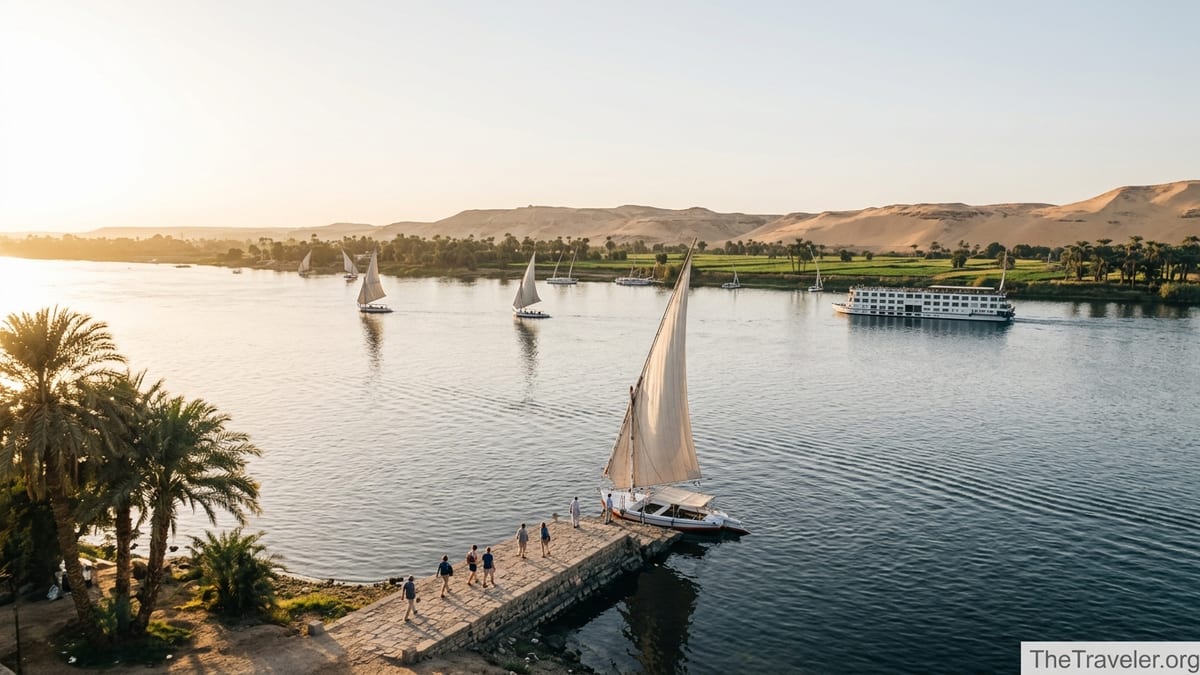
Running between Luxor and Aswan, the Nile Valley is where many visitors feel they finally “meet” ancient Egypt. This is where you walk through the hypostyle hall at Karnak, sail past date palms and sand dunes, and wake to the call to prayer drifting across the river. Whether you have 4, 5, 7 or 10 days, it is possible to build a realistic, satisfying itinerary along this stretch of the Nile, choosing between cruise ships, boutique dahabiyas and land-based stays, with or without an extension to Abu Simbel.
How Long Do You Really Need in the Nile Valley?
Most first-time visitors underestimate how much time the Nile Valley deserves. A quick 4 day loop between Luxor and Aswan will show you headline sights, but travel days, check-ins and early starts add up. Many Egypt specialists now recommend a minimum of 7 days in Upper Egypt for a balanced experience, and 10 days if you want slower travel, time on the river itself and a side trip to Abu Simbel without feeling rushed.
The core triangle is Luxor, Esna/Edfu/Kom Ombo and Aswan. Luxor is the blockbuster, with the Valley of the Kings, Karnak and Luxor Temple. Aswan is smaller and calmer, anchored by Philae Temple and Nubian villages, with Abu Simbel lying about 280 kilometers to the south by road. In between, Edfu and Kom Ombo are awkward to visit efficiently by road but slot naturally into cruise itineraries, which is one reason cruises remain popular.
Costs vary widely. In the 2025 to 2026 season, mainstream 5 star Nile cruise ships often sell from roughly 150 to 250 US dollars per person per night including full board and guided sightseeing in a shared group. Dahabiyas, the smaller wind-assisted boats with 8 to 12 cabins, commonly start closer to 350 to 500 US dollars per person per night. A solid midrange hotel on the ground in Luxor or Aswan might be around 80 to 150 US dollars per room per night, with private guiding and transport billed separately.
The itineraries below assume you are already in Luxor or Aswan and want to focus specifically on the Nile Valley. Many visitors pair these plans with a separate Cairo segment for the pyramids and museums before or after. Timeframes are based on typical driving times, cruise schedules and opening hours used by current tour operators in 2025 and 2026, so you can cross-check with real departures when you book.
4 Day Nile Valley Itinerary: Express Highlights
A 4 day itinerary is essentially an express highlights tour. It works best if you choose either Luxor based or Aswan based, rather than trying to cover the whole corridor. One realistic option is to base in Luxor for all three nights and book a long day trip south that includes Edfu and Kom Ombo by road, accepting that you will have one very long travel day.
On a land based Luxor plan, day 1 could be devoted to the East Bank: Karnak Temple in the morning, when the light is softer and the heat gentler, followed by Luxor Temple near sunset when the columns are floodlit. Day 2 focuses on the West Bank, with the Valley of the Kings, Hatshepsut’s Temple at Deir el Bahari and a stop at the Colossi of Memnon. With a private driver leaving Luxor around 7.30 a.m., it is common to be in the Valley of the Kings before many large groups arrive.
Day 3 can then be your long day: an early departure to Edfu to see the Temple of Horus, one of the best preserved in Egypt, then onward to Kom Ombo, perched right above the Nile with its crocodile mummies museum. The round trip by private car can easily reach 8 to 10 hours, so many travelers hire a local operator in Luxor to arrange the vehicle, permits, fuel and driver. Expect to pay in the region of 120 to 200 US dollars for a private car and driver for the day, split among your group, plus entry tickets.
If you prefer Aswan, flip the idea. Spend two nights in Aswan, visiting Philae Temple by boat, the Unfinished Obelisk and a Nubian village, and then devote one long day to road or flight travel to Abu Simbel. Road convoys from Aswan typically leave around 4.00 a.m. to reach Abu Simbel after sunrise, spend roughly two hours at the temples and return by mid afternoon, with total driving time near eight hours. A fourth day can be reserved for a slower felucca sail on the river and a visit to the Aga Khan Mausoleum or the islands opposite Aswan before you move on.
5 Day Nile Valley Itinerary: Classic Cruise or Split Stay
With 5 days, many travelers opt for a short cruise between Luxor and Aswan plus a night or two on land. The most common pattern is a 3 night, 4 day cruise combined with an extra night in either Luxor or Aswan at the start or end. Major cruise brands publish fixed schedules, so you will see recurring patterns such as embarkation in Aswan on Friday or in Luxor on Monday, with calls at Kom Ombo and Edfu built in.
One practical 5 day layout is to spend night 1 in Luxor, nights 2 to 4 on a cruise from Luxor to Aswan, and night 5 in Aswan. On day 1, check into a hotel on the East Bank, such as a midrange riverfront property with a pool, and explore Luxor Temple in the late afternoon. On day 2, you can join your cruise after visiting the West Bank sites in the morning on a small group tour arranged through the cruise company or a local guide, which ensures your luggage and check-in are handled while you are sightseeing.
During the cruise segment, you typically sail to Esna, Edfu and Kom Ombo. On one day you might take a horse drawn carriage from the dock to Edfu Temple, then return to the ship for lunch while it sails onward. Another afternoon you could tour the double temple of Kom Ombo, with its crocodile deity Sobek, and walk through the small but engaging crocodile mummy exhibit before sunset. On the last morning, the boat reaches Aswan, where a tour to the High Dam and Philae Temple is usually included before disembarkation.
If you prefer to stay ashore, a 5 day split stay might allocate two nights in Luxor, two in Aswan and one night reserved as a buffer for travel. This version uses the day between Luxor and Aswan to visit Edfu and Kom Ombo by road while your luggage travels with you in a private car. Although you sacrifice the experience of sleeping on the river, you gain more control over your daily schedule and hotel style, which some families and light sleepers find worth the trade.
7 Day Nile Valley Itinerary: Balanced Land and River
Seven days in the Nile Valley gives you room to slow down while still seeing the classic temples and tombs in depth. It is also a natural length for combining a 3 or 4 night cruise with two or three nights on land. Several well regarded local tour companies now sell 7 day packages that follow a pattern of 2 nights in Luxor, 3 nights cruising and 2 nights in Aswan, or the reverse traveling northbound.
One southbound blueprint starts with two nights in Luxor. Arrive by overnight train or flight, spend the first afternoon at Luxor Temple and the souq, and dedicate the second day to an early visit to Karnak followed by the West Bank. If your budget allows, sunrise hot air balloon rides over the West Bank are commonly offered here, adding an extra early start but memorable views of fields, the river and tombs below.
On day 3, you board your cruise and sail toward Esna and Edfu. Days 4 and 5 unfold at a slower pace, with temple visits at Edfu and Kom Ombo and long stretches on deck as Upper Egypt’s scenery slides by. Cabins on modern ships tend to have large windows rather than full balconies, but the roof deck, with a small pool and loungers, is usually the social center. On day 6, the boat reaches Aswan, where you explore Philae Temple, the High Dam and an island or Nubian village visit before spending your final night in a riverside hotel. Day 7 can then be used for a day trip to Abu Simbel or for leisurely time in Aswan’s markets and gardens.
If you are cruise-averse, a 7 day land based plan can still be satisfying. In current 2026 example itineraries, operators often suggest three nights in Luxor, three in Aswan and one flexible night that can be placed wherever your flights dictate. A typical loop might be Luxor for three nights, driving via Edfu and Kom Ombo to Aswan on day 4, staying three nights in Aswan with one day dedicated to Abu Simbel and another to Philae and the islands, then flying or training onward on day 7. This style allows you to choose stays ranging from small guesthouses in Luxor’s West Bank villages to heritage hotels in Aswan.
10 Day Nile Valley Itinerary: Slow Travel and Dahabiyas
With 10 days, you can add breathing room and explore beyond the busiest temples. Many travelers in this bracket look to dahabiyas. These smaller, sail-powered boats typically take around a week to travel between Luxor and Aswan, anchoring at quieter islands and less visited tombs or villages along the way. Itineraries from some Egyptian and European operators show 7 night dahabiya journeys paired with one or two nights in Luxor and Aswan at each end, which line up neatly within a 10 day window including arrival and departure days.
One possible 10 day framework would be: two nights in Luxor, seven nights on a dahabiya to Aswan, and one night in Aswan. In Luxor, use your full days to see the major East Bank and West Bank sites, leaving smaller tombs and museums for your return if desired. On the dahabiya, days are quieter. You may have breakfast while moored at a riverside field, then head off by minibus to a lesser visited tomb, such as those in the tombs of the nobles area, before returning to the boat and sailing in the afternoon wind. Village walks and visits to local markets are more common on these itineraries than on big ship cruises.
A second 10 day option is to extend the 7 day balanced cruise and land plan by adding extra nights in both Luxor and Aswan. For example, three nights in Luxor, four on a cruise, and three in Aswan. The added time lets you include smaller West Bank sites such as Medinet Habu or the Ramesseum, or to spend a half day simply sitting in a riverside café watching feluccas tack across the water. In Aswan, additional time could be used for a longer felucca trip up to the First Cataract area or a visit to the Nubian Museum.
Budget wise, a 10 day Nile Valley focus can range widely. A frugal mix of midrange hotels, sleeper trains and a mainstream cruise can sometimes be put together in the range of 1,500 to 2,000 US dollars per person before flights if booked through local providers. A higher end version using a dahabiya and heritage properties along the river can easily climb beyond 4,000 US dollars per person, more in peak winter months when European holidays drive demand.
Choosing Between Cruise Ships, Dahabiyas and Land Based Stays
The choice between sleeping on the river and staying on land shapes your Nile Valley experience. Standard 5 star cruise ships offer convenience and predictability. Meals, guiding and main site visits are bundled, and you unpack only once. These ships feel more like compact hotels, with buffets, small rooftop pools and organized entertainment such as galabeya nights. Cabins are often around 18 to 22 square meters, so they can feel tight for families, but for many travelers the tradeoff is worthwhile.
Dahabiyas are quieter and more intimate. Instead of 60 to 70 cabins, you might share with 10 to 20 other guests. The boats travel primarily under sail when wind allows, with a tugboat used in calm stretches, and they often anchor at rural spots where larger vessels cannot. Evenings might be spent on deck under lanterns as the crew grills fish, with no neighboring ship in sight. Because they include all meals, guiding and entrance fees and carry fewer passengers, nightly rates are significantly higher than big ships, but many repeat visitors consider this the most atmospheric way to experience the Nile.
Land based itineraries appeal to those who want more privacy, larger rooms and flexibility. You can choose a resort style property on Luxor’s East Bank with multiple pools, or a quieter guesthouse on the West Bank closer to the tombs. In Aswan, options range from modern riverside hotels to classic properties on mid river islands. On land, you can time your visits to avoid crowds more easily, linger at a site that captures you, or return to your hotel for an afternoon rest without being bound to a ship’s schedule.
From a practical standpoint, road based itineraries require more logistics. You will need to arrange private drivers or small group tours for transfers between Luxor and Aswan and for day trips to more distant sites. Many visitors book these through local agencies or their accommodation, which can provide an air conditioned vehicle, licensed guide and tickets in a single package. Checking recent traveler reviews and confirming inclusions such as bottled water, tipping expectations and early breakfast boxes helps avoid surprises.
Adding Abu Simbel: Day Trips and Overnight Options
Abu Simbel sits close to the Sudanese border, about a three hour drive each way from Aswan. Most visitors experience it as a very early morning day trip, joining a convoy of buses and vans that leaves Aswan around 4.00 a.m. to arrive shortly after sunrise. This allows roughly two hours on site, enough time to walk through the two main temples, see the relocated cliff face and photograph the statues before the heat builds.
In practical terms, a standard small group Abu Simbel tour from Aswan in 2026 often costs in the region of 60 to 120 US dollars per person, including road transport and a guide but not always the entry ticket, which is paid in Egyptian pounds at the gate. Private trips in a sedan or minivan cost more but give you control over photo stops and pacing. There are also short flights from Aswan to Abu Simbel in some seasons, which reduce travel time but add to the budget.
If your schedule allows, an overnight in Abu Simbel can soften the pace and allow quieter visits, especially outside peak coach hours. A small handful of hotels and guesthouses in the village serve travelers who stay the night, then walk or take short taxis to the site. This works particularly well in a 10 day itinerary where you can afford to spend one night away from Aswan without sacrificing your broader plans.
When adding Abu Simbel to your route, be conscious of how early starts accumulate. A 4.00 a.m. departure from Aswan often comes on top of previous days spent touring in strong sun. Many travelers now choose to position Abu Simbel either at the very start of their Aswan stay, while they are still fresh, or near the end, with a free afternoon and early night built in afterward before their onward flight.
The Takeaway
Planning the right length of stay in the Nile Valley is a balance between time, budget and travel style. Four days gives you an energetic glimpse of Luxor or Aswan and the nearby temples. Five days allows you to fit in a short cruise or a split stay between both cities. Seven days opens the door to a more relaxed mix of land and river time, while ten days gives you space for slower travel and a deeper connection with the river landscape, especially if you choose a dahabiya.
Whichever route you choose, building your itinerary around realistic overnight allocations and travel times will make the difference between a rushed checklist and a rewarding journey. Look carefully at cruise departure days, confirm how temple visits are sequenced, and factor in the impact of early starts and strong sun. With that groundwork done, the Nile Valley will repay your time many times over as you move from one riverside temple to the next, watching modern life unfolding along a river that has shaped Egypt for thousands of years.
FAQ
Q1. Is a Nile cruise or land based itinerary better for a first visit?
For a first visit, many travelers find a short cruise combined with at least one or two hotel nights in Luxor or Aswan offers the best balance. The cruise simplifies logistics between temples like Edfu and Kom Ombo, while hotel stays give you more flexibility to visit major sites early or late in the day.
Q2. How far in advance should I book a Nile cruise or dahabiya?
For mainstream cruise ships, booking two to three months ahead is often enough outside peak periods, while Christmas, New Year and Easter weeks can sell out earlier. Dahabiyas have far fewer cabins, so reserving at least four to six months in advance for popular winter dates is wise.
Q3. Can I visit Abu Simbel on any of these itineraries without feeling rushed?
Abu Simbel can be added as a day trip from Aswan on 4, 5 or 7 day plans, but you will have a very early start and a long day on the road. On a 10 day itinerary, you have more room to add either a slower paced day trip with a relaxed afternoon afterward or an overnight in the Abu Simbel area.
Q4. Are Nile cruise prices all inclusive?
Most Nile cruises include your cabin, three main meals per day and group sightseeing to the standard temples, but often exclude drinks, gratuities and some entrance fees. It is important to confirm in writing what is included, including whether tipping is handled via a pooled “tip box” or left entirely to you.
Q5. Is it safe to travel between Luxor and Aswan by road instead of by cruise?
The road between Luxor and Aswan is a standard route used daily by tour operators and private drivers. Most travelers use licensed drivers arranged through hotels or agencies, travel in daylight hours and respect local speed and checkpoint rules, which together help keep the journey routine and uneventful.
Q6. What is the best time of year to plan a Nile Valley trip?
The most comfortable months are typically from late October to early April, when daytime highs are warm rather than extreme. Summer can see very high temperatures, especially in Luxor, so itineraries then often build in more time for early morning visits and long midday breaks indoors.
Q7. How many nights should I spend in Luxor versus Aswan?
If you have at least a week for the Nile Valley, a common pattern is three nights in Luxor and two in Aswan, plus time on a cruise if you choose one. Luxor has a higher concentration of major monuments, while Aswan offers a calmer atmosphere and access to Nubian culture and Abu Simbel.
Q8. Do I need a guide at every site, or can I explore independently?
You can buy tickets and visit temples and tombs independently, but many travelers appreciate having a licensed Egyptologist guide at least for the major sites such as Karnak, the Valley of the Kings and Philae. Some choose a mix, booking guided days for complex sites and exploring smaller temples on their own.
Q9. How should I budget for tipping on a Nile cruise or guided itinerary?
On cruises, it is common to find suggested tip guidelines per passenger, per night for the crew, plus a separate amount for your guide and driver. For land based tours, tips are usually given directly to guides, drivers and boatmen at the end of each service or day. Asking your operator for current norms before you travel can help you plan cash needs.
Q10. Can I do the Nile Valley with children or older travelers?
Yes, many families and multigenerational groups travel this route. Cruise ships with pools and set meal times can be convenient for children, while land based stays allow you to adjust daily schedules for older travelers who need more rest. Choosing centrally located hotels, arranging private transport and avoiding the hottest hours of the day can make the trip more comfortable for all ages.