


For many Egypt itineraries, the hardest decision is not whether to visit Luxor and Aswan, but how to split your precious nights between them. Both cities sit on the Nile, both offer temples, felucca sailing and atmospheric riverfront promenades, yet they deliver very different experiences. Deciding where to linger and where to pass through shapes how you remember Upper Egypt: as an intense archaeological deep dive, a slow river escape, or a mix of the two.
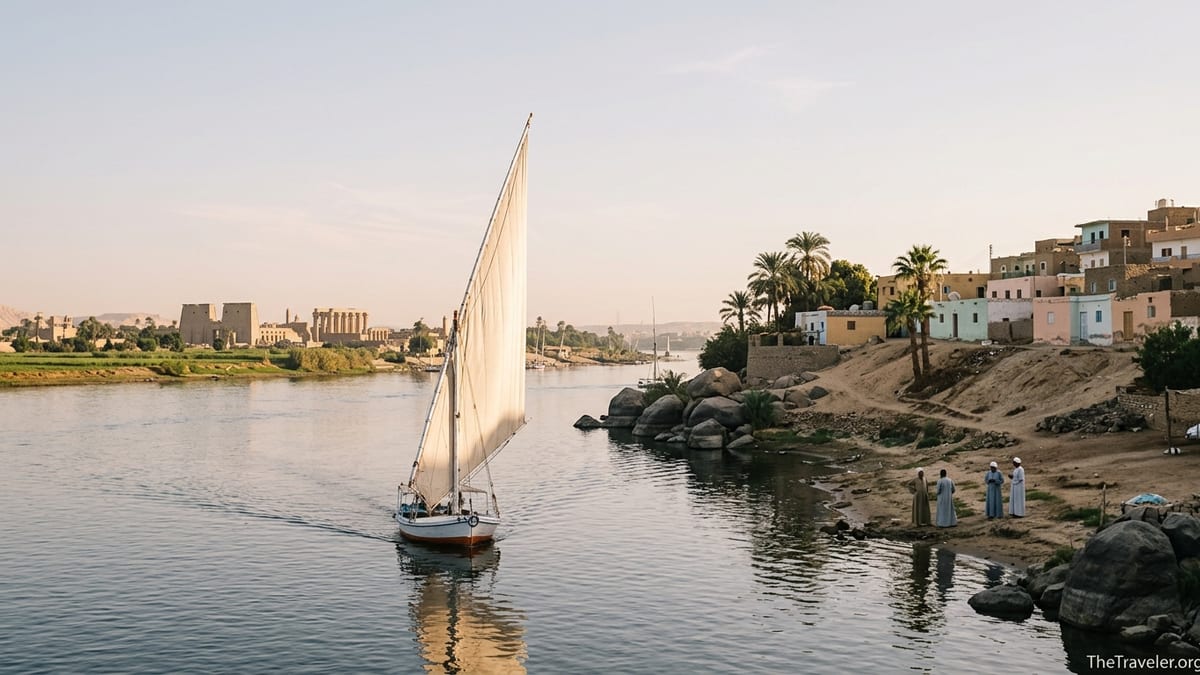
Luxor vs Aswan at a Glance
Luxor is Egypt’s heavyweight when it comes to ancient sites. The modern city sits amid what is often called the world’s greatest open-air museum, with the temples of Karnak and Luxor on the east bank and the Valley of the Kings, Valley of the Queens and the Tombs of the Nobles spread across the west bank hills. In practice, this means more time in vehicles and on site visits, earlier starts, and many more decisions about which tombs and temples to prioritize.
Aswan, by contrast, feels smaller and more relaxed, a palm-fringed river city where life is as much about the water as the ruins. Here the star attractions include the Philae Temple complex, the Nubian Museum, traditional Nubian villages on the islands, and long felucca sails between rocky islets and sandy riverbanks. It is also the main base for excursions to Abu Simbel, which can be reached on a day trip by road or air.
Costs in both cities are relatively modest by international standards, though prices for hotels and site tickets have risen repeatedly in recent years. In Luxor, midrange hotels often hover around 40 to 70 US dollars per night, with simple guesthouses costing less than half that. In Aswan, riverside resorts such as the Sofitel Legend Old Cataract or Mövenpick Resort Aswan can command several hundred dollars a night in peak season, while Nubian guesthouses on islands like Elephantine or Gharb Sohail frequently fall in the 40 to 80 dollar range.
If your priority is seeing as many temples and tombs as possible, Luxor deserves more nights. If you want a gentler pace with time for river breezes, village walks and long sunsets on the water, Aswan rewards extra days. Many travelers ultimately choose a balance such as three or four nights in Luxor and two in Aswan, adjusting based on whether they plan a separate Nile cruise.
Temples, Tombs and Ancient Highlights
Luxor’s appeal is built on sheer density of ancient sites. A typical two or three day stay can easily include Luxor Temple illuminated at night, the huge Karnak complex with its forest of columns, at least one morning devoted to the Valley of the Kings, and an afternoon at Hatshepsut’s terraced mortuary temple at Deir el-Bahari. Add optional visits to the Valley of the Queens, the Tombs of the Nobles, Medinet Habu and Luxor Museum and you begin to see why many visitors leave wishing they had an extra day.
Ticket prices change periodically, but as a rough guide the main temples in Luxor each cost the equivalent of a few US dollars for foreigners, rising to higher amounts for special tombs such as that of Nefertari in the Valley of the Queens or Seti I in the Valley of the Kings. For example, a basic east bank tour booked through a local agency that includes private car, guide and entry to Karnak and Luxor Temple often runs between 50 and 90 US dollars per person depending on group size and season, including a simple lunch. Independent travelers can cut that cost by taking taxis between sites and hiring guides at the gate.
Aswan’s ancient sites are fewer but no less atmospheric. Philae Temple, reached by motorboat across the reservoir above the old Aswan Dam, is a graceful complex dedicated mainly to Isis and is frequently cited by visitors as one of the most beautiful temples in Egypt, particularly in the soft light of late afternoon. Many itineraries combine Philae with a stop at the Unfinished Obelisk, still attached to the bedrock in the granite quarries, and a brief visit to the High Dam. On a second day, travelers often add the excellent Nubian Museum and a short hike or camel ride to the cliffside Monastery of St Simeon.
Abu Simbel, although technically not in Aswan city, is a key factor in how many nights you should spend there. Most travelers base themselves in Aswan and either take a very early caravan-style road trip, often leaving around 4 a.m., or a short morning flight south. A standard shared minibus excursion with a guide typically costs from around 60 to 100 US dollars per person, while private car or small-group tours are more. If Abu Simbel is high on your list, staying at least two nights in Aswan makes the logistics noticeably easier.
River Scenery, Feluccas and the Nile Experience
In Luxor, the Nile is a constant backdrop but less of a focus. The east bank corniche is busy with traffic, cruise ships and touts selling evening felucca rides. These traditional lateen-sailed boats typically charge by the hour; bargaining is expected, and recent reports suggest that a one hour shared felucca at sunset may run around 10 to 15 US dollars per person when arranged directly on the quay, with hotels and online agencies charging more. The standard loop might take you upstream past banana groves and then back as the temples light up.
Hot air balloon rides over Luxor’s west bank have become one of the city’s signature experiences, with dozens of colorful balloons drifting over the Nile and the necropolis at sunrise. While not a river activity in the strictest sense, the view of green fields, desert escarpments and snaking water gives one of the clearest impressions of how ancient Thebes was organized. Prices fluctuate, but many operators quote roughly 80 to 150 US dollars per person including transfers and tea.
Aswan offers a more immersive Nile experience. The river narrows here, weaving around rocky islands dotted with palm trees and pastel-painted Nubian houses. Felucca trips often feel less hurried, and it is common to spend two or three hours sailing around Elephantine Island, Kitchener’s Island and the First Cataract, sometimes stopping for a swim where the current is gentle. Some travelers arrange multi day felucca trips between Aswan and Kom Ombo or Edfu, sleeping on deck under blankets and mosquito nets, though many now favor small dahabiya cruises for greater comfort.
Another hallmark of Aswan is combining river time with village visits. For example, a common afternoon excursion is a motorboat ride from Aswan’s corniche to a Nubian village on Soheil Island or in Gharb Sohail, with time to wander alleys lined with murals, drink hibiscus tea, and perhaps see a local home. Expect to pay roughly 20 to 40 US dollars per person for such a combined boat and village trip when booked through a hotel or reputable local agency, including a short felucca segment at sunset.
Hotels, Guesthouses and Where to Stay
Luxor accommodation covers the full range from simple family-run guesthouses on the west bank to international chains on the east bank corniche. Budget travelers routinely find private rooms in the 15 to 30 US dollar range, often including breakfast, in areas such as Ramla or Al Jorf. These west bank stays give quick access to the tombs and a quieter village feel, albeit with a short boat crossing or bridge ride to reach the main town. On the east bank, midrange hotels with pools near the Nile typically start around 40 or 50 dollars a night in the cooler months, rising in peak winter and around major holidays.
Several well known properties cluster around the area between Luxor Temple and Karnak, making it easy to walk the corniche at sunset and hop into taxis or ride sharing cars for excursions. The trade off is more street noise, more touts and higher restaurant prices. Travelers seeking a calmer atmosphere often choose west bank boutique hotels with fewer than twenty rooms, shaded gardens and rooftop terraces that look across the river to the temple floodlights in the evening.
Aswan’s lodging scene skews slightly more expensive but also more romantic. Iconic properties such as the Sofitel Legend Old Cataract, set on a granite outcrop with sweeping Nile views, offer five star amenities, terraces for afternoon tea and direct access to felucca docks. Rooms here can easily cost several hundred dollars a night in the high season, and even a simple drink in the bar is priced to match the heritage setting. Midrange options include city hotels near the station and mid level resorts facing Kitchener’s Island, where doubles are often available from 70 to 150 dollars depending on view and date.
For a more intimate experience, many travelers now choose Nubian guesthouses on islands like Elephantine or in Gharb Sohail village. Rooms might be basic, sometimes with salt crusted walls and colorful murals, but the setting on the riverbank and the chance to sit under the stars listening to local music can be priceless. Nightly rates are typically in the 40 to 80 dollar range including breakfast, and hosts frequently help organize boat rides, village walks and Abu Simbel transfers, which can simplify planning if you do not speak Arabic.
Atmosphere, Crowds and Pace of Travel
Luxor can feel intense, particularly in peak winter season when large tour groups move between sites and the east bank corniche is lined with coaches. The energy is undeniably exciting if you thrive on history and activity, but it can be tiring. At popular spots such as the more famous royal tombs, you may find yourself standing shoulder to shoulder in narrow corridors, especially mid morning. Starting early and booking at least one private or small group tour can help you reach marquee sites before the crowds build.
The city itself is bustling, with souvenir stalls, felucca touts and horse carriage drivers all competing for attention along the riverfront. Visitors who stay on the west bank and cross the river in the evening often report a completely different impression: quiet lanes, small local cafes and the sound of donkeys and roosters rather than car horns. Choosing your base carefully in Luxor can therefore shape how exhausting or manageable your stay feels.
Aswan, in comparison, usually has a calmer tempo. The corniche is still busy, but the narrower river and clusters of islands create a sense of enclosure that softens the city’s edges. You are more likely to linger in a riverside cafe watching feluccas glide by or stroll through the souq in the evening hunting for spices and scarves rather than rushing between back to back tours. Many travelers use Aswan as a place to catch their breath after full sightseeing days elsewhere in Egypt.
Cultural encounters also differ. In Luxor, most interactions with locals revolve around tourism services. In Aswan, particularly in Nubian areas on the islands, there are more chances to sit with families in their homes, see traditional architecture, or attend a small music performance arranged through your guesthouse. Some of these experiences can feel touristy, but if you stay overnight in a village guesthouse rather than just visiting for an hour, you are more likely to experience daily life rather than staged stops.
Excursions, Logistics and Costs
From Luxor, most major sites lie within a 20 to 45 minute drive. Local taxis, hotel cars and ride share services are easy to arrange on the east bank, while the west bank has its own fleet of drivers who often wait near the ferry landing. A basic half day private tour of the west bank that covers the Valley of the Kings, the Colossi of Memnon and one additional temple frequently costs in the range of 40 to 70 US dollars for the vehicle and guide, with entry tickets on top. Joining a small group can reduce the per person rate, though it limits flexibility on which tombs you visit.
Aswan’s key sites are more spread out but still manageable. Boat rides to Philae, for example, typically involve a taxi ride to the marina south of town, then a short negotiation with boatmen for the trip to the island and back, plus waiting time. Many visitors simplify this by booking a bundled tour that includes vehicle, boat, guide and temple ticket in a single price, often around 40 to 80 dollars per person depending on group size and inclusions. Similar package pricing is common for combined Abu Simbel and Philae days, as well as evening sound and light shows.
When comparing costs, remember that both cities have plenty of informal options that can keep budgets in check. In Luxor you might eat koshari, falafel and grilled chicken from local cafes for just a few dollars per meal, saving your splurge for one dinner in a Nile side restaurant near Luxor Temple. In Aswan, simple fish grills along the corniche or home cooked dinners in Nubian guesthouses offer filling meals at modest prices, making it feasible to reserve your big spend for a high tea at the Old Cataract or a private felucca charter at sunset.
Transport between Luxor and Aswan also factors into how you split nights. Daytime trains link the two cities in three to four hours, with inexpensive second class seats and slightly higher priced air conditioned first class. Many travelers choose to travel in one direction by rail and the other via a Nile cruise, whether on a large ship or a more traditional dahabiya. Booking these segments in advance through a local agent, hotel or reputable online platform is advisable in high season, as the most desirable sailings and train departures can sell out.
How to Split Your Nights: Sample Strategies
For a typical first time trip focused on the classic highlights, a common approach is to spend three or four nights in Luxor and two nights in Aswan, plus additional nights on a Nile cruise if desired. With four nights in Luxor you can allocate one full day to the west bank necropolis, one to the east bank temples and museums, and still have time for a sunrise balloon ride and an unhurried evening at Luxor Temple without feeling rushed.
If your itinerary includes a Nile cruise between the two cities, you may not need equal hotel nights in both. For example, you might arrive in Luxor, spend two nights there to recover from flights and see the main west bank sites, then board a three night cruise that ends in Aswan, followed by a single hotel night in Aswan primarily to visit Philae and fly on to Cairo. In this case, most of your river scenery time comes during the cruise, and devoting more onshore nights to Luxor’s ruins makes sense.
Travelers who are less interested in archaeology and more drawn to landscapes and local culture could reasonably tilt the balance toward Aswan. Two nights allows for Philae and the Nubian Museum on one day, then Abu Simbel plus a sunset felucca on the next. A third night gives space for a slower village visit, market browsing and simply watching the light change on the granite boulders in the river without feeling that you are sacrificing must see tombs elsewhere.
Ultimately, the best split depends on what you imagine when you think of Egypt. If that image is walking through columned halls and painted burial chambers, let Luxor take the lion’s share of your nights. If instead you picture orange sails against a blue river, children diving from sandy banks and pastel house fronts reflected in the water, consider giving Aswan an extra day.
The Takeaway
Luxor and Aswan complement rather than compete with each other. Luxor is the concentrated hit of ancient Egypt, demanding energy, early mornings and a willingness to navigate crowds in exchange for access to some of the most remarkable archaeological sites on the planet. Aswan is the exhale, a place where you can slow down, absorb Nubian culture and let the Nile become more than a backdrop.
For most travelers, a practical rule of thumb is to plan at least one more night in Luxor than in Aswan. If your schedule allows, three or four nights in Luxor and two in Aswan, with a cruise or extra Aswan night added if you want to include Abu Simbel, gives a balanced picture of Upper Egypt without feeling frantic. Those especially keen on tombs and temples can tilt further toward Luxor; those hungry for river time and village stays can shift a night south.
Whichever way you divide your stay, booking a mix of structured tours and unscheduled time pays off. Use tours for complex multi stop days, such as the west bank necropolis or Abu Simbel, then leave an afternoon free to wander Luxor’s riverside or to sit on an Aswan terrace with tea, watching feluccas tack into the evening breeze. The decision of where to sleep more nights matters, but the quality of the time you spend in each place will define your memories far more than the exact count.
FAQ
Q1. If I only have three nights total, should I stay in Luxor or Aswan?
If you have just three nights and have never been to Egypt, base yourself in Luxor. You can see the main west and east bank sites and still fit in a felucca ride, giving you more of the headline ancient highlights in a short time.
Q2. How many nights do I need in Luxor to see the major tombs and temples?
Two full days, or three nights, is the practical minimum for Luxor if you want to see the Valley of the Kings, at least one or two additional west bank sites, plus Luxor Temple and Karnak without feeling rushed.
Q3. Is Aswan worth visiting if I am not going to Abu Simbel?
Yes, Aswan is still worthwhile without Abu Simbel. Philae Temple, the Nubian Museum, felucca sailing around the islands and time in a Nubian village together offer a very different, more relaxed side of Upper Egypt.
Q4. Are hotels generally cheaper in Luxor or Aswan?
On average, Luxor tends to offer more budget and midrange options at lower prices, while Aswan has a higher concentration of pricier riverfront resorts. However, simple guesthouses in Nubian villages can keep Aswan affordable.
Q5. Where is the best place for a felucca ride, Luxor or Aswan?
You can enjoy felucca rides in both cities, but Aswan usually offers more scenic and tranquil sailing among islands and granite boulders. Luxor’s rides are enjoyable yet feel closer to a city waterfront experience.
Q6. Should I do a Nile cruise or stay longer in hotels in each city?
A Nile cruise is ideal if you value slow river travel and want to see riverside temples like Kom Ombo and Edfu. If your priority is flexibility and lingering in specific places, staying extra nights in Luxor and Aswan hotels might suit you better.
Q7. Is it better to base in Luxor or Aswan for visiting Abu Simbel?
Aswan is the usual base for Abu Simbel, with early morning road convoys and short flights departing from there. Staying at least two nights in Aswan around your Abu Simbel trip keeps the long day more manageable.
Q8. How hot does it get, and does that affect where I should spend more nights?
Both cities can be extremely hot from late spring to early autumn, with midday sun making sightseeing tiring. In the hotter months some travelers prefer more time in Aswan, where river breezes and shaded terraces can make downtime more comfortable.
Q9. Can I visit Luxor as a day trip from Aswan or vice versa?
Technically it is possible by early train or private car, but it is not recommended. Each city merits at least one night, and travel times of three to four hours each way make same day round trips tiring and rushed.
Q10. For families, is Luxor or Aswan a better base?
Families often appreciate Aswan’s calmer pace, island boat rides and village stays, which can be engaging for children. However, older kids fascinated by history may get more out of extra nights in Luxor near the major temples and tombs.