


Ras El Bar is one of those places that quietly sit on the edge of the map until you look closely and realise the geography is extraordinary. At the very northern tip of the Nile Delta, this compact resort town is where the Damietta branch of the Nile finally meets the Mediterranean. The point where river and sea collide, known as Al Lisan, remains the defining attraction, backed by family beaches, a busy summer promenade and easy access to the city of Damietta. For foreign travellers exploring the Delta, Ras El Bar offers a rare mix of local holiday atmosphere and a genuinely unusual landscape.
Why Ras El Bar Feels Different From Egypt’s Big Resorts
Ras El Bar is a resort town in Damietta Governorate, set on a narrow peninsula where the Damietta branch of the Nile runs up against the open Mediterranean. It has been a domestic summer escape for Egyptian families since the early 20th century, long before the rise of Red Sea resorts like Hurghada and Sharm El Sheikh. Unlike those international hubs, Ras El Bar is compact, mostly low-rise and still oriented to Egyptian visitors who come for the cool Delta breeze, long seasonal rentals and daily sunset walks along the corniche.
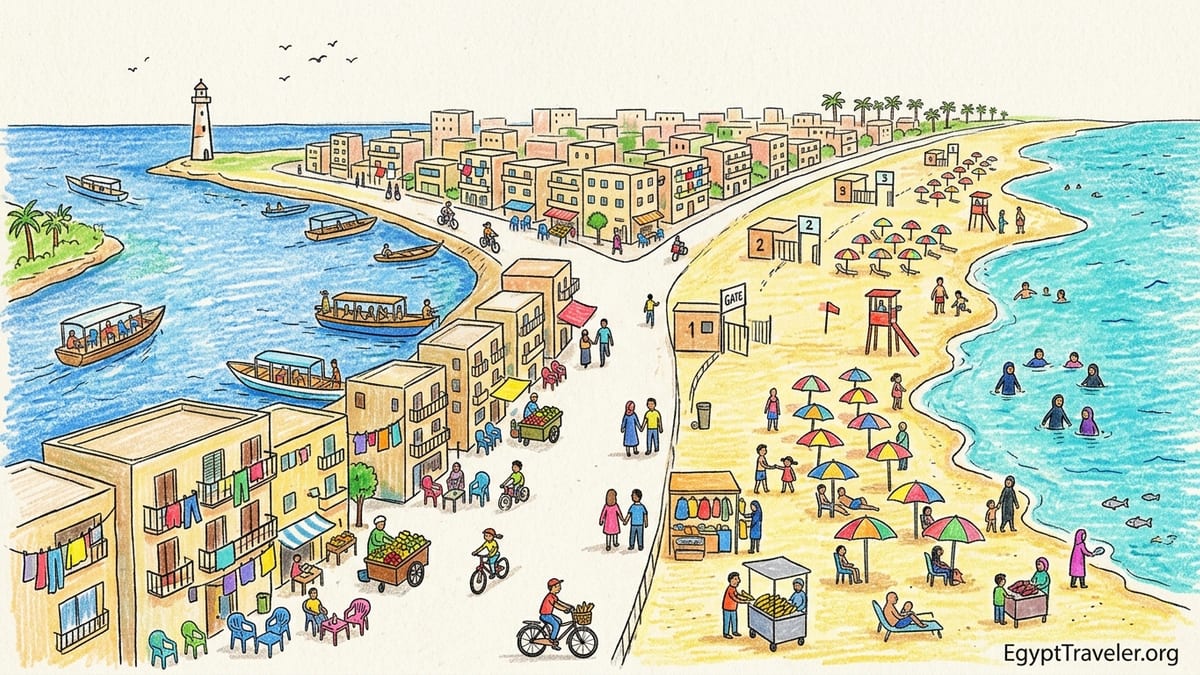
The town’s character is shaped by its grid of chalet-style summer apartments and medium-size hotels. Many Cairenes and Delta families rent the same flat every August, filling balconies with laundry lines and plastic chairs rather than beach-club decor. A walk down Nile Street or around the central market brings you into contact with fruit sellers, children on bikes and old-fashioned beach gear shops rather than tour groups with lanyards. English is less widely spoken than in Red Sea resorts, and menus often appear only in Arabic, which can be part of the appeal if you are seeking a slice of everyday coastal life.
Ras El Bar’s scale is manageable. You can cross the main part of town on foot in 20 to 30 minutes, from the riverfront in the south to the Mediterranean beachfront in the north. This creates a relaxed, lived-in feel. You are never far from a bakery selling fresh fiteer meshaltet, a coffee shop screening football, or a kiosk with cold water and packaged snacks. The trade-off is that nightlife is modest and there are few alcohol-serving venues compared with Hurghada or Sharm El Sheikh. For many travellers, that slower, family-focused rhythm is exactly what makes Ras El Bar worth adding to a Delta itinerary.
Al Lisan: Where the Nile Meets the Mediterranean
Al Lisan, sometimes written El Lessan, is the narrow tongue of land that pushes between the Damietta branch of the Nile and the Mediterranean at the very tip of Ras El Bar. This is the spot that defines the town: stand on the modern promenade near the small lighthouse and you can literally see the darker river water sliding into the blue-green sea. Visitors and local media alike continue to describe this confluence as Ras El Bar’s key attraction, and it is still the place where families pose for photos and teenagers gather in the evening breeze.
Recent development works have upgraded the Al Lisan promenade, adding reinforced sea walls, seating areas and safer walkways to protect the shoreline while keeping the views open. In practice, this means you can stroll along a broad paved path with low railings, pausing at benches that face either the river or the Mediterranean. A typical visit might involve arriving around an hour before sunset, buying a paper cone of roasted peanuts from a vendor on the way, and watching fishing boats move along the channel as the light softens.
Conditions change through the day. In the early morning, Al Lisan can be almost quiet, with just a few joggers and older residents taking the sea air. Around sunset in summer, crowds thicken significantly, especially on weekends and during school holidays, when minibuses arrive from nearby Delta towns. If you want clear photographs of the water meeting point, go early or on a weekday outside July and August. Even then, expect some wind; the exposed tip of the peninsula channels the breeze, so a light jacket can be useful even on otherwise warm days.
Swimming at the precise meeting point is not recommended because of currents and boat traffic, and the promenade is designed more for viewing than for direct access to the water. Instead, treat Al Lisan as a scenic lookout. After sunset, many visitors drift back into town, stopping at simple ice-cream kiosks or shawarma stands on the way to their accommodation, making it easy to fit Al Lisan into an evening walk.
Waterfront Walks, Corniche Life and Local Beaches
Ras El Bar’s life revolves around three waterfronts: the Nile-side corniche, the Mediterranean beaches, and the Al Lisan tip where they converge. The Nile corniche on the western side of town is lined with cafes and simple fish restaurants with plastic chairs set just back from the river. In the late afternoon, families order fresh mango juice or Turkish coffee, and small sightseeing boats offer 30 to 60 minute cruises up and down the Damietta branch. These are usually shared wooden launches with plastic chairs and a loud music soundtrack, costing roughly what you might expect for a short local excursion rather than a formal tour.
On the Mediterranean side, a line of numbered beach sections runs along the shore, each with its own entrance gate, lifeguard posts and rows of umbrellas for rent. In high season, an umbrella with a couple of plastic loungers is typically priced at a modest sum for the day, payable in cash at a booth or directly to the attendant. Most beachgoers are Egyptian families, and dress is correspondingly conservative, with women often swimming in full-length swimwear or burkinis. Bikinis are not unheard of but will attract more attention here than on the Red Sea coast, so many foreign visitors opt for more modest swimwear out of respect for local norms.
The sea itself tends to have low to moderate waves, influenced by Mediterranean winds. Lifeguards usually hoist colored flags to signal conditions; on windy days, they may whistle swimmers back toward the shore. Simple beach snacks such as corn on the cob, roasted sweet potatoes, fresh doughnuts or pre-packed chips are sold by roving vendors. Cold drinks are widely available but alcohol is rare on the public beaches. Music ranges from Egyptian pop blasting from portable speakers to the sound of the surf, depending on how close you sit to big family groups.
Evenings on the corniche are part of the ritual. After sunset, groups stroll up and down the waterfront, stopping at kiosks selling cotton candy or sugarcane juice. The atmosphere is more fairground than party town. If you are comfortable in Arabic, chatting with café owners or fishermen can yield tips on which beach section is quietest that week or when the next fishing boat departs, adding texture to your stay without relying on organised excursions.
Seafood, Cafes and the Taste of Damietta
Damietta Governorate is known throughout Egypt for its seafood and sweets, and Ras El Bar reflects that reputation. Along both the Nile corniche and some of the main streets inland, you will find specialist fish restaurants where the day’s catch is displayed on ice near the entrance. The typical routine is to pick your fish or shrimp by weight, choose whether you want it grilled or fried, and then sit while it is cooked and served with rice, salads and tahini. Prices are moderate by international standards but vary depending on what you choose; local mullet or sardines can be significantly cheaper than large sea bass or imported options.
Simple places near the Nile might serve grilled bouri (mullet), sayadeya rice cooked with caramelised onions, and a plate of pickles, while slightly smarter establishments offer mixed seafood platters with squid, shrimp and fillets. If you are unsure what to order, asking the staff for “the local favourite today” usually results in a good-value choice. Many restaurants are family-run and see the same Egyptian visitors return each summer, so service is often brisk but friendly once you show basic patience during busy times.
Beyond fish, Ras El Bar leans on the broader Damietta food culture. Bakeries sell basbousa and other syrup-soaked sweets from early morning until late at night, and ice-cream parlours open onto busy corners of the grid. Coffee culture is straightforward: expect small glasses of tea with fresh mint, Nescafe-style coffee or traditional Turkish coffee rather than a full menu of international espresso drinks, although a few newer cafes are beginning to offer cappuccinos and iced drinks that cater to younger Egyptians. Street stands selling fresh juices made from guava, mango or sugarcane help to cut the afternoon heat at low prices.
For a deeper food experience, many travellers pair Ras El Bar with a meal stop in Damietta city itself, just across the Damietta branch of the Nile. The city is particularly known for its sweets and for restaurants that mix river and sea fish at reasonable prices. A typical day trip might involve taking a taxi or microbus from Ras El Bar to Damietta in the late morning, having lunch and a walk along the city corniche, then returning to Ras El Bar in time for sunset at Al Lisan.
Where to Stay: From Family Chalets to Riverfront Hotels
Accommodation in Ras El Bar spans from simple family-run hotels and summer apartments to a small number of modern properties overlooking Al Lisan and the Nile. The most high-profile development is a five-star hotel positioned near the tip of Al Lisan, which has been highlighted as the Delta’s flagship upscale property. Its location gives many rooms direct views toward the point where the Nile meets the Mediterranean, and facilities are closer to what international travellers expect, including a more extensive breakfast buffet, in-room air conditioning and, in some cases, on-site dining with river views.
Away from the promontory, much of the town is filled with mid-range hotels and furnished apartments aimed at Egyptian families staying a week or more. These often rent by the night outside peak season and by the week in July and August. Furnishings can be basic, reflecting the fact that many guests treat them more like beach cabins than design hotels, so it is worth asking to see a room or flat before committing if you book locally. Foreign visitors who value predictable standards sometimes choose a branded or well-reviewed hotel near the water and then use taxis or walking to reach other parts of town.
Because Ras El Bar is primarily a domestic destination, you should not expect the same density of tour desks, spa facilities or resort-style entertainment that you might find in Hurghada. Instead, the accommodation experience is about easy access to the beach, proximity to family and a sense of returning to a familiar summer spot. If you are travelling outside the main season, especially in late autumn or winter, large parts of the town can feel quiet and some apartment buildings may be largely closed, but hotels on the river and at Al Lisan usually remain active.
Booking strategies depend on your tolerance for spontaneity. During Egyptian school holidays and festivals, availability can tighten, and prices rise accordingly, so advance booking is sensible. At quieter times, it is common for visitors from nearby governorates simply to arrive, walk a few blocks inland from the corniche and ask at several hotels for rates before choosing, something that confident independent travellers can also do if they speak some Arabic or are travelling with a local friend.
Damietta: The Nearest City and a Different Side of the Delta
Damietta city lies a short distance south of Ras El Bar on the opposite bank of the Damietta branch of the Nile and serves as the governorate’s capital. Known across Egypt for its furniture industry, the city has thousands of workshops and factories producing wooden furniture that is sold nationwide and exported abroad. A dedicated Damietta Furniture City complex on the outskirts brings many of these activities together, reinforcing the region’s role as a major furniture hub. For visitors, this background translates into whole streets of showrooms displaying ornate bedrooms, dining sets and modern living-room designs.
Beyond furniture, Damietta has its own waterfront charm. The city corniche along the Damietta branch features shaded benches, ice-cream vendors and simple snack outlets, giving a more urban flavour than Ras El Bar’s beach-focused promenade. Old quarters with narrow streets and traditional shops selling kitchenware, textiles and sweets provide opportunities to see a working Delta city in action. The contrast can be striking if you visit on a weekday when Ras El Bar is relatively quiet: Damietta’s commercial streets remain busy with students, workers and traders.
Many travellers visit Damietta from Ras El Bar as a half-day trip. A taxi or shared microbus can usually cover the journey in under 30 minutes, depending on traffic near the bridges. Once in Damietta you can walk part of the corniche, visit a furniture showroom, stop for coffee in a simple downtown café, and maybe shop for locally made sweets to take back to Ras El Bar. Because English is not widely used, having key addresses written in Arabic on your phone or a piece of paper helps when arranging onward transport.
Damietta also functions as a broader transport hub. Buses from Cairo and other major cities typically arrive in or near Damietta before continuing to Ras El Bar or offering onward connections. This makes the city an important anchor for any journey into this corner of the Nile Delta, even if you choose to spend most of your nights by the sea.
Getting There: Transport From Cairo, Mansoura and the Delta
Most foreign travellers reach Ras El Bar via Cairo, either directly or with a stop in another Delta city such as Mansoura. Long-distance buses operated by major companies connect Cairo to Damietta and Ras El Bar, with journey times typically in the range of four to five and a half hours depending on route and traffic. Recent online listings for Cairo to Ras El Bar services quote one-way fares starting from around the low hundreds of Egyptian pounds for standard-class coaches, with higher prices for more comfortable or faster services. Because inflation and fuel costs shift frequently, it is wise to check current fares and timings shortly before travel.
From Damietta city to Ras El Bar, travellers usually rely on taxis or shared microbuses. Shared microbuses tend to depart when full from informal stands near major crossroads or bus stations and are cheaper, while private taxis cost more but offer a direct, door-to-door ride. The distance is short enough that costs remain modest by international standards, though agreeing the fare in advance is important, especially for visitors who do not speak Arabic. If you arrive after dark, a private taxi from a reputable stand or hotel recommendation may feel more comfortable.
If you are already in the Nile Delta, Ras El Bar can also be reached from cities such as Mansoura or Tanta through a combination of regional buses and microbuses. These connections often involve changes in Damietta, which reinforces the city’s role as a gateway. Travel times from Mansoura are typically a few hours by road under normal conditions. Regardless of your starting point, allow extra time during major holidays such as Eid or peak summer weekends, when Egyptians travel in large numbers to coastal destinations and roads into Ras El Bar can clog with traffic.
Self-driving is possible for those comfortable with Egyptian road conditions, but parking inside Ras El Bar can be tight in peak season. Many domestic visitors leave their cars at their accommodation and then move around on foot or by inexpensive local tuk-tuks and taxis. Foreign drivers should ensure they are fully insured, carry an international driving permit where required, and are prepared for assertive driving styles and variable signage once they leave the main highways.
Who Will Enjoy Ras El Bar, and When to Visit
Ras El Bar is not trying to be Hurghada or Sharm El Sheikh, and that is central to deciding whether to include it in your itinerary. If you want international nightlife, diving centres, all-inclusive resorts and a high concentration of English-speaking staff, the Red Sea remains a better match. By contrast, Ras El Bar suits travellers who are curious about the Nile Delta, enjoy walking along busy local promenades, and are happy with simpler infrastructure in exchange for an authentic atmosphere.
Summer, particularly July and August, is the main season. The town fills with Egyptian families escaping hotter inland cities, and the atmosphere becomes lively, with crowded beaches, late-opening cafes and children playing in the streets well into the night. This is the best time to experience Ras El Bar at full energy, but it can also be noisy, and accommodation prices peak. Shoulder seasons such as late May, June, September and early October often provide a good compromise, with warm weather, relatively active cafes and more space on the sand.
Outside these months, Ras El Bar shifts into a quieter mode. Winter days can be cool and windy, and some seasonal businesses close or keep reduced hours. On the plus side, hotel prices can drop, and Al Lisan becomes a contemplative place to watch dramatic skies and rougher seas. For travellers focusing on cultural and urban experiences in the Delta, including time in Mansoura, Tanta or Damietta, a short off-season visit to Ras El Bar for its unique geography and river views can still be worthwhile, even if swimming is off the agenda.
In practical terms, foreign visitors should prepare for limited English-language signage, especially on local buses and at informal transport hubs, and may find it useful to have key phrases and hotel addresses in Arabic. Payment is largely cash-based in small establishments, although larger hotels and some restaurants accept cards. For many, these are manageable adjustments that come with the reward of seeing an Egyptian resort town that primarily serves Egyptians themselves.
The Takeaway
Ras El Bar offers a rare combination: the visual drama of a major river meeting the sea, the manageable scale of a walkable town, and the everyday feel of a place catering largely to domestic visitors. Al Lisan, with its upgraded promenade and clear views of the confluence, anchors the experience, while the Nile corniche, Mediterranean beaches and nearby city of Damietta provide enough variety for a few unhurried days. It is not a substitute for Egypt’s big-name international resorts, but it is a distinctive counterpoint.
For travellers already planning to explore the Nile Delta, perhaps combining Cairo with Mansoura, Tanta or rural villages, adding Ras El Bar can round out the picture of how Egyptians themselves holiday on the Mediterranean. You trade nightclub strips and glossy marinas for paper cones of peanuts at sunset, families unpacking home-cooked dinners on the beach and furniture-laden trucks rolling toward the workshops of Damietta. If that sounds more intriguing than disappointing, Ras El Bar’s unusual geography and local atmosphere are likely to justify the detour.
FAQ
Q1. Is Ras El Bar worth visiting for international travellers?
Yes, if you are interested in the Nile Delta, local Egyptian holiday culture and the rare geography where the Damietta branch of the Nile meets the Mediterranean. It is less suited to travellers seeking polished resort facilities or nightlife.
Q2. How many days should I spend in Ras El Bar?
Many visitors find that two to three days is enough to visit Al Lisan, enjoy the beaches, walk the corniche and make at least one side trip into Damietta city.
Q3. Can I swim where the Nile meets the Mediterranean at Al Lisan?
No, Al Lisan is designed as a viewing promenade rather than a swimming spot. Currents and boat traffic make the confluence unsuitable for bathing, so you should use the designated Mediterranean beaches instead.
Q4. How do I get from Cairo to Ras El Bar?
The simplest option is a long-distance bus from Cairo to Damietta or directly to Ras El Bar, usually taking around four to five and a half hours depending on route and traffic, followed by a short taxi or microbus ride if you arrive in Damietta.
Q5. What is the best time of year to visit Ras El Bar?
July and August are the busiest and liveliest, while late May, June, September and early October offer warm weather with fewer crowds. Winter visits are quieter and cooler but can still be rewarding for scenery.
Q6. Is Ras El Bar suitable for solo travellers?
Yes, provided you are comfortable with limited English, basic public transport and a family-oriented environment. Solo travellers often enjoy walking the corniche, taking boat trips and making day visits to Damietta.
Q7. Are there alcohol-serving venues in Ras El Bar?
Alcohol is not widely available. A few higher-end hotels and restaurants may serve it discreetly, but most local cafes and beach establishments do not, so you should not expect a bar scene.
Q8. How does Ras El Bar compare with Hurghada or Sharm El Sheikh?
Hurghada and Sharm El Sheikh are international resort hubs with extensive diving, nightlife and tourist infrastructure. Ras El Bar is smaller, more low-key and focused on Egyptian families rather than overseas package tourism.
Q9. Is Ras El Bar family-friendly?
Very much so. The town is geared toward family holidays, with shallow sections of beach, evening promenades, simple amusements and plenty of multi-room apartments suitable for larger groups.
Q10. Can Ras El Bar be combined with other destinations in the Nile Delta?
Yes. Many travellers pair it with Damietta city, Mansoura or other Delta towns, using Ras El Bar as a coastal break in an itinerary that focuses on everyday Egyptian life rather than classical monuments.