


Base yourself in Sharm El Sheikh for a week and one question comes up again and again: if you only have one Red Sea boat day, should you book Ras Mohammed National Park or Tiran Island in the Straits of Tiran? Both rank among Egypt’s top marine areas and both are easily booked from hotel tour desks and local dive centers, yet they offer noticeably different experiences in 2026. This guide breaks down what you will actually see and feel in the water, how the days run in practice and which option suits different types of snorkelers and divers.
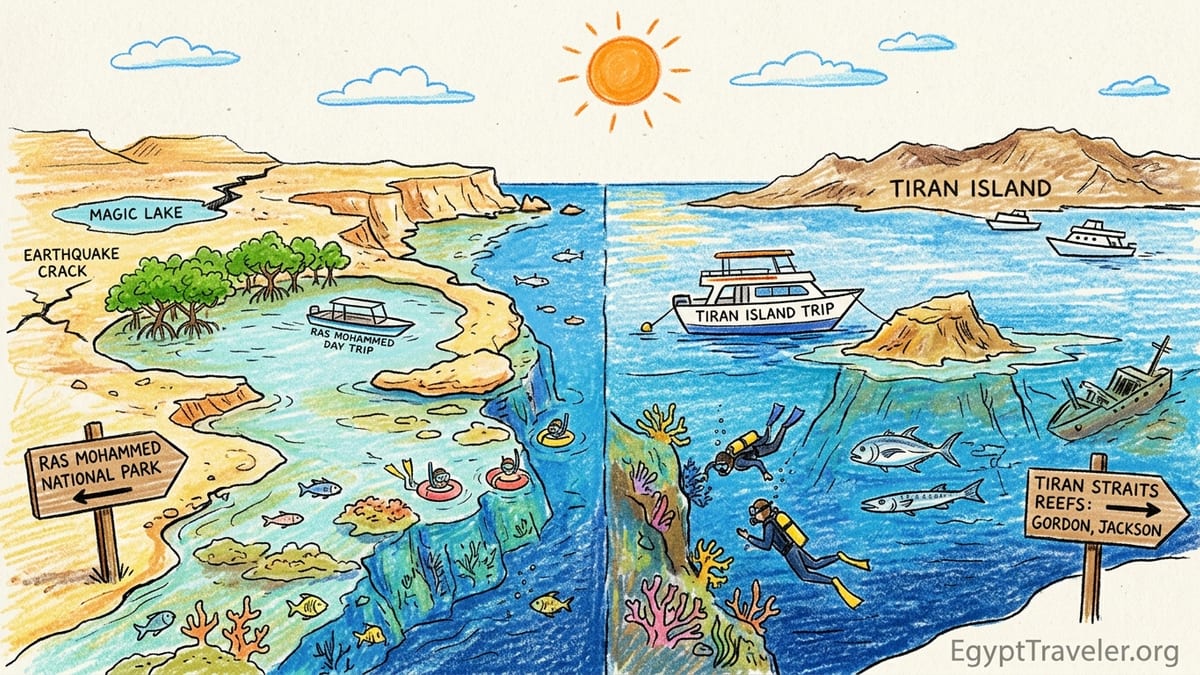
Ras Mohammed vs Tiran in 2026: The Big Picture
Ras Mohammed National Park sits at the very tip of the Sinai Peninsula, around 30 to 45 minutes by road from most Sharm resorts. Boats then work several reefs inside the park, including headline sites like Shark and Yolanda, Jackfish Alley and Anemone City. Because Ras Mohammed is a protected national park, the focus is on healthy coral gardens, schooling fish and the larger sense of being inside a conservation area rather than alongside hotels.
Tiran Island, by contrast, is purely a boat destination. The island itself is a barren crescent of rock that you will only see from a distance, but the Straits of Tiran that surround it host four famous reefs: Gordon, Thomas, Woodhouse and Jackson. Most 2026 day boats from Sharm moor on the more sheltered sides of Gordon and Jackson for snorkelers and newer divers, then use the edges of Thomas or Woodhouse when conditions permit for more experienced groups.
In practice, Ras Mohammed often delivers more varied above-and-below scenery in a single outing: desert cliffs, mangroves, shallow lagoons and drop-offs, plus the much-photographed “magic lake” and earthquake crack that road-based tours visit between snorkel stops. Tiran offers a more “pure boat day” feel: longer cruising, big blue water, and less sense of land-based sightseeing. Which is better depends mainly on whether you want a national-park experience or a classic offshore reef adventure.
Pricing in 2026 is broadly similar through local operators. Day boats to Ras Mohammed and Tiran frequently start around the equivalent of 35 to 60 euros for snorkelers and slightly more for divers, with Ras Mohammed trips often adding a small national-park fee per person collected in cash on the morning of departure. Many Sharm dive centers list exactly the same base rate for a Ras Mohammed or Tiran day, which makes the choice about experience rather than cost.
Snorkeling Conditions: Visibility, Depth and Ease
Snorkelers based in Sharm consistently report excellent visibility in both Ras Mohammed and the Straits of Tiran, commonly around 20 to 30 meters in settled summer weather. The main differences are depth under the boat and how easy it is to stay over shallow coral. Ras Mohammed’s main snorkel stops usually combine a shallow shelf near shore with a wall that drops off into deep blue. At popular stops like Shark and Yolanda, snorkelers can float above 3 to 8 meters of water along the edge of the reef, then look sideways into the drop-off where schools of barracuda, batfish or jacks cruise by.
Tiran’s reefs sit further from shore and rise up from deep water like submerged mountains. Around Gordon Reef, for example, snorkelers often drift along a plateau of 5 to 10 meters depth while the seabed falls away much deeper a short fin-kick to the side. At Jackson Reef, the mooring side used for snorkel groups can feel more exposed to wind and chop, though operators switch reefs if surface conditions look rough. This means Tiran can feel slightly more “big open sea” compared with the partially sheltered bays of Ras Mohammed.
For nervous first-timers, the combination of a visible shoreline, more obvious shallows and generally calmer lagoons makes Ras Mohammed feel more approachable. Tourists who are comfortable in open water often find Tiran exhilarating, especially when currents line up to give a gentle drift past towering coral formations. In both places, 2026 operators routinely provide lifejackets and noodles, and many insist that all snorkelers wear them on drift sections, so less confident swimmers can still join.
Water temperatures are similar at both sites, with midsummer surface water in the high twenties Celsius and winter dropping to the low twenties. In December and January, most local dive centers recommend at least a 5 mm wetsuit for long snorkel sessions; in peak summer many holidaymakers manage in shorties or even just rash vests, but a thin suit still helps prevent chill on three-stop days.
Diving: Reefs, Currents and Experience Levels
For divers, Ras Mohammed is often described locally as “fish soup” in high season. Shark and Yolanda Reef in particular combines a shallow plateau, precipitous walls and a scattering of porcelain toilets and bathtubs from the wrecked Yolanda cargo ship, now colonized by coral and schooling fish. On a typical 2026 day boat, certified divers might do two dives at different Ras Mohammed sites while snorkelers remain on the surface, with the option of a third dive as an add-on. Currents vary from gentle to strong and can change direction, so most operators brief these sites as suitable for divers who are at least comfortable in moderate current and able to make safety stops while drifting.
The Straits of Tiran are famous among divers for current-driven walls and pelagic sightings. Jackson and Thomas Reef, in particular, can deliver fast drifts on the exposed sides where currents funnel through the narrow straits. Liveaboard itineraries often label some Tiran profiles as not suitable for very inexperienced divers because of the combination of depth, current and occasional downwelling, even though sheltered moorings at Gordon or the protected side of Jackson work well for newer divers on calmer days. For many Sharm-based dive centers, Tiran is where they take confident Open Water or Advanced Open Water divers looking for a more adventurous wall dive.
In terms of certification, snorkel-inclusive day boats usually accept try-divers and Discover Scuba participants at both Ras Mohammed and Tiran, but will restrict them to the most sheltered sections of the reefs. If you hold only a handful of logged dives, discuss site choices in advance. Many Sharm dive centers in 2026 suggest starting with a Ras Mohammed day to re-familiarize yourself with Red Sea conditions before signing up for current-heavy profiles in the Straits of Tiran.
Bullish marketing often promises sharks and big pelagics everywhere, yet actual sightings are always luck-dependent. Ras Mohammed occasionally produces reef sharks, large tuna or even hammerheads in the blue at certain times of year; Tiran, thanks to its current-swept position at the mouth of the Gulf of Aqaba, has long had a reputation among regular visitors for attracting schooling jacks, barracuda and the occasional shark on the outer walls. For most divers in 2026, though, the consistent highlight in both areas remains the density and variety of reef life rather than a single headline species.
Coral, Marine Life and Overall Underwater Atmosphere
Ras Mohammed’s status as a national park means that its reefs benefit from stricter protections than many house reefs along the main Sharm hotel strip. Mooring buoys, no-fishing rules and a ban on anchoring in key zones all help coral quality. At Shark and Yolanda, divers commonly report thick forests of soft coral, large gorgonians and huge schools of anthias swirling over the drop-off. Snorkelers in 2026 still find classic Red Sea scenes here: parrotfish grazing, clownfish tucked into anemones and table corals sheltering schools of glassfish.
Tiran’s offshore location and current-fed environment give many visitors the impression of slightly larger fish and a greater chance of pelagic action. On recent trips, local operators have highlighted frequent sightings of blue-spotted stingrays on sandy patches near Gordon Reef, as well as turtles, morays and clouds of schooling fusiliers around Jackson. Because shore access is effectively absent, these reefs have been spared some of the casual trampling and overuse that affects easily waded lagoons elsewhere in the region.
That said, both areas are experiencing the same broad Red Sea pressures: warming events, occasional localized bleaching and the strains of high visitor numbers in peak holiday seasons. On busy days in July and August, dozens of boats can be moored around Ras Mohammed’s most famous reefs, and the “White Island” sandbank that is often bundled into Ras Mohammed trips has a strong reputation among frequent visitors as crowded and highly Instagram-driven. In comparison, several travelers and dive professionals currently based in Sharm report that Tiran feels marginally less congested in 2026, with more time actually spent in the water rather than queuing for photo stops.
For wildlife fans, the choice becomes one of emphasis. If you want intense reef color, classic coral gardens and high fish density plus the knowledge that you are inside an Egyptian national park, Ras Mohammed stands out. If you prefer big-water scenery, dramatic reef pinnacles and a slightly higher chance of encountering schooling pelagics out in the blue, Tiran has the edge.
Boat Logistics, Tour Duration and Fees
From Sharm El Sheikh hotels, Ras Mohammed can be reached either by road or by boat. Boat trips usually involve a short road transfer to the harbor, followed by around 45 to 60 minutes of sailing to the first reef inside the park. Road-based tours drive directly into the national park by bus or minibus, stopping at lookouts, mangroves and the earthquake crack before transferring to small boats or allowing snorkeling from shore at selected bays. In 2026, most mainstream tour desks still sell Ras Mohammed as a full-day boat trip, roughly 8:00 to 17:00, including two or three snorkel sessions and lunch on board.
Tiran is exclusively a boat excursion. Operators typically collect guests between 8:00 and 9:00, depending on resort location, then transfer them to Sharm’s marina for a 60 to 90 minute cruise out into the Straits of Tiran. The distance is greater than to Ras Mohammed, so more of the day is spent under way. A fairly standard 2026 itinerary for a mixed snorkel and dive boat might include two long sessions over different parts of Gordon and Jackson reefs or a combination of Gordon with Thomas or Woodhouse if conditions permit. Return to harbor is usually around 16:30 to 17:30.
National-park fees apply at Ras Mohammed and are normally collected in cash per person on top of the tour price. The exact implementation can vary depending on park decisions and tour operators, but travelers booking in 2026 should expect a small additional charge on arrival at the marina, often quoted in US dollars or Egyptian pounds. By contrast, Tiran lies outside the Egyptian national parks network, so there is no equivalent park entrance fee, though some dive centers list a modest “offshore fuel” or “Tiran supplement” to account for the longer cruise.
Food and equipment inclusions are similar for both excursions. Many mid-range operators include lunch, hot drinks and soft drinks on board, with snorkel gear rental either bundled or available at a low daily rate. More upscale Red Sea boat brands and some five-star hotel dive centers charge more but cap guest numbers per boat, offer better catering and provide higher staff-to-guest ratios. If you dislike crowds and are willing to pay extra, choosing a boutique operator can transform either Ras Mohammed or Tiran from a budget “cattle boat” into a far more relaxed day at sea.
Crowds, Atmosphere and On-land Sightseeing
Ras Mohammed is one of Egypt’s flagship protected areas and remains a signature excursion for package-holiday travelers in Sharm. As a result, the marina and main sites can feel very busy in peak European school holiday periods, particularly from late June through August and around Christmas and New Year. Many budget tours combine Ras Mohammed reef stops with an extended visit to White Island, a shallow sandbank where dozens of boats anchor at once while guests wade and take photos. Some visitors enjoy the party-like scene, while others find it overcrowded and would rather spend the time snorkeling.
That said, Ras Mohammed’s variety of access points makes it easier for operators to spread out. Smaller groups, especially those booked with dive centers rather than mass-market street agencies, may visit quieter bays or time their Shark and Yolanda stops to avoid the heaviest boat traffic. Road-based Ras Mohammed tours can also reach lookouts and shore-access snorkel spots away from the main moorings, though these trips inevitably include more time on the bus.
Tiran offers almost no land-based sightseeing. The island itself is now under Saudi administration and off limits to landing from Egyptian day boats; you will view its barren slopes and the rusting wreck on nearby Gordon Reef from the deck while moored. The upside is that the atmosphere centers on the sea rather than on a specific instagrammable sandbar. Boats still cluster at the most sheltered moorings, but regulars in 2026 often describe a calmer, more water-focused vibe at Tiran compared with Ras Mohammed’s mixed sightseeing-snorkel crowd.
For travelers who prefer landscapes and photography on top of snorkeling, Ras Mohammed’s desert cliffs, mangroves and viewpoints offer more variety. For those who are happy with nothing more than the horizon, a deck, and a sequence of coral walls, Tiran’s boat-only character may be a better fit.
Which Is Better for Beginners, Families and Experienced Divers?
If you are a first-time snorkeler, a nervous swimmer, or traveling with young children, Ras Mohammed generally feels more forgiving. The presence of visible shoreline, a mix of shallow sandy entries and walls, and the option of road-accessible bays can all help beginners feel secure. Many family-oriented Sharm resorts recommend Ras Mohammed road-and-boat combinations for guests who want a taste of the Red Sea without spending the entire day far offshore.
For adults who are comfortable but not especially strong in the water, either trip can work. The key difference is your comfort with current and distance from land. Ras Mohammed has its share of drifts, but many popular stops are partially sheltered. Tiran’s best sites rely on current to bring in nutrients and fish, so operators may cancel or switch reefs if conditions are too strong. If you know you dislike chop and swell, Ras Mohammed offers more options to adapt the day route, especially outside the windiest winter weeks.
Experienced snorkelers and divers who enjoy blue-water feel, dramatic walls and current-driven sites often rate Tiran slightly higher. The four reefs in the Straits of Tiran each offer multiple profiles depending on current direction, so repeat visitors can log many dives without repetition. Divers with Advanced certifications, drift experience and good buoyancy control will get more out of Tiran’s exposed corners than casual holiday divers limited to 18 meters.
By contrast, Ras Mohammed rewards those who love variety in a compact area. In a single day, you might combine the colorful shallows of Anemone City with the vertical walls of Shark Reef and the wreckage of Yolanda, then finish with a relaxed snorkel over a protected lagoon. For mixed-experience groups that include both serious divers and family snorkelers, Ras Mohammed tends to offer the best compromise.
The Takeaway: If You Can Only Book One Boat Day
For many travelers flying into Sharm El Sheikh for a short break, time or budget allows just one full boat day. If that is your situation in 2026, answering a few questions will usually make the choice between Ras Mohammed and Tiran Island clear.
Choose Ras Mohammed if you want the fuller national-park experience, with desert scenery, the possibility of road-access stops, a mix of shallow coral gardens and walls, and a slightly gentler feel for beginners and families. Expect the classic highlights of Shark and Yolanda Reef, thriving coral formations, large schools of reef fish and, in high season, plenty of other boats. Be prepared for a small park fee on top of your tour price and consider booking with a quality dive center rather than a bargain street stand if you want to avoid the most crowded boats and itineraries that overemphasize White Island.
Choose Tiran Island if you prioritize time in the water over sightseeing, enjoy the idea of being far offshore among isolated reef pinnacles and are comfortable with the possibility of stronger currents and more “advanced-feeling” conditions. Certified divers looking for dramatic walls, schooling pelagics and a more adventurous vibe often gravitate here. Snorkelers who are confident in open sea typically appreciate the big-water atmosphere and slightly less congested moorings, especially when travelling outside the very busiest summer weeks.
In an ideal world you would do both. But if you can only book one Red Sea boat day from Sharm in 2026, a simple rule of thumb works well. For a first taste of the Red Sea and a family-friendly national-park day with plenty to look at above and below the surface, pick Ras Mohammed. For a more focused offshore reef adventure centered on walls, currents and wide horizons, go for Tiran Island.
FAQ
Q1: Is Ras Mohammed or Tiran Island better for complete beginner snorkelers?
Ras Mohammed is usually better for complete beginners because many sites combine shallow sandy areas with protected reefs close to shore, and some tours access the park by road so you are never far from land. Tiran’s reefs rise from deeper water and can feel more exposed, especially on breezy days.
Q2: Which trip has stronger currents, Ras Mohammed or Tiran?
Both areas can have current, but the Straits of Tiran are generally known for stronger and more consistent flows, especially on the outer sides of Jackson and Thomas reefs. Ras Mohammed experiences currents too, particularly at Shark and Yolanda, but operators have more sheltered bays available if conditions build.
Q3: Are national-park fees included in Ras Mohammed tour prices?
Many tour desks quote a base price for Ras Mohammed and then collect a small national-park fee per person in cash on the day, often in US dollars or Egyptian pounds. It is a good idea to confirm in advance whether your chosen excursion includes this fee or charges it separately at the marina.
Q4: Do Tiran Island trips land on the island itself?
No. In 2026 standard snorkel and dive boats from Sharm do not land on Tiran Island. The island is under Saudi administration and off limits for casual landings, so you will view it and the nearby wrecks from the water while snorkeling and diving the surrounding reefs.
Q5: How long are the typical day trips to Ras Mohammed and Tiran?
Both are full-day outings. Hotel pickups usually start around 8:00 and most boats return between 16:30 and 17:30. Tiran involves a longer cruise to reach the reefs, so you may spend slightly more time under way and slightly less time on land compared with Ras Mohammed road-and-boat combinations.
Q6: Which destination is better for experienced divers looking for challenging dives?
Experienced divers who enjoy drift dives, walls and open-sea conditions often favor the Straits of Tiran, particularly Jackson and Thomas reefs when currents are running. Ras Mohammed also has advanced profiles, but Tiran’s exposed position at the mouth of the Gulf of Aqaba tends to deliver more consistently “big-water” dives.
Q7: Is there a big price difference between Ras Mohammed and Tiran trips?
For day boats from Sharm, prices are broadly similar in 2026, with many dive centers charging around the same base rate for Ras Mohammed and Tiran. The main differences are the small Ras Mohammed park fee and, in some cases, a modest fuel or offshore supplement for Tiran. Overall, experience and operator quality matter more than destination for cost.
Q8: Which trip is less crowded in peak season?
Ras Mohammed, especially when combined with White Island, often feels busier because it is heavily marketed to first-time visitors and package tours. Tiran can still be popular but generally attracts a slightly higher proportion of divers and confident snorkelers, so some travelers find the experience calmer and more focused on the water, particularly if they choose a smaller-boat operator.
Q9: Can I see sharks and big pelagics at Ras Mohammed or Tiran?
Shark and pelagic sightings are possible at both Ras Mohammed and Tiran, especially in certain seasons and at exposed sites, but they are never guaranteed. Most visitors in 2026 remember the reefs for their coral and schooling reef fish rather than a single large animal encounter, so it is best to book for the overall underwater scenery rather than for a promised shark sighting.
Q10: If I am staying a week in Sharm, is it worth doing both Ras Mohammed and Tiran?
Yes. With a week in Sharm, many travelers and dive centers recommend booking one Ras Mohammed day and one Tiran day. The two areas feel different enough in terms of scenery, currents and atmosphere that doing both gives a much fuller sense of the Red Sea around Sharm El Sheikh.