


Few places in Egypt look as otherworldly in real life as Siwa’s salt lakes. Perfectly still, crystal-blue pools ringed with hard white salt have turned this remote oasis near the Libyan border into a social media star. Yet behind every dreamy photo is a very physical reality: water dense enough to lift you without effort, sharp salt underfoot, desert sun overhead and an environment that needs care. This guide focuses entirely on how to experience Siwa’s salt lakes in comfort and safety, what to bring, which lakes travelers actually visit, and how to fit a float into a wider day in the oasis.
What Siwa’s Salt Lakes Actually Are
Siwa Oasis lies in a natural depression in Egypt’s Western Desert, surrounded by salt-rich rock and fed by underground springs. Over thousands of years, water rising from the aquifer has dissolved minerals in the surrounding rock, then evaporated under intense desert sun. What remains are hypersaline lakes and ponds with salinity significantly higher than the Mediterranean and Red Sea. The largest bodies, like Siwa Lake and Zeitoun Lake, spread across the western side of the oasis, while dozens of smaller pools and pits are linked to salt extraction and drainage projects.
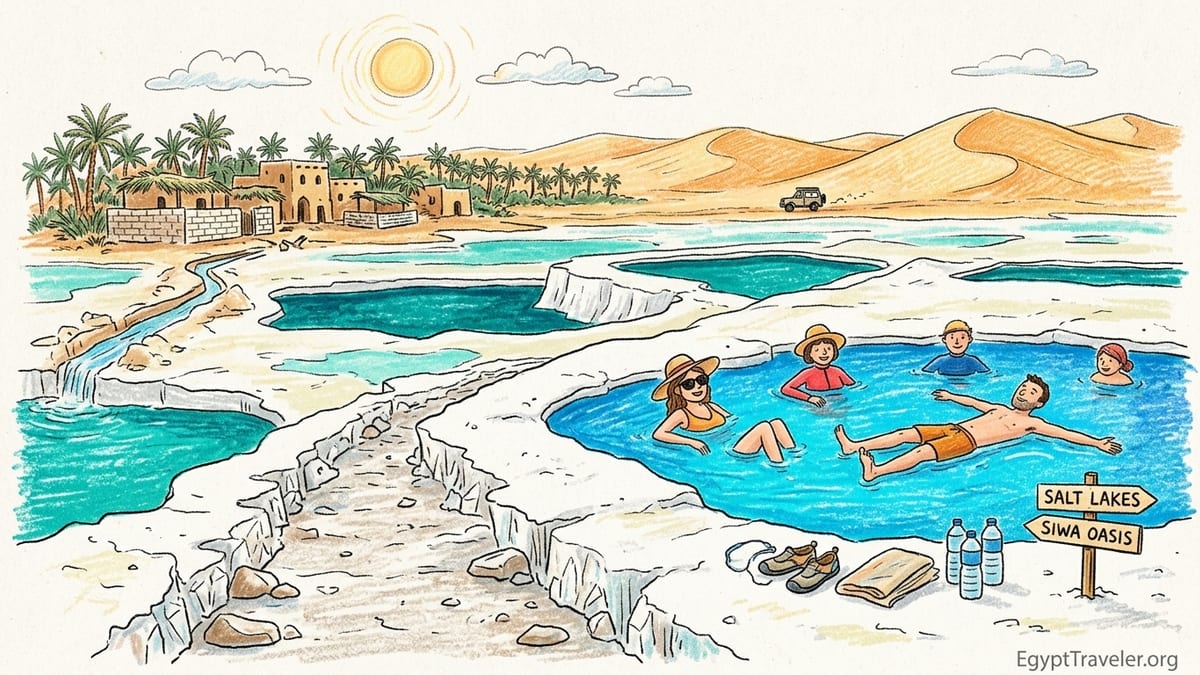
When people talk about “the Siwa salt lakes,” they often picture the small turquoise basins made famous on Instagram rather than the broad, shallow main lakes. Many of those vivid blue pools are located at the edge of active salt-mining areas where slabs of crystalline salt are cut for industry and for Siwa’s distinctive salt-brick buildings. These pools are usually several meters deep with vertical walls made of compacted salt. In contrast, the natural lakes often have gentler slopes, muddy shallows and, in places, reeds and birdlife.
Egypt’s tourism authorities now highlight Siwa’s salt lakes alongside hot springs and desert safaris as a core wellness experience. Official promotion describes them as part of the oasis’s “therapeutic” landscape, but it is important to understand that they are not managed spa pools. There are no lifeguards, almost no changing facilities and few signs. Access is negotiated locally with drivers and land users, and conditions can change when new pits are dug or old ones flood. Treat the lakes as wild environments rather than a theme-park attraction.
The expansion of agriculture and drainage works in recent decades has also reshaped parts of Siwa’s lake system. Government water-management projects have dug canals and new depressions to channel saline drainage away from farmland, which means some of the smaller pools people floated in a few years ago may look different today or be off-limits if they are now part of active engineering work. Guides usually know which sites are currently used for swimming and photography and which are better left alone.
Why You Float So Easily – And What That Means For Your Body
Floating in Siwa’s salt lakes can feel almost comical at first. As soon as you lean back, the dense brine pushes you upward and your legs pop to the surface. This effect comes from the very high concentration of dissolved salts in the water. Salty water is heavier than fresh water, so your body, which is mostly water, becomes relatively lighter and more buoyant. Even travelers who normally sink in a hotel pool find that they bob on the surface here with no effort, which is why local drivers often compare the experience to the Dead Sea.
That same salinity that makes floating effortless is also harsh on skin, eyes and mucous membranes. When your body sits in concentrated brine, water is drawn out of your outer skin cells. Most people feel this as a tightening or prickling sensation after five to ten minutes in the water. If you stay much longer, particularly on your first visit, the skin can become raw and irritated later in the day. People with eczema, very dry skin or recent sunburn are more likely to feel uncomfortable, so shorter dips with breaks in between are advisable.
Cuts, insect bites and freshly shaved areas are particularly vulnerable because the protective outer layer of skin is already compromised. Even a tiny nick from a razor or cracked skin on your heels can sting sharply when the brine touches it. Travelers who shave legs, underarms or faces are often surprised by how painful the first minute in the water can be. For that reason, it is wise to avoid shaving the day you plan to visit the lakes and to check your feet and hands for small wounds before you get in.
Eyes are even more sensitive. A splash of highly saline water into your eyes can burn intensely and cause several minutes of tearing and blurred vision. It is not usually dangerous if rinsed quickly with fresh water, but it is very unpleasant and can easily ruin the mood of the excursion. Keeping your head above water, avoiding playful splashing and having a bottle of fresh water ready on the shore for emergency rinsing all make a big difference to comfort.
Safety Basics: Time Limits, Health Considerations and Children
In most Siwa salt pools used for tourism, local guides recommend spending around 10 to 20 minutes in the water at a time, then getting out to rest your skin and rehydrate. After a short break in the shade and some drinking water, you can re-enter for another float. Travelers who stay in for significantly longer sometimes report feeling light-headed or noticing red, itchy patches on their skin later, especially if they also had heavy sun exposure.
The lakes are extremely buoyant, so swimming ability is much less important than in regular water. Non-swimmers can safely sit back and float as long as they are comfortable in the water and follow instructions on how to enter and exit. The main risk is not sinking but losing balance near sharp edges or standing up too quickly on uneven, jagged salt. People who panic in deep water should still use caution because most of the Instagram-famous pools drop straight down and are too deep to stand in.
Families frequently bring children to the lakes, and kids usually love the novelty of “floating like a cork.” However, children’s eyes and skin may react more quickly to the salt, and they are more tempted to splash and rub their faces. Before getting in, explain clearly that there is no jumping in headfirst, no splashing others’ faces and no rubbing eyes with wet, salty hands. Many parents choose to let children float for a slightly shorter time than adults, then rinse them promptly with fresh water and put on long-sleeved sun protection while they play on the shore.
Anyone with open wounds, recent piercings, a severe skin condition or eye problems should take extra medical advice before entering hypersaline water. While Siwa’s lakes are not known for strong currents or waves, the combination of dehydration, summer heat above 40 degrees Celsius and salt exposure can be tiring. Older travelers and those with heart or blood pressure issues often schedule their float earlier in the morning when temperatures are milder and save more strenuous activities, like sandboarding in the Great Sand Sea, for cooler late-afternoon hours.
What To Bring: Clothing, Footwear and Practical Gear
What you pack for Siwa’s salt lakes can make the difference between a dreamlike experience and an uncomfortable day. The single most important item is freshwater to rinse with. Many local drivers stop first at a cold or hot spring where you can shower after your float, but you should still carry several large bottles of drinking-quality water per person in the vehicle. Use one for drinking and one for pouring over your body and especially your hands and face as soon as you get out of the lake.
Footwear is almost as critical. The salt crust around many pools is sharp and brittle, more like broken glass than soft sand. Underwater ledges can be irregular and slippery. Closed water shoes or sturdy sandals that strap firmly around the heel protect your soles when walking to the edge and give you grip when climbing in and out. Thin flip-flops are easily sliced by the salt and do not protect your toes if you misjudge a step. Some visitors take off shoes once seated on the edge and swing directly into deeper water to avoid stepping on jagged surfaces.
For clothing, choose a swimsuit you do not mind aging quickly. High salinity and bright sun are hard on elastic fibers and dyes. Dark, simple fabrics fare better than delicate, pale colors or heavily printed swimwear. Many travelers wear a rash vest or quick-drying T-shirt on top, both for modesty and to add a layer of sun protection. Women who prefer full-coverage swimwear will find that the extra fabric also helps shield skin from direct contact with the salt for the first few minutes in the water.
A lightweight towel and a change of loose, breathable clothes are essential so you are not driving back with crystallized salt on your skin and seat. Pack a small dry bag or waterproof pouch for valuables and a basic waterproof phone case if you plan to take photos or videos while floating. The risk is less from dropping the phone to the bottom, where it is visible through clear water, and more from salt clogging charging ports and buttons. Travelers who have rinsed their devices immediately in fresh water tend to have fewer problems later.
Sun, Hydration and Avoiding Common Pain Points
The desert climate around Siwa is dry, sunny and often windy. Even outside peak summer, the sun can feel fierce when reflected off bright white salt and pale sand. Apply broad-spectrum sunscreen generously at least 15 minutes before reaching the lakes and top up on exposed areas after you dry off. Pay special attention to shoulders, shins, tops of feet and the face. A wide-brimmed hat and UV-rated sunglasses not only protect from sunburn but also reduce glare from the water, making the views more enjoyable.
Dehydration is one of the easiest problems to overlook. People mistake the cool feel of water on their skin for overall cooling, but in reality, the combination of high salt, sun and dry air pulls moisture from the body. Drink water steadily during the drive, between floats and afterward. Local cafés and guesthouses in Siwa town often serve fresh juices made from dates, oranges or hibiscus that help replace some electrolytes, but they should complement, not replace, plain water.
Small decisions before you arrive can prevent bigger pain later. Avoid shaving on the same morning as your float, and do not apply scented lotions or perfumes right before getting in, as some can react with salt and increase irritation. Remove metal jewelry, especially items that are not solid gold or stainless steel, to reduce corrosion and discoloration. Some visitors wear simple silicon rings or leave all accessories at their accommodation to be safe.
Plan how you will enter and exit the water before you commit. In many of the smaller mining pools, you sit on the edge, lower yourself in with your hands on the salt rim and then gently slide off. On the way out, you reverse that motion. Rushing or trying to climb out vertically can lead to scraped shins or hands if you slip. Ask your driver or guide to demonstrate the best spot, since they usually know where the edges are strongest and which sections have started to crumble.
Which Lakes To Visit and How To Get There
Most first-time visitors see the lakes as part of a half-day desert trip arranged through their guesthouse or a local driver. Vehicles leave Siwa town and follow unpaved tracks across the oasis fringe, passing palm groves and salt fields before reaching a cluster of bright pools. The drive typically takes 20 to 40 minutes depending on which route is used and whether you also include sand dunes in the Great Sand Sea. Road quality ranges from acceptable asphalt near town to rugged dirt that is rutted after rare winter rains. A high-clearance vehicle or 4x4 is strongly recommended, and many travelers feel more comfortable hiring an experienced Siwan driver rather than self-driving a rental car off the paved roads.
There are two broad types of sites where visitors float. The first are natural or semi-natural salt lakes with gradual access, sometimes near sunset viewpoints like Fatnas Island on the main lake. Here the water may be slightly less vividly colored up close but the setting can be wide and peaceful, with views across palms and open water. The second type are compact, almost geometric pools inside working salt-mining areas. These are the intensely turquoise “baths” most often seen on social media, with sheer salt walls and crystalline edges.
Access conditions in the mining zones can vary. Some pits are on land controlled by particular quarry operators or farmers, and drivers maintain informal agreements about where they bring guests. You should not assume that every photographed pool is automatically open to the public or safe on the day you visit. New pits may have unstable edges, hidden metal equipment or trucks operating nearby. Responsible guides choose locations a little set apart from active machinery and avoid sites that are in obvious daily use for industrial extraction.
If you prefer to travel independently, discuss your plans with your accommodation in Siwa. Many eco-lodges and guesthouses run their own small excursions or recommend trusted drivers, and they can advise which lakes are currently used for floating. Some travelers rent bicycles to reach viewpoints near Siwa Lake itself on quiet roads, but it is not practical to cycle out across salt fields to the remote turquoise pits in midday heat. When in doubt, err on the side of hiring a driver for at least your first visit so you can see how the routes work.
Best Time of Day for Light, Photos and Pairing With Other Sights
Light transforms Siwa’s salt lakes. Around mid-morning, roughly between 9 and 11 am for much of the year, the sun is high enough to illuminate the turquoise color without casting harsh vertical shadows. This is a comfortable time for photos that show people floating clearly against the blue water. By early afternoon in summer, the combination of high sun, glare and heat can be intense, so many guides suggest either an earlier start or a later-afternoon visit from October to April.
Late afternoon brings warmer tones, with the salt rims and surrounding dunes glowing soft gold. If you time things right, you can float in the lakes and then drive on to watch the sun set from a dune above the Great Sand Sea or from palm-fringed Fatnas Island on the main lake. Some organized tours explicitly market this sequence as a “salt lake float and sunset” experience, giving you varied water and light without feeling rushed.
To rinse off salt without repeating an entire Siwa itinerary, pair the lakes with one nearby spring rather than trying to see every famous spot in one day. Cleopatra’s Bath, a stone-lined spring near the old Shali fortress, is a popular choice because it is central, has simple cafés and is easy to access by car, tuk-tuk or bicycle. Many travelers float in a salt pool in the morning, shower off there, then soak for a short while in the fresh, clear water of Cleopatra’s Bath before heading into town for a late lunch and a stroll through Shali’s mud-brick lanes.
Another option is to combine a salt-lake float with Bir Wahed, a hot spring in the dunes reached by 4x4. In this case, drivers often take guests first to bounce over sand dunes, stop at the salt lakes for floating and photos while the sun is high enough to light the colors, then continue to Bir Wahed where you can warm up in sulfur-rich water as the day cools. This makes for a full but varied afternoon without too much repetition of similar experiences.
Independent Travelers, Permissions and Respecting a Fragile Landscape
The popularity of Siwa’s salt lakes has risen sharply in the last decade, boosted by videos on social media and coverage by international media describing the oasis as a “new” destination. With that popularity has come pressure on a sensitive environment. The oasis sits inside a protected area, and its lakes, springs and dune systems support wildlife and local agriculture as well as tourism. Visitors have a role in keeping the area clean and respectful so that floating remains a low-impact pleasure rather than a burden.
If you are exploring without a formal tour, avoid driving or walking across obviously crusted salt flats unless local guides confirm they are safe. Thin crusts can conceal soft mud or brine below, which can damage vehicles and pose a hazard. Always park where your driver suggests, usually on firm sand a short walk from the pools, rather than right at the water’s edge. Take all rubbish back with you, including plastic bottles and wet wipes, which can accumulate quickly for wildlife and local communities.
Photography is welcome, but be considerate of other bathers and of workers if you are near active salt fields. Ask before including strangers in close-up shots and think twice before climbing salt mounds or equipment to get a better angle. The sharp crystals can be unstable and break off under weight, and heavy foot traffic erodes natural formations surprisingly fast. Simple choices such as staying on existing tracks and not carving names into salt or mud walls help preserve the strange beauty that drew people here in the first place.
Finally, remember that this is home for the Siwan community, not just a backdrop. Many drivers and guides grew up farming olives and dates around these lakes before tourism blossomed. Supporting local businesses, respecting modesty norms in villages by covering up outside swimming spots, and being patient with limited facilities all contribute to a more balanced relationship between visitors and the oasis. A salt-lake float feels even more special when it is part of a broader appreciation of Siwa’s culture, food and history rather than a single photo opportunity.
FAQ
Q1. Do I need to know how to swim to enjoy Siwa’s salt lakes?
Swimming skills are not essential because the water is so buoyant that you naturally float. You should, however, feel comfortable in deep water, listen to your guide’s instructions on how to sit back and float, and avoid panicking if you drift a short distance from the edge.
Q2. How long is it safe to stay in the salt water?
Most local guides suggest staying in for about 10 to 20 minutes at a time, then taking a break to rest, drink water and let your skin recover. You can repeat this cycle a few times, but extended single sessions are more likely to leave your skin sore or irritated later in the day.
Q3. Can children float in the lakes, and from what age?
Many families bring school-age children to float in the lakes, and kids usually enjoy the sensation. Younger children should be closely supervised, spend a shorter time in the water than adults, avoid splashing others’ faces and have their eyes rinsed quickly with fresh water if any salt gets in.
Q4. What should I wear for a salt-lake visit?
Wear a simple, comfortable swimsuit that you do not mind exposing to strong salt and sun, ideally in darker colors. Many travelers add a rash vest or T-shirt for extra sun protection. Bring a lightweight towel and a loose change of clothes so you can travel back without salt drying on your skin and fabric.
Q5. Do I need special shoes for walking around the lakes?
Closed water shoes or sturdy sandals that strap around the heel are strongly recommended because the salt crust can be sharp, uneven and slippery. Thin flip-flops offer little protection and can easily be cut by the jagged salt surfaces along the shore and underwater ledges.
Q6. Is it okay to wear jewelry or a watch in the water?
It is better to remove most jewelry and watches before entering the lakes. High salinity can tarnish metals, dull plating and trap salt in clasps and mechanisms. If you choose to keep something on, limit it to pieces that are solid gold or stainless steel and rinse them thoroughly in fresh water afterward.
Q7. What is the best time of day to visit for photos?
Late morning often offers the clearest turquoise color with manageable shadows, while late afternoon brings softer, golden light and beautiful reflections. Midday in high summer can be uncomfortably hot and very bright, so many visitors aim for earlier or later hours for both comfort and photography.
Q8. Can I visit the salt lakes without a guide or driver?
Some experienced travelers explore independently, but most visitors find it simpler and safer to hire a local driver who knows the unmarked tracks, landowner permissions and current pool conditions. Independent visitors should at least seek up-to-date advice from their accommodation before attempting to reach the pools alone.
Q9. How should I combine the salt lakes with Cleopatra’s Bath in one day?
A common pattern is to visit the salt lakes in the morning, float for one or two short sessions, then return toward town and stop at Cleopatra’s Bath to rinse off and relax in fresh water. Afterward, you can have lunch nearby and spend the afternoon exploring Shali’s old mud-brick fortress or nearby gardens.
Q10. Are the salt lakes open year-round, and is there an ideal season?
The lakes themselves are present year-round, but the experience is most comfortable from roughly October to April when daytime temperatures are milder. Summer visits are possible but require careful attention to sun protection, hydration and timing your float for early morning or late afternoon rather than the hottest part of the day.