


For many travelers, a Nile cruise between Luxor and Aswan feels like the default way to see Upper Egypt. Yet an increasing number of visitors are skipping the boat entirely, choosing instead to sleep in hotels and move between temples by train or private car. Done well, this approach can be more flexible, often cheaper, and far better for early-morning temple visits. It does require more planning, but the reward is a trip that runs on your schedule rather than a ship’s.
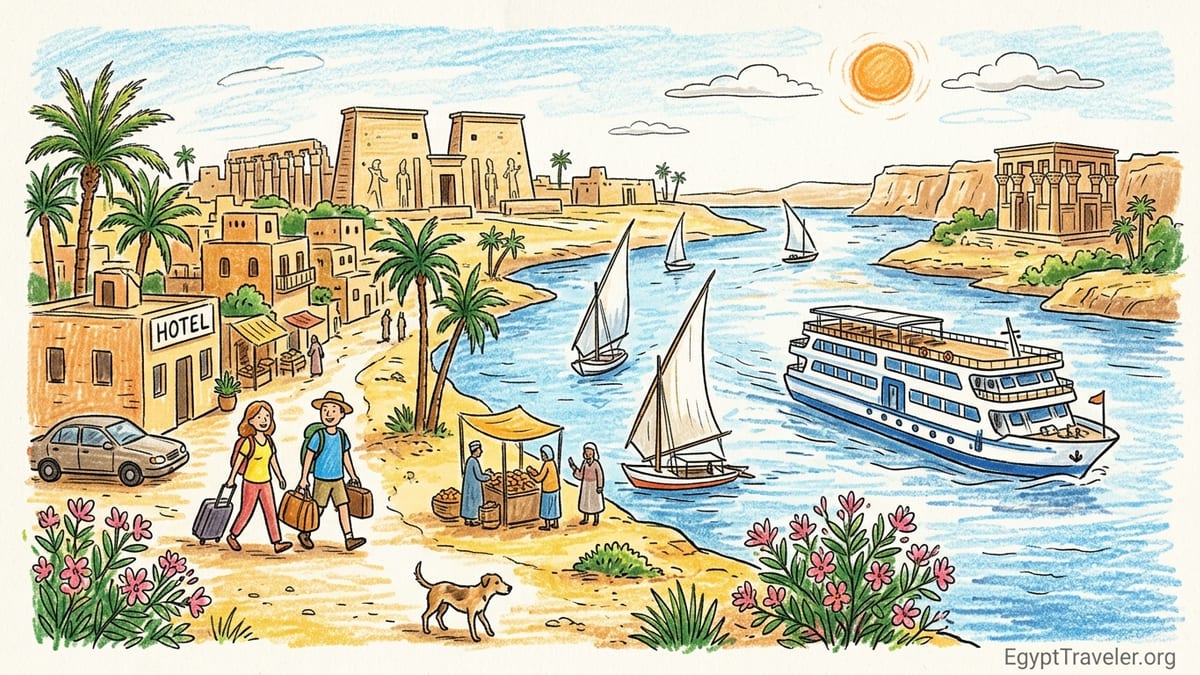
Why Skip the Cruise in Upper Egypt
A classic three or four night cruise between Luxor and Aswan still suits many visitors, especially those who want a packaged experience where transport, hotel and most sightseeing are bundled together. But in 2025 and 2026 prices for quality cruises have climbed noticeably, with reputable operators commonly quoting several hundred dollars per person for a three or four night sailing between Luxor and Aswan, and luxury or small-ship dahabiya sailings running far higher. For couples or small groups who are comfortable arranging a few transfers, staying in hotels and traveling by road or rail can work out significantly cheaper while delivering more control over each day.
There is also the tempo of cruise life to consider. On board you are tied to fixed meal times, fixed departure hours for temple visits and a fixed sequence of stops that are largely the same from one ship to the next. Travelers who like to wander Luxor’s corniche at night, return to Karnak a second time, or linger over a long breakfast with a Nile view often find a hotel base more appealing. With a land-based itinerary, you can choose to revisit a favorite site, skip another, or simply sleep in without worrying that the gangway has been pulled up.
Finally, cruising concentrates your time on the water and limits your evenings to the ship. A hotel-based trip gives you access to real neighborhoods: cafés full of local families, small restaurants near Luxor Temple, or a Nubian-run guesthouse on Elephantine Island in Aswan. If your idea of travel includes watching everyday life in Upper Egypt, not just monuments and buffets, then staying on land lets you see more of it.
Choosing Your Bases in Luxor and Aswan
Most hotel-based itineraries use Luxor and Aswan as anchors, then add Esna, Edfu and Kom Ombo as stops when moving between the two. In Luxor, choices range from historic grande-dame properties like the Sofitel Winter Palace, just south of Luxor Temple, to modern midrange resorts such as the Steigenberger Achti, which regularly appears in recent traveler reports for offering large pools, gardens and Nile views at room rates that can be around 50 to 100 US dollars per night in shoulder seasons for a standard double. On the West Bank, small guesthouses near the villages of Ramla and Gurna offer quieter nights and easy access to the Valley of the Kings.
In Aswan, riverside hotels cluster around the corniche and the First Cataract. The Old Cataract, a historic property now managed by an international luxury brand, is the city’s most atmospheric splurge, with terraces directly above the Nile and views towards Elephantine Island. Midrange options include chain hotels near the railway station and simple Nubian guesthouses on the islands, where a double room with breakfast can come in under 100 US dollars outside the busiest winter holiday weeks. Budget travelers continue to find basic rooms near the train station for far less, though comfort and noise levels vary.
By booking hotels in both cities, you create flexibility around temple days. In Luxor you might dedicate one full day to the West Bank, another to Karnak and Luxor Temple, and keep a third as a buffer for revisiting favorites or simply resting by the pool. In Aswan you can spread Philae, the Unfinished Obelisk, the Nubian Museum and a felucca sail across several evenings, and slot in a separate half or full day for Abu Simbel by road or air. Unlike a cruise, you are never squeezed into doing three major sites in the same afternoon just because the ship is on a schedule.
Private Car vs Train: How to Move Between Luxor and Aswan
Once you commit to hotels, the key decision is how to travel the roughly 215 kilometers between Luxor and Aswan. You have three main options: private car, daytime train, or, for the most budget-conscious and adventurous, a sequence of local minibuses that follow the Nile road. Each has distinct trade-offs in cost, comfort and convenience, especially when you factor in stops at Esna, Edfu and Kom Ombo.
A private car is the most straightforward. Recent listings on major booking platforms and local agencies show direct private transfers from Luxor to Aswan starting at about 35 to 50 euros per car one way, rising to around 60 to well over 200 euros if you add stops at Edfu and Kom Ombo and include an Egyptologist guide. These prices are per vehicle, not per person, so a couple or family can split the cost. Door-to-door pick up from your Luxor hotel and drop off at your Aswan hotel means you avoid taxis at either station and you control the departure time, which might be as early as 6:30 am for a quiet morning at Edfu Temple.
The train is the classic low-stress alternative. Daytime services between Luxor and Aswan typically take three to four hours. Foreign travelers most often use air-conditioned first or second class on the Egyptian National Railways trains or book the tourist-marketed “VIP” trains. Typical fares for these comfortable daytime trains can be in the range of 10 to 20 US dollars per person each way, depending on class and how you buy tickets. For two travelers, a direct train can therefore be cheaper than a private car, although you will need taxis or ride-hailing at both ends and you will pass, rather than stop at, Edfu and Kom Ombo.
A third option, used mainly by long-term or very budget-conscious travelers, is to travel in stages by shared microbus along the agricultural road close to the Nile. This can significantly undercut the cost of a direct private transfer and allows improvisation: hopping off at Kom Ombo for a quick temple visit, then catching the next minibus onward. It is however slower and more confusing to organize, and it is not suitable for those with large suitcases or a tight sightseeing schedule.
Building Esna, Edfu and Kom Ombo into a Hotel-Based Route
If you are not on a cruise, your main chance to see Esna, Edfu and Kom Ombo is while moving between Luxor and Aswan. The most practical arrangement is a one way private car transfer that turns the drive into a full sightseeing day. Many Upper Egypt agencies now advertise a standard route: pick up at your Luxor hotel in the morning, first stop at Edfu Temple, second at Kom Ombo Temple, then drop off at your Aswan hotel by late afternoon. Typical prices on booking platforms fall around 60 to 120 euros per car for the driver and vehicle, with higher rates when a licensed guide joins at the temples, or when lunch, entrance tickets or detours are included.
Using that model, a couple staying at a midrange hotel in Luxor might book a 70 euro shared private transfer via an online platform. They leave Luxor around 7:00 am, reach Edfu in about two hours, explore the towering Ptolemaic temple for 90 minutes before the big cruise groups arrive, then continue another hour to Kom Ombo. After an hour there and a simple lunch nearby, they are in their Aswan hotel lobby around 4:00 pm. Their luggage stayed in the trunk the entire time and they paid one fixed price for transport that doubled as a temple day.
Travelers with more time can break that journey in Esna, which sits closer to Luxor. Some agencies now offer flexible itineraries where you drive from Luxor to Esna, tour the recently restored Temple of Khnum with its vivid ceiling paintings, then continue to Edfu or overnight in Esna at a small guesthouse along the river. This slower version appeals to those who want to see one or two temples in depth, rather than rushing through three on the same day. It can also be combined with a local felucca sail from Esna in the late afternoon before continuing south the next morning.
If private car rates feel too high, it is possible, though less convenient, to blend train and taxis. For example, you could take an early morning train from Luxor to Edfu, hire a taxi at the station to shuttle you to the temple and back, then continue by later train to Aswan. Because train schedules, onboard comfort and ticket rules can evolve, it is important to check current timetables close to your travel date. This patchwork approach makes the most sense for solo travelers who prioritize savings and are comfortable negotiating fares in person.
Flexibility, Luggage and Early Temple Starts
One of the strongest arguments for a hotel and car or train combination is flexibility around temple hours. In Upper Egypt, the coolest, quietest sightseeing is usually right when sites open, often around 6:00 or 7:00 am, or again in the last hour before closing. Cruise schedules group dozens or hundreds of passengers into similar time slots, which can leave you lining up at the narrow passageways of Edfu or squeezed into the hypostyle hall at Kom Ombo. With a private driver, you choose precisely when to start, and with a hotel base you can easily return to places like Karnak or Luxor Temple for dusk light that many cruise passengers never see.
Luggage handling is simpler than it might seem. On a direct private transfer, your bags stay in the vehicle while you tour, with the driver waiting in the car park. For peace of mind, most travelers still take passports, wallets and electronics in a small daypack, but they are spared the repetitive packing and unpacking that comes with one-night cruise cabins. On trains, you keep your bags with you in the carriage and lift them into overhead racks or slide larger suitcases into the space between seats. This is manageable for most reasonably fit travelers, though it can be cumbersome with large hard-shell suitcases or for those with mobility concerns.
Flexibility also shows up in how you structure rest days. On a cruise, the program tends to fill every day with some sort of organized activity. In a hotel, nothing stops you from dedicating a full day to the pool, a hammam session and an evening walk along the corniche, especially in Luxor where the riverfront promenade comes alive after sunset. Jet lagged arrivals can plan a soft landing day in Luxor before tackling the West Bank, while those ending in Aswan can engineer a truly quiet final 24 hours looking at the Nile from a terrace instead of packing and disembarking at 8:00 am.
Costs and Hidden Trade-offs of Organizing It Yourself
Financially, a hotel-based route compares favorably with cruising, especially in midrange and budget categories. As a rough real-world example, a couple in November might pay around 70 US dollars per night for a well-reviewed riverside hotel in Luxor, another 90 to 120 dollars per night in Aswan, a 70 euro private car transfer with stops at Edfu and Kom Ombo, and two first-class train tickets in the opposite direction at perhaps 15 dollars each. Add meals in local restaurants, site tickets and a day trip to Abu Simbel, and the total can still undercut some cruise quotes of 1,200 to over 2,000 dollars per person for similar dates, particularly once you exclude high-end or boutique boats.
The value equation improves further for small groups. A family of four paying 80 euros for a private transfer between Luxor and Aswan, or a small group of friends splitting 100 euros for a full-day car with driver and guide, often pays less per person than if they bought individual train tickets plus separate day tours. They also gain intangibles like setting their own pace at sites, choosing where to stop for tea or lunch, and not being locked into the ship’s onboard restaurant every night.
There are disadvantages. You must arrange each transfer separately, which can mean several rounds of messaging or emailing with local agencies, monitoring train portals that sometimes glitch, and keeping track of pick up times. Some travelers relish this trip-planning puzzle; others find the mental load tiring, especially in the heat and sensory overload of Upper Egypt. If a train is delayed or a driver is late, you have to solve the problem yourself or with support from your hotel, rather than simply reporting it to a tour manager on board.
Travel insurance, tipping patterns and perceived safety can also feel less clear on a do-it-yourself route. Reputable local agencies and hotel concierge desks are used to arranging private transfers and can build in receipt-based payments, clear driver names and vehicle plate details, and simple tipping guidance. It is worth paying slightly higher quoted rates to work with firms that respond quickly and communicate clearly, since they will be your backup if a car breaks down on the road between Edfu and Kom Ombo or if your flight into Luxor is delayed.
Sample Itinerary: Five or Six Days Luxor to Aswan Without a Boat
To see how the pieces fit together, consider a five or six night plan. You arrive in Luxor on Day 1 and check into a Nile-side hotel. After a gentle afternoon walk to Luxor Temple and dinner nearby, you sleep early. Day 2 is your West Bank day, with a pre-dawn start for the Valley of the Kings, Hatshepsut’s Temple at Deir el Bahri, and the Colossi of Memnon, with plenty of time to return to your hotel by late afternoon. Day 3 is dedicated to the East Bank: a morning at Karnak, a midday break back at the hotel, and an evening return to Luxor Temple under lights.
On Day 4, you check out and meet a pre-booked driver at 7:00 am for the Luxor to Aswan transfer with stops. After two to three hours at Edfu and Kom Ombo, you reach Aswan in the late afternoon and check into your chosen hotel or island guesthouse. Day 5 could start with Philae, followed by the Nubian Museum and a late-afternoon felucca sail. If you have a sixth day, use it for Abu Simbel, leaving pre-dawn by road with a shared minibus booked through your hotel, or with a short flight from Aswan’s airport. You might then finish with one last dinner overlooking the First Cataract before an evening train or flight back to Cairo.
This structure leaves room for adjustments. Budget travelers might reduce Luxor to two nights and book the train instead of a private car, seeing only one of the intermediate temples. Slow travelers might extend Luxor to four nights to revisit Karnak or add Medinet Habu, then spend three nights in Aswan to enjoy more river time and café-hopping. Families with young children can schedule a rest day between heavy sightseeing, using the hotel pool and air-conditioned play spaces instead of trying to match the intensity of a cruise excursion schedule.
The key is to think of Luxor and Aswan as well-served small cities rather than mere embarkation points. Once you do that, building a trip around comfortable hotels, a couple of scenic train rides and a single full-day car transfer becomes less like a compromise and more like a deliberate way to inhabit Upper Egypt at your own pace.
The Takeaway
Skipping a Nile cruise does not mean missing the best of Upper Egypt. With a bit of planning, you can wake up in elegant or characterful hotels, reach Esna, Edfu and Kom Ombo on your own schedule, and still stand in the same monumental halls that cruise passengers see, often with fewer crowds and cooler air. Private cars, trains and even local minibuses now form a practical network between Luxor and Aswan, and real-world prices for midrange hotels and transfers often come in below current cruise quotes for the same corridor.
The trade-off lies in logistics. You exchange the simplicity of a pre-packaged cabin for the freedom to choose your own view each night, whether that is a historic balcony above the Nile or a family-run guesthouse on a quiet island. For travelers who enjoy shaping their journeys and are willing to book a few extra transfers in exchange for flexibility, Upper Egypt without a Nile cruise is not a consolation prize. It is a satisfying, deeply practical alternative that lets the river set the scene rather than the schedule.
FAQ
Q1. Is it realistic to visit Luxor, Esna, Edfu, Kom Ombo and Aswan without taking a Nile cruise?
Yes. With a combination of hotel stays, one or two private car transfers and possibly a train ride, it is entirely realistic to see all major sites between Luxor and Aswan without boarding a cruise ship. The key is to plan your temple stops for the same day you move between the two cities.
Q2. How many days do I need in Upper Egypt if I skip the cruise?
Most travelers do well with five to seven nights split between Luxor and Aswan, which allows at least two full sightseeing days in Luxor, one or two in Aswan, and one travel day that includes Edfu and Kom Ombo. Adding an extra night makes it easier to include Abu Simbel or a slower visit to Esna.
Q3. Which is cheaper: a hotel-based trip or a Nile cruise?
For midrange travelers and small groups, a hotel-based itinerary is often cheaper than a quality cruise once you add up cabin costs, tips and extras. Budget hotels or guesthouses in Luxor and Aswan can be very affordable, and private car transfers priced per vehicle become more economical as you add people.
Q4. Are private car transfers between Luxor and Aswan safe?
Reputable local drivers run this route daily and for most visitors it feels routine. Booking through a trusted agency or hotel, traveling in daylight, confirming vehicle details in advance and wearing seatbelts where available all contribute to a safe experience.
Q5. Can I easily bring large suitcases on the train between Luxor and Aswan?
Yes, but you should be prepared to handle your own bags. Most daytime trains have overhead racks and some floor space for larger suitcases. If you travel with very bulky luggage, a private car may be more comfortable, as your bags stay in the trunk during temple visits.
Q6. How early can I visit the temples if I am not on a cruise?
Site opening times vary but many major temples open around 6:00 or 7:00 in the morning. With your own driver or by arranging a taxi from your hotel, you can arrive close to opening time, which is ideal for cooler temperatures and fewer crowds.
Q7. Do I need to book transfers and trains in advance or can I arrange them on arrival?
In high season from roughly October to April it is wise to pre-book at least your key transfers and train tickets, especially if you have a tight schedule. In quieter months, many travelers successfully arrange cars through their hotel a day or two in advance, but checking current availability and policies before you go is still recommended.
Q8. What are the main disadvantages of skipping a cruise?
The main downside is organizational effort. You will need to manage multiple hotel bookings, at least one long-distance transfer and a series of day trips. You also miss the relaxed rhythm of drifting along the Nile for hours at a time, which some people consider the highlight of a cruise.
Q9. Is this approach suitable for families with children?
Yes, provided you build in rest time. Families often appreciate having more space in hotel rooms, access to pools and the ability to eat in a variety of restaurants. A private car can also be easier with strollers or nap schedules than joining group excursions from a ship.
Q10. Can I combine a short cruise with hotel stays in Luxor and Aswan?
Many travelers do exactly that. You can spend several nights in Luxor, take a three night cruise that includes Edfu and Kom Ombo, then end with one or two nights in a hotel in Aswan. This hybrid model reduces logistics while still giving you time on land and flexibility at the beginning or end of your trip.