


The Western Desert of Egypt is far more than a line of dots on the map between Cairo and Luxor. Siwa, Bahariya, Farafra, Dakhla and Kharga each have their own character, landscapes and style of hospitality, from salt-brick ecolodges and family guesthouses to proper hotels and minimalist desert camps under the stars. Choosing the right base for your route, budget and comfort level can make the difference between a once-in-a-lifetime adventure and a long, dusty slog.
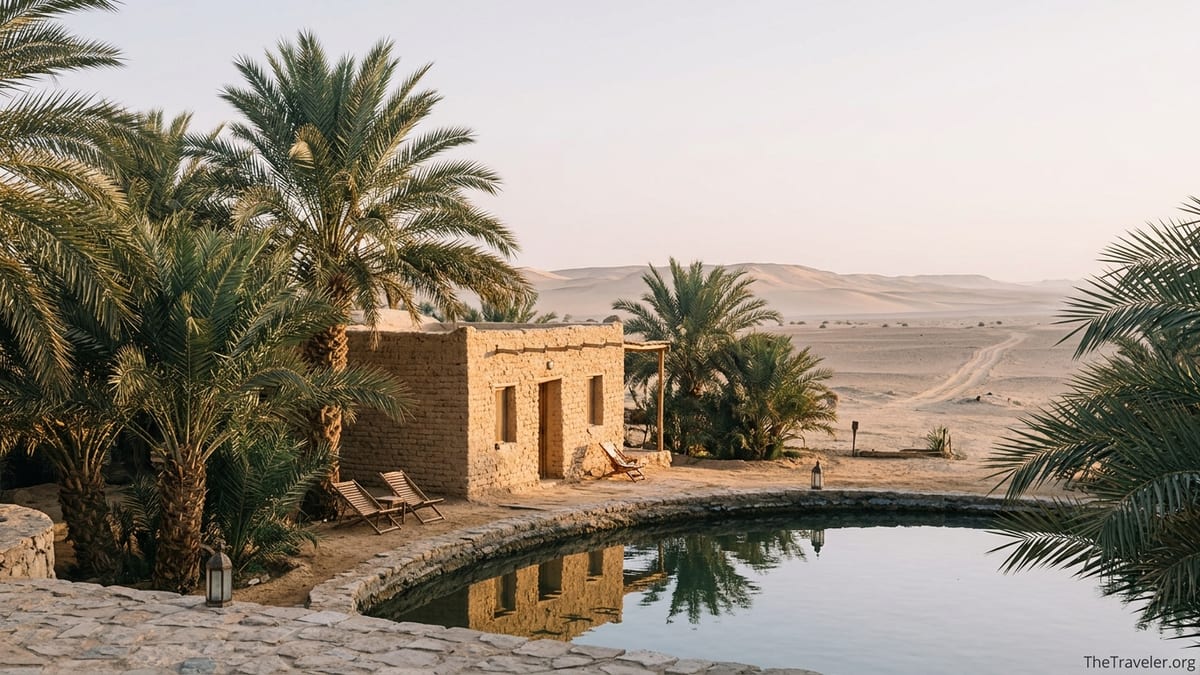
How to Choose Your Base in Egypt’s Western Desert
Most travelers encounter the Western Desert as a multi-day circuit, linking Cairo with Bahariya and the White Desert, then continuing south through Farafra to Dakhla and Kharga before looping back toward the Nile. Others focus on a single oasis such as Siwa for a slower, retreat-style stay. Your ideal base depends on whether you value comfort, immersion in traditional life or maximal time out in the dunes.
A useful rule of thumb is that Bahariya and Kharga offer the most straightforward hotel-style comfort, Siwa and Dakhla excel at atmospheric ecolodges and guesthouses, and the open desert between Bahariya and Farafra is where you will find the most rugged wild camps. Prices can fluctuate with fuel costs and demand, but as of 2026, comfortable midrange rooms in the oases typically run from about 60 to 120 US dollars per night for a double, with simpler guesthouse rooms often between 30 and 60 dollars.
When comparing options, consider not only the room but also how the property integrates with guiding, transport and permits. In Bahariya, for instance, hotels such as Western Desert Hotel & Safari or Bedouin Castle Hotel & Safari often package rooms with 4x4 trips to the Black and White Deserts, which can be more practical than booking everything separately. In Siwa and Dakhla, ecolodges frequently include half-board and can help arrange local drivers for day trips or multi-day crossings.
Finally, remember that distances are long and public transport infrequent. If you are planning a longer Western Desert circuit, it can be worth paying a little extra for well-run accommodation that doubles as a reliable logistics hub, especially in shoulder seasons when temperatures are less predictable and road conditions can change quickly.
Siwa: Salt-Brick Ecolodges and Oasis Guesthouses
Siwa, tucked close to the Libyan border, has become Egypt’s showcase for ecolodge-style stays. Around the old Shali fortress and the palm gardens you will find properties built from traditional kershef, a salt-and-mud brick that keeps interiors cool and blends almost seamlessly into the dunes. These ecolodges tend to favor candlelight, natural ventilation and spring-fed pools over televisions and loud generators, so they suit travelers who prize atmosphere over conventional luxury.
Rates at well-known Siwa ecolodges commonly fall between roughly 120 and 250 US dollars per night for a double, depending on season and board basis. Rooms are often simple but meticulously designed, with handmade furniture, thick textiles and terraces looking out over the palm groves or salt lakes. Many include set menus using local olives, dates and vegetables, and some organize sunset drives out to the Great Sand Sea or to hot and cold springs in the surrounding desert.
For travelers on a tighter budget or those wanting more flexibility, Siwa’s locally run guesthouses are an appealing alternative. Family compounds within walking distance of Shali might offer basic but clean ensuite rooms from around 30 to 60 dollars, often including breakfast. Facilities are more modest, with fans instead of air conditioning in some rooms and simpler bathrooms, but the chance to eat home-cooked Siwan meals and chat with hosts about current conditions on the desert tracks is a major advantage.
Couples often gravitate toward the quieter ecolodges on the fringes of the oasis, where nights are dark and silent, while solo travelers and long-stay visitors may prefer central guesthouses where it is easier to find shared jeeps or group excursions. Regardless of where you stay, confirm in advance whether your lodge can arrange transfers from Marsa Matrouh or the nearest bus drop-off point to avoid being stranded after a long journey.
Bahariya: Practical Hotels and Desert Safari Bases
Bahariya Oasis, about 365 kilometers from Cairo, is the main jumping-off point for overnight trips to the Black and White Deserts. In the main village of Bawiti you will find a cluster of simple hotels and safari-focused lodges. Properties such as Western Desert Hotel & Safari and Bedouin Castle Hotel & Safari are typical of the area, offering basic but comfortable rooms, rooftop terraces and on-site teams of drivers and cooks used to running 4x4 expeditions.
Standard doubles in Bahariya often range between about 40 and 90 US dollars per night. Rooms usually have private bathrooms, hot water and air conditioning, and some properties have small pools or shaded gardens where you can rest between desert outings. Décor is generally plain and functional rather than design-led, but balconies overlooking the date palms or rock ridges around the oasis help remind you that you are far from Cairo’s traffic.
For many visitors, the real “room” in Bahariya is the desert camp that their hotel organizes. Typical White Desert safaris include one hotel night in Bawiti and one or two nights sleeping on mattresses around a windbreak under the stars, with simple meals cooked over the fire. These overnight circuits are usually priced as multi-day packages rather than per-night accommodation, so when comparing offers it makes sense to look at the total cost and inclusions: number of nights in camp, park permits, 4x4 capacity and whether winter trips include warm bedding.
Compared with Siwa and Dakhla, Bahariya’s guesthouses and hotels may feel less characterful, but they excel in practicality. English-speaking staff, flexible meal times to match bus schedules and the ability to find or join other small groups at short notice make Bahariya a smart base for solo travelers and first-time visitors attempting the White Desert. If comfort is a priority, ask specifically about heating in winter and air conditioning in high summer, as desert temperatures can be extreme at both ends of the year.
Dakhla: Clay-House Lodges and Long-Stay Retreats
Farther south, Dakhla Oasis has developed a reputation among repeat Egypt travelers for its peaceful atmosphere and distinctive mud-brick architecture. Many lodges here are built in a style that echoes the old fortified villages, with thick clay walls, vaulted ceilings and terraces that open toward the surrounding dunes and fields. This gives Dakhla’s accommodations a homely, almost village-like feel, ideal for travelers who want to stay put for several days rather than rush through.
Room prices at characterful lodges in and around Dakhla typically fall in the 60 to 130 US dollar range for a double, often including breakfast and sometimes dinner. Interiors usually favor locally made wooden beds, woven rugs and clay amphorae over polished hotel finishes. Some properties incorporate small libraries, roof terraces or shaded courtyards where long-stay guests can read, work remotely or simply watch the rhythm of oasis life unfold.
Dakhla is also one of the better places in the Western Desert for travelers who need consistent connectivity and amenities. While not all lodges have rock-solid internet, many can provide workable Wi-Fi and arrange transport to nearby hot springs, rock art sites and abandoned villages. A few larger hotels in the New Valley governorate towns near the oasis add more conventional touches such as small conference rooms, making Dakhla a feasible base for small group retreats or creative residencies.
Culturally minded travelers often appreciate how Dakhla guesthouses are embedded in local communities. Hosts can introduce guests to pottery workshops, date farms or desert musicians and arrange overnight trips into the dunes that are less hurried than the classic Bahariya–White Desert loop. If you are planning a longer north–south circuit through the Western Desert, spending three or four nights in Dakhla is a way to break up long drives with genuine rest and cultural depth.
Kharga and Farafra: Simple Hotels and Emerging Ecolodges
Kharga, the largest of Egypt’s western oases, has historically had fewer tourist-focused beds than its size might suggest. Accommodation has centered on straightforward hotels in and around the main town, plus a small but growing number of ecolodge-style properties. Typical town hotels offer basic double rooms with private bathrooms, air conditioning and television at prices that often start around 40 to 80 US dollars per night. They are functional bases for visiting local temples, necropolises and hot springs rather than destinations in themselves.
On the edge of Kharga Oasis, newer ecolodge-style hotels built in traditional materials aim to blend desert aesthetics with modern comforts, usually at midrange prices. These properties may add small swimming pools, larger gardens and spaces for camping groups on their grounds, which can be useful if you are traveling with overland vehicles or joining a multi-day jeep expedition. As Kharga is less accustomed to independent tourists than Bahariya or Siwa, it is worth confirming details such as meal times, language abilities and transport options when you book.
Farafra, between Bahariya and Dakhla, is quieter still. Most travelers encounter it as a brief stop while transiting the Black and White Desert rather than as a standalone destination. Accommodation in and around the village is limited to a handful of small hotels and guesthouses and very simple desert camps. Expect basic rooms, occasionally shared bathrooms and intermittent Wi-Fi. Prices are generally modest, roughly comparable to simple guesthouses in Bahariya, but choice is more limited, so advance arrangements through a tour operator or your Bahariya hotel are usually wise.
In both Kharga and Farafra, the main advantage is access to quieter desert landscapes and nearby archaeological sites without the crowds that sometimes form around Bahariya. If you are an experienced desert traveler, photographer or overlander who values solitude and is comfortable with simple infrastructure, a night or two in these oases can be especially rewarding.
Desert Camps: From White Desert Bivouacs to Multi-Day Crossings
Spending at least one night in a desert camp is often the highlight of a Western Desert journey. Around Bahariya and Farafra, most travelers experience this as a one or two night bivouac in the White Desert. Operators load up 4x4s late in the morning, stop at the Black Desert and Crystal Mountain, and reach surreal chalk formations by late afternoon. Camps are typically informal: mattresses on carpets, low windbreaks, shared meals and open-air toilets screened by a dune.
These basic camps are not separate commercial properties but extensions of Bahariya or Farafra hotels, and prices are usually quoted per person for a package including transport, permits, guide, meals and equipment. For a shared group trip, rough guide prices might fall between 90 and 180 US dollars per person for an overnight, more for private departures or multi-day crossings. If you are comparing offers, ask about group size, vehicle condition, winter sleeping gear and how they handle extreme weather such as sandstorms.
More remote desert circuits, including routes linking Siwa to Bahariya or continuing deep into the dunes west of Dakhla and Kharga, rely on expedition-style camping. Nights are even more minimalist, sometimes with no fixed windbreaks or camp furniture at all, but offer unmatched star fields and silence. These trips cost more because of fuel, food and the expertise required, and are best arranged through established desert safari outfits rather than improvised locally at the last minute.
Desert camps are magical but not for everyone. Bathrooms are rudimentary, temperatures can drop sharply at night in winter and there may be limited provision for dietary restrictions. If you like the idea of campfires and sunrise over the dunes but prefer a bed and private bathroom, it can make sense to choose a Bahariya or Dakhla hotel that offers short sunset trips and early-evening returns rather than full overnight camps.
Matching Stays to Different Trip Styles and Budgets
For comfort-focused travelers and first-time visitors, a combination of hotel nights and one carefully chosen desert camp works well. You might spend your first night in a midrange Bahariya hotel with air conditioning and ensuite bathrooms, then head out for a single night in the White Desert before returning to the same hotel to shower and rest. Adding two or three nights in a Siwa or Dakhla ecolodge afterward creates a satisfying contrast: wild camping followed by slower days around hot springs and palm gardens.
Couples looking for atmosphere rather than formality often favor Siwa’s romantic ecolodges or Dakhla’s clay-house retreats. Candlelit dinners, spring-fed pools and quiet terraces offer privacy and a sense of being cocooned from the outside world. A practical itinerary for a one-week escape might involve flying or driving to Siwa for four or five nights, with one night in a simple desert camp near the Great Sand Sea, then finishing with a night or two in Bahariya or Dakhla to break up the return journey.
Adventure travelers and photographers often invert this balance, prioritizing multiple nights in the desert with short, functional hotel stays in between. They might book basic but reliable lodgings in Bahariya and Farafra and allocate most of their budget to fuel, permits and guides for extended circuits through the Black Desert, White Desert and the dunes west of Dakhla or south of Kharga. For such trips, it can be more important that your hotel has a secure car park and flexible meal times than a pool or elaborate décor.
For longer Western Desert circuits of 10 days or more, pacing is crucial. Alternating more demanding segments, such as multi-day camping between Bahariya and Dakhla, with recovery time in a Siwa or Dakhla ecolodge can help prevent fatigue. Travelers with remote work to juggle may wish to build in several nights at properties with stronger connectivity in Dakhla or Siwa, using days in Kharga, Bahariya and the desert itself as offline, immersion periods.
The Takeaway
Egypt’s Western Desert offers far more variety in accommodation than many travelers expect. From atmospheric Siwa ecolodges built in traditional salt brick to practical Bahariya hotels geared to White Desert safaris, from Dakhla’s clay-house retreats to simple Kharga town hotels and barefoot desert camps under the Milky Way, you can tailor your stays very closely to your comfort level, budget and appetite for adventure.
When planning, think in terms of roles rather than individual properties: Bahariya or Farafra as your logistics hub for the Black and White Deserts, Siwa and Dakhla as places to slow down, and Kharga as an access point for quieter ruins and hot springs. Then decide how many nights you truly want under the stars versus in a bed with a shower.
Conditions, availability and standards can change, especially in remote oases. Wherever possible, reconfirm details of transport, included meals, camping equipment and seasonal temperatures shortly before you travel, and allow a buffer day for road or weather disruptions. Do that, and your nights in Egypt’s Western Desert will likely become some of the most vivid travel memories you carry home.
FAQ
Q1. Is it safe to stay in Egypt’s Western Desert oases as an independent traveler?
Independent stays in Siwa, Bahariya, Dakhla and Kharga are generally feasible when you use reputable lodgings and local guides, monitor current travel advice and follow local security guidance.
Q2. How far in advance should I book accommodation in the Western Desert?
For peak periods such as October to April, it is wise to book well-run hotels, ecolodges and guided desert camps at least several weeks ahead, especially in Siwa and Bahariya.
Q3. What is the typical price range for accommodation in the Western Desert?
As a broad guide, simple guesthouse rooms often run from about 30 to 60 US dollars per night, while midrange hotel and ecolodge doubles commonly range from about 60 to 130 dollars or more.
Q4. Can I visit the White Desert without booking an organized camp?
Access to the White Desert is usually arranged through licensed operators using 4x4 vehicles, and overnight stays are typically part of guided packages rather than independent camping.
Q5. Which oasis is best for couples seeking a romantic stay?
Siwa and Dakhla are particularly appealing for couples, thanks to their intimate ecolodges, quiet clay-house retreats, hot springs and slower pace compared with busier Bahariya.
Q6. Will I have internet access at ecolodges and desert camps?
Many ecolodges in Siwa and Dakhla now offer basic Wi-Fi, but connections can be inconsistent, and most desert camps have little or no coverage, so plan for partial disconnection.
Q7. Do I need special permits to camp in the Western Desert?
Certain protected areas, including the White Desert, require permits that are normally arranged by licensed operators or your hotel as part of a safari or camping package.
Q8. What should I pack for staying in desert camps and remote oases?
Pack layers for hot days and cold nights, a warm hat and socks for winter, a headlamp, power bank, sun protection and any personal medications, plus a sleeping bag if not provided.
Q9. Are vegetarian or special diets easy to accommodate?
Basic vegetarian meals are usually possible in hotels, guesthouses and camps, but more specific dietary needs should be communicated clearly in advance and reconfirmed on arrival.
Q10. How many nights should I plan for a Western Desert circuit?
A compact circuit with one White Desert overnight and short oasis stays works in about five to seven nights, while a slower, more in-depth route can easily fill 10 days or more.